



8. Aina had previously worked as a consultant to examination bodies, including the National Examinations Council and the National Business and Technical Examinations Board on ICT systems and examination integrity.
News
African Countries Evacuate Nationals Amidst Israel-Iran Tensions

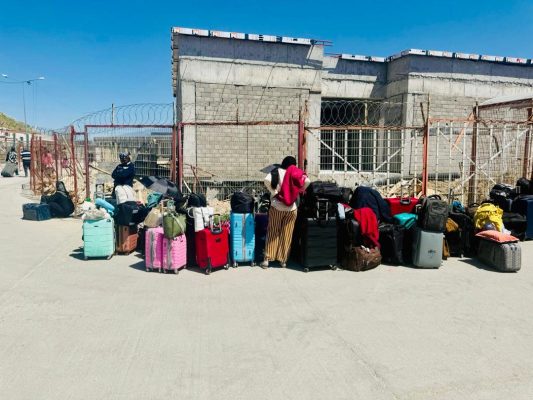
As tensions escalate between Israel and Iran following renewed military confrontations that began on June 13, several African countries have initiated evacuation procedures for their nationals.
The latest crisis, which saw Iran launch missiles into Israel and Israel target nuclear and military facilities inside Iran, has resulted in significant casualties.
Iran’s health ministry confirmed over 220 deaths, while Israeli authorities say 24 people have died from retaliatory attacks.
Here is a detailed look—based on reporting by BBC News Pidgin at the evacuation responses of African governments:
Nigeria
The Nigerian government says it is finalising plans to evacuate its citizens from the affected regions. A statement from the Ministry of Foreign Affairs explained that authorities are working with international partners to ensure the safe and timely return of Nigerians. Citizens in Israel and Iran are advised to reach out to Nigerian embassies or consulates in nearby countries for further guidance.
The spokesperson of Nigeria’s Ministry of Foreign Affairs, Kimiebi Imomotimi Ebienfa, in a statement on Tuesday, June 17 said: “The ministry wishes to inform that following the escalation of the crisis between the State of Israel and the Islamic Republic of Iran, the Federal Government is finalizing arrangements for the emergency evacuation of stranded Nigerians in both countries.
“All affected Nigerian citizens are therefore strongly advised to abide by the necessary security protocols and do well to contact the nearest Nigerian embassy for registration and further instructions.
“The ministry commends the efforts put in place by our missions in Tel Aviv, Israel and Tehran, Iran for their dedication and commitment to reaching out to the Nigerian community at this difficult time.
“We wish to reassure the general public that the Federal Government of Nigeria remains committed to the safety and welfare of all its citizens both at home and abroad and is working in close coordination with relevant international partners and local authorities to ensure the timely and secure evacuation of Nigerians in the affected areas.”
Ebienfa added that in the same vein, the Government of Nigeria reiterated its call for the immediate cessation of hostilities, urging all parties involved to embrace dlalogue, respect international humanitarian law and prioritize the protection of civilians.
He said Nigeria stands firm in its support for the peaceful resolution of conflicts and reaffirms its longstanding commitment to global peace and stability, adding that further updates will be provided through official channels as events unfold.
Ghana
Ghana has already begun evacuating its nationals from Iran. This has seen the Ghanaian government shutting down its embassy in Tehran while confirming that diplomats, students, professionals, and other citizens are being moved out through land borders.
In Israel, however, evacuation has been delayed due to border closures. The Ghanaian Ministry of Foreign Affairs noted that movement is only possible with approval from Israeli authorities. Citizens are currently being told to remain in bomb shelters.
Ghana’s Ministry of Foreign Affairs said in a statement: “The Government of Ghana expresses its serious concern over the military escalation between Israel and Iran, following the military strikes undertaken by the State of Israel on Iranian territory on 13 June 2025.
“Ghana calls upon the partics to exercise maximum restraint, prioritize dialogue, and accept the channels of diplomatic facilitation to de-escalate the situation. Ghana further calls upon the parties to reaffirm their commitment to the Charter of the United Nations and the principles of international law.
“Ghana urges the parties to urgently recommit to the peaceful resolution of the conflict and to respect the sovereignty, security, and territorial integrity of each other. Ghana stands ready to support a unified response of the international community to de-escalate the conflict to prevent its spread, abate the further destabilisation of the Middle East, and contain the unfolding threat to international peace and security.”
According to the Ghanaian embassy in Israel, 922 Ghanaians are officially residing in the country. One Ghanaian resident told *BBC News Pidgin* that they rely on automated alerts from Israel’s defence ministry to seek shelter during missile attacks, most of which occur at night.
Uganda
Uganda is coordinating evacuations through third-party countries, as it has no embassies in either Israel or Iran. According to *Chimp Reports*, the Ugandan government has contacted Egypt, Turkey, Azerbaijan, and Jordan to request visas for its nationals fleeing the conflict zones.
As of now, 48 Ugandan students have begun leaving Tehran. Uganda’s foreign ministry has tasked its diplomatic missions in the region with overseeing the evacuation process.
Uganda’s Ministry of Foreign Affairs on Friday said in a statement on its official X account: “The Government of
The Uganda Embassy in Tehran has successfully coordinated the evacuation of two diplomatic staff who had remained in Tehran, and 42 Ugandan students to Turkiye following the outbreak of conflict between the Islamic Republic of Iran and the State of Israel that broke out on 13th June 2025.
“The evacuations were managed by the Embassy having set up an emergency evacuation coordination centre in neighbouring Turkey where, in cooperation with the Embassy in Ankara and guidance from Ministry of Foreign Affairs Headquarters, Ugandans in Iran were registered for evacuations, land transport arranged and the Republic of Turkey requested and accepted to issue visas on arrival yo enable emergency evacuation of the affected Ugandans back home through Turkey.
“The Emergency Evacuation Coordination Centre is being overseen by Amb. Twaha Matata, Charge d’Affaires a.i, assisted by Mr. Oscar J. Edule, Minister Counsellor and Mr. Agaba Mark, Financial Attaché, Uganda Embassy Tehran. This centre will continue to operate until all Ugandans in the Islamic Republic of Iran are repatriated to Uganda.
“The evacuated nationals were received at the Bargarzan border by Mr. Julius Malinga, Second Secretary, Ms. Zainah Nabirye, Uganda Embassy in Tehran and Mr. Mubarak Daka from the Uganda Embassy in Ankara on Wednesday, 18th June 2025. They are being transferred today to Istanbul, where they are expected to be conveyed to Uganda on a commercial chartered aircraft.
“Registration and coordination efforts continue to be undertaken for other Ugandan nationals still inside Iran, with the aim of safely guiding, supporting, and ensuring their safe exit and return to Uganda.”
Kenya
The Kenyan Ministry of Foreign Affairs has not started evacuations but issued a strong advisory urging its citizens in Israel and Iran to take extreme precautions. Citizens have been instructed to avoid unnecessary travel, remain indoors, and follow local authorities’ instructions. Kenyans in distress have been directed to contact their missions in Tel Aviv or Tehran for emergency assistance.
South Africa
South Africa’s foreign ministry earlier asked its citizens in Iran to register with the country’s embassy. The government, however, warned that its consular support is limited and that it may not be able to offer assistance during emergencies. The ministry encouraged South African nationals to evaluate their own safety and act accordingly.
Guardian.ng

When the terrorists started operating in the northern part of the country, attacking communities and schools and abducting not only the residents but also pupils and students, many people never believed they would find their way to the South West part of the country. But when they took over Kwara, about a year ago, some raised the alarm that the South West was the next target.
This came to pass last week Friday. They attacked Community High School Ahoro-Esinele and Yawota Baptist Nursery and Primary School in Oriire Local Government Area of Oyo state, abducting 39 pupils and students including a two-year-old toddler and seven teachers. One teacher was killed in the process while another one was beheaded in captivity. All the victims are still being held by the terrorists one week after. Following the terrorists’ attack, there have been palpable fears in the south west region as many communities have been deserted. The residents have fled their homes and are taking refuge elsewhere.
But the frightening reality which is giving security experts sleepless nights is that these terrorists have already blended into everyday life in the south west. These individuals are described as sleeper cells. According to security experts, these terrorist cells do not arrive carrying flags or announcing their intentions. Instead, they move quietly into communities, rent apartments, establish businesses and build relationships.
Security experts warn that Nigeria’s greatest security threat may no longer be only terrorists occupying forests and ungoverned spaces, but hidden networks operating unnoticed within towns and cities, patiently waiting for the right moment to strike. They said the most dangerous enemy is often the one no one suspects, not always the insurgent wielding an AK-47 in a conflict zone, but sometimes the familiar face that greets neighbours daily, attends community gatherings, and appears fully integrated into society.
They are individuals or networks embedded within civilian populations, operating quietly for months or years while gathering information, studying security patterns, recruiting sympathisers, building local contacts, and waiting for instructions before attacks eventually occur. They are terrorist cells. They are no longer only in the north, they have found places down south.
Their weapon is not merely explosives or guns; it is patience. Unlike conventional terrorists, sleeper cells rarely strike immediately. They study communities, observe security routines, and identify vulnerable targets. Some facilitate the movement of money or logistics. Others provide safe houses, recruit sympathisers, or monitor critical infrastructure. By the time violence erupts, security analysts say the groundwork may already have been completed.
This is why the stakeholders in the south west including the elders, leaders and activists are lamenting that the region is no longer safe. They are asking the state governments in the region to rise up to the challenge and make Yorubaland safe for the people.
Yorubaland no longer safe — Oladotun
In his reaction, the President, Yoruba Council Worldwide, Mr Hassan Oladotun said,”the recent invasion of some schools in Oyo by terrorists has shown that Yorubaland is no longer safe. It is better for governors across the region to jettison politics and take collective action towards safeguarding the region from total invasion by bandits and terrorists. It is obvious that the Amotekun outfit is either losing focus or it has been abandoned for bandits to have the audacity to move their activities into Yorubaland, especially Ogbomoso and parts of Oyo State. It is a signal that the region is no longer safe.
“The menace started from Ekiti State areas which share boundaries with Kwara State and we thought the establishment of the outfit would put a stop to the movement of the bandits towards the southwest.

Gunmen Abduct and Later Release Ekiti Council Vice-Chairman After Joint Rescue Operation
The Abduction
Gunmen intercepted Grace Ogunleye, the Vice-Chairman of Ilejemeje Local Government Area, along the Ipere–Iludun road on Wednesday, May 20, 2026. The incident occurred while she was driving toward Ido Ekiti following an official visit to the local government secretariat. Her abandoned vehicle was later found by the roadside, and her mobile phone was switched off immediately following the attack. Falade Sunday, the LGA’s director of information, quickly alerted security forces to launch a search.
The Rescue
Following a swift, coordinated operation, the Ekiti State Police Command confirmed that Ogunleye was rescued unharmed. Police spokesperson Sunday Abutu stated that a joint team of police officers, military personnel, and local security operatives successfully pressured the kidnappers into releasing her. Falade Adegoroye Michael, the Ekiti State Commissioner of Police, has ordered a full-scale investigation to track down and arrest the fleeing suspects.

President Bola Tinubu has appointed 39-year-old Professor Segun Aina as the new Registrar of the Joint Admissions and Matriculation Board, succeeding Professor Ishaq Oloyede, whose tenure expires on July 31, 2026.
The appointment was announced in a statement issued on Thursday by the President’s Special Adviser on Information and Strategy, Bayo Onanuga.
Oloyede’s decade at JAMB was, by most accounts, transformational. Within three years of assuming office in 2016, he overhauled the board’s operations and finances. Remittances to the Federal Government rose sharply from less than ₦50 million between 1978 and 2016, to ₦7.8 billion in 2017 alone.
From 2016 to 2026, JAMB remitted ₦20.7 billion in operating surplus and funded physical and human development projects from internally generated revenue.
Here are key facts about Prof. Aina:
1. Aina is a professor of Computer Engineering at Obafemi Awolowo University, Ile-Ife, with expertise in digital infrastructure, national examination systems and institutional reforms.
B.Eng. (Hons.) Computer Systems Engineering – 2008
M.Sc. Internet Computing and Network Security – 2009
Ph.D. Electrical Engineering (Signal Processing) – 2015
Registered Engineer, Council for the Regulation of Engineering in Nigeria (COREN) – 2017
. He is a distinguished academic and systems expert with extensive experience in national examination systems, digital infrastructure, and public-sector institutional reform.
3. He holds a Bachelor of Engineering in Computer Systems Engineering from the University of Kent, an MSc in Internet Computing and Network Security.
4. He also holds a PhD in Digital Signal Processing, both from Loughborough University, United Kingdom.
5. He has also completed the Senior Management Programme at Lagos Business School.
Aina has over 15 years of professional experience advising federal and state governments on digital transition, institutional reforms and system design.
7. He is one of Nigeria’s youngest professors in Computer Engineering and will become the youngest registrar in JAMB’s history.


Business6 hours ago
NNPC Releases New Petrol Prices at Filling Stations Nationwide; State-by-state Costs Emerge

News2 days ago
Yorubaland No Longer Safe, Terror Cells Expanding — Gani Adams

Politics2 days ago
Taraba 2027: Kefas Secures APC Ticket For Second Term

Sports11 months ago
Former Super Eagles Star Loses Life Savings, Duped By A Pastor of ₦1.2 Billion

Lifestyle9 months ago
I’m A Married Man, I Can Never Get Myself Involved With Such A Thing, Delta Gov Aide Reveals Why He Offered Comfort ₦500,000 Job

Uncategorized9 years ago
These ’90s fashion trends are making a comeback in 2017
-

 Politics2 days ago
List Of Tinubu Ex- Ministers Crash Out Of APC Governorship Primaries
-
 News2 days ago
Yorubaland No Longer Safe, Terror Cells Expanding — Gani Adams
-

 Entertainment2 days ago
Failed Relationships Made Me Freeze My Eggs — Ashmusy
-
 Business2 days ago
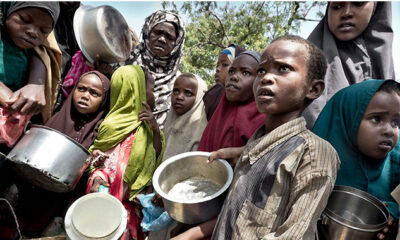
35 Million Nigerians Risk Acute Hunger In Coming Months — UN
-

 Sports2 days ago
Galatasaray President Rules Out Osimhen Exit
-

 Sports2 days ago
Five Gold Medals And African Record Highlight Nigeria’s Success In Algeria
-
 Politics2 days ago
Taraba 2027: Kefas Secures APC Ticket For Second Term
-
 Business6 hours ago
NNPC Releases New Petrol Prices at Filling Stations Nationwide; State-by-state Costs Emerge