Business
Aliko Dangote’s Surprise Resignation From Sugar, Cement Companies Triggers Reactions
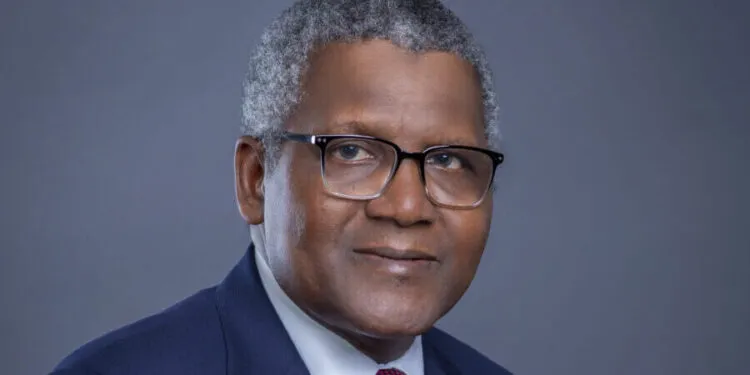
Dangote has stepped down as chairman of Dangote Sugar PLC and Dangote Cement PLC to focus on his $20 billion refinery and petrochemical project
The refinery, which is Africa’s largest, aims to reduce Nigeria’s reliance on imported fuel despite facing several industry challenges.
Stakeholders have praised Dangote’s move to exit the companies as a sign of strong succession planning and good corporate governance
Nigerians have shared mixed reactions to Aliko Dangote’s decision to step down from leadership roles in two of his companies.
The President of Dangote Industries Limited and Africa’s wealthiest man recently resigned as chairman of both Dangote Sugar PLC and Dangote Cement PLC, creating space for new leadership in these major subsidiaries.
These resignations occurred within a two-month period, marking a significant shift in Dangote’s direct involvement in the day-to-day operations of the publicly listed firms.
In June 2025, Dangote Sugar PLC announced that Dangote had stepped down after two decades at the helm. His resignation officially took effect on June 16, 2025.
Following a comprehensive selection process, the board appointed Arnold Ekpe, a veteran in the banking sector, as the new Chairman.
Not long after leaving the sugar company, Dangote also relinquished his position at Dangote Cement PLC. Emmanuel Ikazoboh, who previously served as an independent non-executive director, was named as his successor.
Dangote’s decision to retire from Dangote Sugar and Dangote Cement is mainly driven by the need to focus on the $20 billion Dangote Petroleum Refinery and Petrochemicals project.
This massive facility, located in the Lekki Free Zone in Ibeju Lekki, Lagos, can process up to 650,000 barrels of oil per day. It is considered the largest refinery in Africa and the biggest single-train refinery in the world.
When production began in January 2024, it marked a major turning point for Nigeria and Africa in reducing dependence on imported fuel.
Despite having four government-owned refineries, Nigeria has relied heavily on fuel imports for years, spending huge amounts of money without getting any output from those refineries.
In an interview with Forbes, Dangote described the refinery as the biggest risk of his life.
He has faced many obstacles, including clashes with powerful figures in the oil industry, often referred to as a “cabal.”
One of the early challenges was a dispute with the Nigerian Midstream and Downstream Petroleum Regulatory Authority (NMDPRA) who questioned the quality of his petrol.
Perhaps the most challenging for the refinery was with the Nigerian National Petroleum Company Limited (NNPCL) over the supply of crude oil.
However, relations have improved under the current NNPCL leadership, which Dangote recently praised for supporting the refinery’s progress.
What people are saying
In an interview with Daily Trust, Adebayo Adeleke, former General Secretary of the Independent Shareholders Association of Nigeria (ISAN), said that Aliko Dangote’s decision to step down from two of his companies makes sense.
He said: “The implication to me is rather positive. It is good one that now in the life of the entrepreneur and the core investor, a very dominant core investor, his stepping aside is a sure sign of succession planning and is also a positive one for corporate governance.”
Adeleke said that as a business expands, the founder should focus on key areas and ensure effective leadership succession is in place.
Also sharing his thoughts, Mr. Boniface Okezie praised Dangote’s achievements in the cement and sugar sectors, especially his efforts to make the companies more self-sufficient.
He said: “For me the refinery is a bigger project for him than Sugar and Cement combined. Also the refinery is also more complex. He had been in cement for decades and in line with the corporate governance principle, he has got people to run the companies for him and that does not take him away from those companies.”
Even though Dangote is stepping back, Okezie said he is still the owner and visionary behind the companies, and the people managing them are working under his direction.
Speaking with Legit. Dr. Ifeoma Uzor, a corporate governance analyst, said that Dangote’s exit from his sugar and cement boards signals a mature shift toward strategic leadership.
She said: “It reflects strong succession planning and enhances investor confidence. Focusing on the refinery, a high-risk, high-impact project, demonstrates vision. This move shows that sustainable businesses outlast individual founders, and it’s a positive development for long-term corporate stability in Nigeria.”
Also reacting to the trending topic, Tunde Olukoyede, a social critic, said that Dangote’s full commitment to the refinery project is a game-changer.
He said: “His resignation frees him to tackle the enormous operational and political complexities of running Africa’s largest refining facility. It’s a calculated decision that could shift Nigeria from fuel dependency to self-sufficiency. While cement and sugar are stable, the refinery needs his full attention to succeed.”

Business
FG Suspends 15% Import Tax On Petrol
The Federal government of Nigeria has suspended the implementation of the proposed 15% import tax on petrol and diesel.
Naija News reports that this was announced in a statement on Thursday by the Nigerian Midstream and Downstream Petroleum Regulatory Authority (NMDPRA).
The statement, signed by the NMDPRA Director, Public Affairs Department, George Ene-Ita, also assured Nigerians that there is an adequate supply of petroleum products in the country during the peak demand period of the incoming yuletide.
The authority advised members of the public against hoarding, panic buying, or other non-market-driven escalation of petroleum prices.
It would be recalled that President Bola Tinubu had approved a 15 per cent import duty on diesel and premium motor spirit (PMS), also known as petrol.
Naija News learnt that the private secretary to the president, Damilotun Aderemi, conveyed Tinubu’s approval to the Federal Inland Revenue Service (FIRS) and the Nigerian Midstream and Downstream Petroleum Regulatory Authority (NMDPRA).
According to TheCable, Tinubu approved the request in a letter dated October 21, 2025, after the FIRS requested that the 15 per cent duty be applied to the cost, insurance, and freight (CIF) to align import costs with domestic realities.
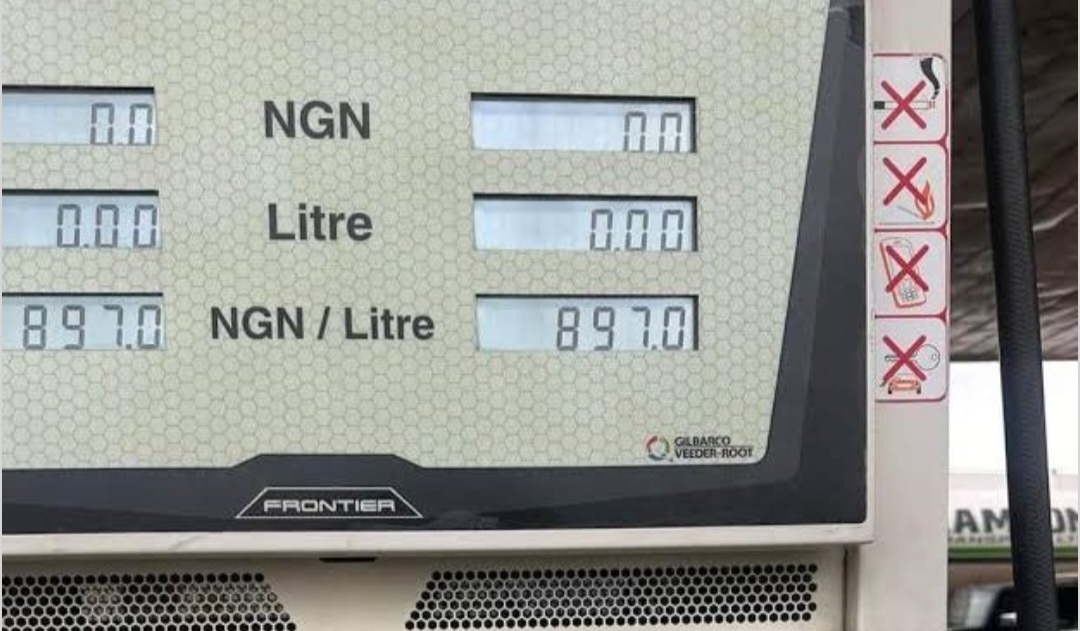
The letter also stated that the implementation of the import duty will increase the price of a litre of petrol by an estimated ₦99.72 kobo.
However, the statement by NMDPRA on Thursday noted that “the implementation of the 15% ad-valorem import duty on imported Premium Motor Spirit and Diesel is no longer in view.”
It affirmed the commitment of the authority to ensuring a smooth and uninterrupted supply of petroleum products.

Business
Major Gas Investment Looms as FG Scrutinizes 215 Projects for $20 Billion Funding
The NMDPRA said it is reviewing 215 gas utilisation projects and targeting investments worth $20 billion
The agency said it has identified 70 of the 215 projects are top priority, with a demand potential of 15 billion standard cubic feet per day
The federal government is planning to significantly increase Nigeria’s gas production and domestic utilisation by 2030.
The Nigeria Midstream and Downstream Petroleum Regulatory Authority (NMDPRA) has said it is reviewing 215 gas utilisation projects, and it has identified 70 of them that can attract investments worth $20 billion.
This was disclosed by the Authority’s chief executive, Engr. Farouk Ahmed, at the opening session of the Gas Utilisation Unlock Validation Series, held on the sidelines of the ongoing 43rd annual conference of the Nigerian Association of Petroleum Explorationists (NAPE) in Lagos.
The federal government declared a Decade of Gas plan in 2020 in a move to increase gas utilisation and harness the country’s over 200 trillion proven natural gas reserves.
The ambitious plan, which was launched in 2020 by former President Muhammadu Buhari, aims to make Nigeria a gas-powered economy.
At the session, the NMDPRA boss noted that the 70 gas projects identified from the 215 reviewed are high-impact projects with a combined potential demand of 15 billion standard cubic feet of gas per day (bscf/d).
If actualized, these projects would create thousands of jobs and accelerate industrial growth in the country, driving the strategic objectives of the Decade of Gas plan.
The Authority’s chief executive explained that the projects were assessed based on associated infrastructure needs, market linkages, supply zones, and existing gaps requiring policy and investment interventions.
He added that the projects spread across six major demand clusters: power generation, fertiliser production, petrochemicals, industrial feedstock, CNG/LPG, and export markets.
Ahmed, in his presentation, equally noted some hindrances to growth in Nigeria’s gas sector, including infrastructure gaps, regulatory overlaps, and market uncertainties.
He revealed that the Decade of Gas Secretariat has begun a three-week exercise to validate project data, align gas demand with supply, set appropriate pricing frameworks, and pinpoint the infrastructure and support systems required for effective execution.
He said:
“This validation series is not merely an audit of projects but a springboard for accelerated implementation. Each project team will work closely with the NMDPRA and the Decade of Gas Secretariat to validate assumptions, remove bottlenecks, and assign clear responsibilities and timelines.”
Affirming NMDPRA’s commitment, Ahmed urged operators, regulators, and investors to collaborate strategically to deepen gas utilisation and help Nigeria achieve its goal of being a gas-powered economy by 2030.
“Time is not on our side. We must ensure that within the next 12 to 24 months, we begin commissioning critical gas development projects that will drive the goals of the Decade of Gas,” he advised.
The Minister of State for Petroleum (Gas), Rt. Hon. Ekperikpe Ekpo, who delivered a keynote address at the NAPE convention, said the Decade of Gas initiative can help Nigeria increase gas production by an additional 4.7 billion cubic feet per day by 2030.
He urged stakeholders to collaborate to increase domestic utilisation of gas and also increase export revenues, in line with the 2030 target.
“This marks the initial phase of a ten-year strategy to reposition Nigeria as a gas-driven industrial power, delivering clean energy, strengthening industries, and generating export revenues through coordinated public–private collaboration,” he said.
Analysts have said that increasing local utilisation of gas requires improved investment in gas-to-power, clean cooking, and gas mobility infrastructure.
Business
Nestoil Refutes Defamatory Claims, Reaffirms Integrity, Commitment to Rule of Law
l Company denounces false online publications, abuse of judicial process.
l Vows legal action against malicious actors.
In a firm and measured response to recent online reports, Nestoil Limited has strongly refuted what it described as “defamatory and unsubstantiated claims” circulated by certain gossip platforms and individuals posing as freelance journalists.
The indigenous oil and gas company emphasized that the allegations, including insinuations of bribery and judicial interference are “entirely baseless, malicious, and orchestrated to mislead the public.”
In a detailed statement issued through its Corporate Communications Department, Nestoil reaffirmed its unwavering commitment to integrity, due process, and the rule of law, stressing that its operations have always been guided by ethical corporate principles and regulatory compliance.
“At no point has Nestoil undermined justice or influenced public or judicial officers through unethical means. We have always, and will always, adhere to due process and the rule of law,” the statement read. “Nestoil emphatically and unreservedly rejects any insinuation or suggestion that the company, its affiliates, or its representatives have ever engaged in improper payments or attempted to subvert the judicial process.”
The company also addressed what it termed the deliberate misrepresentation of ongoing legal proceedings involving certain entities associated with First Bank of Nigeria (FBN). According to Nestoil, the said entities obtained an ex-parte order against Nestoil, its affiliate Neconde Energy Limited (Neconde), and some executives without prior notice or participation from the defendants, an action that has since been exploited to create a false public impression.
Nestoil explained that ex-parte orders are temporary judicial instruments meant only to maintain the status quo pending full hearing of all parties. However, it alleged that the FBN entities have gone beyond the intent of the order by vandalizing third-party assets and sponsoring misleading reports of a purported takeover of Nestoil and Neconde.
Such acts, the company argued, demonstrate a blatant disregard for the judicial process and appear to be part of a larger campaign to weaponize misinformation against the company. In response, Nestoil stated that it has already presented its case to the courts, refuting the claims and allegations by the FBN entities purporting to act on behalf of the banks.
“The company and its affiliates have always acted within the bounds of the law and have never engaged in conduct that could prejudice the ongoing court proceedings. These actions and the related false narratives are not only unjust but also lack any legal or factual basis,” the company added.
Warning against misinformation, Nestoil urged the media, stakeholders, and the general public to disregard sensational publications originating from anonymous or unverifiable sources. It warned that the spread of such falsehoods undermines both the integrity of the justice system and public confidence in corporate governance.
It said, “We urge all concerned parties to rely solely on verified sources and to remain alert to the dangers posed by misinformation.
Reiterating its readiness to defend its integrity, Nestoil declared that it would pursue all available legal remedies against individuals or organizations that persist in publishing or amplifying defamatory material.
The oil giant reaffirmed its dedication to transparency, accountability, and ethical business practices, noting that its corporate philosophy has always been anchored in respect for the law and the communities it serves.
“Nestoil is, and has always been, guided by an unyielding commitment to the highest standards of integrity, transparency, and ethical business conduct,” the company said. “We operate strictly within all applicable legal and regulatory frameworks, and our longstanding adherence to these standards remains non-negotiable. As we advance, we will vigorously defend our position through lawful means, remaining true to the values that define our organization.”
-
News13 hours agoPeople Who Abused Me Have Come Back To Praise Me – Obasanjo
-
News2 days agoPensioners Threaten Nationwide Naked Protest Over Unpaid Arrears
-
News1 day agoMilitary Coup: DSS Files Fresh Charges Against Nigerian
-
News1 day agoWhat Ex- Officer Should Instead Of Seeking Help
-
Business1 day agoMajor Gas Investment Looms as FG Scrutinizes 215 Projects for $20 Billion Funding
-
News2 days ago‘Wike Has Disgraced Public Office’ – CSO Knocks FCT Minister Over Clash With Soldiers
-
Politics12 hours agoGoing Ahead With The National Convention In Ibadan Is A Waste Of Efforts – Saraki
-
News3 hours agoWe Don’t Need To Wash Our Dirty Linen In Public’ – Speaker Warns Lawmaker