
Business
PENGASSAN-Dangote Rift Widens Over Salary Suspension

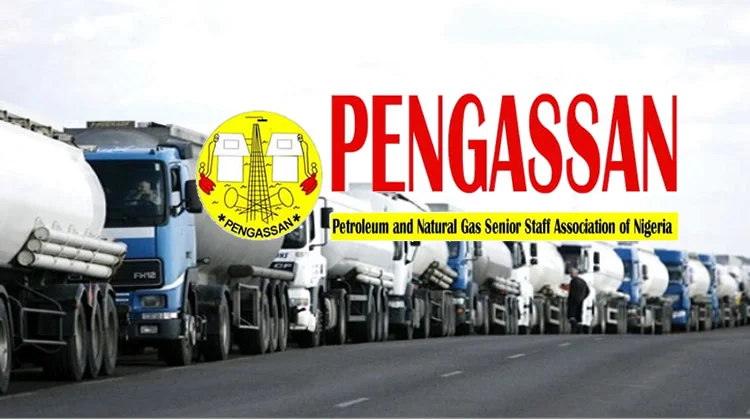
The Dangote Petroleum Refinery has stopped the monthly salaries of the engineers sacked in September during its face-off with the Petroleum and Natural Gas Senior Staff Association of Nigeria.
In a bid to address this, PENGASSAN said it is engaging the Dangote Group to resolve the matter amicably instead of resorting to another industrial action.
Findings by The PUNCH revealed that the salaries were halted following the refusal of many of the engineers to accept their redeployment to Zamfara, Borno, Benue, and Sokoto states, among others.
Some of the workers, who spoke on condition of anonymity because of the sensitivity of the issue, had earlier said individuals were sent to a coal mine in Benue, concrete road construction sites in Borno and Ebonyi states, as well as rice plants in Kebbi, Niger, Sokoto, and Zamfara.
While a few workers were said to have accepted the redeployment, many rejected it, relying on assurances from PENGASSAN that the crisis would be resolved through dialogue.
It was learnt that the Dangote Group issued a warning signal in October by slashing the wages of the affected workers before withholding their November salaries completely.
A senior official of the Dangote Group confirmed to our correspondent that the company would no longer continue paying those who rejected the redeployment offers.
While the affected workers described the non-payment of their salaries as “victimization”, the official, who did not want his name in print due to the lack of authorization to speak on the matter, wondered why the company should keep paying individuals who had refused the alternative placements offered.
“Those whose services were terminated were given an opportunity to work in our other projects, such as rice mills, concrete road construction, and coal mines.
All those who accepted have started working.
“If a newspaper terminates the services of an employee, and if it even goes out of its way to provide alternative employment, but the employee is not interested in availing the alternative employment, will it keep paying his/her salary?” the official said.
Recall that PENGASSAN had shut down oil and gas facilities in September over allegations that 800 refinery workers were fired for volunteering to be members of the union. However, the Dangote refinery said it only sacked a few workers who were sabotaging the facility, describing the exercise as a reorganization.
The shutdown caused nationwide losses in oil and gas production and contributed to a drop in power generation until the Federal Government intervened and directed the redeployment of the affected workers.
In October, the sacked engineers were invited to pick up their letters at the Ikeja office of the Dangote Group. One of the letters sighted by our correspondent was titled ’Offer of Trainee Engagement’ and carried the letterhead of Dangote Projects Limited.
It reads partly: “Based on your performance at the assessment and subsequent interviews held with you, we are pleased to engage you as Engineer Trainee (Mechanical Engineering) for the coal project we are executing at Okpokwu, Benue State. This engagement shall be subject to the following conditions: You will report to your work location within 14 days upon receipt of this letter.
“You will undergo classroom training and hands-on training in the construction, commissioning, and operation of our Coal Project at Okpokwu, Benue State. Your training will be for a period of two years, and it will be reviewed periodically. You will be required to submit reports on your learning and progress. The objective of the training is to impart to you skills and to enable you to take up a position of responsibility in the organization.”
Many of the engineers expressed concerns about the posting, especially to places perceived to be security hot spots. “The issue with the re-employment is that, firstly, there’s no address to report to on that letter. No office to report to in the states we were posted to. Secondly, those are security hot zones.
“Thirdly, in the letter, it is stated that if you don’t report within 14 days, your employment will be terminated, but no office location was given, and they don’t exist when we checked on Google Maps. So, if we accept the letters, we are basically terminating our employment by ourselves because there’s no office in those states to report to. PENGASSAN has basically told us not to accept the letters. We should let them continue with their talks,” they told The PUNCH.
Speaking during a briefing last week, the PENGASSAN President, Festus Osifo, said the union was still engaging the Dangote refinery to have the issues resolved.
Osifo said, “Since our last national industrial action, we have been engaging them in a lot of conversations, but the issues are not fully resolved. There are still a lot of pending issues. The NEC decided that, yes, let us still continue that process by pushing those issues by engaging in a dialogue to resolve the issues, and by also engaging all our social partners and stakeholders to get the issues resolved. And we hope and pray that these issues will be resolved at the table.
“These issues should be resolved in mere jaw-jaw so that we will not go back to Egypt. But as PENGASSAN, you know, we don’t shy away from doing what is right. But our preference is to get the subject resolved over the negotiation table.”
Business
REVEALED: Estimated Salary of Nigerian Ambassadors Released Following Tinubu’s Appointments

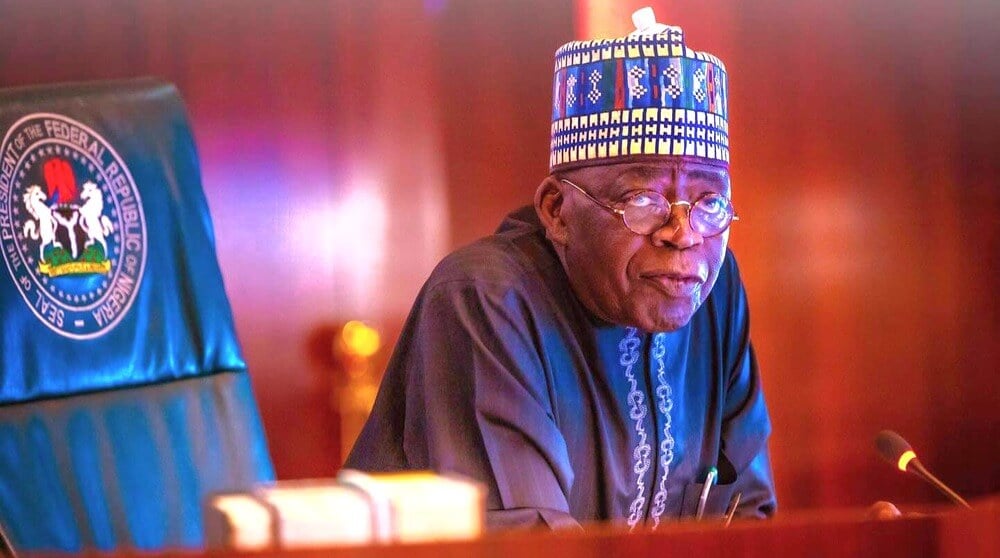
Nigerian ambassadors’ pay packages have come under renewed attention following President Bola Tinubu’s latest appointments
Fresh figures revealed that while basic salaries remained modest, allowances significantly boosted overall compensation for diplomats posted abroad
Reports showed that total monthly take-home pay often reached several million naira, reflecting the high costs of overseas postings
According to Salary.com, as of December 2025, the average annual salary for employees at the Nigerian Embassy in the United States stood at $93,909. This translated to an approximate hourly wage of $45.
Salaries at the embassy typically ranged from $82,124 to $107,453 annually, reflecting the diverse roles and levels of experience within the organisation. Reports indicated that pay was influenced by factors such as job role, department, years of service, and location.


Nigerian Ambassador Salary Structure
Rufai Oseni of Arise TV reported that the salary of Nigerian ambassadors was governed by the Consolidated Diplomatic, Consular and Foreign Service Cadre Salary Structure (CONPSS) in the Nigerian public service. Ambassadors usually fell into the highest grade levels, GL 17 or equivalent, with additional allowances for overseas postings.
Based on government budget allocations, salary surveys, and reports on foreign service personnel costs, the basic salary was described as modest by international standards but supplemented by substantial allowances.
Basic Salary of Nigerian Ambassadors Monthly Basic Pay:
Approximately ₦800,000 to ₦1,200,000 (about $485–$727 USD).
Annual Basic Salary: ₦9.6 million to ₦14.4 million (about $5,818–$8,727 USD).
These figures were drawn from the CONPSS scale for top-tier diplomatic officers. Entry-level foreign service officers reportedly earned around ₦300,000–₦500,000 monthly, but ambassadors, being at the top of the career ladder, commanded the upper end.
The figures also aligned with general public sector pay for Grade Level 17 officers, adjusted for inflation and the 2025 minimum wage increase to ₦70,000.
Allowances and Total Compensation
Reports highlighted that basic pay alone did not reflect the full compensation package. Nigerian ambassadors posted overseas received allowances designed to offset high living expenses, hardship, and representational duties.
Total monthly take-home pay often exceeded ₦2–5 million ($1,212–$3,030 USD), depending on the host country.
The release of estimated salaries following President Bola Tinubu’s ambassadorial appointments shed light on the financial structure of Nigeria’s foreign service. While the basic salary remained modest compared to international standards, allowances ensured that ambassadors were adequately supported in their overseas postings.
See the X post below:
Salary of a Nigerian Ambassador
The salary of a Nigerian ambassador, as a senior Foreign Service Officer in the Ministry of Foreign Affairs, is governed by the Consolidated Diplomatic, Consular and Foreign Service Cadre Salary Structure (CONPSS) in the Nigerian public service.…— oseni rufai (@ruffydfire) November 29, 2025
Follow us on WhatsApp for: Hot Breaking News, Business, Political, Entertainment, Lifestyle, and Sports…telling it as it is….

NNPCL is the only state-owned oil producing organization in the entire world which has become a perpetual drag on the nation’s progress. Last week, just as the nation was celebrating the declaration of Ntn profits from operations last year, Nigerians were once again reminded that very little has changed in the management of the affairs of the most important business organization in Nigeria. Until new evidence surfaces indicating a new re-orientation of corporate governance, the NNPCL will find it difficult to shed its negative image. For the most part, nothing seems to work well in the organization.
“Power tends to corrupt; and absolute power corrupts absolutely.”
Lord Acton, 1834-1902.
Late President Yar’Adua and former President Jonathan appointed Ministers who served themselves more than Nigeria, and, although they were not well supervised, the two Presidents were personally above reproach with regard to the operations of the NNPC. Failure to ensure that the mandatory Turn Around Maintenance, TAM, was carried out, as and when due was the only error which can be justifiably charged to their accounts.
Buhari returned Nigeria to the discredited President/Minister approach to governance. It was a monumental disaster. Unlike when he was Petroleum Minister in 1973 and left office in a cloud of financial uncertainty, the sector had become highly technical; and only very few people in any country could successfully manage it. Buhari was not one of them.
He left an unmitigated disaster behind. One of them was the N8tn Crude-for-Loans agreement reached to finance budget deficits incurred by the FG. Under the agreements, 213,000 barrels of crude oil were daily reserved to service the loans.
Given that, at the time, daily output of crude was about 1.4 million barrels a day, daily net production was under 1.2 million barrels each day. Meanwhile, the budgets each year were based on 2 million barrels per day; and later, Alhaji Dangote was promised all the crude required to run his 600,000 barrels refinery. TAMs were not carried out; petrol was imported in large quantities and fuel subsidy payments escalated to untenable proportions. The stage was set for our present predicament.
“828M litres of fuel imported to avert nationwide shortage.” News, December 1, 2025.
Tinubu came into office and applied a shock treatment to the economy which almost killed the patient. Divinely, the nation survived the therapy is now gradually getting out of the intensive care unit. A recovery is now underway – even if tentative. Still, it is undeniable that the economy might be turning the corner. The Organised Private Sector, OPS, has demonstrated resilience, once again, as it did when the Structural Adjustment Programme, SAP, was introduced in the 1980s. There is faint light at the end of the dark tunnel. There is however, an elephant in the room – NNPCL.
Notwithstanding the profits recently declared by the company, the overall performance this year has been underwhelming.
The news report in reference touched on some of the problems. According to the reporter, “Fuel security slowed in October as the Dangote Petroleum Refinery supplied only an average of 17.1 million litres per day of the nation’s petrol needs, forcing the country to rely heavily on imports, despite earlier hopes of self-sufficiency.”
In reality, the hope of self-sufficiency which was based on the assumption that Dangote would be fully supplied with crude was delusory at best. Dangote’s refinery could not attain full capacity in 2025; even if the crude promised was fully delivered. Furthermore, Dangote was not expected to be the sole supplier of petrol to Nigerians. NNPCL, under the former Group Managing Director, Mele Kyari, requested for and was given $2.9 billion to revive the Port Harcourt and Warri refineries; and get them to start supplying fuel. Promises were made to start production by December 2024.
We are now in December 2025. After months of shameless deceit, including reported supply of fuel by the two refineries, Nigerians woke up to the truth. Funds provided for another TAM by NNPCL had vanished with no fuel being produced. That has been the history of the NNPCL since all the four refineries produced petrol during the Babangida administration – a feat which has not been repeated by any other government since 1993.
The NNPC(L) has consistently duped Nigeria because our governments have repeatedly appointed untrustworthy individuals to manage the business. Their crimes have been overlooked by Presidents and the National Assembly for reasons most of us can only guess because nobody has been prosecuted in Nigeria yet.
NNPC(L) ROBIN HOODS
Robin Hood, the famed fairy tale English robber, took from the rich to give to the poor.
Meanwhile, two former Directors of the NNPC(L) have been successfully prosecuted and sentenced in the United States for stealing Nigerian money and laundering the proceeds of crime in the US. The funds stolen in Nigeria were forfeited to American states. The robbers of NNPC(L) rob Nigeria to enrich wealthy nations even more.
CRUDE PRODUCTION PROMISES UNFULFILLED
“Promises like [cookies] are made to be broken.” Jonathan Swift, 1667-1745.
Nothing is more dangerous than a convincing illusion. Nigerian governments have operated on one for over ten years; and NNPC(L) was responsible for it. Nigeria’s budgets in the last twelve years have been based on two million barrels per day crude oil production. NNPC(L) directors invariably accept the budget estimates for crude production. In no single month was the target achieved. That fact has never stopped NNPC(L) from repeating the same promise to Presidents – who were too eager to be deceived. The repercussions have been devastating.
Expected crude oil revenue estimates were never achieved; the increasing negative variances generated were largely responsible for the escalating national debt – of which the N8tn is just a small fraction. Question is: when will NNPC(L) play a positive role?

Nigeria’s First Lady, Senator Oluremi Tinubu, has declared that the country is on the verge of entering a new era of prosperity, saying a time will come when Nigeria will lend to other nations.
Naija News reports that Mrs Tinubu spoke on Sunday, December 7, in Ile-Ife, Osun State, shortly after being conferred with the chieftaincy title of Yeye Asiwaju Gbogbo Ile Oodua, during a grand ceremony marking the 10th coronation anniversary of the Ooni of Ife, Oba Adeyeye Ogunwusi.
The event drew an influential crowd, including former President Olusegun Obasanjo; the wife of the Vice President, Nana Shettima; ex-First Lady, Patience Jonathan; Governors Ademola Adeleke (Osun), Babajide Sanwo-Olu (Lagos), and Dapo Abiodun (Ogun); and former House of Representatives Speaker, Dimeji Bankole.
Also present were ex-Ogun governor Ibikunle Amosun, Lagos Deputy Governor, Dr Obafemi Hamzat, Speaker of the Lagos Assembly, Mudashiru Obasa, Osun Deputy Governor Kola Adewusi, and former Osun First Lady, Kafayat Oyetola.
Traditional rulers, including the Sultan of Sokoto, Alhaji Sa’ad Abubakar; the Olu of Warri, Ogiame Atuwatse III; the Orangun of Ila, Oba Abdulwahab Oyedotun; and the Soun of Ogbomoso, Oba Ghandi Olaoye, were also in attendance.
‘Nigeria’s Joy Has Come’ – Remi Tinubu
In a short but emphatic address delivered in a mix of Yoruba and English, the First Lady expressed gratitude to the Ooni and to the people of Ile-Ife for the honour.
She declared confidently: “Nigeria’s joy has come; those wondering how we want to do it, we will show them how things are being done. By 2026, Nigeria will be in prosperity; we will be lending to other nations.”
She added that the achievements expected under President Bola Tinubu would eventually surprise many: “It is important to say it here at the source of the Yoruba race today, that during the administration of President Bola Tinubu, people will wonder how he has been able to achieve such milestone.”
Earlier in his remarks, the Ooni of Ife, Oba Ogunwusi, said Oluremi Tinubu had been supportive of the throne since his ascension, and also acknowledged former President Obasanjo’s long-standing contributions to the palace.
The Sultan of Sokoto, Sa’ad Abubakar, in his goodwill message, prayed for a long and impactful reign for the Ooni, urging Nigerians to continue praying for their leaders to steer the country in the right direction.
Ooni Has Rebranded Yoruba Culture – Says Adeleke
In his remark, Osun State Governor, Ademola Adeleke, described the Ooni as a modern royal leader who has redefined the image of Yoruba traditional institutions globally.
“Our royal father demonstrated what it means to have an empowered royal father. With strong economic footing and limitless capacity for local and global networking, his majesty changes the narration of traditional rulership,” he said.
Adeleke revealed that the state government is aligning with the Ooni’s cultural vision, listing ongoing infrastructure upgrades in Ile-Ife: “In line with that vision, our government embarked on an infrastructure upgrade of Ile-Ife with 14 roads completed so far and several others ongoing. We are about to complete the first ever flyover in this cradle of the Yoruba nation.”


REVEALED: Estimated Salary of Nigerian Ambassadors Released Following Tinubu’s Appointments

KWAM 1’s Awujale Dream: Ijebu Royal Family Denies Singer’s Alleged Link To Them: “He’s Not With Us”

Benin Coup: Trending Video Shows Rebels Reportedly Firing At Jet Tinubu Sent


-

 Politics22 hours ago
Ogun 2027: Iyabo Obasanjo Opens Up On Governorship Ambition
-

 Sports21 hours ago
Injured Neymar Emotional As Boyhood Club Santos Stun Cruizero 3–0, Escape Relegation
-

 Politics24 hours ago
Defection Rumours Rise As Fubara Faces Mounting Assembly Fire
-
 Lifestyle2 days ago
KWAM 1’s Dream To Become Awujale Faces First Big Hurdle As Ijebu Ruling House Issues Crucial Demand
-

 Business22 hours ago
Petroleum Sector Retards National Progress
-

 News22 hours ago
Celebration Must Go On Despite Insecurity, Hardship – Northern Christians
-

 Foreign22 hours ago
ECOWAS Suspends Guinea-Bissau After Coup, Orders Immediate Release of President
-

 Politics22 hours ago
‘Baseless, Misleading’ – Tinubu’s Minister Denies Interference In Osun APC Primary Screening