
Tech
Inside The UK’s Nigerian Tech Boom


A new wave of Nigerian tech talent is quietly transforming the UK start-up scene – from AI to fintech, their impact is beginning to show
Across the UK’s innovative tech hotspots, a new generation of Nigerian tech professionals are shifting the paradigm and reshaping the future of the UK’s digital economy, with determination, innovation and community.
With a growing reputation as one of the most successful migrant communities in the world, Nigeria now ranks among the top contributors to the innovation boom in the UK. From leading teams at Wise, Deliveroo, BT Group and Innovate UK to founding cross-border start-ups tackling logistics, climate, and global financial inclusion, Nigerian tech professionals are silently climbing the ranks and curating a new narrative. One that speaks of resilience and technical brilliance.
Several high-profile Nigerian owned companies such as Reach Robotics (Mekamon) have raised over $12m operating in the UK digital space, a clear indicator of the impact of this diaspora community on the economy. According to data from the Home Office, Nigerians ranked among the most successful applicants for the Global Talent Visa, a clear indication of the growing presence of skilled talent from one of Africa’s fastest-growing tech ecosystems in the United Kingdom. A similar report from Tech Nation also shows Nigerians as having one of the rising demographics in the UK’s tech migration, alongside countries like India and the USA.
Nigeria has a young, tech-savvy population, with a median age of 18 years old. The country ranks among the top contributors to Africa’s 700,000 developers, with many structured training programs equipping more with skills in artificial intelligence, cloud, cyber security and more disciplines. This unique blend makes Nigerian talent very attractive in the global talent pool. Combined with high English language proficiency and a strong cultural familiarity with the UK – rooted in historical ties – Nigerians are often well-positioned to integrate quickly and contribute meaningfully in professional environments across the United Kingdom and beyond.
Another key factor that sets this diaspora community apart is how effectively they are able to translate their understanding of their own native technology ecosystem into the reality of living and working in the UK, a fluency that allows them to see what others might miss. And while platforms like LinkedIn may help in sculpting career paths, it follows that optimal connectivity and reliance are enhanced through diaspora communities such as Tech Nation Naija (TN Naija), a fast-growing network of Nigerian tech professionals in the UK digital space. Through peer mentorship, workshops and referrals, this network is quietly bridging the gaps between both ecosystems.
Networks and communities such as these are becoming pipelines for UK technology companies seeking African talent and vice versa.As such, the rise of the Nigerian tech diaspora forces a rethink of global talent. In a world where borders are tightening, these diaspora professionals are showing that innovation thrives on the movement of people, knowledge and opportunity.
For the UK, this presents access to one of the world’s youngest and fastest growing tech talent ecosystems and for Nigeria, it presents an opportunity for the perspective of migration to no longer be deemed to be a brain drain but instead to be viewed as a brain gain, as capital and knowledge return to the country through mentorship and its diaspora networks.
As the UK grapples with talent shortages and the need to diversify its tech workforce, the Nigerian diaspora offers a blueprint for not only innovation but also inclusion and integration. This quiet community may not always be at the forefront of the news cycle, but it undoubtedly has its hands on the future of the global tech ecosystem, shaping possibilities and influencing policies across the two countries.
Entrepreneur.com

Kotun daukaka kara da ke zamanta a Kaduna ta soke hukuncin da kotun tarayya ta yanke a wata kara da tsohon gwamna, Nasir El-Rufai, ya shigar a kan majalisar dokokin jihar.
A hukuncin da kotun ta yanke kan ƙorafin daukaka kara mai lamba CA/K/240/2024, kotun ta bayyana cewa an samu kura-kurai a shari’ar da aka gudanar a ranar 18 ga watan Yuli, 2024.
The Sun ta wallafa cewa kotun ta ce ba a mika wa Nasir El-Rufai takardar sanarwar kotu yadda ya kamata ba, kuma hakan ya hana shi damar mayar da martani ga takardun da wadanda ake kara suka gabatar.
New Telegraph ta ruwaito cewa kotun daukaka karar ta bayyana cewa hukuncin da alkalin kotun tarayya, Mai shari’a R.M. Aikawa, ya yanke a ranar 30 ga watan Yuli, 2024, bai inganta ba.
Saboda haka, kotun ta ayyana hukuncin a matsayin maras tushe tare da umartar a mayar da shari’ar zuwa kotun tarayya domin a sake ba wa wani alkalin daban.
Kotun ta jaddada cewa isar da takardun sanarwar shari’a yadda ya kamata na da matukar muhimmanci wajen tabbatar da hurumin kotu.
Ta kuma ce hana Nasir El-Rufai damar kare kansa ya sabawa ka’idojin shari’a da ke karkashin dokar kare hakkin dan Adam.
Tun da farko, El-Rufai ya shigar da karar ne a shekarar 2024 domin neman a kare masa hakkinsa na dan Adam.
Ya zargi majalisar dokokin jihar Kaduna da hana shi cikakken damar kare kansa yayin binciken da ta gudanar a kansa.
Wannan hukunci na kotun daukaka kara ya zama babban nasara ga tsohon gwamnan, domin ya ba shi damar sake gabatar da karar tasa a gaban kotu.
Hakan na nufin za a sake duba dukkanin bayanan shari’ar daga tushe a karkashin sabon alkalin da za a nada don sauraron ƙarar.
A wani labarin, kun ji cewa kotu ta sahalewa hukumar ICPC ta ci gaba da tsare tsohon gwamnan Kaduna, Nasir El-Rufai a binciken da ta ke masa.
Hukumar CPC na zargin El-Rufa’i da almundahana yayin da ta garkame shi na sama da kwanaki 20 bayan ya fito daga ofishin EFCC da ya kai kansa.
Tuni lauyansa ya garzaya kotu yana neman a soke sabon umarnin da hukumar yaki da yi wa tattalin arziki ta’annati ta samu, inda ya ke ganin an saɓa ka’ida.

The National Universities Commission (NUC) has approved more postgraduate programmes for the Atiba University Oyo (AUO), Oyo State.
In a letter addressed to the Vice Chancellor of AUO, Professor Sunday Olawale Okeniyi, signed by the NUC Director Academic Planning, Abubakar M. Girei, the commission approved 11 courses for the institution at the postgraduate, Master’s and PhD levels.
According to the letter, NUC arrived at the decision, following resource verification carried out by panels of experts on some proposed programmes at the Atiba University Oyo.
Part of the letter reads:
“I am directed to inform the Vice Chancellor that the Executive Secretary has considered and approved the establishment of the full-time mode of the following postgraduate programmes to be run in the main campus of the university with effect from 2025/2026 academic session—PGD Accounting, PGD, M.Sc. Business Administration, PGD, M.Sc. & Ph.D. Public Administration, PGD, M.Sc. & Ph.D. Computer Science, MBA Business Administration, M.Sc. & Ph.D. Political Science, M.Sc. & Ph.D. International relations, M.Sc. & Ph.D. Economics M.Sc. & Ph.D. Sociology, M.Sc. & Ph.D. English and M.Sc. Nursing.
The President/ Founder, James Adesokan Ojebode, PhD therefore uses the golden opportunity to congratulate the entire Atiba University Oyo community.
The registration of Subscriber Identity Module (SIM) through third parties, recently identified by the Nigerian Communications Commission (NCC) as a problem threatening the integrity of Nigeria’s telecommunication landscape is serious enough to warrant close attention by all stakeholders. By extension, the issue amounts to illegal SIM registration, and thereby threatens national security.
This time, the spotlight has been turned on a seemingly innocuous but deeply problematic practice—the delegation of SIM registration to domestic staff, drivers, and other third parties by “high-profile” Nigerians.
The NCC’s recent pronouncements, particularly from its Executive Vice Chairman, Dr Aminu Maida, highlight a troubling hypocrisy at the heart of this challenge. Precisely, Maida had during an interaction with the media, stated that there were no more cases of unregistered SIMs in the country’s telecommunication networks, the NCC having concluded the exercise long ago.
“Right now, I can authoritatively say that there is no unregistered SIM operating in the network, even though there might be issues, whereby a registered SIM is being used by somebody who is not the person who registered it.
“And I think this is where all of us are guilty because if you send your driver or house help to go and register a SIM simply because you don’t want your identity to be known, you are committing a crime”, Maida added. He noted that NCC could not be held responsible for situations where some registered SIMs are used by people other than those who registered them.
Admitting the need for enlightenment on the implications of such an action, Maida urged perpetrators to desist from such activities capable of serious embarrassment.
“On our part, we will try and do more to educate people on the consequences of such actions because if anything happens, nobody will listen to their story of registering SIMs for people at a fee of about N5, 000.”
Today, while there are over 300 million connected lines, 172 million, according to the NCC, are very active as of July 2025. SIM registration in Nigeria has evolved over the years, starting with a 2010 directive from the NCC to all MNOs. This initial effort aimed to curb the use of unregistered SIM cards for criminal activities. However, the process was fraught with challenges, including data integrity issues and the sale of pre-registered SIMs.
The current system represents a more robust approach, with the NIN serving as the core unique identifier. The government’s decision to enforce the linkage has resulted in a significant reduction in the number of active mobile subscriptions as unlinked lines were disconnected.
For years, the NCC has worked to enforce a robust SIM registration process, culminating in the linkage with the National Identification Number (NIN). The goal is clear: to create a verifiable database of subscribers that can be used to track and apprehend criminals who rely on anonymous communication to perpetrate their nefarious acts, from kidnapping and armed robbery to financial fraud. The success of this initiative is predicated on the honesty of every single subscriber. Yet, according to the NCC, this is where the system is being compromised, not by the masses, but by those who should, by virtue of their position and education, be setting a better example.
The act of sending a driver or domestic aide to register a SIM card is often born of a desire for convenience or, more disturbingly, a deliberate attempt to conceal one’s identity. The NCC rightly labels this a “crime” and a significant loophole. While the biometric systems in place might prevent the activation of a completely unregistered SIM, they cannot stop a registered SIM from being used by someone other than its true owner. When a crime is committed with a SIM card registered in a domestic worker’s name, it is the innocent party who is implicated, facing potential legal consequences and social embarrassment.
This practice is a dangerous form of negligence. It undermines the very foundation of the national SIM-NIN linkage policy. The NCC’s efforts to create a secure and traceable telecom environment are rendered less effective when a segment of the population, often the most influential, willfully circumvents the rules. It is an act of privilege that disregards the collective good.
While the NCC is right to call out this behavior, the responsibility does not fall on the public alone. The commission and its partners, the Mobile Network Operators (MNOs), must also take a hard look at their own systems. How are these delegates able to successfully register SIMs on behalf of their employers? Are there weaknesses in the verification process at the point of registration? The NCC must not only educate the public on the dangers but also work with MNOs to tighten up their registration protocols to make such fraudulent delegation impossible.
Further, a more visible and stringent enforcement mechanism is needed. The NCC has often warned of arrests and prosecution, but tangible examples of high-profile individuals facing consequences for this specific offense are scarce. Without a credible threat of action, the warnings may be dismissed as mere rhetoric.
Ultimately, solving the problem of illegal SIM registration requires a multi-pronged approach. It starts with a change in mindset among the elite, who must recognize that their actions have broader societal implications. It continues with the NCC and MNOs strengthening their systems to eliminate loopholes. And it is sustained by consistent and fair enforcement that holds everyone accountable, regardless of their social standing. The NCC’s latest warning is a call to action—a reminder that a secure digital future for Nigeria is a shared responsibility; and no one is above the law.


NNPC Releases New Petrol Prices at Filling Stations Nationwide; State-by-state Costs Emerge

Yorubaland No Longer Safe, Terror Cells Expanding — Gani Adams

Taraba 2027: Kefas Secures APC Ticket For Second Term

Former Super Eagles Star Loses Life Savings, Duped By A Pastor of ₦1.2 Billion

I’m A Married Man, I Can Never Get Myself Involved With Such A Thing, Delta Gov Aide Reveals Why He Offered Comfort ₦500,000 Job

These ’90s fashion trends are making a comeback in 2017
-
 News2 days ago
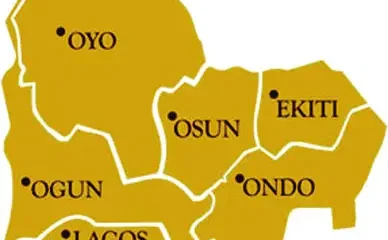
Yorubaland No Longer Safe, Terror Cells Expanding — Gani Adams
-

 Politics2 days ago
List Of Tinubu Ex- Ministers Crash Out Of APC Governorship Primaries
-

 Entertainment2 days ago
Failed Relationships Made Me Freeze My Eggs — Ashmusy
-

 Business2 days ago
35 Million Nigerians Risk Acute Hunger In Coming Months — UN
-
 Politics2 days ago
Taraba 2027: Kefas Secures APC Ticket For Second Term
-

 Sports2 days ago
Galatasaray President Rules Out Osimhen Exit
-

 Sports2 days ago
Five Gold Medals And African Record Highlight Nigeria’s Success In Algeria
-
 Business5 hours ago
NNPC Releases New Petrol Prices at Filling Stations Nationwide; State-by-state Costs Emerge