
Politics
Fresh Moves To Drag Jonathan Into 2027 Presidential Race Revealed

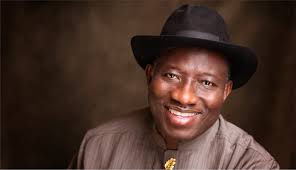
Fresh attempts have been launched by a coalition of forces across the country to drag former President, Dr Goodluck Jonathan to run in 2027.
This is coming amid the frenzied efforts by various power blocs to reposition their camps in good stead ahead of the general election.
The mobilization drive, which is in an embryonic stage, is principally under the aegis of Jonathan Support Group.
The rising wave of realignment by politicians and groups took a dizzying height following last Wednesday adoption of the African Democratic congress (ADC) by some chieftains of the Peoples Democratic Party (PDP) and the All Progressives Congress (APC) as a preferred choice to field candidates for the next general election.
Jonathan lost his second-term bid to former President Buhari in the 2015 presidential election.
Amidst the debate on whether Jonathan was eligible to run again or not, having taken the oath of office twice as president, the Federal High Court in Bayelsa had ruled in 2022 that he could still contest the presidential election.
The presiding judge, Justice Dashen, who gave the judgement, held that the former President’s right could not be stopped by any retroactive law.
He recalled that the 2007 election produced the late Umaru Musa Yar’Adua as president and not Goodluck Ebele Jonathan; stressing that Section 137 could not have a retroactive effect to stop him from contesting for presidency.
Justice Dashen ruled that there was no presidential election conducted in the country in 2010 and that Goodluck Ebele Jonathan could not be deemed to have been sworn into the office of the president that year.
The belief by the pro-Jonathan movement is that the former president, who conceded defeat to former President Muhammadu Buhari 10 years ago, still has the pedigree and goodwill among the political elite and grassroots, who they noted placed premium on national stability while in office.
Many other pressure groups are also said to be involved in intense meetings and consultations, as well as awareness tours to feel public in all the states and the Federal Capital Territory (FCT), Abuja.
Top on their lobbying strategy is what they described as Jonathan’s record as a unifier and a “leader who sacrificed personal ambition to protect Nigeria’s democracy.”
The director general of the group, Mr Abdullahi Dambatta, who shed light on the campaign in spite of the fact that the general election is about two years ahead expressed the hope that the former president would hearken to the call for him to run again.
He said: “We urge former President Goodluck Jonathan to consider the clarion call by Nigerians and step forward as a candidate who can unite our country and lead us towards a brighter future.
“As the nation prepares for the 2027 elections, the Jonathan Support Group believes that now is the time for all stakeholders to come together and support a candidate who can genuinely represent the interests of all Nigerians
“We urge former President Goodluck Jonathan to consider this call and to step forward as a candidate who can unite our country and lead us towards a brighter future.
“This appeal comes in light of the numerous challenges currently facing Nigeria, including economic hardship, insecurity, unemployment, and rampant banditry.”
Dambatta said there is an urgent need for a leader who embodies integrity, inclusivity, and a commitment to national unity. Nigerians need credible journalism. Help us report it.
“Nigeria is currently at crossroads. We are grappling with significant issues that threaten our stability and progress. We need a leader who can bring all Nigerians together, regardless of their background.
“Former President Jonathan during his tenure demonstrated a commitment to democratic values and governance that prioritised the welfare of all citizens.
“Jonathan Support Group believes that former President Goodluck Ebele Jonathan has the vision and experience necessary to lead Nigeria.
“His leadership style is one that fosters inclusivity and economic advancement, which is exactly what our nation needs at this critical juncture.
“Under Jonathan’s leadership, we can work towards restoring Nigeria’s lost glory on the international stage and within our own borders,” he stated.
Other figures reportedly active in the coalition of support groups include some former Northern governors who had previously supported him in 2011, a handful of serving National Assembly members, and youth activists who argue that a return to Jonathan could stabilise national politics at a time of deepening economic hardship and rising insecurity.
Supporters of the movement argue that the former president’s return could help “heal the nation’s divisions,” pointing to increasing ethnic and religious polarization, economic hardship, and widespread disillusionment with the current political class.
“There is also a pragmatic angle: some Northern politicians reportedly see Jonathan as a bridge figure that, having served only one full term, remains eligible for a single term in office. This, in theory, would create space for a North-South power rotation in 2031 without a prolonged stay in power by the South,” a political analyst, Alhaji Aliyu Dandume stated.
The move could reshape existing alignments. Jonathan is formally a member of the PDP, but there have been persistent rumours about a new coalition party.
“Our expectation is that the Coalition adopts Jonathan as its candidate. He stands a better chance to defeat the incumbent President, Bola Ahmed Tinubu, at the polls than any of the aspirants due to his acceptability by Nigerians irrespective of region, tribe or religion”, another analyst, Mahmood Shema, said.
He explained that for Northern politicians hoping to preserve the long-standing informal zoning arrangement—where power rotates between North and South—this scenario could be appealing: Jonathan’s presidency would, by definition, end in 2031, allowing the North to legitimately reclaim the slot thereafter.
Supporters also underscored Jonathan’s perceived inclusive governance style, relative peace during much of his tenure (excluding the Boko Haram insurgency’s peak years), and his statesmanlike decision to accept defeat in 2015, which many credit with preventing large-scale post-election violence.
While Jonathan himself remains silent, the Northern Youth Alliance for Jonathan has launched a series of town hall meetings in states such as Kano, Kaduna, and Katsina, aimed at selling the idea to the next generation of voters.
Similarly, the Jonathan Solidarity Forum is also believed to have been involved in engagement with some southern political actors to reassure them that the push is not an attempt by the North to dominate but rather a pragmatic move to restore political equilibrium.
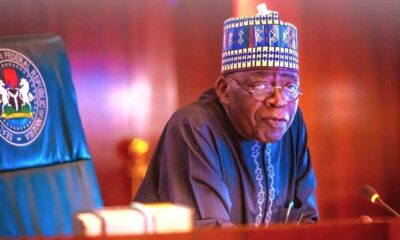

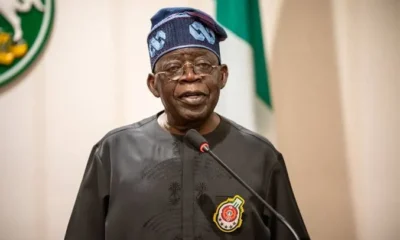

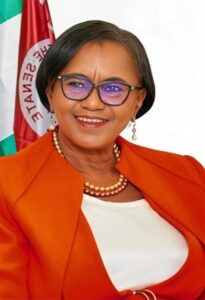
Senator Ipalibo Banigo has officially dumped the Peoples Democratic Party (PDP) to the ruling All Progressives Congress (APC).
Banigo’s defection letter was read on the floor of the Senate on Tuesday, March 10, 2026, by Senate President Godswill Akpabio.
As reported by The Punch, the federal lawmaker said her decision to join APC is to advance development in Rivers State and President Bola Tinubu’s administration.
Banigo, representing Rivers West Senatorial District, said her decision is intended to align politically with Rivers State Governor Siminalayi Fubara.
“The decision follows extensive consultations with my constituents, my political associates, and critical stakeholders across my senatorial district, given the prevailing internal divisions, protracted leadership disputes, and ongoing litigations within the People’s Democratic Party, which have adversely affected cohesion.
“This decision is also predicated on my resolve to join my political mentor, the Minister of the Federal Capital Territory, Nyesom Wike, and the Governor of Rivers State, Siminalayi Fubara, in supporting President Bola Tinubu, to actualize his re-election bids and enable the President to continue his evident economic reforms, which have significantly improved the economic situation, enhanced currency stability, and driven numerous infrastructural developments across our dear nation.”

Zamfara state deputy governor, Mani Malam Mummuni, has announced the defection of the state’s leadership from the Peoples Democratic Party (PDP) to the All Progressives Congress (APC).
The news means President Bola Ahmed Tinubu has further consolidated his political grip across Nigeria following the defection of the Zamfara state government to the APC.
In a video that has gone viral, the announcement was made by Zamfara Deputy Governor Mani Malam Mummuni on behalf of Governor Dauda Lawal, confirming that the state leadership had formally aligned with the ruling party.
The move widens Tinubu’s influence at the subnational level, with the APC now governing more than 30 of Nigeria’s 36 states. The development reinforces the party’s dominance as 2027 general elections draw near.

Barely any last minute change, Governor Bala Mohammed of Bauchi State and his Oyo State counterpart Seyi Makinde will quit their membership of the Peoples Democratic Party, PDP, before April, DAILY POST reports.
It has been a tumultuous period for the PDP as its key leaders continue to defect following the protracted leadership tussle bedeviling the opposition platform.
A credible source familiar with developments in the party told DAILY POST weekend that while Bala Mohammed is on his way to the ruling All Progressives Congress, APC, Makinde has concluded plans to join the African Democratic Congress, ADC.
The source, who spoke anonymously, told our correspondent that “all the PDP leaders are leaving. Bala Mohammed is already in APC, Makinde is on his way to ADC”.
How governors resigned from PDP
Since 2023 general elections, no fewer than 9 PDP governors have left the party, citing an irreconcilable crisis in the opposition party.
Governor Sheriff Oborevwori of Delta State was first to dump the party for APC in April 2025.
Subsequently, Governor Umo Eno of Akwa Ibom joined the ruling party in June 2025, followed by Peter Mbah of Enugu State, who also decamped to APC in October 2025.
Bayelsa State Governor, Douye Diri joined APC in November 2025, followed by the Rivers State Governor, Siminalayi Fubara, who also defected to the ruling party in December 2025.
In January this year, Governor Caleb Mutfwang of Plateau State, Agbu Kefas of Taraba State and Ahmadu Fintiri of Adamawa State all dumped PDP for the ruling party.
Only Ademola Adeleke of Osun State defected to the Accord Party in December 2025.
Meanwhile, Zamfara State Governor, Dauda Lawal has indicated interest to dump PDP for APC.
DAILY POST gathered that Governor Dauda will be officially received into the party immediately after the forthcoming Eid-el-Kabir celebration.
Both federal and state lawmakers are not left out in the gale of defections from the PDP to the ruling APC.
According to a tracking by the Policy and Legal Advocacy Centre up to January 2026, 66 PDP federal lawmakers have defected to APC since the 10th National Assembly began in June 2023.
No fewer than 19 senators and 47 House of Representatives members dumped PDP for APC
Defectors move to beat INEC deadline
Politicians planning to defect to another party are under pressure to conclude their plans before April following the new election timetable recently released by the Independent National Electoral Commission, INEC.
In the new timetable, INEC fixed January 16, 2027 for the presidential and National Assembly elections, while governorship and state houses of assembly elections are scheduled for February 6, 2027.
However, the conduct of party primary elections, including resolution of disputes arising from primaries, will commence on April 23, 2026 and end on May 30, 2026.
DAILY POST reports that under the revised schedule, political parties are required to submit their membership register to the electoral body between April 1, 2026 and April 21, 2026 in line with Section 77(4) of the Electoral Act, 2026.
The electoral law requires registers to be submitted “not later than 21 days to the conduct of party primaries.”
Similarly, political parties must conduct their primaries latest May 30, 2026 to enable them “democratically nominate candidates for the election as required by Section 84 of the Electoral Act, 2026,” said INEC.


Tinubu Makes 2 Fresh Appointments, Senate Takes Action

JUST IN: Top Female Senator Dumps PDP For APC, Details Emerge

BREAKING: Tinubu Issues Nationwide Message to Nigerians , “We Will Never Surrender”

Former Super Eagles Star Loses Life Savings, Duped By A Pastor of ₦1.2 Billion

These ’90s fashion trends are making a comeback in 2017
