
News
‘No more 2 Years Visa ’: Fresh Trouble For Nigerian Applicants As U.S Reduces Visa Validity


The United States Department of State has revised its visa reciprocity policy for Nigerian citizens, reducing most non-immigrant, non-diplomatic visas to single-entry permits valid for just three months.
According to Naija News, the policy adjustment, which takes immediate effect, was announced by the U.S. Embassy in Abuja in a statement released on Monday.
“Effective immediately, most non-immigrant and non-diplomatic visas issued to citizens of Nigeria will be single-entry visas with a three-month validity period,” the Embassy stated.
The Embassy, however, clarified that the new rule applies only to visas issued on or after July 8, 2025. All previously issued U.S. non-immigrant visas will retain their original terms and duration.
The move stems from the United States’ visa reciprocity principle, which matches the visa terms that U.S. citizens face when applying for visas to other countries.
“Visa reciprocity is a continuous process and is subject to review and change at any time, such as increasing or decreasing permitted entries and duration of validity,” the Embassy noted.
According to the statement, U.S. visa policy is shaped by global technical and security benchmarks aimed at protecting its borders and ensuring the integrity of its immigration system.
Benchmarks include:
Secure Travel Documents: Verifying the identity of travellers and ensuring passport security.
Visa Overstay Management: Monitoring and minimising instances of travellers overstaying their permitted time in the U.S.
Information Sharing: Exchanging relevant security and criminal data with U.S. authorities.
The U.S. Mission acknowledged Nigeria’s ongoing efforts to align with international best practices and confirmed that discussions with Nigerian immigration and security agencies are underway.
“We commend the ongoing efforts by the Government of Nigeria’s immigration and security agencies to meet standards of international best practices,” the statement added.
Nigerians travelling to the United States were urged to ensure their documents are valid and accurate, and to strictly observe the conditions of their visas.
“The U.S. Mission is working with the Government of Nigeria to ensure that Nigeria can meet the criteria,” the statement read.
Despite the new visa rules, the Embassy reaffirmed America’s commitment to its long-standing relationship with Nigeria.
It stated, “The United States remains a committed partner in deepening people-to-people ties with Nigeria. We look forward to continued cooperation at all levels.”
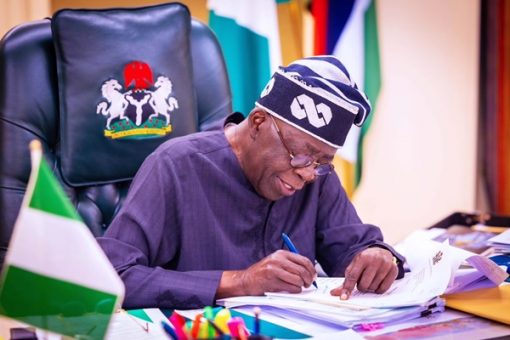
Nigeria’s Ministry of Interior is set to declare a nationwide public holiday across all sectors to mark Democracy Day 2026, potentially granting a one-day break for both private and public sector employees.
The federal government’s announcement regarding Democracy Day will be the only national public holiday observed in Nigeria in June 2026.
Democracy Day commemorates the 1993 presidential election and the nation’s struggle for democratic freedom. June 12, 2026, falls on a Friday.
On June 6, 2018, the late former president Muhammadu Buhari, in a public statement, changed the Democracy Day from May 29 to June 12, in honour of the June 12, 1993, presidential election and its winner, Moshood Kashimawo Olawale Abiola, who died in prison.
Abiola was born on August 14, 1937 and passed away under suspicious circumstances on July 7, 1998. A popular Ogun businessman, publisher, and politician of the Egba clan, he is often referred to as MKO Abiola.
He ran for the presidency in 1993 and was widely regarded as the presumed winner of the election, which was annulled by former military head of state, General Ibrahim Babangida.
Some southwest states had been celebrating June 12 as a public holiday and are holding ceremonies in Abiola’s honour until Buhari officially declared the day as Nigeria’s real democracy day. The former president, on Monday, June 10, 2018, signed the Public Holiday Amendment Bill into law.
The law, according to the former president’s ex-senior special assistant on National Assembly Matters (Senate), Ita Enang, allows a public holiday to be declared on June 12 every year, while May 29 is to be a handing-over date.

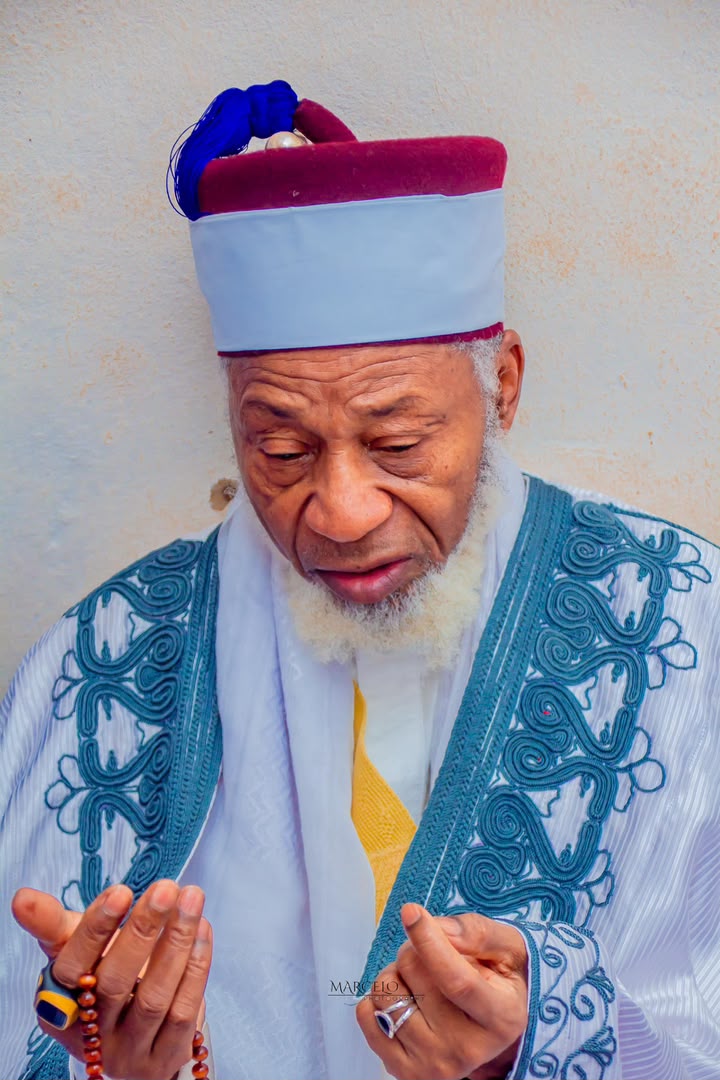
A top Nigerian monarch, the Emir of Gazargamu in Yobe State, His Royal Highness Alhaji Ahmad Tijjani Ibn Saleh, has died after a prolonged illness.
The monarch passed away on Tuesday in Cairo, Egypt, where he had been receiving medical treatment.
His son, Engr. Tijjani Hamisu Bala, who is the General Manager of the Yobe State Road Maintenance Agency (YORMA), confirmed the development to Daily Trust in Damaturu.
In a statement announcing the death, Bala described the late emir as a father, mentor and traditional ruler whose life was devoted to the service of his people and humanity.
“With profound sorrow and total submission to the will of Almighty Allah, I announce the passing of my beloved father, namesake and traditional ruler, His Royal Highness Alhaji Ahmad Tijjani Ibn Saleh, the Emir of Gazargamu, who returned to his Creator today, June 9, 2026, in Cairo, Egypt, after a protracted illness,” he said.
He said the late emir’s life was marked by wisdom, humility, courage and unwavering dedication to the service of his people.
“His fatherly guidance, leadership and legacy will remain a source of inspiration to us all,” he added.
Bala prayed to Allah to forgive the late monarch’s shortcomings and grant him Al-Jannatul Firdaus; and give the family and the entire emirate strength and patience to bear the painful loss.
As of the time of filing this report, details of the burial arrangements were yet to be announced, while it remained unclear whether the late emir would be buried in Nigeria or in Egypt.

The Independent National Electoral Commission (INEC) has confirmed that it has appealed two Federal High Court judgments challenging aspects of its Timetable and Schedule of Activities for the 2027 General Election, maintaining that the processes outlined in the timetable are interconnected and cannot be separated without disrupting the entire electoral programme.
INEC Chairman, Prof. Joash Amupitan (SAN), disclosed this on Tuesday during the Commission’s Second Quarterly Consultative Meeting with leaders of political parties in Abuja.
According to him, the Commission carefully reviewed the two court rulings and subsequently approached the appellate courts to seek definitive legal interpretations on the issues raised.
The first judgment, delivered on May 20, 2026, in the case of Youth Party vs INEC (Suit No. FHC/ABJ/CS/517/2026), questioned certain timelines contained in the electoral timetable. The second judgment, delivered on May 26, 2026, in Social Democratic Party (SDP) vs INEC (Suit No. FHC/ABJ/CS/720/2026), upheld INEC’s authority to issue an election timetable but nullified specific timelines relating to the nomination and substitution of candidates.
Prof. Amupitan noted that the court, in the SDP judgment, acknowledged the importance of a comprehensive timetable, stating that “an election timetable, without date for submission of parties’ membership register, timeframe for primaries, etc. is inchoate. Without this timetable, there would be chaos in our electoral system.”
“While the Commission remains fully respectful of the decisions of the Courts and of the judicial process generally, these judgments raise important legal questions concerning the extent of the Commission’s constitutional and statutory powers in coordinating and regulating electoral activities,” he said.
The INEC chairman stressed that the election timetable is built around a series of interdependent processes designed to ensure the orderly, transparent and successful conduct of elections.
He explained that although the Electoral Act prescribes timelines for some activities, several critical electoral processes are not assigned specific statutory deadlines and must therefore be accommodated within the Commission’s broader election calendar.
Among the activities listed by the Commission are the submission and verification of party membership registers, monitoring of party primaries nationwide, uploading of primary election results to INEC’s portal, candidate nomination processes, printing of ballot papers and result sheets, quality assurance procedures, deployment of election materials, training of electoral personnel, voter education campaigns, procurement of sensitive materials, configuration of BVAS machines, and compliance with statutory requirements such as allowing political parties to inspect electoral materials under Section 42 of the Electoral Act, 2026.
“The Commission therefore considers it imperative that all electoral activities be harmonised within a coherent and workable framework that promotes certainty, transparency, administrative efficiency and equal treatment of all political parties,” Amupitan stated.
He assured political parties and the Nigerian public that despite the pending appeals, INEC remains committed to conducting the 2027 General Election in strict compliance with the Constitution, the Electoral Act and all valid court rulings.
The chairman also announced that on June 26, 2026, the Commission would provide all political parties with official access codes to its Candidate Nomination Portal, enabling authorised national officers to upload the names, personal details and other required information of nominated candidates.
He warned that the nomination portal is fully automated and will automatically shut down once the stipulated deadline expires.


BREAKING: Peter Obi Drags Kenneth Okonkwo to Court, Reasons Emerge

FG to Declare Nationwide Public Holiday, Date Revealed

2027 Election: What Peter Obi Told Me About Atiku – Dele Momodu Reveals

Former Super Eagles Star Loses Life Savings, Duped By A Pastor of ₦1.2 Billion

I’m A Married Man, I Can Never Get Myself Involved With Such A Thing, Delta Gov Aide Reveals Why He Offered Comfort ₦500,000 Job

Lagos Imposes ₦250,000 Fine For Illegal Waste Disposal

-
 Politics2 days ago
BREAKING: APC Releases List of Qualified Senatorial Candidates Ahead 2027
-
 News2 days ago
JUST IN: INEC Releases Final List Of Candidates For 2026 elections
-
 Politics1 day ago
BREAKING: Kwankwaso Breaks Silence on Dumping NDC
-

 Politics2 days ago
JUST IN: INEC Validates Only Three Parties for 2026 Senatorial By-Election; Gives Reason
-
 News14 hours ago
FG to Declare Nationwide Public Holiday, Date Revealed
-

 Business1 day ago
JUST IN: Marketers Crash Petrol Prices Nationwide, New Pump Prices Emerge
-

 News20 hours ago
BREAKING: Top Nigerian Emir is Dead, Details Emerge
-
 Politics2 days ago
Tension as Fresh Move to Remove NDC Before 2027 Emerges –