
Foreign
ECOWAS Suspends Guinea-Bissau After Coup, Orders Immediate Release Of President

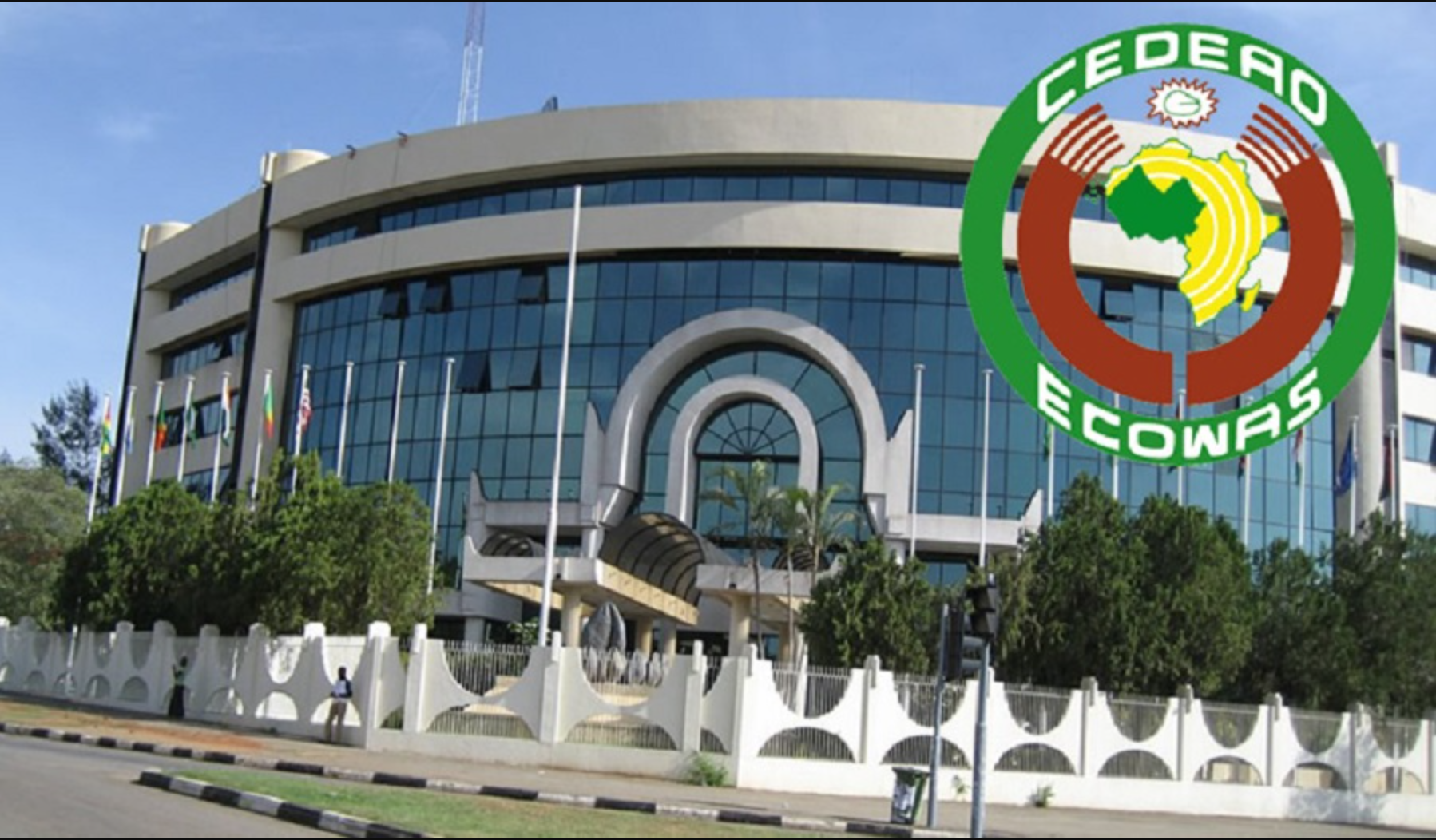
West African leaders have placed a suspension on Guinea-Bissau following the military takeover of November 26, saying the action has pushed the country into deeper political uncertainty.
The regional bloc stressed that democratic order must return immediately and demanded the release of President Umaro Sissoco Embaló, who was seized during the crisis.
This decision came after an emergency virtual meeting of the ECOWAS Mediation and Security Council held on Thursday night.
The session, chaired by Sierra Leone’s President Julius Maada Bio, brought together heads of state, foreign ministers, and top representatives from several member countries including Nigeria, Ghana, Liberia, Senegal, Cabo Verde, and Côte d’Ivoire. Senior officials from Benin, The Gambia, and Togo were also part of the deliberations.
Officials from the ECOWAS Commission, the African Union, the United Nations Office for West Africa and the Sahel, and Guinea-Bissau’s foreign minister joined the meeting as observers.
The atmosphere was tense, as the council reviewed a detailed report submitted by ECOWAS Commission President Omar Touray on the escalating situation.
In the briefing, leaders raised alarm over the disruption of the electoral process in the country.
They commended ordinary citizens for their “resilience and commitment to democracy” despite the tension surrounding the November 23 polls. The council noted that the takeover has undermined confidence in the democratic transition.
ECOWAS, in its formal resolution, said it “condemns in the strongest terms the coup d’état perpetrated on 26 November 2025 and calls for the unconditional restoration of constitutional order without delay.”
The bloc added that it “rejects any arrangements that perpetuate the illegal abortion of the democratic process and the subversion of the will of the people of Guinea-Bissau.”
The regional body insisted that the electoral commission must be allowed to continue its work and release results from the suspended vote. It demanded that the “will of the people” be respected and urged coup leaders to stop interfering with the electoral process.
The communiqué further called for the “immediate and unconditional release of all detained officials, in particular President Umaro Sissoco Embalo, as well as the electoral officials and all other political figures.”
ECOWAS warned that the masterminds of the coup would be held “both individually and collectively responsible for the protection of life and property of all citizens and residents of Guinea-Bissau and for the security and safety of all detainees.”
The council instructed the military to guarantee safe access for ECOWAS observers and international partners still monitoring the election.
It stated that “the MSC decides, in accordance with the provisions of the ECOWAS Protocol on Democracy and Good Governance 2001 (A/SP/12/01), to suspend Guinea-Bissau from all ECOWAS decision-making bodies until the restoration of full and effective constitutional order in the country.”
To address the crisis, a high-level delegation led by the ECOWAS chair and supported by the presidents of Togo, Cabo Verde, and Senegal will travel to Bissau for direct engagement with the coup leaders. Their mandate is to push for the swift reinstatement of democratic governance.
The bloc urged the military high command to step back from politics, return to the barracks, and uphold their constitutional responsibilities. ECOWAS also directed its Stabilisation Support Mission in Guinea-Bissau to continue safeguarding state institutions in the meantime.
In a sign of escalating pressure, the organisation warned that it “reserves the right to use all options” allowed under its protocols, including sanctions, if the junta continues to defy the regional position.
The African Union and the European Union also issued strong reactions, condemning the coup and demanding the release of President Embaló.
Senegal confirmed on Thursday that the detained president had been flown into the country “safe and sound.”
Political tensions had been rising even before the coup, as the electoral race between President Embaló and opposition candidate Fernando Dias da Costa grew fiercely competitive.
Dias da Costa later told reporters that he believed he won the vote and accused Embaló of manipulating the process—an allegation the president firmly denied.
Following the takeover, the military named General Horta N’Tam, the army chief of staff, as the head of a one-year transition. After taking his oath, he told the nation, “I have just been sworn in to lead the High Command.”
Guinea-Bissau has a long history of political instability, and this latest development has once again placed the fragile nation at the centre of regional diplomatic attention.
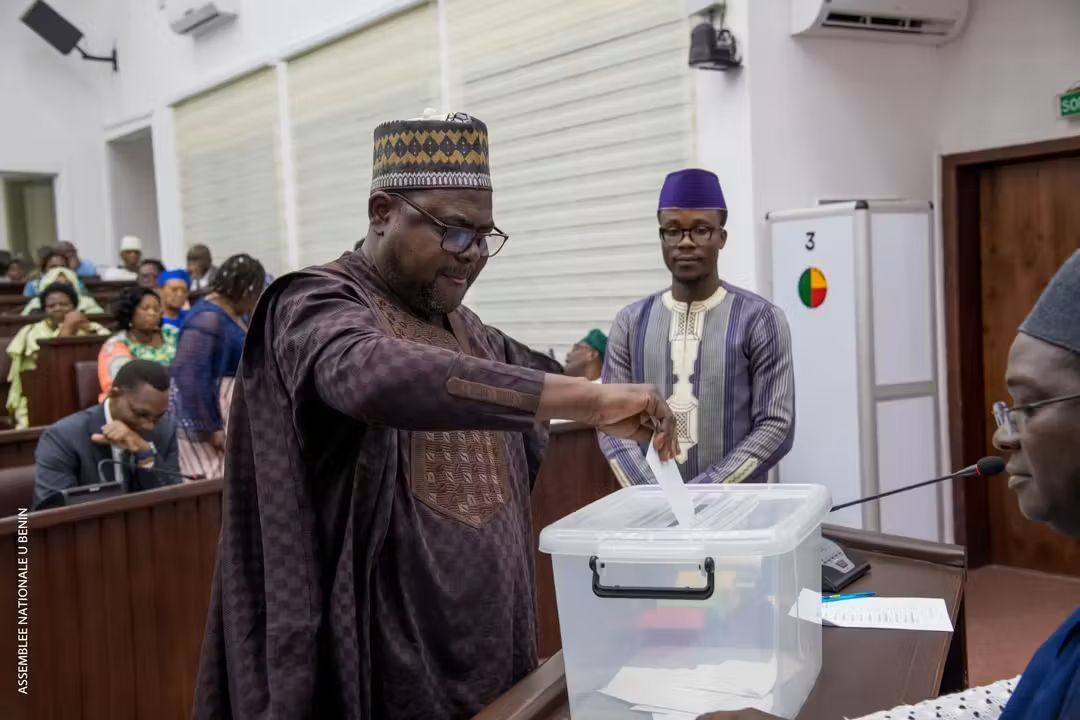
The National Assembly of Bénin (National Assembly Benin) has approved a revision of the country’s Constitution, extending the presidential term from five to seven years and creating a bicameral parliament.
In a post shared on Facebook on Saturday by the Assemblée Nationale du Bénin, lawmakers announced that the bill was passed during a plenary session held on Friday at the Palace of the Governors in Porto-Novo.
According to the Assembly, 90 deputies voted in favour and 19 against, approving the amendment to the Constitution of 11 December 1990, previously revised in 2019.
“The Deputies of the 9th Legislature… adopted by 90 votes for and 19 against, the law modifying the Constitution of the Republic of Bénin,” the statement read.
The legislative body added that, in line with Article 154, the proposal first had to secure the required three-quarters majority during a preliminary vote. Deputies met this threshold with 87 votes for and 22 against, before proceeding to the final secret ballot.
The post, originally published in French, has been translated by PUNCH Online using Google Translate.
According to the Assembly’s breakdown, 15 new articles were created and 18 amended.
One of the most significant changes is contained in the newly modified Article 42, which now states: “The President of the Republic is elected by direct universal suffrage for a term of seven years, renewable only once. No one may, in his or her lifetime, serve more than two terms as President of the Republic.”
The reform also introduces a bicameral legislature, as stipulated in the updated Article 79, giving legislative powers and government oversight to both the National Assembly and a newly established Senate.
“Beyond this major change, Parliament—under the amended Article 79—exercises legislative power and oversees government action. It is now composed of two chambers: the National Assembly and the Senate.”
Under Article 80, deputies’ terms are now set at seven years, renewable, with an additional clause stating that any deputy who resigns from the party that sponsored them during legislative elections will automatically lose their mandate.
“The term of office for deputies is 7 years, renewable. Any deputy who resigns and thereby ceases to be a member of the party that sponsored them for the legislative election loses their mandate.”
The reformed Article 113.1 defines the Senate as an institution responsible for regulating political life and safeguarding “national unity, development, territorial defence, public security, democracy, and peace.”
The law also extends the tenure of mayors and municipal councillors to seven years, renewable.

The Federal Government has opened discussions with the United Kingdom (UK) over the possible transfer of former Deputy Senate President, Senator Ike Ekweremadu, who is currently serving a nine-year sentence in a UK prison for organ harvesting.
The Daily Voice understands that a high-powered Nigerian delegation arrived in London on Monday to engage British authorities on the matter.
The delegation included the Minister of Foreign Affairs, Yusuf Maitama Tuggar, and the Attorney General of the Federation and Minister of Justice, Lateef Fagbemi.
Both officials held a closed-door meeting with senior representatives of the UK Ministry of Justice.
After the meeting, the officials were received by Ambassador Mohammed Maidugu, Acting High Commissioner to the United Kingdom, at the Nigerian High Commission in London.
Diplomatic sources told Daily Trust that the visit is part of President Bola Tinubu’s effort to secure either an early release or a lawful review of Ekweremadu’s sentence based on humanitarian considerations.
Officials familiar with the negotiation confirmed that the Nigerian government is exploring different legal avenues under UK law, including prisoner-transfer agreements, compassionate parole, or more lenient relief options.
We are working on an appeal for a prisoner exchange for him to serve the remainder of his term in Nigeria,” a top Ministry of Foreign Affairs official disclosed.
“Consultations are still ongoing with the UK authorities.”
The Daily Voice reports that Ekweremadu, a long-serving legislator and three-time Deputy President of the Senate, was convicted at the Old Bailey in March 2023 alongside his wife, Beatrice, and a medical doctor, Obinna Obeta.
They were found guilty of conspiring to exploit a young Nigerian, David Nwamini, for the removal of his kidney to treat Ekweremadu’s daughter, Sonia.
The former senator was sentenced to nine years and eight months in a UK correctional facility — the longest sentence ever handed down in the UK for an organ-harvesting-related offence.
The latest diplomatic push signals renewed efforts by the Nigerian government to renegotiate the terms of Ekweremadu’s imprisonment, even as officials tread carefully to respect UK judicial processes.
The Federal Government is expected to update the public as consultations with UK authorities continue.

Former Kaduna Central Senator, Shehu Sani, has urged Nigerians and other Africans affected by the recent mass visa revocation in the United States to return home before facing possible arrest by US Immigration and Customs Enforcement.
In a post on his X (Twitter) handle on Monday, Sani said no matter how long one stays abroad, they’ll be reminded it’s not their home.
He wrote, “Nigerians and other thousands of Africans whose visas were recently revoked by President Trump should hasten and leave the country and return home before they get arrested by ICE.
“No matter how long you live in the comfort of your adopted home, you will someday be reminded that it’s not your father’s house.”
The advisory comes in the wake of reports that the US State Department has revoked at least 80,000 visas since January 2025 under President Donald Trump’s administration, more than twice the number recorded in the previous year.
According to a report released last Thursday, the US Department said the revoked visas include 16,000 linked to driving under the influence, 12,000 for assault, and 8,000 student visas.
It also listed other reasons for the revocations, including terrorist support, criminal activity, public safety threats, overstays, and actual terrorism.
The advisory comes in the wake of reports that the US State Department has revoked at least 80,000 visas since January 2025 under President Donald Trump’s administration, more than twice the number recorded in the previous year.
According to a report released last Thursday, the US Department said the revoked visas include 16,000 linked to driving under the influence, 12,000 for assault, and 8,000 student visas.
It also listed other reasons for the revocations, including terrorist support, criminal activity, public safety threats, overstays, and actual terrorism.
While the nationalities of the affected visa holders were not disclosed, the department had earlier stated in August that over 6,000 student visas were withdrawn for overstays and legal violations, including a small number connected to “support for terrorism.”
The US has also tightened its visa regulations in recent months.
In July, the US Embassy directed all applicants for F, M, and J non-immigrant visas to set their social media accounts to public as part of enhanced background checks.
That same month, it also announced a major policy change affecting Nigerian applicants, which included a reduction in the validity period for several categories of visas.


France President, Macron Extends Support To Nigeria On Fight Against Terrorism

KWAM 1’s Dream To Become Awujale Faces First Big Hurdle As Ijebu Ruling House Issues Crucial Demand

Osun Marks 2025 World AIDS Day Aids


-

 Entertainment1 day ago
You Know Nothing About Music – Shallipopi Knocks Daniel Regha
-
 Politics1 day ago
Progressive Govs Forum Passes Vote Of Confidence On Tinubu
-
 Politics1 day ago
Tinubu Nominates Chukwuemeka Chukwu For Second Term As Enugu REC
-
 News1 day ago
Police Deploy Special Team To Enforce Ban On VIP Escorts
-

 News1 day ago
Ambassadorial List: Some Nominees Should Be Jailed- Obidient Movement
-

 Business1 day ago
NNPC serviced $3bn loan with N991bn crude – Report
-
 Politics1 day ago
Omisore Declared His Disqualification From Osun Governorship Primary As Huge Joke
-
 Business1 day ago
From January Unregistered POS Terminals ‘ll Be Seized; Fintechs On Watchlist – CAC