Opinion
Why Trump And Bukele Are Destroying Kilmar Abrego Garcia’s Life

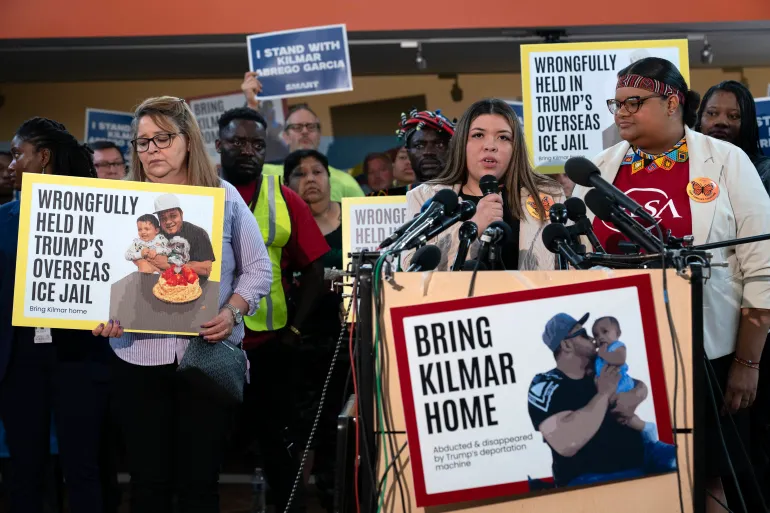
The two want to block all channels for legally challenging their lucrative prison scheme.
In March, the United States government deported to El Salvador 29-year-old Kilmar Abrego Garcia, a Salvadoran national who had lived and worked in the US for almost half his life. Little did he know that he would soon be the face of US President Donald Trump’s sinisterly exuberant mass deportation campaign.
Married to US citizen Jennifer Vasquez Sura, Abrego Garcia was detained while driving in Maryland with the couple’s five-year-old autistic son, who got to witness his father’s capture by the US forces of law and order and has apparently been severely traumatised as a result. In a subsequent court affidavit, Vasquez Sura said her son, who cannot speak, had been “very distressed” by the “sudden disappearance of his father”, crying more than usual and “finding Kilmar’s work shirts and smelling them, to smell Kilmar’s familiar scent”.
Of course, tearing families apart and traumatising children has long been par for the bipartisan course in everyone’s favourite “land of the free”, although Trump has certainly made more of a sensational spectacle out of it than his Democratic predecessors, Joe Biden and Barack Obama. Anyway, there is nothing like sowing a bunch of fear and psychological trauma in the name of national security, right?
Abrego Garcia was deported to El Salvador along with more than 200 other people, who shared the honour of serving as demonised guinea pigs in the Trump administration’s current experiments in sadistic countermigration policy. The deportees were swiftly interned in the Terrorism Confinement Center (CECOT), the notorious mega-prison built by Nayib Bukele, El Salvador’s self-described “coolest dictator in the world”. The facility houses thousands of people arrested under the nationwide “state of emergency”, which was declared in 2022 and shows no sign of abating.
Under the pretence of fighting a war on gangs, Bukele has imprisoned more than 85,000 Salvadorans – over 1 percent of the country’s population – in an array of jails that often function as blackholes in terms of indefinitely disappearing human beings as well as any notion of human and legal rights. And now that incoming US funds and deportees have boosted El Salvador’s international carceral clout along with Bukele’s tough-guy image, there is even less of a rush to end the “emergency”.
Meanwhile, the case of Abrego Garcia in particular has provided both Trump and Bukele with an extended opportunity to showcase their mutual passion for sociopathy and disdain for the law. As it so happens, Abrego Garcia’s deportation to El Salvador occurred in direct violation of a 2019 ruling by a US immigration judge, according to which he could not be deported to his native country on account of the dangers that such a move would pose to his life.
Indeed, Abrego Garcia fled to the US as a teenager, precisely out of fear for his life following gang threats to his family. And although the US government was quickly forced to acknowledge that his deportation in March had occurred “because of an administrative error”, the Trump-Bukele team remains determined not to rectify it.
After all, this would set a dangerous precedent in suggesting that the possibility of recourse to justice does in fact exist, and that asylum seekers in the US should not have to live in terror of being spontaneously disappeared to El Salvador by “administrative error”.
As per a recent New York Times article exposing the details of the debate within the Trump administration over how to manage the PR side of the Abrego Garcia blunder before it became public, officials from the US Department of Homeland Security (DHS) “discussed trying to portray Mr. Abrego Garcia as a ‘leader’ of the violent street gang MS-13, even though they could find no evidence to support the claim”.
But a lack of evidence has never stopped folks who are not concerned with facts and reality in the first place. Trump officials have continued to insist on Abrego Garcia’s affiliation with MS-13, while the president himself has unabashedly invoked a doctored photograph of tattoos on the man’s knuckles. The administration has also relied heavily on the fact that, in 2019, the police department in Prince George’s County, Maryland, decided that Abrego Garcia was a gang member because he was wearing a Chicago Bulls hat, among other oh-so-incriminating behaviour.
To be sure, the frequency with which US law enforcement outfits cite Chicago Bulls merchandise as alleged proof of gang membership would be laughable given the US basketball team’s massive domestic and international fanbase – if, that is, such preposterous profiling tendencies did not directly translate into physical and psychological torment for Abrego Garcia and countless other individuals.
In April, the US Supreme Court ordered the Trump administration to “facilitate” Abrego Garcia’s return to the US. In addition to thus far failing to comply with that order, the administration has gone to ludicrous lengths to defy a separate order from US District Judge Paula Xinis that it provide details about what exactly it is doing to secure Abrego Garcia’s release.
Apparently irked by Judge Xinis’s pushiness, Trump administration officials then went with the good old “state secrets” excuse, which would enable the withholding of information regarding Abrego Garcia’s case in order to safeguard “national security” and the “safety of the American people”, as DHS spokeswoman Tricia McLaughlin put it.
Bukele, for his part, has handled the Abrego Garcia situation with a petulant and vengeful machismo befitting the world’s “coolest dictator”, taking to X to ridicule the wrongfully abducted and imprisoned man. During an April visit to his partner in crime in the Oval Office in Washington, Bukele made clear to reporters that he would not be lifting a finger on Abrego Garcia’s behalf: “How can I smuggle a terrorist into the United States?”
Speaking of terrorism, it is worth recalling that, long before the current “state of emergency” in El Salvador, the US had an outsized hand in supporting right-wing state terror in the country, where the civil war of 1979-92 killed more than 75,000 people.
The majority of wartime atrocities were committed by the US-backed Salvadoran military and allied death squads, and countless Salvadorans fled north to the US, where MS-13 and other gangs formed as a means of communal self-defence. Following the war’s end, the US undertook the mass deportation of gang members to a freshly devastated nation, paving the way for continued violence, migration, and deportation and culminating, of course, in the world’s coolest dictatorship.
As they say, nothing fuels the consolidation of power and evisceration of rights like a solid “terrorist” enemy – and at the present moment, Abrego Garcia holds the dubious distinction of serving as that enemy for not one but two sociopathic heads of state. At the end of the day, though, Abrego Garcia is no Osama bin Laden; he is just a random guy whose calculated torment is meant as a warning to anyone who might be feeling too confident in the rule of law.
Trump has already proposed sending US citizens to El Salvador for incarceration, as well – and to hell with any semblance of legality. To that end, the president has proposed that Bukele build more prisons, a project that presumably will not require much arm-twisting.
Now, as the US government goes about annihilating the rights of foreign nationals and legal citizens alike, it is safe to assume that no one is safe.
Aljazeera.com



Isaac Fayose, brother of former Ekiti State Governor, Ayo Fayose, has announced the death of his wife after a prolonged battle with cancer.
According to Naija News, the social commentator shared the sad news on Instagram with a candle image, alongside a farewell message.
“Rest in peace my darling wife, odabo oyinbo mi”, he wrote.
Before her death, Fayose had opened up about the severity of her illness.
He said he travelled to Australia to spend time with his family, but was met with a painful reality as his wife had become extremely weak due to cancer.
He explained that she was no longer able to speak or carry out basic daily activities. According to him, the woman who once welcomed him at the airport could no longer do so, and he had to make his way from the airport by Uber.
He also described how roles had reversed in the home, saying he now had to take care of her, including cooking for her, as she could no longer do so herself. He added that he spent time beside her, singing her favourite songs, while she responded only by holding his hand.
In his emotional reflection, he also spoke about life and wealth, stressing that money and material possessions could not stop illness or death, and questioned the actions of those who use public office to take what belongs to others.

Oluwasegun Ajiboye has emerged as the Chairman of the Professional Online Media Practitioners Association.
Ajiboye is a seasoned media professional with extensive experience in journalism and public communication. He was appointed Chief Press Secretary (CPS) by former Ondo State Governor, the late Rotimi Akeredolu.
Before his appointment, Ajiboye served as Assistant Editor with The Nation newspaper. He studied Language and Linguistics at the University of Lagos.
A native of Irun Akoko in Akoko North West Local Government Area of Ondo State, Ajiboye began his journalism career in 2000 as a reporter with The News magazine before moving to The Sun newspaper in 2003.
Between 2007 and 2009, he served as Press Secretary to the late former Ondo State Governor, Olusegun Agagu.
He also worked as Group News Editor of the defunct National Life newspaper until 2012, when he joined The Nation as Assistant Editor of its Saturday title.
His emergence as chairman is expected to bring his wealth of experience in journalism and media management to the association and the practice of online journalism in the country.
In his acceptance message, Ajiboye expressed deep appreciation to members of the association for the confidence reposed in him, describing his emergence as a call to greater service. He pledged to work tirelessly with all stakeholders to strengthen unity, professionalism, and innovation within the body, while advancing the growth and credibility of online media practice across the country.
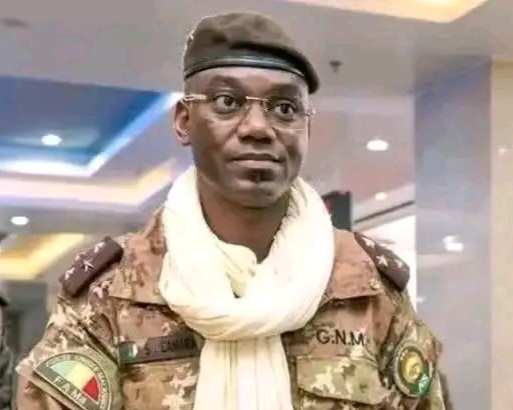
Mali’s Defence Minister, Sadio Camara, has been killed following a wave of coordinated attacks targeting military installations across the country.
Camara reportedly died from injuries sustained during an attack on his residence in Kati, a key military garrison town located about 15 kilometres from Bamako.
The assault, which occurred barely 24 hours before his death, involved a suicide car bomb and formed part of a broader offensive across the country.
The attacks were reportedly carried out by fighters linked to Jama’at Nusrat al-Islam wal-Muslimin, an al-Qaeda-affiliated group, alongside Tuareg rebels from the Liberation Front of Azawad.
According to Al Jazeera, the attackers were able to breach Kati, considered one of the most secure military locations in Mali.
Camara, a key figure in Mali’s military leadership, rose to prominence after playing a central role in the coups of 2020 and 2021 that brought the current junta to power.
Al Jazeera’s Nicolas Haque described his death as significant.
“He was one of the most influential figures within the ruling military leadership… His death is a major blow to the country’s armed forces,” he said.
The coordinated offensive extended beyond Kati, with gunmen attacking several locations including Bamako, Gao, Kidal and Sevare.
“As we speak, people in the garrison town of Kidal can still hear heavy gunfire and loud explosions,” Haque said, adding that the operation remained ongoing more than 24 hours after it began.
The attacks have intensified pressure on Mali’s interim leadership, with analysts suggesting that security forces were overwhelmed by the scale and coordination of the violence.
However, Interim President, Assimi Goita, was reportedly moved to safety and remains in control of the military.
International bodies, including the African Union, the Organisation of Islamic Cooperation, and the United States Bureau of African Affairs, have condemned the attacks and called for urgent measures to restore stability.


NNPC Releases New Petrol Prices at Filling Stations Nationwide; State-by-state Costs Emerge

Yorubaland No Longer Safe, Terror Cells Expanding — Gani Adams

Taraba 2027: Kefas Secures APC Ticket For Second Term

Former Super Eagles Star Loses Life Savings, Duped By A Pastor of ₦1.2 Billion

I’m A Married Man, I Can Never Get Myself Involved With Such A Thing, Delta Gov Aide Reveals Why He Offered Comfort ₦500,000 Job

These ’90s fashion trends are making a comeback in 2017
-
 Politics2 days ago
List Of Tinubu Ex- Ministers Crash Out Of APC Governorship Primaries
-
 News2 days ago
Yorubaland No Longer Safe, Terror Cells Expanding — Gani Adams
-

 Entertainment2 days ago
Failed Relationships Made Me Freeze My Eggs — Ashmusy
-
 Business2 days ago
35 Million Nigerians Risk Acute Hunger In Coming Months — UN
-
 Politics2 days ago
Taraba 2027: Kefas Secures APC Ticket For Second Term
-
 Sports2 days ago
Galatasaray President Rules Out Osimhen Exit
-

 Sports2 days ago
Five Gold Medals And African Record Highlight Nigeria’s Success In Algeria
-
 Business6 hours ago
NNPC Releases New Petrol Prices at Filling Stations Nationwide; State-by-state Costs Emerge