
Opinion
I’m A Tech Executive And I’m Afraid Of AI

Andy Kurtzig
Artificial intelligence is evolving at a breakneck pace – but not always to humans’ benefit.
An AI chatbot encourages a teen to kill himself, a lawsuit claims. Another chatbot generates racially offensive book summaries. Yet another allegedly tells a teen to kill his parents over screen time limits. And most recently, it seems that AI forges citations for a Department of Health and Human Services report on children’s health.
Such catastrophic failures will keep happening as long as we allow AI to run unchecked – or worse, use it to push political agendas.
I’ve worked in AI for more than a decade, specifically in the professional services field. I’ve seen the technology evolve from its infancy to today’s billion-dollar gold rush. I’ve also seen the misplaced confidence tech executives and policymakers seem to have when it comes to AI.
A recent study we conducted at Pearl, a generative AI platform powered by professional service experts, found that more than a quarter of parents with kids under 18 say their child uses AI more than five times a day – compared to 13% of Gen Zers and 11% of millennials. Nearly a third of those parents also say their child has been given the wrong answer by AI before, and they’ve had to correct it.
An illustration showing a woman with her hair in a bun, holding a smartphone from which orange flames are emanating towards her face. The background is a bold red, contrasting with the dark silhouette of the woman. This image conveys the intense impact of technology, the addictive nature of digital devices, misinformation or the potential dangers and negative consequences of excessive smartphone usage.
This is a clear indicator that we cannot trust AI. Worse, we seem to have baselessly convinced ourselves that these kinks will sort themselves out with each new AI generation.
This blind faith in AI isn’t just misplaced – it’s dangerous. The legal system is already seeing AI-generated documents filled with fictitious case law. Hospitals are fielding AI-created patient summaries riddled with errors. Financial institutions are using AI to assess creditworthiness, often reinforcing systemic biases that harm marginalized communities.
Companies, meanwhile, are rushing to replace human expertise with AI-driven automation, ignoring the very real risks posed by unchecked AI hallucinations (incorrect or misleading results generated by AI). And it’s getting worse. OpenAI’s recently launched AI models hallucinate more than several of its older ones.
So far, AI companies have shown little to no results when it comes to making AI more accurate. Still, more and more people are using and normalizing AI as a trustworthy source – including our country’s leaders. A 2023 Georgetown study suggests it could take $1 trillion to improve AI’s accuracy by just 10%.
AI companies know their systems aren’t reliable, but instead of fixing the core issue, they slap a band-aid disclaimer on the bottom of responses: “Consult a professional.” A digital get-out-of-jail-free card – or so they think. It’s meant to shift the blame to users, while AI keeps spewing falsehoods. Based on our internal research, over 70% of AI responses to legal, medical and veterinary questions include this cop-out.
So, what’s the alternative? Do we let AI proceed and accept the dangers? We are seeing a mass disregard for subject matter expertise from the very top levels of our government on down. One-third of people already believe AI will replace doctors in the next 10 years, according to a survey we released earlier this year. Nearly half think the same about lawyers.
But the reality is, there’s a reason we trust doctors, lawyers and engineers. They have been trained to navigate complexity, nuance and real-world consequences. AI hasn’t. A chatbot doesn’t understand the emotional weight of a life-altering diagnosis, nor can it argue a complex legal case in court. AI lacks intuition, morality and genuine problem-solving skills that come from human experience.
The path forward isn’t about killing AI – it’s about making it better. That means demanding human oversight and not letting AI operate unchecked. AI can be a powerful tool, but only when it works with people, not in place of them.
If we don’t act now, we risk a future where misinformation, unchecked automation and blind trust in AI endanger lives even more. The technology is advancing whether we like it or not, but we have the power to shape how it integrates into society
Usnews.com

Isaac Fayose, brother of former Ekiti State Governor, Ayo Fayose, has announced the death of his wife after a prolonged battle with cancer.
According to Naija News, the social commentator shared the sad news on Instagram with a candle image, alongside a farewell message.
“Rest in peace my darling wife, odabo oyinbo mi”, he wrote.
Before her death, Fayose had opened up about the severity of her illness.
He said he travelled to Australia to spend time with his family, but was met with a painful reality as his wife had become extremely weak due to cancer.
He explained that she was no longer able to speak or carry out basic daily activities. According to him, the woman who once welcomed him at the airport could no longer do so, and he had to make his way from the airport by Uber.
He also described how roles had reversed in the home, saying he now had to take care of her, including cooking for her, as she could no longer do so herself. He added that he spent time beside her, singing her favourite songs, while she responded only by holding his hand.
In his emotional reflection, he also spoke about life and wealth, stressing that money and material possessions could not stop illness or death, and questioned the actions of those who use public office to take what belongs to others.

Oluwasegun Ajiboye has emerged as the Chairman of the Professional Online Media Practitioners Association.
Ajiboye is a seasoned media professional with extensive experience in journalism and public communication. He was appointed Chief Press Secretary (CPS) by former Ondo State Governor, the late Rotimi Akeredolu.
Before his appointment, Ajiboye served as Assistant Editor with The Nation newspaper. He studied Language and Linguistics at the University of Lagos.
A native of Irun Akoko in Akoko North West Local Government Area of Ondo State, Ajiboye began his journalism career in 2000 as a reporter with The News magazine before moving to The Sun newspaper in 2003.
Between 2007 and 2009, he served as Press Secretary to the late former Ondo State Governor, Olusegun Agagu.
He also worked as Group News Editor of the defunct National Life newspaper until 2012, when he joined The Nation as Assistant Editor of its Saturday title.
His emergence as chairman is expected to bring his wealth of experience in journalism and media management to the association and the practice of online journalism in the country.
In his acceptance message, Ajiboye expressed deep appreciation to members of the association for the confidence reposed in him, describing his emergence as a call to greater service. He pledged to work tirelessly with all stakeholders to strengthen unity, professionalism, and innovation within the body, while advancing the growth and credibility of online media practice across the country.
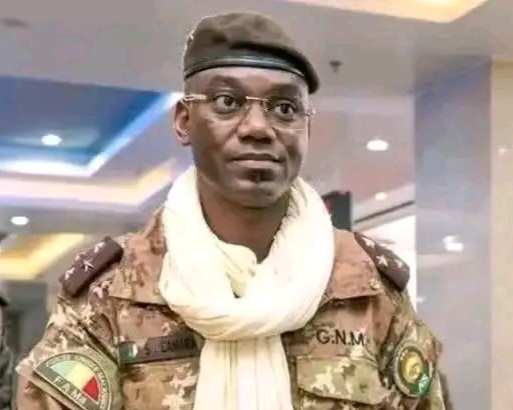
Mali’s Defence Minister, Sadio Camara, has been killed following a wave of coordinated attacks targeting military installations across the country.
Camara reportedly died from injuries sustained during an attack on his residence in Kati, a key military garrison town located about 15 kilometres from Bamako.
The assault, which occurred barely 24 hours before his death, involved a suicide car bomb and formed part of a broader offensive across the country.
The attacks were reportedly carried out by fighters linked to Jama’at Nusrat al-Islam wal-Muslimin, an al-Qaeda-affiliated group, alongside Tuareg rebels from the Liberation Front of Azawad.
According to Al Jazeera, the attackers were able to breach Kati, considered one of the most secure military locations in Mali.
Camara, a key figure in Mali’s military leadership, rose to prominence after playing a central role in the coups of 2020 and 2021 that brought the current junta to power.
Al Jazeera’s Nicolas Haque described his death as significant.
“He was one of the most influential figures within the ruling military leadership… His death is a major blow to the country’s armed forces,” he said.
The coordinated offensive extended beyond Kati, with gunmen attacking several locations including Bamako, Gao, Kidal and Sevare.
“As we speak, people in the garrison town of Kidal can still hear heavy gunfire and loud explosions,” Haque said, adding that the operation remained ongoing more than 24 hours after it began.
The attacks have intensified pressure on Mali’s interim leadership, with analysts suggesting that security forces were overwhelmed by the scale and coordination of the violence.
However, Interim President, Assimi Goita, was reportedly moved to safety and remains in control of the military.
International bodies, including the African Union, the Organisation of Islamic Cooperation, and the United States Bureau of African Affairs, have condemned the attacks and called for urgent measures to restore stability.


NNPC Releases New Petrol Prices at Filling Stations Nationwide; State-by-state Costs Emerge

Yorubaland No Longer Safe, Terror Cells Expanding — Gani Adams

Taraba 2027: Kefas Secures APC Ticket For Second Term

Former Super Eagles Star Loses Life Savings, Duped By A Pastor of ₦1.2 Billion

I’m A Married Man, I Can Never Get Myself Involved With Such A Thing, Delta Gov Aide Reveals Why He Offered Comfort ₦500,000 Job