
Business
How manufacturing sector can grow in 2026 — Experts

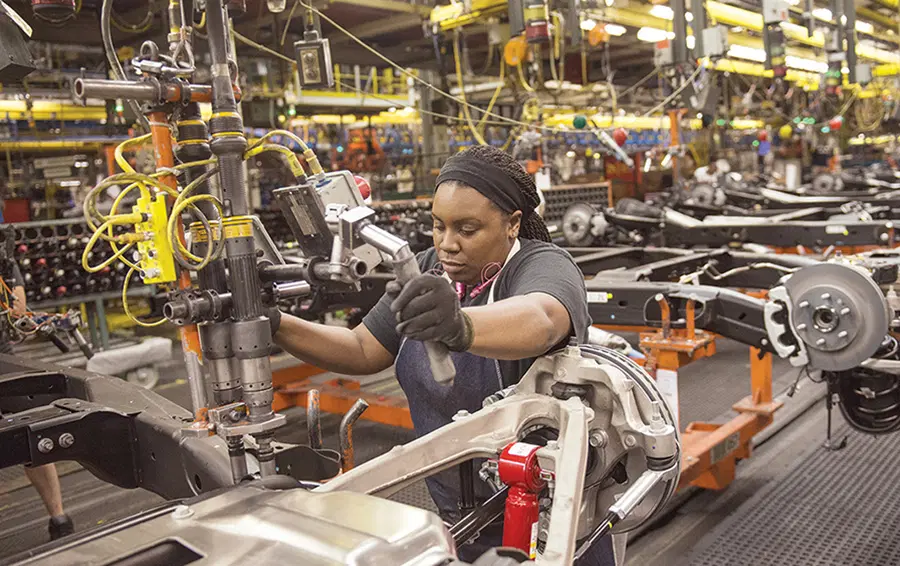
Nigeria’s manufacturing sector stands at a critical crossroads as industry stakeholders project improved performance in 2026, following a modest recovery in the second half of 2025. While recent gains have raised expectations of a stronger growth trajectory, experts caution that the sector’s ability to transition from recovery to sustained expansion will depend largely on policy consistency and effective implementation of ongoing economic reforms.
The cautiously optimistic outlook is anchored on continued macroeconomic stability, improved execution of incentives under the new tax laws scheduled to take effect from January 1, favourable oil price dynamics, rising foreign capital inflows, stable energy costs, and the timely implementation of key industrial and fiscal policies aimed at strengthening domestic production.
Effective execution of new tax laws and incentives critical – MAN
In his projection, Director of Research and Economic Policy Division, Manufacturers Association of Nigeria (MAN), Dr Oluwasegun Osidipe, said the sector is expected to record 3.1 percent real growth and a contribution of 10.2 percent to the real gross domestic product (GDP) in the coming year.
He however hinged the expected improved performance on the effective execution of incentives under the new tax laws.
On the requisite conditions to achieve the improved outlook, Osidipe said: “The naira is projected to appreciate further to N1,300–N1,400/$, driven by global oil price recovery, stronger external reserves, robust export earnings, increased foreign investments and remittance inflows.
“Headline inflation will decelerate further to 14%, supported by easing food prices, stable energy prices and appreciation of the naira.
“The Central Bank of Nigeria (CBN) is anticipated to implement further cuts in the benchmark interest rate to about 23%, in line with the disinflationary trend and to stimulate credit expansion and output growth.
“Further reduction in lending rates and completion of the bank recapitalisation exercise will enhance credit availability to manufacturers, strengthening investment and capacity utilisation.
“Real growth is projected to reach 3.1 percent while contribution to real GDP is expected to rise to 10.2 percent. These gains, however, hinge on the effective execution of incentives under the new tax laws, the operationalisation of the National Single Window (NSW) Project and the purposeful implementation of the Nigeria Industrial Policy in close alignment with the “Nigeria First” Policy framework,” he stated.
According to him, manufacturers had over the years struggled under multiple taxation, which hindered growth.
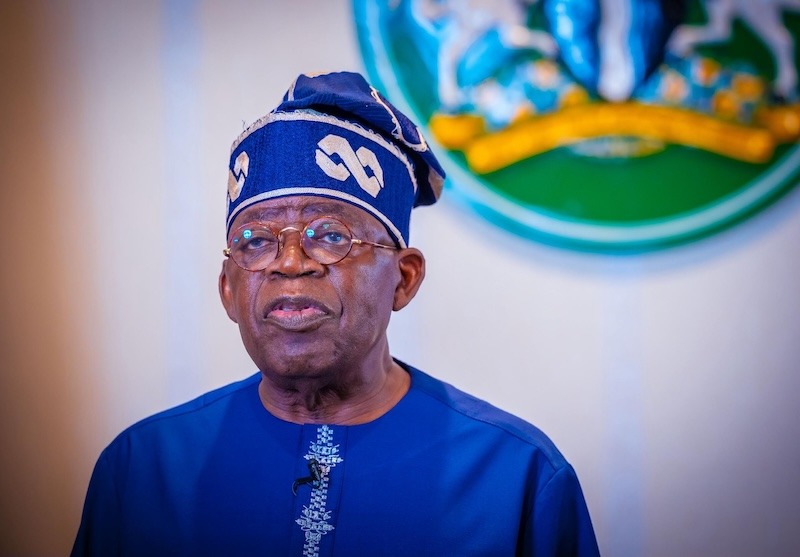
President Bola Tinubu has declared that Nigeria is in a stronger position despite the intense public backlash that followed the removal of fuel subsidy. The president said the criticism that greeted the policy was heavy and emotionally charged.
He described the pressure from opponents as overwhelming but necessary for the country’s long-term recovery.According to him, the difficult decisions were taken to save Nigeria from deeper economic trouble.
Tinubu made the remarks during an interfaith breaking of fast meeting with members of the House of Representatives on Friday.
He said many Nigerians initially struggled to understand the direction of his government. This included the decision to remove fuel subsidy and allow the naira to float freely in the foreign exchange market. He noted that these reforms were painful but unavoidable.
In his words:
“It was initially very difficult at the beginning for people to realize the direction of my thinking but I’m glad that with the heat of the critics, none of you came to me to say can you reverse the removal of subsidy or can you change the foreign exchange floatation of naira? I am glad we are out of the dark tunnel.
“You collaborated and joined together as a team and gave me the inspiration to move on because the heat was high voltage from the critics but today we are better off for it.
“And if there is anything that you deserve, you deserve a second term subject to our party and your party.”
The president praised lawmakers for standing firm during the period of public anger. He said their support gave him the courage to continue with the reforms instead of backing down.
Tinubu maintained that the removal of fuel subsidy has helped reduce waste and corruption in the oil sector. He also said the forex reform was necessary to stabilize the economy and attract investment.
The president admitted that citizens are still feeling the impact of the changes. However, he insisted that the country has passed through the worst phase and is now moving toward recovery.
Business
JUST IN: 13 Banks May Shut Down In March As CBN Confirms 20 Safe For Recapitalisation Deadline

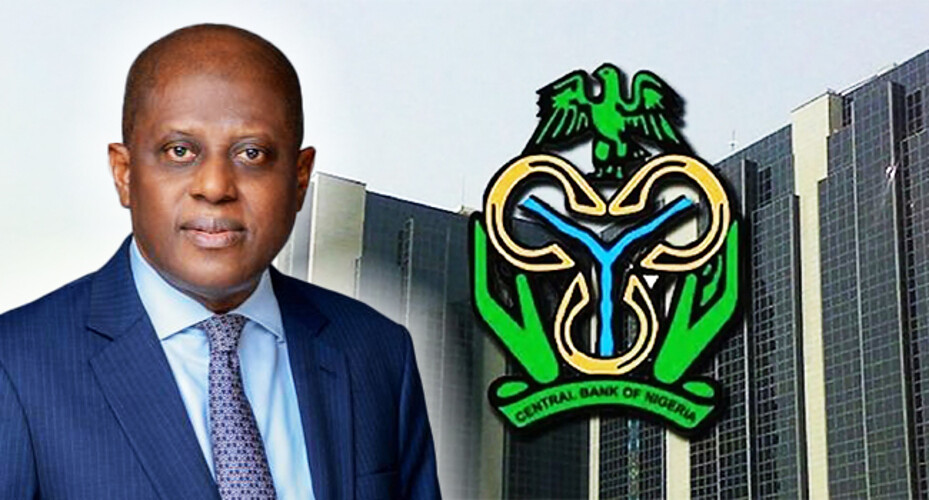
Four weeks before the March 31, 2026, deadline, the Central Bank of Nigeria announced that 20 out of 33 participating banks have met the new minimum capital requirement under its sweeping recapitalisation programme.
Governor Olayemi Cardoso disclosed on Tuesday that banks have so far raised a verified and approved total of N4.05 trillion, marking a major step in efforts to reinforce the strength and stability of the country’s financial system.
Speaking at the end of a two-day meeting of the Monetary Policy Committee in Abuja, Cardoso said the committee welcomed the strong progress recorded so far.
According to him, most financial soundness indicators in the banking sector remain within regulatory thresholds, reflecting continued resilience.
Of the N4.05 trillion raised as of February 19, 2026, N2.90 trillion, representing 71.67 per cent, came from domestic sources.
According to a BusinessDay report, foreign participation accounted for $706.84 million, equivalent to N1.15 trillion, or 28.33 per cent of the total.
The CBN governor described the balance between local and foreign inflows as a sign of broad investor confidence. He noted that interest from international investors had been evident in previous engagements abroad and expressed satisfaction that this interest has translated into tangible commitments.
While 20 institutions have crossed the new capital threshold, 13 banks are still working to complete their recapitalisation plans before the deadline.
Some of these lenders are exploring strategic options, including potential mergers or other forms of consolidation.
Cardoso explained that banks currently under regulatory intervention face legal and structural considerations that may affect the timing and sequencing of their capital-raising efforts.
Punch reported that Cardoso stressed that it would be unrealistic to expect them to follow the same timeline as institutions that had more than two years to prepare.
Despite these differences, the governor reassured the public that depositors’ funds remain safe.
He said affected banks continue to operate under close supervisory and regulatory oversight to safeguard stability.
Cardoso reiterated that the March 31 deadline is non-negotiable. He said the CBN remains fully engaged with stakeholders to ensure the process concludes in an orderly, transparent and credible manner.
According to him, the central bank will continue to monitor progress closely and enforce regulatory standards to preserve the stability and integrity of the banking system.
With just weeks left, attention now turns to the remaining banks and whether they can close the gap in time. For the majority that have already met the target, the milestone signals a new phase in Nigeria’s banking reforms and a stronger foundation for the years ahead.
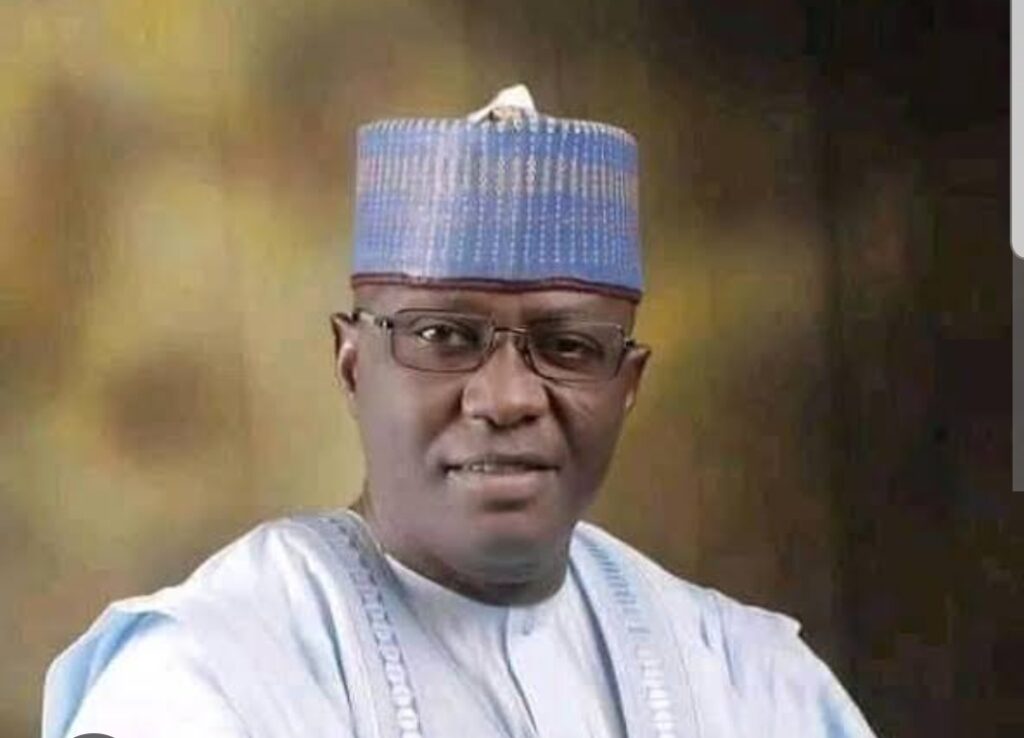
National Commission for Refugees, Migrants and Internally Displaced Persons (NCFRMI), has reiterates its commitment to effective implementation of the Global Compact for Migration.
The Honourable Federal Commissioner, NCFRMI, Hon. Dr. Tijani Aliyu Ahmed disclosed this in his opening remark at the just concluded Voluntary National Review (VNR) on the implementation of the Global Compact for Safe, Orderly and Regular Migration (GCM) ahead of the 2026 International Migration Review Forum (IMRF).
The event which was held between February 17 and 21 at the Lagos Continental Hotel, Victoria Island Lagos, had the International Organisation for Migration, other international partners, members of the civil society, federal and state government agencies among others in attendance.
Speaking, Dr Tijani extended appreciation to the Federal Government, the United Nations Network on Migration for the sustained technical guidance, institutional support and capacity building provided to Nigeria in the implementation of the Compact.
“I equally acknowledge the invaluable support of the Resident Coordinator’s Office for strengthening system-wide coherence and coordination across the United Nations Country Team and partners in Nigeria.”
He recalled that Nigeria adopted the Global Compact for Migration following its endorsement by the United Nations General Assembly in December 2018, and “since then we have demonstrated sustained political will and institutional commitment to its implementation. As a Champion Country, Nigeria has taken deliberate steps to domesticate the principles and objectives of the GCM within our national migration governance framework.
“The recently validated revised National Migration Policy and its integrated Implementation Plan, which doubles as Nigeria’s National GCM Implementation Plan, stand as clear evidence of this alignment between global commitments and national action.”
He added that in preparation for the first IMRF in 2022, Nigeria conducted its inaugural Voluntary National Review in Lagos through a whole-of-government and whole-of-society approach. “The process strengthened coordination among stakeholders and informed Nigeria’s national report, pledge and interventions at IMRF 2022. Building on that foundation, Nigeria convened a second Voluntary National Review in August 2024 in Abuja, structured around Technical Working Groups covering Labour Migration, Migration Data, Border Management, Return, Readmission and Reintegration, and Diaspora Engagement. The outcomes informed Nigeria’s engagement at the regional review and reinforced sustained national monitoring.”
This 2026 Review according to him is required to track progress since the 2024 regional review, assess implementation across the twenty-three objectives of the Compact, and consolidate national priorities, challenges and areas for improvement ahead of IMRF 2026. “Over the next three days, discussions will follow the GCM review template and align with the thematic areas of the IMRF roundtables. Breakout sessions chaired by members of the United Nations Network on Migration and supported by national thematic leads will evaluate progress, identify lessons learned and generate structured talking points to guide Nigeria’s participation at IMRF 2026.
“This consultation also provides an opportunity to stock take Nigeria’s pledges made at IMRF 2022, highlighting achievements, gaps and opportunities for renewed commitment. Furthermore, building on the evidence of impact from Nigeria’s side event at IMRF 2022, preparations are underway for a side event at IMRF 2026 to showcase practical achievements, lessons learned and pathways for strengthening regular migration channels.
“At this juncture, I would like to reiterate the unwavering commitment of the National Commission for Refugees, Migrants and Internally Displaced Persons, to the effective implementation of the Global Compact for Migration and to sustaining the whole-of-government and whole-of-society approach that underpins this national process.
“We remain deeply appreciative of the consistent support of the International Organization for Migration and other members of the United Nations Network on Migration in strengthening Nigeria’s migration governance efforts. As we prepare for IMRF 2026, we look forward to sustained technical collaboration and partnership to facilitate Nigeria’s effective engagement at the Review Forum and the successful delivery of our proposed side event. Continued cooperation will be critical in transforming commitments into tangible, evidence-based results.”


BREAKING: Tinubu Appoints New Minister of State For Finance

Former President Confirmed Dead

Electricity Company Announces One-Month Power Outage; Lists Affected Areas

Former Super Eagles Star Loses Life Savings, Duped By A Pastor of ₦1.2 Billion

These ’90s fashion trends are making a comeback in 2017

I’m A Married Man, I Can Never Get Myself Involved With Such A Thing, Delta Gov Aide Reveals Why He Offered Comfort ₦500,000 Job
-
 News1 day ago
Electricity Company Announces One-Month Power Outage; Lists Affected Areas
-
 Politics2 days ago
2027: Tsunami Defection Hits APC As Lawmakers Set To Join ADC, Others Over Return Tickets
-
 Foreign19 hours ago
Former President Confirmed Dead
-
 News10 hours ago
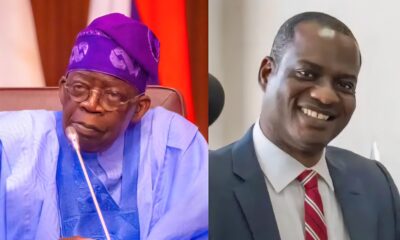
BREAKING: Tinubu Appoints New Minister of State For Finance