
Health
Profit Or Public Health? A False Choice In The Sachet Alcohol Debate


Nationwide tensions are on the rise as the National Agency for Food and Drug Administration and Control (NAFDAC) sticks to its guns over the full enforcement of a ban on alcoholic beverages in sachets and small bottles (200ml and below). The prevailing narrative surrounding the enforcement has been framed as a moral battle: profiteers on one side and public health defenders on the other. It is a powerful headline. It is also a misleading one.
To suggest that industry stakeholders are prioritising profit over public health is to oversimplify a complex policy issue and to mischaracterise the motivations of thousands of Nigerians whose livelihoods are directly tied to the sector. This debate is not about corporate greed. It is about economic survival, regulatory balance, and the interconnectedness of health and livelihoods.
Public health does not exist in isolation from economic stability. When policies trigger large-scale job losses, destabilise value chains, and threaten billions in local investments, the consequences ripple far beyond factory gates. They reach homes, schools, hospitals, and communities. They affect the same families whose welfare regulators say they are protecting. It is therefore disingenuous to reduce legitimate economic concerns to “profit-seeking.” What is at stake extends beyond balance sheets.
The sector impacted by the ban supports a vast ecosystem: manufacturers, distributors, small-scale retailers, logistics providers, packaging suppliers, marketers, and informal traders. Estimates referenced by labour groups indicate that millions of livelihoods may be affected directly and indirectly. Whether the precise figure is debated or not, the scale of economic exposure is undeniable.
When factories scale down or shut production lines, it is not shareholders who suffer first. It is line workers, drivers, depot staff, retail shop owners, and their dependents. In an economy already grappling with inflation, currency volatility, and high unemployment, the social consequences of abrupt regulatory shocks must be carefully weighed.
Economic displacement carries health consequences of its own. Poverty correlates strongly with deteriorating health outcomes. Job loss leads to reduced access to healthcare, increased stress, poorer nutrition, and vulnerability to mental health challenges. A regulatory action that triggers economic shockwaves can indirectly undermine public health in ways that are less visible but no less severe.
What’s more, the Director-General of NAFDAC, Mojisola Adeyeye, has emphasised concerns about underage access to alcohol in small, concealable packaging. The protection of minors is unquestionably a legitimate policy objective. No responsible stakeholder disputes the need to prevent underage drinking or substance abuse.
However, the central question remains: “does banning a packaging format sufficiently address the root causes of alcohol abuse?”
Product size alone does not create consumption behaviour. Underage access is primarily an enforcement issue. Retail compliance, age verification, perimeter control around schools, parental supervision, and community-level enforcement mechanisms play decisive roles. If minors are able to purchase alcohol, regardless of packaging size, then the regulatory focus must interrogate points of sale and enforcement gaps.
Furthermore, alcohol in larger containers remains legally available. The removal of sachet and small PET formats does not eliminate alcohol from the market. It merely alters packaging dynamics. If consumption is driven by behavioural and socio-economic factors, the packaging shift may not produce the intended public health outcome.
There is also the matter of proportionality. Regulatory action should be measured, targeted, and responsive to evolving economic conditions. The 2018 agreement referenced by NAFDAC outlined a phased approach. Yet between 2018 and 2024, Nigeria experienced unprecedented economic turbulence — including pandemic disruptions, supply chain shocks, foreign exchange volatility, and inflationary pressures that strained manufacturing capacity.
Phased compliance assumes a relatively stable economic environment. When that stability collapses, regulators must evaluate whether timelines remain feasible without disproportionate harm. Flexibility in policy implementation is not weakness. It is responsible governance.
Another dimension that deserves serious reflection is the risk of unintended consequences. Sudden restrictions on regulated products can create market distortions. When legitimate supply chains contract abruptly, informal and unregulated alternatives often emerge. Counterfeit production, illicit distribution, and unsafe substitutes become attractive gaps to exploit.
Nigeria’s regulatory history across multiple sectors has demonstrated that prohibition-style measures, if not carefully calibrated, may push demand underground rather than eliminate it. An unregulated alternative market would pose far greater public health risks than a monitored, licensed production environment.
It is therefore imperative to interrogate whether the current approach optimally balances health protection with economic stability and enforcement realism.
Equally troubling is the language deployed in public discourse. Framing the debate as a binary moral question — “Do we want children to die or do we want money?” — may resonate emotionally, but it does not elevate policy analysis. Such rhetoric risks polarising stakeholders rather than fostering collaborative solutions.
No serious industry actor advocates harm to children. No responsible labour union is indifferent to public health. The argument advanced by stakeholders is not that economic interests trump health; it is that both must be protected simultaneously.
Public health and economic health are not adversaries. They are interdependent pillars of national stability.
The involvement of labour organisations such as the Nigeria Labour Congress and the Trade Union Congress of Nigeria underscores that this debate transcends corporate interests. When labour unions raise alarms about job losses, they are fulfilling their mandate to defend workers, not to undermine health objectives.
In democratic governance, engagement with policymakers is neither subversive nor unethical. Consultation, advocacy, and dialogue are legitimate mechanisms for resolving complex policy conflicts. Casting stakeholder engagement as clandestine lobbying undermines the very participatory governance structures that sustain accountability.
The broader issue at hand is regulatory balance. Effective regulation should aim for outcomes that are sustainable, enforceable, and economically coherent. It should incorporate data transparency, measurable impact assessments, and periodic review mechanisms. It should also align with a comprehensive National Alcohol Policy framework to ensure consistency rather than fragmentation.
A policy that destabilises millions of livelihoods without conclusively addressing root behavioural drivers risks creating parallel crises: economic distress and public health strain.
Nigeria’s current socio-economic climate demands prudence. Youth unemployment remains high. Small and medium-scale enterprises are navigating a volatile operating environment. Manufacturing costs continue to rise. In this context, policy shocks reverberate intensely.
The country cannot afford solutions that inadvertently deepen economic fragility.
The question, therefore, should not be framed as “profit versus public health.” It should be reframed as “How do we protect public health while safeguarding livelihoods and economic resilience?”
That is the conversation worthy of a serious nation.
Protecting children from alcohol abuse requires comprehensive enforcement strategies, educational campaigns, community engagement, retailer accountability, and behavioural interventions. Packaging restrictions may form part of a broader toolkit, but they cannot substitute for systemic solutions.
Public health objectives are noble and necessary. Yet they must be pursued with economic intelligence and regulatory foresight.
In the final analysis, a nation’s strength lies in its ability to harmonise competing interests without sacrificing either. Health without livelihoods breeds poverty. Livelihoods without regulation breed disorder. The challenge is not choosing one over the other; it is integrating both responsibly.
According to key industry stakeholders, the economic disruption projected to arise from NAFDAC’s wholesale enforcement is in the region of 500,000 direct job losses, 5 million indirect job losses, and the loss of over N800 billion in investments. While NAFDAC is hell bent on the ban, the Office of the Secretary to the Government of the Federation (OSGF) and the National Security Adviser (NSA) had earlier directed a suspension, citing security and economic risks.
Some industry thought leaders also maintain that the ban may drive a radical and harmful shift with consumers gravitating toward dangerous, unregulated, or illicit alcohol alternatives.
Suffice it to say that reducing the debate to a morality play does not serve the Nigerian public. What is required is sober assessment, collaborative engagement, and a recalibration that ensures children are protected, workers are not abandoned, and economic stability is preserved.
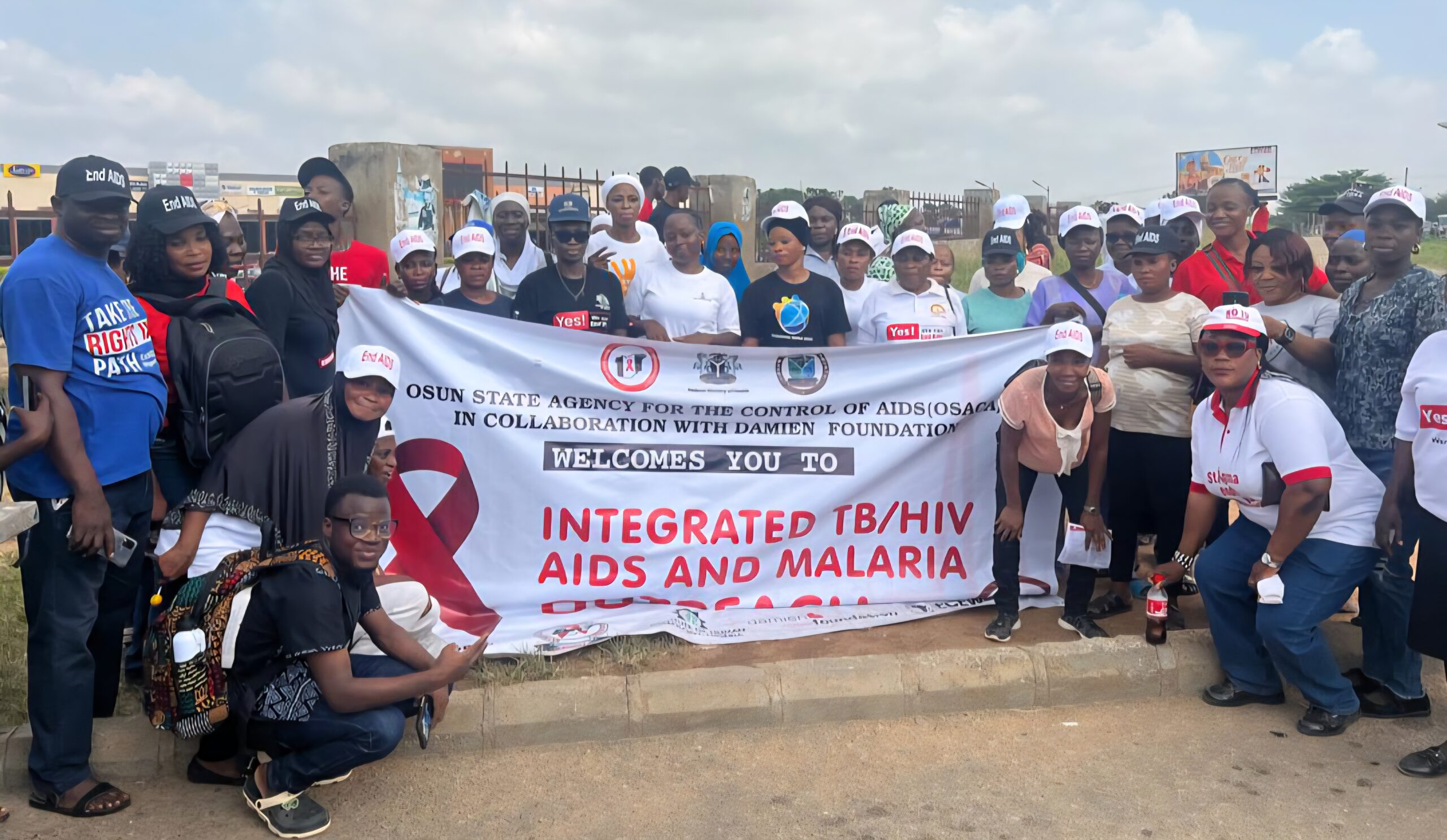
Osun State has commemorated World AIDS Day 2025 with a series of impactful, community-driven activities aimed at renewing commitment, raising awareness, and strengthening action toward ending AIDS as a public health threat.
The event was themed, “Overcoming Disruptions; Sustaining Nigeria’s HIV Response.”
Partners and stakeholders across the state delivered coordinated interventions that touched every segment of the population.
The commemoration started with a vibrant road walk, featuring representatives from the TB, HIV, and Malaria programs, Network of people living with HIV( NEPWHAN), implementing partners, civil society groups, and community volunteers. Participants marched through major streets across Osun State, distributing educational materials and engaging residents on the importance of early testing, treatment adherence, and preventive practices.
The road walk served as a powerful symbolic action to amplify visibility, reinforce solidarity, and mobilize community participation in the fight against HIV/AIDS and other infectious diseases.
A major highlight of the event was the rollout of comprehensive Integrated Testing Services, bringing essential health screening directly to the communities. These services included:
Cutting-edge PDX diagnostic machines were deployed to conduct real-time screening for tuberculosis—particularly children and vulnerable groups. The use of these devices allowed for quicker identification of presumptive TB cases and immediate linkage to further evaluation.
Free, confidential HIV testing was offered to the general population, with special attention to pregnant women to strengthen the Prevention of Mother-to-Child Transmission (PMTCT) efforts. Trained counselors were available onsite to provide pre- and post-test counseling, ensuring individuals understood their results and next steps.
Rapid malaria testing was also conducted for adults and children, supporting early diagnosis and reducing risk of complications. This integration reflected the state’s commitment to a holistic approach to public health.
Throughout the activities, health educators and volunteers led awareness sessions addressing HIV prevention, stigma reduction, treatment adherence, benefits of knowing one’s status, and healthy lifestyle practices. These sensitization efforts targeted the general population, including youth, market women, transport unions, and rural communities. The interactive sessions helped demystify misconceptions around HIV, TB, and malaria, while encouraging individuals to take advantage of the free testing services available.
The commemoration was coordinated by the Osun State Agency for the control of HIV in collaboration, State Aids Control Programme ( SASCP), Osun State Tuberculosis and Leprosy Control Programme (STBLCP), Osun State Malaria Elimination Programme (SMEP) with implementing partners.


About 18 million cases of malaria are being prevented every year in the country through intensified national interventions.
Minister of State for Health and Social Welfare Dr Iziaq Salako, who disclosed this at the 2025 Nigeria Health Sector-Wide Joint Annual Review (JAR) in Abuja, said that the progress is a powerful demonstration of what sustained political commitment can achieve.
Salako observed that key gains have emerged from strategic investments, including the distribution of 63 million insecticide-treated nets between 2021 and 2023, which has led to nearly 70 per cent of households owning at least one net.
The minister noted that more than half of pregnant women now receive preventive malaria therapy, adding that this has contributed significantly to reductions in maternal and child deaths.
Citing findings from the 2023 Nigeria Demographic and Health Survey (NDHS), Salako listed significant improvement in the nation’s health indices, including Maternal mortality declined from 576 to 512 deaths per 100,000 live births, under-five mortality fell from 132 to 110 deaths per 1,000 births, full immunization coverage increased to 39 per cent and skilled birth attendance rose to 53 per cent, among others.
The minister, however, expressed concern over the country’s doctor-to-patient ratio of 1:5,000, compared to the WHO benchmark of 1:600.
Salako noted that government health spending remains low at 5.2 per cent of GDP, well below the 15 per cent Abuja Declaration target, while out-of-pocket payments stand at a high 71 per cent, pushing millions into poverty.
“These are formidable obstacles,” he admitted, warning that without bold reforms in financing and workforce development, progress could stall.
Salako highlighted several reforms under the Nigeria Health Sector Renewal and Investment Initiative (NHSRII), including the recruitment of over 37,000 health workers since 2023, supported by a new Health Workforce Migration Policy to curb brain drain, and wider insurance coverage through the National Health Insurance Authority (NHIA), now reaching more than 20 million Nigerians.
The minister, however, expressed concern over the country’s doctor-to-patient ratio of 1:5,000, compared to the WHO benchmark of 1:600.
Salako noted that government health spending remains low at 5.2 per cent of GDP, well below the 15 per cent Abuja Declaration target, while out-of-pocket payments stand at a high 71 per cent, pushing millions into poverty.
“These are formidable obstacles,” he admitted, warning that without bold reforms in financing and workforce development, progress could stall.
Others are the expansion of the Basic Health Care Provision Fund (BHCPF), with fund absorption rising from 45 per cent in 2019 to 78 per cent in 2023; the Power for Health Initiative, aimed at providing reliable, green and hybrid energy to health facilities; and the strengthening of the Nigeria Digital Health Initiative (NDHI) to improve data quality, accountability, and service delivery.
The minister emphasized the need to accelerate efforts to meet the health needs of Nigeria’s 230 million citizens through unified action across all levels of government, partners, and communities.


Another Nigerian Pastor’s Prophecy On Winner Of Israel-Iran War After TB Joshua Trends

Profit Or Public Health? A False Choice In The Sachet Alcohol Debate

BREAKING: Tinubu Appoints New Minister of State For Finance

Former Super Eagles Star Loses Life Savings, Duped By A Pastor of ₦1.2 Billion

These ’90s fashion trends are making a comeback in 2017

I’m A Married Man, I Can Never Get Myself Involved With Such A Thing, Delta Gov Aide Reveals Why He Offered Comfort ₦500,000 Job
-

 News2 days ago
Electricity Company Announces One-Month Power Outage; Lists Affected Areas
-

 Foreign1 day ago
Former President Confirmed Dead
-
 News21 hours ago
BREAKING: Tinubu Appoints New Minister of State For Finance
-
 News1 hour ago
Another Nigerian Pastor’s Prophecy On Winner Of Israel-Iran War After TB Joshua Trends