
Foreign
Putin Holds Fast on Ukraine Terms, Trump Faces Action

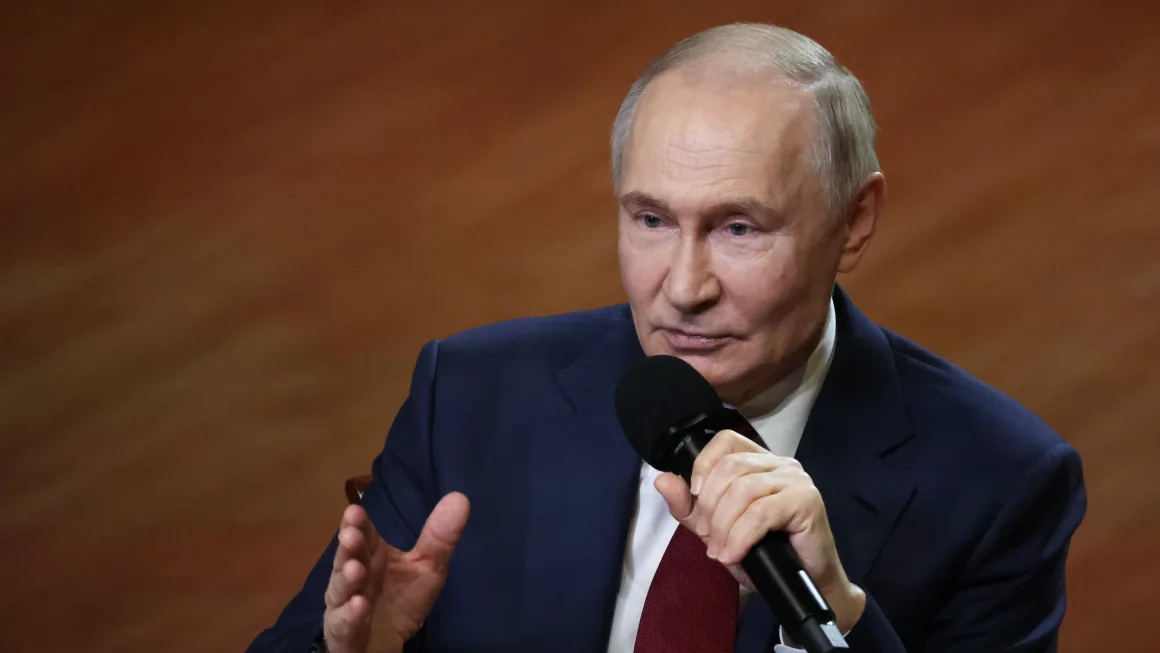
Russia and Ukraine are still as far apart as ever, with the two warring countries unable to make a significant breakthrough in direct talks in Istanbul.
While there was agreement to exchange more prisoners, Moscow and Kyiv remain deeply divided over how to bring the costly and bitter Ukraine war to an end.
Russia has shown itself to be particularly uncompromising, handing Ukrainian negotiators a memorandum re-stating its maximalist, hardline terms which would essentially amount to a Ukrainian surrender.
Expectations were always low for a Kremlin compromise. But Moscow appears to have eliminated any hint of a readiness to soften its demands.
The Russian memorandum again calls on Ukraine to withdraw from four partially occupied regions that Russia has annexed but not captured: a territorial concession that Kyiv has repeatedly rejected.
It says Ukraine must accept strict limits on its armed forces, never join a military alliance, host foreign troops or aquire nuclear weapons. It would be Ukrainian demilitarization in its most hardline form, unpalatable to Ukraine and much of Europe, which sees the country as a barrier against further Russian expansion.
Other Russian demands include the restoration of full diplomatic and economic ties, specifically that no reparations will be demanded by either side and that all Western sanctions on Russia be lifted.
It is a Kremlin wish-list that, while familiar, speaks volumes about how Moscow continues to imagine the future of Ukraine as a subjugated state in the thrall of Russia, with no significant military of its own nor real independence.
This uncompromising position comes despite two important factors which may have given the Kremlin pause.
Firstly, Ukraine has developed the technical capability to strike deep inside Russia, despite its staggering disparity of territory and resources. The stunning drone strikes recently targeting Russian strategic bombers at bases thousands of miles from Ukraine is a powerful illustration of that. Ukraine, it seems, has some cards after all, and is using them effectively.
Secondly – and arguably more dangerously for Moscow – the Kremlin’s latest hardline demands come despite US President Donald Trump’s increasing frustrations with his own Ukraine peace efforts.
Trump has already expressed annoyance with his Russian counterpart, Vladimir Putin, who he said had gone “absolutely MAD” after massive Russian strikes on Ukraine last week.
But now, Trump himself is under pressure as a cornerstone of his second term foreign policy – bringing a rapid end the Ukraine war – looks decidedly shaky.
There are powerful levers to pull if Trump chooses, like increasing US military aid or imposing tough new sanctions, such as those overwhelmingly supported in the US Senate. One of the key backers of a cross-party senate bill that aims to impose “crippling” new measures on Moscow, Senator Richard Blumenthal, accused Russia of “mocking peace efforts” at the Istanbul talks and in a carefully worded post on X accused the Kremlin of “playing Trump and America for fools.”
It is unclear at the moment how the mercurial US president will react, or what – if anything – he will do.
But the outcome of the Ukraine war, specifically the brokering of peace deal to end it, has become inextricably linked with the current administration in the White House.
The fact that Putin has once again dug in his heels and presented an uncompromising response to calls for peace, may now force Trump to act.
Edition.cnn.com
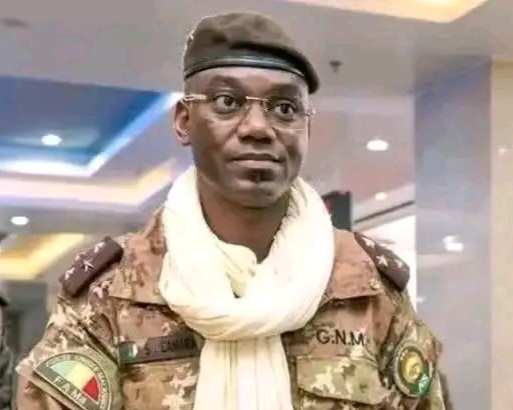
Mali’s Defence Minister, Sadio Camara, has been killed following a wave of coordinated attacks targeting military installations across the country.
Camara reportedly died from injuries sustained during an attack on his residence in Kati, a key military garrison town located about 15 kilometres from Bamako.
The assault, which occurred barely 24 hours before his death, involved a suicide car bomb and formed part of a broader offensive across the country.
The attacks were reportedly carried out by fighters linked to Jama’at Nusrat al-Islam wal-Muslimin, an al-Qaeda-affiliated group, alongside Tuareg rebels from the Liberation Front of Azawad.
According to Al Jazeera, the attackers were able to breach Kati, considered one of the most secure military locations in Mali.
Camara, a key figure in Mali’s military leadership, rose to prominence after playing a central role in the coups of 2020 and 2021 that brought the current junta to power.
Al Jazeera’s Nicolas Haque described his death as significant.
“He was one of the most influential figures within the ruling military leadership… His death is a major blow to the country’s armed forces,” he said.
The coordinated offensive extended beyond Kati, with gunmen attacking several locations including Bamako, Gao, Kidal and Sevare.
“As we speak, people in the garrison town of Kidal can still hear heavy gunfire and loud explosions,” Haque said, adding that the operation remained ongoing more than 24 hours after it began.
The attacks have intensified pressure on Mali’s interim leadership, with analysts suggesting that security forces were overwhelmed by the scale and coordination of the violence.
However, Interim President, Assimi Goita, was reportedly moved to safety and remains in control of the military.
International bodies, including the African Union, the Organisation of Islamic Cooperation, and the United States Bureau of African Affairs, have condemned the attacks and called for urgent measures to restore stability.
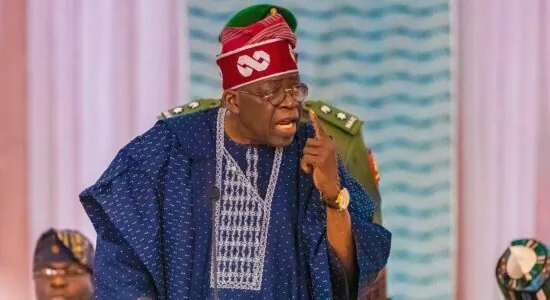
President Bola Tinubu has declared Nigeria’s support for countries in the Gulf region following rising tension linked to the ongoing conflict involving the United States, Israel, and Iran.
Naija News reports that he made this known in Abuja during a formal ceremony where he received letters of credence from several foreign diplomats. The event had representatives from countries such as Qatar and Saudi Arabia, alongside envoys from Lebanon, Sudan, Namibia, Rwanda, Somalia, Argentina, and Congo.
During the meeting, the president assured the visiting diplomats that Nigeria stands with nations in the Gulf, including the United Arab Emirates, Saudi Arabia, Qatar, Kuwait, Bahrain, Oman, and Jordan. He praised their calm approach in handling the situation and stressed the need for peace across the region.
Tinubu described the diplomatic gathering as an important step in strengthening Nigeria’s relationship with other countries. He encouraged the envoys to build stronger partnerships with Nigeria that would benefit both sides.
He also spoke about his government’s economic direction, saying efforts are being made to position Nigeria as an attractive destination for investors. He pointed out opportunities in areas like infrastructure, economic growth, and diaspora involvement, inviting the diplomats to explore these sectors.
On regional matters, the president restated Nigeria’s role in the Economic Community of West African States, especially in maintaining democratic order, improving trade among member states, and addressing instability in the Sahel region.
Tinubu further noted that global issues such as climate change, energy challenges, terrorism, and unfair financial systems require countries to work together.
He said Nigeria is ready to cooperate with other nations both directly and through international platforms to promote a safer and fairer global system.

According to a report by Telegraph, on Thursday April 23, 2026, Israel’s defence minister has declared the country stands prepared to resume military operations against Iran, but only upon receiving authorisation from the Trump administration, as tensions between the two nations continue to simmer beneath a fragile ceasefire.
The statement came amid fresh alarm in the Iranian capital on [date], after Iranian state media reported that explosions were heard above Tehran and air defence systems were activated across the city. The developments immediately triggered speculation of a new Israeli strike, drawing swift attention from regional observers and international monitors tracking the volatile situation.
However, a source within the Israeli military moved quickly to dismiss those claims. Speaking to Israeli outlet Ynet, the source firmly stated that Israel had not carried out any attacks on Iran, offering a direct contradiction to the wave of concern that had swept through diplomatic circles following the reports from Tehran.
A ceasefire between the two countries has been in effect since April 8, and Israeli officials have so far indicated no public breach of that agreement. Despite this, the defence minister’s earlier remarks have raised serious questions about how durable that truce remains, particularly given its apparent dependency on political decisions emanating from Washington.
The reference to a required “green light” from the Trump administration underscores the degree to which Israeli military calculations are now intertwined with American foreign policy direction. Analysts note that this framing places significant weight on Washington’s posture toward Tehran, effectively making U.S. political will a trigger mechanism for potential renewed hostilities in the region.
Iran has not officially responded to the Israeli defence minister’s statement at the time of reporting. The sounds heard over Tehran, while alarming to residents and regional watchers, remain unexplained by Iranian authorities beyond initial media reports of activated air defences.
The situation reflects the precarious nature of the current ceasefire, with both nations maintaining high military readiness even as formal hostilities remain paused. Observers warn that the combination of unexplained aerial activity and bellicose ministerial language represents a dangerous mix that could rapidly destabilise the existing arrangement.


NNPC Releases New Petrol Prices at Filling Stations Nationwide; State-by-state Costs Emerge

Yorubaland No Longer Safe, Terror Cells Expanding — Gani Adams

Taraba 2027: Kefas Secures APC Ticket For Second Term

Former Super Eagles Star Loses Life Savings, Duped By A Pastor of ₦1.2 Billion

I’m A Married Man, I Can Never Get Myself Involved With Such A Thing, Delta Gov Aide Reveals Why He Offered Comfort ₦500,000 Job

These ’90s fashion trends are making a comeback in 2017
-
 News2 days ago
Yorubaland No Longer Safe, Terror Cells Expanding — Gani Adams
-

 Entertainment2 days ago
Failed Relationships Made Me Freeze My Eggs — Ashmusy
-
 Sports2 days ago
Galatasaray President Rules Out Osimhen Exit
-
 Business2 days ago
35 Million Nigerians Risk Acute Hunger In Coming Months — UN
-

 Sports2 days ago
Five Gold Medals And African Record Highlight Nigeria’s Success In Algeria
-
 Politics2 days ago
Taraba 2027: Kefas Secures APC Ticket For Second Term
-
 Business15 hours ago
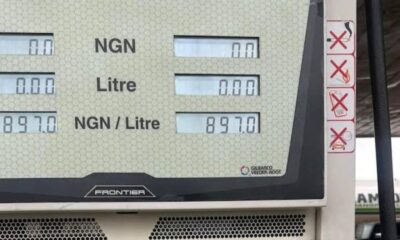
NNPC Releases New Petrol Prices at Filling Stations Nationwide; State-by-state Costs Emerge