
News
Deaver: AMCE To Cut Foreign Healthcare Reliance, Boost Local Industry


Brian Deaver is the Chief Executive Officer of the African Medical Centre of Excellence (AMCE), a state-of-the-art hospital in Abuja, Nigeria. The AMCE is a collaborative initiative between the African Export-Import Bank (Afreximbank) and King’s College Hospital, London, aiming to enhance healthcare delivery in West Africa. Under Deaver’s leadership, the AMCE is set to commence operations focusing on the diagnosis and treatment of complex diseases. In this interview with GODSGIFT ONEDINEFU, Beaver gave insight into what the AMCE would mean for Nigeria. Excerpts:
What inspired the creation of the African Medical Centre of Excellence, and why was Abuja chosen as its location?
The African Medical Centre of Excellence (AMCE) was inspired by a critical gap in Africa’s healthcare system—too many Africans are forced to travel abroad for specialised care due to the lack of world-class facilities on the continent. This challenge resonated deeply with Afreximbank President Benedict Oramah, who personally experienced the high costs and difficulties of seeking medical treatment overseas. Motivated by this, he became determined to bridge the gap and bring top-tier healthcare closer to home.
To select the ideal location for the first AMCE, a competitive bid process was conducted. After careful evaluation of several prospective host countries, Nigeria was chosen to host the inaugural Centre, reflecting its pivotal role in advancing healthcare in the region.

Abuja was selected as the best location due to its central and accessible position, making it strategically suited to serve not only Nigeria but the wider West African region. The city’s growing infrastructure and strong government support provide a solid foundation for establishing a world-class healthcare facility that can meet the continent’s urgent needs.
What health services should Nigerians expect from this? What does this centre mean for the average Nigerian?
Nigerians can look forward to cutting-edge medical services in areas like cancer care, heart health, blood disorders, and general medicine. This includes advanced diagnostics, stem cell treatments, bone marrow transplants, modern and effective cancer therapies, and complex heart surgeries. For the average Nigerian, AMCE Abuja is a beacon of hope—offering access to top-quality care right at home. It means fewer people will have to travel abroad for treatment, easing both the emotional stress and the heavy financial burden that often comes with seeking healthcare overseas. We’re treating very serious conditions, we’re not only treating sickle cell, we’re curing it.
With many Nigerians seeking medical treatment abroad, how will AMCE restore public confidence in the domestic healthcare system and reverse outbound medical tourism which costs Nigeria billions of naira?

AMCE aims to restore confidence by providing world-class, affordable healthcare at home, backed by global expertise from our partners like King’s College Hospital and The Christie. By offering advanced treatments locally, we are working to reduce the reliance on foreign medical services, saving costs and ensuring that Nigerians receive the same standard of care at home.
It is apparent that people are travelling abroad because they don’t want to guess whether the latest technology is available or the best surgeons are available. So they just automatically go abroad looking for care. We want to establish a trust in our system, and establishing that trust is like any other trust that we have. It takes time, and it takes understanding and getting to know the relationship, the person, in our case, getting to know our facility. So when patients come, and they have as good an experience as they possibly can in the conditions that they come from, they’re going to talk about it. So we will be measuring what patients say when they leave the facility. Because they’re going to talk about how they felt while they were here, whether their needs were met, whether their questions were answered, and whether they were treated with compassionate care. That’s what we have to do to build the trust.
The emigration of Nigerian healthcare professionals is currently at a critical level. What role will AMCE play in reversing the brain drain and creating attractive career paths for medical professionals within Nigeria?
We are committed to training and employing Nigerian medical professionals, providing career opportunities that enable them to stay and thrive in Nigeria. Through residency programmes, mentorship, and collaboration with international experts, we aim to create an environment where Nigerian professionals can develop their skills, contribute to local healthcare, and advance their careers without having to leave the country. By fostering this environment, we also hope to encourage the return of talented Nigerians who had previously emigrated in search of better career opportunities, helping to reverse the brain drain and build a strong, sustainable healthcare workforce in Nigeria.
There is currently inequality in access to affordable and quality healthcare has been a challenge in Nigeria, how will AMCE work to ensure broader access to its services and reach underserved communities?
We understand that access to quality healthcare is not the same for everyone. For many Nigerians, especially those in rural or low-income communities, it can feel completely out of reach. That is why at AMCE, making our services inclusive and affordable is at the heart of what we do.
To support this mission, we are launching the AMCE Foundation, a dedicated initiative to ensure that no one is left behind. The Foundation will help patients who might otherwise struggle to afford care and contribute to building a more equitable healthcare system where everyone has a fair chance at getting the treatment they need. I’m happy to report that even before we’ve seen the first patient, the foundation has attracted $75 million in donations.
We are also partnering with health insurance companies to make our specialised services more accessible to everyday people, so more Nigerians can benefit from the kind of care that was once only available abroad.
Will AMCE contribute to medical research that’s rooted in African health realities, such as sickle cell disease, infectious disease resistance, or genetic conditions specific to the region?
Yes, we are committed to conducting research that addresses the health challenges most relevant to Africa, particularly non-communicable diseases like sickle cell disease, heart disease, cancer, and region-specific genetic conditions. Our partnerships with leading global institutions such as King’s College Hospital and Christie Manchester provide us with access to world-class research capabilities.
At the same time, we draw on local expertise to ensure our findings are rooted in the unique health realities of the continent. By generating data specific to African populations, we aim to develop treatments tailored to the needs of our communities. This collaborative approach will help ensure that AMCE plays a key role in advancing medical research that has a direct and positive impact on the health of Africans.
I’ve spoken about the importance of clinical trials. Most of the pharmaceuticals in the world were developed based on North American and European genomes. Every continent, every area of the world has a little different genome, and our bodies metabolise medications differently. So here in Africa, the pharmaceuticals are not optimised to the African genome. They need to be optimised.
We’ll be doing those clinical trials here. So some of the foundation funds will go to funding that sort of research.
How will AMCE contribute, directly and indirectly, to Nigeria’s GDP, and how will it influence job creation and ancillary industries in the region?
AMCE will contribute directly and indirectly to Nigeria’s GDP by creating thousands of jobs in healthcare, administration, research, and support. It will also stimulate local industries such as pharmaceuticals, medical supplies, and healthcare infrastructure. By offering world-class medical services, AMCE will attract both local and international patients, boosting the economy and promoting growth in related sectors like tourism and hospitality. This will strengthen Nigeria’s healthcare sector and create opportunities for local businesses, driving economic development.
How much has been invested into this facility? Did private equity or sovereign investment play a role in funding AMCE, and are there expansion plans?
The AMCE project has attracted over US$300 million in investment, primarily funded by Afreximbank, with collaboration from private investors and international partners. Our long-term vision includes expanding the model to other regions in Africa, adapting it to local needs, and establishing a network of centres across the continent to further strengthen healthcare delivery.
How will AMCE leverage AI, telemedicine, and data analytics in its operations, while also protecting patients?
Technology is at the core of AMCE. Our 18 MeV cyclotron will be key to producing radiopharmaceuticals for advanced imaging techniques like PET scans, helping doctors detect diseases like cancer earlier and diagnose them more accurately. We are deploying AI-powered diagnostic tools, telehealth platforms, and data-driven treatment monitoring systems. These innovations enhance accuracy, improve efficiency, and increase access.
Patient data privacy is non-negotiable. We adhere to local and global data protection protocols, with strict cybersecurity measures to ensure confidentiality, integrity, and ethical handling of patient information.
How is AMCE preparing for future health emergencies, from pandemics to local outbreaks, given Nigeria’s past vulnerabilities?
We have established a robust supply chain for essential medical supplies and developed rapid response protocols for both pandemics and local outbreaks. Collaborating with health authorities and setting up dedicated emergency healthcare units will ensure AMCE is well-equipped to respond swiftly, minimise disruptions, and continue providing uninterrupted care during critical health events.
Our emergency preparedness framework includes on-site infectious disease units, rapid-response teams, and coordination protocols with the Government health authorities. We’ve also invested in supply chain resilience and backup systems for power, oxygen, and essential medicines.
AMCE’s infrastructure is designed to adapt quickly to crises while maintaining continuity of care for critical patients during health emergencies.
What are some of the key challenges you’ve faced in bringing this project to life, and how were they overcome?
One of the key challenges we faced was navigating the dynamic and sometimes unpredictable environment in Nigeria, particularly with the country’s infrastructure and socio-political changes. Despite these hurdles, we remained steadfast in our commitment to the vision of AMCE and managed to meet our June 5th launch date. Through strategic planning, strong collaboration with both our private and government partners, and unwavering support from Afreximbank, we overcame various delays, maintained momentum, and delivered a world-class healthcare facility on schedule. Meeting our launch timeline is a testament to what’s possible when vision meets execution. We’re proud to launch AMCE—an innovation poised to transform healthcare delivery across Africa.
Businessday.ng
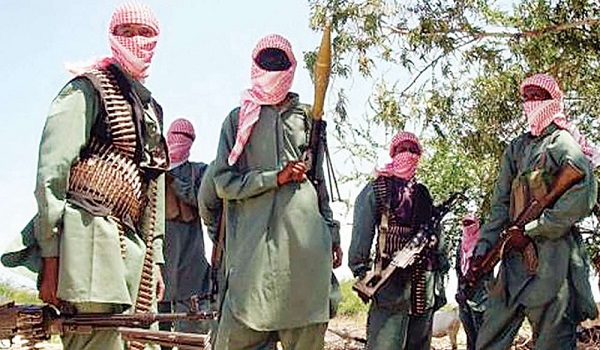
Tension and sorrow have gripped the Iluke Bunu community in Kogi State following a deadly bandit attack that reportedly claimed the life of the Vice Principal of Government Secondary School, Iluke.
According to reports, the victim, identified as Mr. Gani Anifowose, was brutally killed on Wednesday morning during an attack carried out by armed bandits.
Residents said the community is currently facing heightened security concerns, with fear and panic spreading across the area.
In another disturbing development, reports indicate that students from three neighbouring communities, who were scheduled to sit for the English Language WAEC examination on the same day, were allegedly abducted amid the worsening insecurity in the region.
The incidents have raised fresh concerns over the safety of students, teachers, and residents in vulnerable communities across Kogi State.
A representative of the community association called on security agencies and relevant authorities to urgently intensify efforts to restore peace, secure the affected communities, and ensure the safe return of the abducted victims.
“An hour is gone and no sign of rescue efforts from the security agencies despite placing several calls for help. We urge citizens to remain calm and continue praying for divine intervention, protection, and lasting peace in our communities.”

The Independent Corrupt Practices and Other Related Offences Commission (ICPC) has reportedly stepped up its investigation into former Minister of Innovation, Science and Technology, Uche Nnaji, over allegations of certificate forgery.
According to a report by Premium Times, the anti-graft agency has begun efforts to locate the former minister after he allegedly failed to honour several invitations issued in connection with the ongoing investigation.
The publication reported that sources familiar with the matter said the ICPC had invited Nnaji for questioning through different channels, including telephone calls, emails and WhatsApp messages, but he did not appear before investigators.
One of the sources quoted by the newspaper claimed that the commission could declare the former minister wanted if attempts to secure his appearance are unsuccessful.
The latest development is said to be part of an investigation that followed a lengthy inquiry by Premium Times into Nnaji’s academic records and National Youth Service Corps (NYSC) documents.
The newspaper had earlier alleged that the former minister submitted forged degree and NYSC certificates during his ministerial screening and confirmation process in 2023.
According to the report, the ICPC has also sought information from the University of Nigeria, Nsukka (UNN), as part of its investigation.
Another source cited by Premium Times alleged that Nnaji’s failure to respond to the invitations may be linked to his political ambitions ahead of the 2027 governorship election in Enugu State.
The newspaper recently reported that the former minister moved from the All Progressives Congress (APC) to a faction of the Peoples Democratic Party (PDP) and later emerged as its governorship candidate.
Neither Nnaji nor his media aide, Robert Ngwu, had publicly responded to the latest allegations as of the time of filing this report. Premium Times said calls and messages sent to his spokesperson were not answered.
The controversy surrounding the former minister began after investigations into his academic qualifications were published in 2023.
According to the newspaper, Nnaji had approached the Federal High Court in Abuja in a bid to stop the release of his academic records by the University of Nigeria, Nsukka.
However, Premium Times reported that university authorities later informed the newspaper that although Nnaji was admitted into the institution, he did not graduate or obtain the certificate attributed to him.
The publication also stated that the National Youth Service Corps disowned the discharge certificate allegedly presented by the former minister.
Nnaji eventually resigned from his position shortly after the allegations became public.
The matter has continued to attract public attention, with several lawyers and civil society groups calling for a thorough investigation and, where necessary, prosecution in line with the law.
In a related development, POLITICS NIGERIA also reported earlier this year that an investigative panel set up by the Federal Ministry of Education examined the matter as part of a broader review of the allegations surrounding the former minister’s credentials.
The ICPC has yet to release an official public statement detailing the current status of its investigation

Nigeria’s Ministry of Interior is set to declare a nationwide public holiday across all sectors to mark Democracy Day 2026, potentially granting a one-day break for both private and public sector employees.
The federal government’s announcement regarding Democracy Day will be the only national public holiday observed in Nigeria in June 2026.
Democracy Day commemorates the 1993 presidential election and the nation’s struggle for democratic freedom. June 12, 2026, falls on a Friday.
On June 6, 2018, the late former president Muhammadu Buhari, in a public statement, changed the Democracy Day from May 29 to June 12, in honour of the June 12, 1993, presidential election and its winner, Moshood Kashimawo Olawale Abiola, who died in prison.
Abiola was born on August 14, 1937 and passed away under suspicious circumstances on July 7, 1998. A popular Ogun businessman, publisher, and politician of the Egba clan, he is often referred to as MKO Abiola.
He ran for the presidency in 1993 and was widely regarded as the presumed winner of the election, which was annulled by former military head of state, General Ibrahim Babangida.
Some southwest states had been celebrating June 12 as a public holiday and are holding ceremonies in Abiola’s honour until Buhari officially declared the day as Nigeria’s real democracy day. The former president, on Monday, June 10, 2018, signed the Public Holiday Amendment Bill into law.
The law, according to the former president’s ex-senior special assistant on National Assembly Matters (Senate), Ita Enang, allows a public holiday to be declared on June 12 every year, while May 29 is to be a handing-over date.


Filling Stations Adjust Petrol Prices Again as New Landing Cost Emerges

Bandits Strike Again, Kill Vice Principal in Fresh School Attack

BREAKING: Court Takes Action on APC Primaries

Former Super Eagles Star Loses Life Savings, Duped By A Pastor of ₦1.2 Billion

I’m A Married Man, I Can Never Get Myself Involved With Such A Thing, Delta Gov Aide Reveals Why He Offered Comfort ₦500,000 Job

Lagos Imposes ₦250,000 Fine For Illegal Waste Disposal

-

 Politics2 days ago
BREAKING: Kwankwaso Breaks Silence on Dumping NDC
-

 News1 day ago
FG to Declare Nationwide Public Holiday, Date Revealed
-

 Business2 days ago
JUST IN: Marketers Crash Petrol Prices Nationwide, New Pump Prices Emerge
-
 News10 hours ago
Bandits Strike Again, Kill Vice Principal in Fresh School Attack
-

 News1 day ago
BREAKING: Top Nigerian Emir is Dead, Details Emerge
-
 Politics11 hours ago
BREAKING: Court Takes Action on APC Primaries
-
 Business7 hours ago
Filling Stations Adjust Petrol Prices Again as New Landing Cost Emerges
-

 News14 hours ago
BREAKING: Tinubu’s Ex-Minister in Trouble Over Certificate Scandal