
Opinion
Japa: The Courage And Cost Of Nigeria’s Great Exodus


I still remember the evening I first heard the term “Japa.” It came in the form of a meme—“If you’re seeing this, pack your bags”—plastered over an image of a dusty road disappearing into a golden horizon. The joke wasn’t just funny—it was painfully accurate. “Japa,” a Yoruba word meaning “to flee,” has evolved into a cultural and economic phenomenon, serving as a shorthand for the restless exodus of Nigerians, particularly the young and educated, in search of a better life. What was once a quiet movement of the desperate and the privileged has now morphed into a defining feature of Nigeria’s national psyche. It reflects not only a failure of the state but also the boundless courage of individuals who continue to chase dignity, safety, and opportunity across oceans.
Beneath the headline-grabbing migration figures lie deeply human stories, complicated by trade-offs that span continents and generations. When Aisha, a surgical nurse from Kaduna, arrived in London in 2022, she secured an NHS position that paid her over three times her salary in Nigeria. Her new life was a dream on paper—financial stability, functional healthcare, and reliable electricity. But the price was steep: her mother, widowed and diabetic, was left behind with no one to accompany her to clinic visits. Her younger siblings, used to Aisha’s help with tuition and groceries, now relied on irregular remittance flows and prayer. Her calls home, filled with reassurance and cheer, barely masked the weight of her absence. Aisha’s story is not exceptional—it is replicated across tens of thousands of households in Lagos, Yenegoa,Owerri, Ilorin, and beyond.
In 2023, Nigeria received an estimated $20.13 billion in remittances, the highest in sub-Saharan Africa and one of the few bright spots in the country’s bleak economic landscape. Remittances now account for nearly 4% of Nigeria’s GDP—greater than direct foreign investment — and serve as a vital buffer for families struggling with inflation, food insecurity, and crippling unemployment. These inflows fund school fees, hospital bills, building projects, and sometimes entire family businesses. For many, having a child or sibling abroad is the difference between collapse and survival. But money doesn’t hug you. It doesn’t walk your grandmother to the mosque or church. It doesn’t explain puberty to your 13-year-old son now growing up without a father figure.
What’s less visible but just as real is the emotional price of migration. There’s the guilt of leaving ageing parents in precarious health, the pain of missing births and funerals, and the slow erosion of intimacy with friends and siblings. Couples stretch their marriages across time zones, relying on WhatsApp calls that feel both immediate and artificial. Children born abroad grow up with hybrid identities, sometimes unable to speak their parents’ language or understand the values they left behind.

The psychological price of migration is huge. Take Emmanuel, a computer science graduate from Enugu who arrived in Toronto in late 2023. At first, he thrived—new friends, a buzzing tech hub, crisp winter mornings. Within weeks, though, he began waking at 3 a.m., heart pounding, unable to shake the fear that he was alone in a strange land. Migraines set in, his appetite vanished, and he drifted into a fog of irritability and despair—a textbook case of the “Ulysses syndrome,” an immigrant stress reaction marked by anxiety, insomnia, and somatic pains. A 2020 meta-analysis of Nigerian-American immigrants found that higher acculturative stress was strongly linked to poorer mental health outcomes. Emmanuel endured six months of silent struggles before reaching out for therapy, finally realising that the cost of leaving home included the erosion of his well-being.
Nigeria, as a state, teeters between the benefits and burdens of this migration wave. On the one hand, remittances boost foreign reserves, provide fiscal stability, and enhance the purchasing power of recipient households. Diaspora investments are also reshaping the tech ecosystem. Diaspora entrepreneurs in London and Toronto have launched some of Europe’s fastest-growing fintech startups. Additionally, Nigeria ranks second only to India in terms of long-term migrants to the UK, with approximately 120,000 Nigerians relocating there as of June 2024. Nigerian-led startups in the UK, Canada, and the US are channelling capital, ideas, and tools back home, with Lagos fast becoming a West African tech hub despite its infrastructural challenges. Culturally, the country is undergoing a kind of global flowering—Afrobeat now dominates international music charts, Nollywood films are streaming on Netflix, and Nigerian chefs are redefining fine dining in New York, Toronto, and Berlin.
But the cost of this “success” is staggering. Over 75,000 Nigerian professionals have emigrated between 2019 and 2024. The health sector has been particularly hard hit: the Nigerian Medical Association estimates that more than 50% of registered doctors are practising abroad, widening the patient-doctor gap at home and prompting emergency staffing drives that still fall short. In 2023 alone, over 3,600 nurses were licensed to practice in the United Kingdom. University classrooms, once bustling with brilliant lecturers, now depend on visiting professors and part-time faculty. Hospitals are forced to recruit unqualified assistants to fill gaps. In the public sector, civil service talent is drying up, with young officers resigning en masse. The result is a talent vacuum that weakens national institutions just when they are most needed.
Government responses have been largely reactive and uncoordinated. Proposals to bond medical graduates to public service contracts for five to ten years have sparked outrage, especially among young professionals who argue that the state has no moral authority to restrict their freedom after failing to provide basic infrastructure, job security, or personal safety. Some state governments have introduced scholarship retention schemes and returnee investment incentives, but these remain too few, poorly implemented, or overshadowed by more attractive foreign offers. Policy inertia persists because Japa isn’t just a problem of economics—it is a verdict on governance. People are not leaving because they lack patriotism; they are leaving because patriotism no longer feeds them.

And while the Nigerian government tries to cope, Western host countries also wrestle with their own dilemmas. Nigerian migrants now comprise a significant portion of new arrivals in countries such as Canada and the United Kingdom. In Canada’s 2024 immigration data, Nigerians ranked among the top five sources of skilled workers. Western host nations find themselves in a precarious balancing act. Nigerian nurses and engineers fill critical shortages, bolstering public coffers through taxes and consumer spending. In the UK, they are heavily represented in the National Health Service and private care homes. These workers are praised for their diligence, education, and resilience.
However, the systems receiving them are often ill-prepared to integrate them. Many face bureaucratic roadblocks, including slow credential recognition and expensive licensing exams, which delay their full participation in the workforce. Years of retraining blunt the momentum of eager professionals, and discrimination can turn anticipation into anxiety. Others face subtle racism, wage disparities, and cultural isolation. Britain’s new Code of Practice for ethical health-worker recruitment aims to ensure that “poaching” talent doesn’t hollow out Nigeria’s fragile health system, yet the debate over “brain drain” ethics continues amid NHS staffing crises.
Despite these challenges, the Nigerian presence abroad is growing stronger and more confident. Nigerian culture is reshaping Western norms—Afrobeat now pulses through Glastonbury stages; jollof rice trucks line the streets of London; Yoruba phrases are sneaking into British slang; and the children of migrants are rising to prominence in politics, academia, and the arts. In 2025, the UK’s political landscape saw its first major-party leadership candidate of Nigerian descent. In America, Nigerian-American students consistently excel academically, and Nigerian churches and businesses have transformed entire neighbourhoods. These are not signs of assimilation—they are signs of expansion, the Nigerian identity flowering beyond borders.
Yet the question remains: what happens to the country they left behind? Who teaches in the schools from which they once graduated? Who rebuilds the hospitals where they were trained? Who ensures that power stays on long enough to power a mother’s air conditioner? Who stays to fix the power grid, redesign the curriculum, enforce the laws, and tell the next generation that hope is still possible at home?
Japa is not a simple story of brain drain or economic migration. It is a reckoning. It is a mirror held up to a nation that has failed too many of its brightest and bravest. But it is also a thread—an invisible umbilical cord—that connects the streets of Lagos to the clinics of Manchester, the classrooms of Toronto, and the startups of Berlin. And through that thread flows not just money but longing, memory, identity, and love. Japa is not unequivocal gain. It is a human response to systemic failures—economic, social, and political—and to the boundless courage of individuals chasing the promise of a better life. Its actual impact is braided across continents: in the phone calls between a migrant nurse and her mother, in the budget sheets of national ministries, and the urban rhythms of Toronto’s Chinatown.
Perhaps, over time, Japa will evolve from a flight to a return, as seen in India. Possibly, one day, Aisha will bring her NHS experience back to Kaduna to build a clinic of her own, and Emmanuel will reopen his old bedroom as a co-working space for local tech startups. Perhaps Nigeria will invest in a future that gives people a reason to stay, not just a means to leave. Until then, the suitcase remains half-packed, the visa application opens on the browser, and the heart is torn in two—between what is and what should have been.
Thenewsnigeria.com.ng
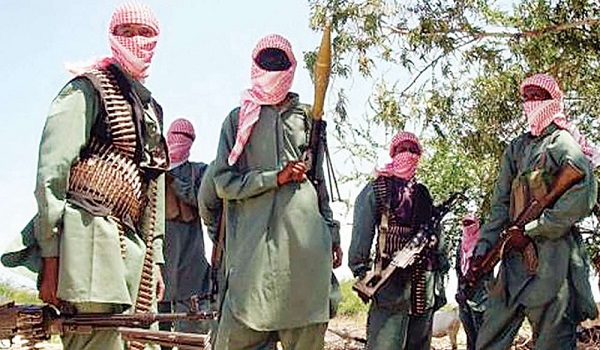
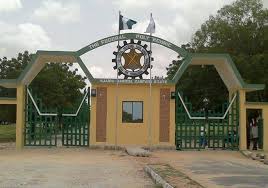
Seven students of Federal Polytechnic, Kaura Namoda, Zamfara State, have been abducted by suspected bandits who invaded their off-campus residence located on the outskirts of the Low-Cost area of Kaura Namoda town.
The Chairman of Kaura Namoda Local Government Area, Hon. Mannir Haidara Kaura, confirmed the incident to Daily Trust, stating that security agencies had launched operations to secure the safe return of the abducted students.
“The incident occurred, and security operatives are currently carrying out rescue operations to ensure the safe return of the kidnapped students,” Haidara said.
One of the students of the institution, Ibrahim Ahmad, disclosed that one of the abducted students had managed to escape, leaving three male and three female students still in captivity.
Meanwhile, a group known as the Concerned Citizens of Kaura Namoda expressed alarm over what it described as the worsening security situation in the area, allegedly perpetrated by a notorious bandit leader, Kachalla Bello Dansadiya, and his gang.
In a statement, the group recalled previous incidents, including the abduction of two senior lecturers who were held captive for more than two months despite the payment of ransom.
It also cited the kidnapping of three residents and a district head from his residence located near a military base.
“Alarmingly, all these victims are reportedly still being held in a well-known bandit camp around Dajin Yamma, yet no rescue operations have taken place. Where are the fighter jets and armoured vehicles?” the group queried.
The Zamfara State Police Command also confirmed the abduction, saying security operatives had intensified efforts to rescue the victims.
The command’s spokesperson, DSP Yazid Abubakar, said the incident occurred at the students’ residence on the outskirts of the Low-Cost area of Kaura Namoda.
He confirmed that one of the victims escaped, while efforts were ongoing to rescue the remaining six students.
According to him, the institution itself remains well secured.
“The school premises have been fortified with adequate security personnel, making it extremely difficult for bandits to penetrate,” he said.
Explaining how the incident happened, Abubakar said one of the students reportedly stepped outside at night to relieve himself and inadvertently left the door open.
“One of the students went outside during the night, claiming he wanted to urinate. In the process, he left the door open. Coincidentally, bandits passing through the area entered the house and abducted the students,” he said.
The police spokesperson added that members of the Command’s Violent Crime Response Unit (VCRU), in collaboration with troops of Operation Fansan Yamma, had launched a coordinated rescue operation.
“Our VCRU personnel, together with troops of Operation Fansan Yamma, are working to ensure the safe rescue of the abducted students,” Abubakar said.
-Source: Daily Trust

Alfa Iliasu, a prominent cleric in Ilesha-Baruba, Baruten Local Government Area of Kwara State, has been hacked to death.
Community leaders confirmed that the cleric, who was widely respected across Baruten and neighbouring communities, was killed under controversial circumstances.
The member representing Okuta/Yashikira constituency in the Kwara State House of Assembly, Muhammed Baba Saliu, said the community was still piecing together details of the tragedy.
“We know the cleric has been butchered and buried. Along the line, there are reports that among those who killed him, one of them was killed, another was arrested and another one went away. There are many reports coming in and I will speak further when I have a fuller grasp of the whole situation,” the lawmaker said.

A former chairman of Baruten Local Government, Abdulrasheed Ibrahim, said preliminary accounts indicated that the attack occurred around 9 a.m. while Quranic lessons were ongoing within the cleric’s compound.
He said the cleric was rushed to hospital but later died from the injuries sustained in the attack, adding that the suspect was later lynched.
Ibrahim added that the suspect was apprehended and taken into police custody before events escalated, leading to mob action and wider unrest within the community.
The Emir of Ilesha-Baruba, Alhaji Halidu Abubakar, confirmed the incident in a chat with Daily Trust.
He said traditional and religious leaders immediately intervened to prevent a breakdown of law and order.
“One man went and killed a prominent Islamic cleric, Alfa Ilyas, with a cutlass. Nobody really knows what transpired between them before the attack,” the monarch said, adding that they later appealed to the youths over the matter.
The emir, however, acknowledged that despite the appeals, some angry youths allegedly attacked properties belonging to some residents before security operatives restored order.
But the Seriki Fulani of Ilesha-Baruba, Ardo Muhammed Abdullahi, alleged that the violence extended beyond the suspect and affected innocent residents.
Abdullahi claimed that the suspected attacker, identified only as Seke, popularly known as “Boso,” was a labourer known within the community and had previously been involved in disputes over unpaid wages.
“Only God knows what happened between him and Alfa Iliasu, but it appears there may have been a disagreement. He entered the cleric’s house and attacked him before trying to escape,” he said.
According to the Fulani leader, the suspect was initially apprehended by residents and taken to a police station before a mob allegedly overpowered security personnel, removed him from custody and lynched him.
He alleged that the violence later spread to other residents who had no connection to the attack.
“They burnt my three houses completely, including those belonging to members of my family. My wife and children narrowly escaped. As I speak, two of my children are still missing and I do not know whether they are alive or dead,” he said.
Abdullahi further claimed that several people were killed during the unrest and warned that failure to address the situation could heighten tensions between communities that have coexisted for decades.
He said he had reported the incident to security agencies and expressed disappointment that properties belonging to individuals he described as long-standing contributors to peace and security in the area were targeted.
The Fulani leader also disclosed plans to relocate from the community, citing concerns over the safety of his family and property
Isaac Fayose, brother of former Ekiti State Governor, Ayo Fayose, has announced the death of his wife after a prolonged battle with cancer.
According to Naija News, the social commentator shared the sad news on Instagram with a candle image, alongside a farewell message.
“Rest in peace my darling wife, odabo oyinbo mi”, he wrote.
Before her death, Fayose had opened up about the severity of her illness.
He said he travelled to Australia to spend time with his family, but was met with a painful reality as his wife had become extremely weak due to cancer.
He explained that she was no longer able to speak or carry out basic daily activities. According to him, the woman who once welcomed him at the airport could no longer do so, and he had to make his way from the airport by Uber.
He also described how roles had reversed in the home, saying he now had to take care of her, including cooking for her, as she could no longer do so herself. He added that he spent time beside her, singing her favourite songs, while she responded only by holding his hand.
In his emotional reflection, he also spoke about life and wealth, stressing that money and material possessions could not stop illness or death, and questioned the actions of those who use public office to take what belongs to others.


Political Twist: Nigerians React as NDC Gives Key Appointment to Peter Obi’s Popular Critic

Tragedy as Adeleke Dies On Official Assignment in Switzerland

BREAKING: Femi Falana, Others Announce Date for Nationwide Protest Over Insecurity, Hunger

Former Super Eagles Star Loses Life Savings, Duped By A Pastor of ₦1.2 Billion

I’m A Married Man, I Can Never Get Myself Involved With Such A Thing, Delta Gov Aide Reveals Why He Offered Comfort ₦500,000 Job

Lagos Imposes ₦250,000 Fine For Illegal Waste Disposal

-

 News2 days ago
FG to Declare Nationwide Public Holiday, Date Revealed
-
 News21 hours ago
Bandits Strike Again, Kill Vice Principal in Fresh School Attack
-
 News2 days ago
BREAKING: Top Nigerian Emir is Dead, Details Emerge
-

 Politics22 hours ago
BREAKING: Court Takes Action on APC Primaries
-

 Business18 hours ago
Filling Stations Adjust Petrol Prices Again as New Landing Cost Emerges
-

 News1 day ago
BREAKING: Tinubu’s Ex-Minister in Trouble Over Certificate Scandal
-

 Politics2 days ago
BREAKING: INEC Updates Portal, Lists New PDP National Executives
-
Health4 hours ago
Tragedy as Adeleke Dies On Official Assignment in Switzerland