
Opinion
Lessons From The Vatican, A Muslim View

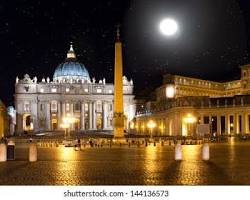
Recently, Pope Leo XIV appealed against the recent senseless killings of people in Benue State, Nigeria. He said:
“On the night of 13th/14th June, in the town of Yelwata in the Guma Local Government Area, in Benue State in Nigeria, a terrible massacre occurred in which around 200 people were killed with extreme cruelty, most of whom were internally displaced persons hosted by the local Catholic mission. I pray that security, justice and peace will prevail in Nigeria, a beloved country so affected by various forms of violence. And I pray in a special way for the rural Christian communities in Benue State, who have been unceasingly the victims of violence.”
It is good that the Pope spoke against the senseless killings of Christians in Nigeria. He is a Catholic leader but to the credit of the Vatican, it has been speaking for world peace. The Christians value their lives, if other Nigerians don’t.
In fact, the Vatican has consistently identified with the problems of the Palestinians, although about 90 per cent of them are muslims. The Catholic Church has its challenges and problems but there are some lessons the world can learn from it. After all, the prophet of Islam said that knowledge and wisdom are the property of the believer. Therefore, he should seek and take them, even if it requires going to China, a country that had nothing to do with Islam at that time. Perhaps, to date.

This piece is about papacy, an office and institution. And I’m fairly conversant with the papacy as an institution because I offered European History in the university, where we examined the origin and development of Christianity, including the rebellion of Martin Luther and his 95 allegations called Theses, against the Catholic Church in 1517, based on which he was excommunicated (disowned) in June 1520 by Pope Leo X.
I have also read a number of books on contemporary issues in the Vatican and papacy. The one I found most engaging and intriguing is titled, “In God’s Name – An investigation Into the Murder of Pope John Paul I” by David Yallop. Over six million copies were sold, and The Economist (London) described it as, “Excellently done… an engrossing and disturbing book”. Indeed, like all other religious groups, the Catholic Church has its share of challenges. But this is not our focus.
For clarity, the pope refers to “the individual leader of the Catholic Church, the Bishop of Rome, who serves as the spiritual leader and Head of State of Vatican” while the papacy refers to “the office, dignity, and jurisdiction of the pope, encompassing the institution, authority, and tradition of the papal office”.
Now, the lessons. First, let me start with power. If there is to be president of the world, based on global acceptance of his followers, the pope is eminently qualified, as a spiritual leader and head of government (Vatican) whose about 1.4 billion followers cut across all countries, races and continents.

Interestingly, it is an enormous power which the Pope doesn’t use to massage his (not her) ego or acquire material wealth. I put “her” in bracket because there has never been a female Pope, and the struggle now is for an African, not female Pope.
With a population of 882 people, and as an enclave in Italy, the Vatican is the smallest country in the world but with sovereignty, independence and self-government. Thus, the pope is a strong leader, as head of government and at the same time spiritual leader in the world. But I cannot recall reading about an instance where the pope used this ENORMOUS POWER against humanity.
Secondly, all the four occupiers of the office of the pope in my life, were paragons of humility, the climax of which was the kissing of the feet of warring faction leaders of Southern Sudan. You may recall that John Garang took up arms for the freedom of Southern Sudan from the Arabs of Sudan who they accused of racism. However, Pope Francis knelt down and kissed the feet of their leaders. This may not mean anything in some cultures but the pope succeeded in sending a powerful message to them pleading for peace.
The president of Southern Sudan, Salva Kirr, stated in his tribute to Pope Francis that:
“His act of kindness and humility demonstrated during our visit to Rome in 2019, when he knelt down to kiss our feet was a turning point for us, the peace partners. I was almost trembling” (Agnes Aineah, ACI Africa, Juba, April 23, 2025)
Thirdly, all the popes preached peace and love for humanity regardless of religion, gender or race. And they matched their words with action. For example, they never abandoned the Palestinians who are predominantly Muslims and Arabs. Imagine the set back the Palestinians may have experienced if any of the Popes had called on Catholics in the world to support Israel.
Of course, only God knows the pressure put on them to do so. But Pope Francis died calling for ceasefire and humanitarian intervention for Palestinians in Gaza. To the dismay of war mongers, I believe.
The Catholic Church is known for effective organisation and management based on which it successfully runs thousands of dioceses and parishes all over the world. It does this by engaging in productive businesses to generate wealth to cater for its officials and followers. This commitment to social services like education, health etc earned it the respect of its followers which makes management and discipline easier.
Also, their officials are constantly trained and retrained to discharge their duties effectively. For example, see the address of Pope John Paul II to the plenary session of the congregation for the clergy entitled, “The Priest, Pastor, and Leadership of the Parish Community”, delivered on Friday November 23, 2001.
He specifically stated that, “in fulfilling his duty as guide, which is his personal responsibility, the pastor will surely obtain help from the consultative bodies foreseen by canon law”.
In the same vein, the Vatican has been teaching the world how to conduct free and fair elections. No petition. No tribunal. No court case.
For us in Nigeria, the lessons are important, because there will always be Muslims and Christians in the country. Therefore, they must learn to live in peace on the basis of justice and fairness. We must also continue to pray for peace in the country. Even if Nigeria is to break, let the new countries have something to show for wasting their time in Nigeria.
Be that as it may, it would be interesting, for example, just as the Muslims were persecuted in Mecca and the prophet of Islam sent them to present day Ethiopia where there was a just Christian king called Najashi of Aksum empire, if some Muslims are to be persecuted in Nigeria today, they will find peace in the Vatican. And the Sultan of Sokoto should be comfortable enough to send them there.
Finally, it will be good if the Vatican examines the possibility of changing the colours of the smoke they use as symbols of election of a new pope; with black indicating mourning, and white victory for the election of a new pope. All colours are innocent but people will continue to attach meanings to them.
There appears to be light at the end of the tunnel in Benue. For example, President Muhammadu Buhari expressed frustration that he directed the Inspector General of Police to relocate to Benue during a similar attack but he refused. Today, the Inspector General of Police and Chief of Defence Staff are there already before President Bola Tinubu directed them to go.
Should we all say, Shalom!
Dailytrust.com
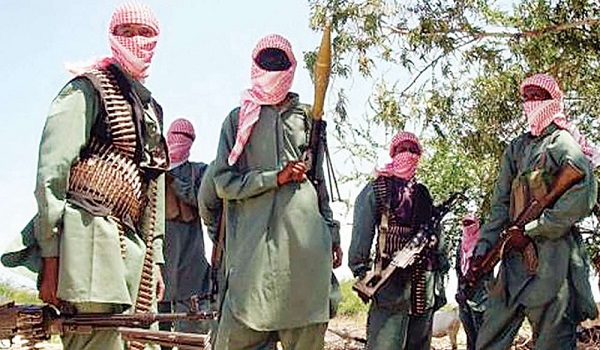
Seven students of Federal Polytechnic, Kaura Namoda, Zamfara State, have been abducted by suspected bandits who invaded their off-campus residence located on the outskirts of the Low-Cost area of Kaura Namoda town.
The Chairman of Kaura Namoda Local Government Area, Hon. Mannir Haidara Kaura, confirmed the incident to Daily Trust, stating that security agencies had launched operations to secure the safe return of the abducted students.
“The incident occurred, and security operatives are currently carrying out rescue operations to ensure the safe return of the kidnapped students,” Haidara said.
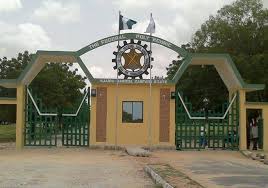
One of the students of the institution, Ibrahim Ahmad, disclosed that one of the abducted students had managed to escape, leaving three male and three female students still in captivity.
Meanwhile, a group known as the Concerned Citizens of Kaura Namoda expressed alarm over what it described as the worsening security situation in the area, allegedly perpetrated by a notorious bandit leader, Kachalla Bello Dansadiya, and his gang.
In a statement, the group recalled previous incidents, including the abduction of two senior lecturers who were held captive for more than two months despite the payment of ransom.
It also cited the kidnapping of three residents and a district head from his residence located near a military base.
“Alarmingly, all these victims are reportedly still being held in a well-known bandit camp around Dajin Yamma, yet no rescue operations have taken place. Where are the fighter jets and armoured vehicles?” the group queried.
The Zamfara State Police Command also confirmed the abduction, saying security operatives had intensified efforts to rescue the victims.
The command’s spokesperson, DSP Yazid Abubakar, said the incident occurred at the students’ residence on the outskirts of the Low-Cost area of Kaura Namoda.
He confirmed that one of the victims escaped, while efforts were ongoing to rescue the remaining six students.
According to him, the institution itself remains well secured.
“The school premises have been fortified with adequate security personnel, making it extremely difficult for bandits to penetrate,” he said.
Explaining how the incident happened, Abubakar said one of the students reportedly stepped outside at night to relieve himself and inadvertently left the door open.
“One of the students went outside during the night, claiming he wanted to urinate. In the process, he left the door open. Coincidentally, bandits passing through the area entered the house and abducted the students,” he said.
The police spokesperson added that members of the Command’s Violent Crime Response Unit (VCRU), in collaboration with troops of Operation Fansan Yamma, had launched a coordinated rescue operation.
“Our VCRU personnel, together with troops of Operation Fansan Yamma, are working to ensure the safe rescue of the abducted students,” Abubakar said.
-Source: Daily Trust

Alfa Iliasu, a prominent cleric in Ilesha-Baruba, Baruten Local Government Area of Kwara State, has been hacked to death.
Community leaders confirmed that the cleric, who was widely respected across Baruten and neighbouring communities, was killed under controversial circumstances.
The member representing Okuta/Yashikira constituency in the Kwara State House of Assembly, Muhammed Baba Saliu, said the community was still piecing together details of the tragedy.
“We know the cleric has been butchered and buried. Along the line, there are reports that among those who killed him, one of them was killed, another was arrested and another one went away. There are many reports coming in and I will speak further when I have a fuller grasp of the whole situation,” the lawmaker said.
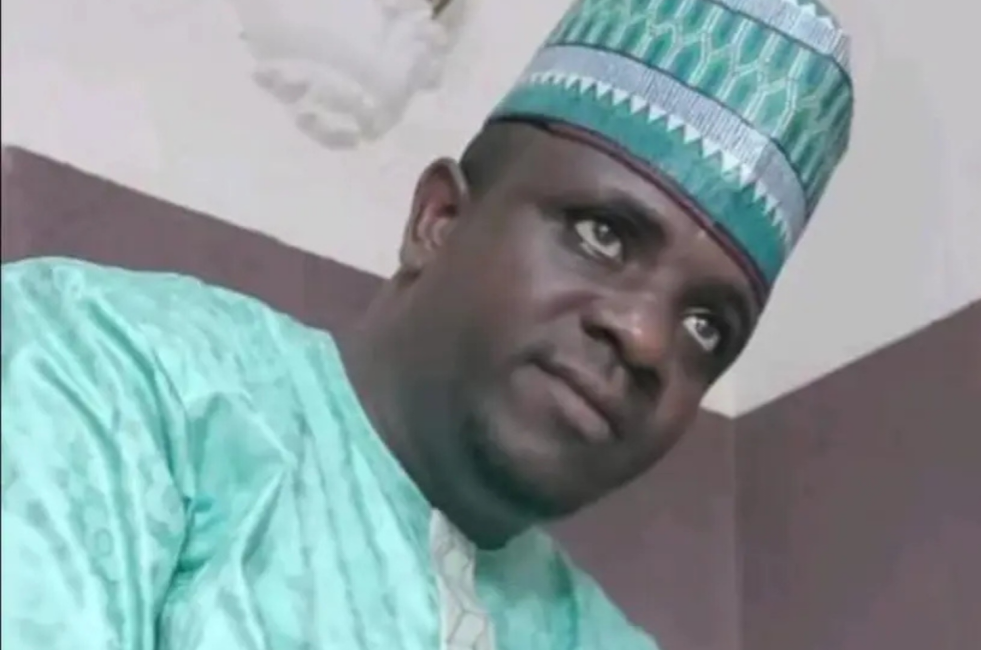
A former chairman of Baruten Local Government, Abdulrasheed Ibrahim, said preliminary accounts indicated that the attack occurred around 9 a.m. while Quranic lessons were ongoing within the cleric’s compound.
He said the cleric was rushed to hospital but later died from the injuries sustained in the attack, adding that the suspect was later lynched.
Ibrahim added that the suspect was apprehended and taken into police custody before events escalated, leading to mob action and wider unrest within the community.
The Emir of Ilesha-Baruba, Alhaji Halidu Abubakar, confirmed the incident in a chat with Daily Trust.
He said traditional and religious leaders immediately intervened to prevent a breakdown of law and order.
“One man went and killed a prominent Islamic cleric, Alfa Ilyas, with a cutlass. Nobody really knows what transpired between them before the attack,” the monarch said, adding that they later appealed to the youths over the matter.
The emir, however, acknowledged that despite the appeals, some angry youths allegedly attacked properties belonging to some residents before security operatives restored order.
But the Seriki Fulani of Ilesha-Baruba, Ardo Muhammed Abdullahi, alleged that the violence extended beyond the suspect and affected innocent residents.
Abdullahi claimed that the suspected attacker, identified only as Seke, popularly known as “Boso,” was a labourer known within the community and had previously been involved in disputes over unpaid wages.
“Only God knows what happened between him and Alfa Iliasu, but it appears there may have been a disagreement. He entered the cleric’s house and attacked him before trying to escape,” he said.
According to the Fulani leader, the suspect was initially apprehended by residents and taken to a police station before a mob allegedly overpowered security personnel, removed him from custody and lynched him.
He alleged that the violence later spread to other residents who had no connection to the attack.
“They burnt my three houses completely, including those belonging to members of my family. My wife and children narrowly escaped. As I speak, two of my children are still missing and I do not know whether they are alive or dead,” he said.
Abdullahi further claimed that several people were killed during the unrest and warned that failure to address the situation could heighten tensions between communities that have coexisted for decades.
He said he had reported the incident to security agencies and expressed disappointment that properties belonging to individuals he described as long-standing contributors to peace and security in the area were targeted.
The Fulani leader also disclosed plans to relocate from the community, citing concerns over the safety of his family and property
Isaac Fayose, brother of former Ekiti State Governor, Ayo Fayose, has announced the death of his wife after a prolonged battle with cancer.
According to Naija News, the social commentator shared the sad news on Instagram with a candle image, alongside a farewell message.
“Rest in peace my darling wife, odabo oyinbo mi”, he wrote.
Before her death, Fayose had opened up about the severity of her illness.
He said he travelled to Australia to spend time with his family, but was met with a painful reality as his wife had become extremely weak due to cancer.
He explained that she was no longer able to speak or carry out basic daily activities. According to him, the woman who once welcomed him at the airport could no longer do so, and he had to make his way from the airport by Uber.
He also described how roles had reversed in the home, saying he now had to take care of her, including cooking for her, as she could no longer do so herself. He added that he spent time beside her, singing her favourite songs, while she responded only by holding his hand.
In his emotional reflection, he also spoke about life and wealth, stressing that money and material possessions could not stop illness or death, and questioned the actions of those who use public office to take what belongs to others.


Filling Stations Adjust Petrol Prices Again as New Landing Cost Emerges

Bandits Strike Again, Kill Vice Principal in Fresh School Attack

BREAKING: Court Takes Action on APC Primaries

Former Super Eagles Star Loses Life Savings, Duped By A Pastor of ₦1.2 Billion

I’m A Married Man, I Can Never Get Myself Involved With Such A Thing, Delta Gov Aide Reveals Why He Offered Comfort ₦500,000 Job

Lagos Imposes ₦250,000 Fine For Illegal Waste Disposal

-
 Politics2 days ago
BREAKING: Kwankwaso Breaks Silence on Dumping NDC
-
 News1 day ago
FG to Declare Nationwide Public Holiday, Date Revealed
-

 Business2 days ago
JUST IN: Marketers Crash Petrol Prices Nationwide, New Pump Prices Emerge
-
 News10 hours ago
Bandits Strike Again, Kill Vice Principal in Fresh School Attack
-

 News1 day ago
BREAKING: Top Nigerian Emir is Dead, Details Emerge
-
 Politics11 hours ago
BREAKING: Court Takes Action on APC Primaries
-
 Business7 hours ago
Filling Stations Adjust Petrol Prices Again as New Landing Cost Emerges
-
 News14 hours ago
BREAKING: Tinubu’s Ex-Minister in Trouble Over Certificate Scandal