
News
Nigeria, Benin Sign Integration Pact

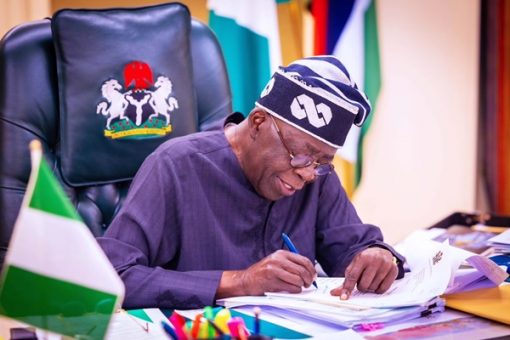
In a historic move aimed at redefining regional integration in West Africa, Nigeria and the Republic of Benin on Saturday signed a landmark agreement to deepen bilateral cooperation and set a precedent for broader collaboration across the Economic Community of West African States (ECOWAS).
The signing ceremony, held during the inaugural West Africa Economic Summit (WAES) in Abuja, was witnessed by President Bola Ahmed Tinubu of Nigeria and his Beninois counterpart, President Patrice Talon.
The agreement, officials say, will serve as a template for actionable economic and political integration in the sub-region.
Minister of Industry, Trade and Investment, Dr. Jumoke Oduwole and Minister of State for Foreign Affairs, Ambassador Bianca Odumegwu-Ojukwu, signed on behalf of Nigeria.

Representing Benin were the Minister of Industry and Trade, Shadiya Alimatou Assouman, and the Minister of Foreign Affairs and Cooperation, Shegun Adjadi Bakari.
According to a statement by Special Adviser to President Tinubu on Information and Strategy, Bayo Onanuga, Talon, while speaking at the event, hailed the agreement as a bold step forward.
“President Tinubu and I have agreed on full integration between Benin and Nigeria. The responsibility now lies with our ministers to implement it. Benin and Nigeria are more than twins—we are the same people. Let us show the region that integration is possible,” he said.
Talon called for urgent reforms within ECOWAS, warning that the regional bloc was facing a crisis of credibility and functionality.

“ECOWAS is a perfect example of regional integration. Unfortunately, our ECOWAS is in crisis right now,” he declared.
He cited the failure of key regional infrastructure projects, including the West African Gas Pipeline, which he said had been rendered ineffective due to bureaucratic inertia.
“It is ridiculous. This failure of regional cooperation wastes resources and undermines integration,” Talon said, revealing that Benin was now importing gas from Qatar via a floating storage and regasification unit.
Similarly, he lamented the poor performance of the West African Power Pool.
“We invested heavily in this infrastructure. But it is not functioning as expected. Unless we act decisively, I’m not confident it ever will,” he added.
Turning his focus to logistical bottlenecks along the Lagos–Abidjan Corridor, Talon criticised the persistent border harassment and delays that plague cross-border travel.
“The road exists. But a businessman should be able to travel from Lagos to Abidjan in hours—not days—without facing harassment at multiple checkpoints. That is not integration,” he stressed.
The Beninois leader warned that poverty remained the most potent threat to democracy and stability in the region.
“Poverty is the main threat to democracy, security, and stability. If we do not address poverty through integration, our values will remain hollow,” he said.
Invoking global trade tensions, Talon cited the United States’ protectionist shift under President Donald Trump as a wake-up call for African nations.
“The trade war should remind us that nations act in their interest, and so should we. At some point, we may even have to thank President Trump for that reminder,” he said.
Talon urged his fellow West African leaders to abandon lip service and take concrete steps to deliver economic opportunity for their people.
“If we cannot create wealth and opportunity, all our other values—democracy, liberty—cannot be sustained. Integration must be real. Integration must be delivered,” he concluded.
The summit, a precursor to the 67th Ordinary Session of the ECOWAS Authority of Heads of State and Government scheduled for Sunday at the State House Conference Centre in Abuja, featured remarks from several West African leaders and global officials.
Liberian President Joseph Boakai reaffirmed his country’s support for ECOWAS and regional bodies like the Mano River Union in reducing trade barriers and harmonising economic policies.
He commended President Tinubu, Chair of the ECOWAS Authority, for what he described as a “timely, strategic summit.”
“This summit offers a vital platform for reflection, coordination, and renewed commitment to the economic transformation of our subregion. While the challenges in the region are complex, they are not insurmountable”, Boakai said.
Read Also: FG denies abandoning Nigerians in Iran
Sierra Leone’s President Julius Maada Bio called for a deeper, more strategic push for economic integration amid global uncertainty and domestic vulnerabilities.
“This potential must be unlocked through strategic integration, particularly amid rising public debt, climate vulnerability, food insecurity, and geopolitical uncertainty,” he said.
Bio emphasised the need for political will to drive regional trade initiatives such as the ECOWAS Trade Liberalisation Scheme and the Common External Tariff.
“Trade integration must start with a strong political commitment,” he noted.
He also expressed Sierra Leone’s support for a regional single currency to improve business confidence and reduce transaction costs.
“To deepen intra-regional competitiveness, we must accelerate progress toward monetary union. A single currency would reduce exchange rate costs, support price stability, and improve the business environment”, Bio said.
The summit also featured recorded messages from UN Deputy Secretary-General Amina Mohammed and World Trade Organisation Director-General Dr. Ngozi Okonjo-Iweala.
Thenationonlineng.net



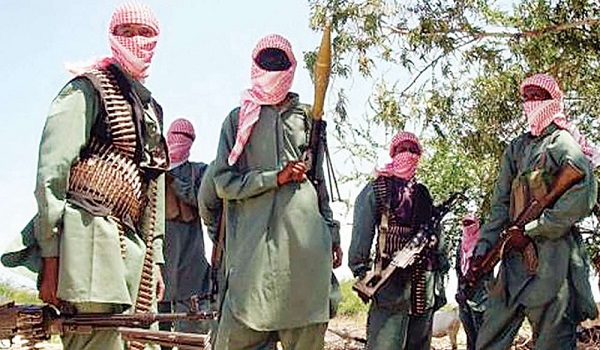
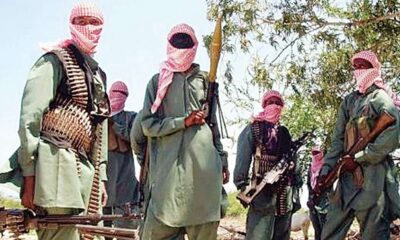
Tension and sorrow have gripped the Iluke Bunu community in Kogi State following a deadly bandit attack that reportedly claimed the life of the Vice Principal of Government Secondary School, Iluke.
According to reports, the victim, identified as Mr. Gani Anifowose, was brutally killed on Wednesday morning during an attack carried out by armed bandits.
Residents said the community is currently facing heightened security concerns, with fear and panic spreading across the area.
In another disturbing development, reports indicate that students from three neighbouring communities, who were scheduled to sit for the English Language WAEC examination on the same day, were allegedly abducted amid the worsening insecurity in the region.
The incidents have raised fresh concerns over the safety of students, teachers, and residents in vulnerable communities across Kogi State.
A representative of the community association called on security agencies and relevant authorities to urgently intensify efforts to restore peace, secure the affected communities, and ensure the safe return of the abducted victims.
“An hour is gone and no sign of rescue efforts from the security agencies despite placing several calls for help. We urge citizens to remain calm and continue praying for divine intervention, protection, and lasting peace in our communities.”
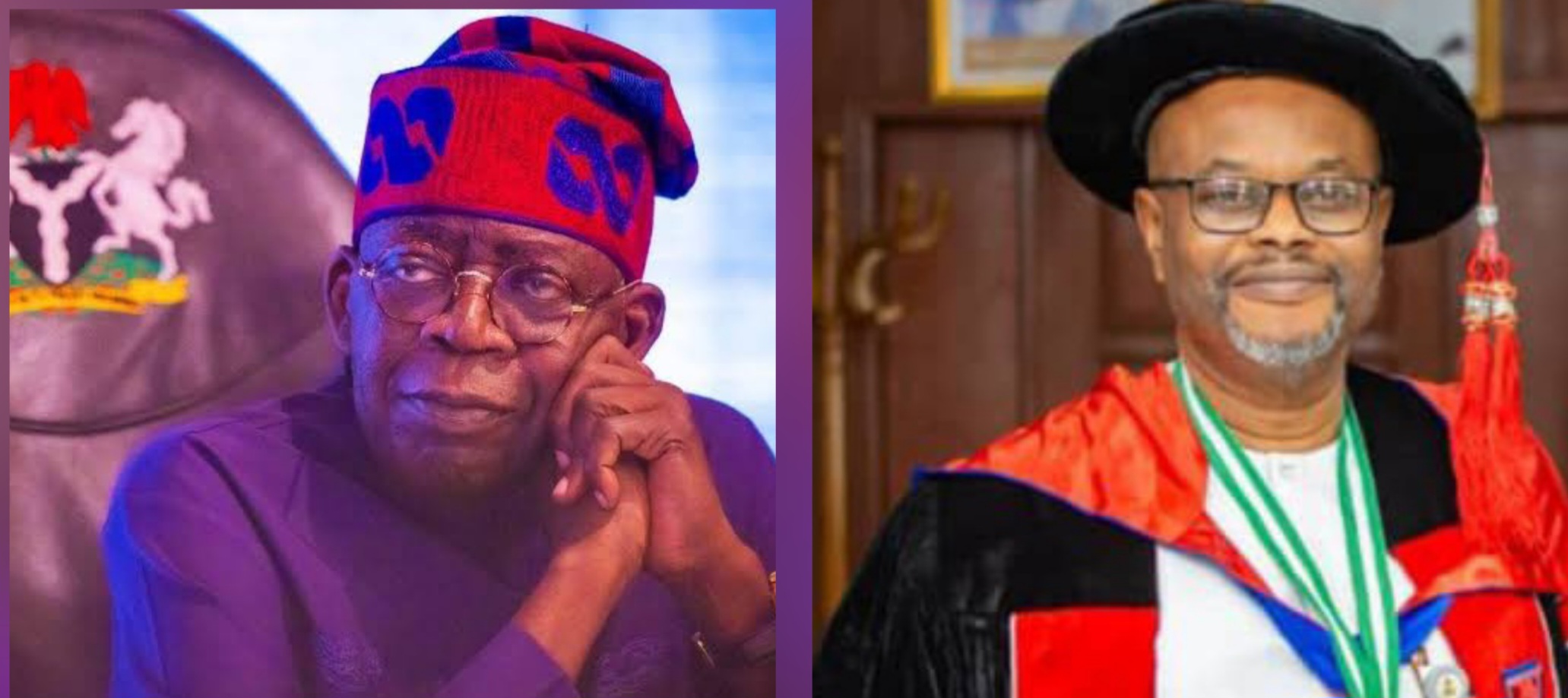
The Independent Corrupt Practices and Other Related Offences Commission (ICPC) has reportedly stepped up its investigation into former Minister of Innovation, Science and Technology, Uche Nnaji, over allegations of certificate forgery.
According to a report by Premium Times, the anti-graft agency has begun efforts to locate the former minister after he allegedly failed to honour several invitations issued in connection with the ongoing investigation.
The publication reported that sources familiar with the matter said the ICPC had invited Nnaji for questioning through different channels, including telephone calls, emails and WhatsApp messages, but he did not appear before investigators.
One of the sources quoted by the newspaper claimed that the commission could declare the former minister wanted if attempts to secure his appearance are unsuccessful.
The latest development is said to be part of an investigation that followed a lengthy inquiry by Premium Times into Nnaji’s academic records and National Youth Service Corps (NYSC) documents.
The newspaper had earlier alleged that the former minister submitted forged degree and NYSC certificates during his ministerial screening and confirmation process in 2023.
According to the report, the ICPC has also sought information from the University of Nigeria, Nsukka (UNN), as part of its investigation.
Another source cited by Premium Times alleged that Nnaji’s failure to respond to the invitations may be linked to his political ambitions ahead of the 2027 governorship election in Enugu State.
The newspaper recently reported that the former minister moved from the All Progressives Congress (APC) to a faction of the Peoples Democratic Party (PDP) and later emerged as its governorship candidate.
Neither Nnaji nor his media aide, Robert Ngwu, had publicly responded to the latest allegations as of the time of filing this report. Premium Times said calls and messages sent to his spokesperson were not answered.
The controversy surrounding the former minister began after investigations into his academic qualifications were published in 2023.
According to the newspaper, Nnaji had approached the Federal High Court in Abuja in a bid to stop the release of his academic records by the University of Nigeria, Nsukka.
However, Premium Times reported that university authorities later informed the newspaper that although Nnaji was admitted into the institution, he did not graduate or obtain the certificate attributed to him.
The publication also stated that the National Youth Service Corps disowned the discharge certificate allegedly presented by the former minister.
Nnaji eventually resigned from his position shortly after the allegations became public.
The matter has continued to attract public attention, with several lawyers and civil society groups calling for a thorough investigation and, where necessary, prosecution in line with the law.
In a related development, POLITICS NIGERIA also reported earlier this year that an investigative panel set up by the Federal Ministry of Education examined the matter as part of a broader review of the allegations surrounding the former minister’s credentials.
The ICPC has yet to release an official public statement detailing the current status of its investigation
Nigeria’s Ministry of Interior is set to declare a nationwide public holiday across all sectors to mark Democracy Day 2026, potentially granting a one-day break for both private and public sector employees.
The federal government’s announcement regarding Democracy Day will be the only national public holiday observed in Nigeria in June 2026.
Democracy Day commemorates the 1993 presidential election and the nation’s struggle for democratic freedom. June 12, 2026, falls on a Friday.
On June 6, 2018, the late former president Muhammadu Buhari, in a public statement, changed the Democracy Day from May 29 to June 12, in honour of the June 12, 1993, presidential election and its winner, Moshood Kashimawo Olawale Abiola, who died in prison.
Abiola was born on August 14, 1937 and passed away under suspicious circumstances on July 7, 1998. A popular Ogun businessman, publisher, and politician of the Egba clan, he is often referred to as MKO Abiola.
He ran for the presidency in 1993 and was widely regarded as the presumed winner of the election, which was annulled by former military head of state, General Ibrahim Babangida.
Some southwest states had been celebrating June 12 as a public holiday and are holding ceremonies in Abiola’s honour until Buhari officially declared the day as Nigeria’s real democracy day. The former president, on Monday, June 10, 2018, signed the Public Holiday Amendment Bill into law.
The law, according to the former president’s ex-senior special assistant on National Assembly Matters (Senate), Ita Enang, allows a public holiday to be declared on June 12 every year, while May 29 is to be a handing-over date.


Filling Stations Adjust Petrol Prices Again as New Landing Cost Emerges

Bandits Strike Again, Kill Vice Principal in Fresh School Attack

BREAKING: Court Takes Action on APC Primaries

Former Super Eagles Star Loses Life Savings, Duped By A Pastor of ₦1.2 Billion

I’m A Married Man, I Can Never Get Myself Involved With Such A Thing, Delta Gov Aide Reveals Why He Offered Comfort ₦500,000 Job

Lagos Imposes ₦250,000 Fine For Illegal Waste Disposal

-
 Politics2 days ago
BREAKING: Kwankwaso Breaks Silence on Dumping NDC
-
 News1 day ago
FG to Declare Nationwide Public Holiday, Date Revealed
-
 News13 hours ago
Bandits Strike Again, Kill Vice Principal in Fresh School Attack
-

 Business2 days ago
JUST IN: Marketers Crash Petrol Prices Nationwide, New Pump Prices Emerge
-
 News2 days ago
BREAKING: Top Nigerian Emir is Dead, Details Emerge
-
 Politics14 hours ago
BREAKING: Court Takes Action on APC Primaries
-
 Business10 hours ago
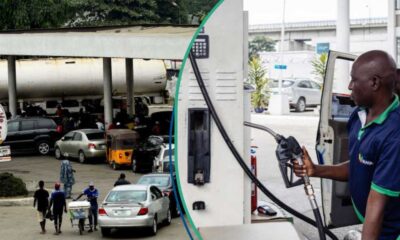
Filling Stations Adjust Petrol Prices Again as New Landing Cost Emerges
-
 News17 hours ago
BREAKING: Tinubu’s Ex-Minister in Trouble Over Certificate Scandal