
Foreign
US, Israel’s True Intentions In Iran Debate

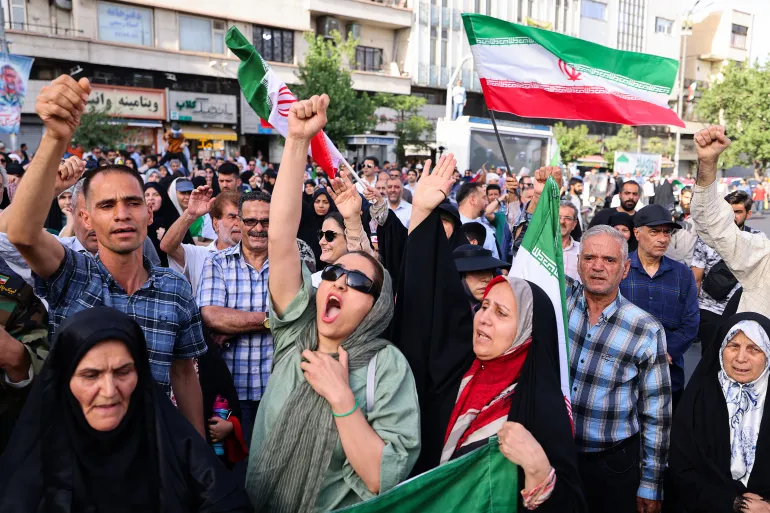
In his 2002 testimony to the United States Congress, then former Israeli Prime Minister Benjamin Netanyahu told US lawmakers that an invasion of Iraq was necessary for winning the “war on terror” and preventing Iraq and terrorist groups from acquiring weapons of mass destruction. He further claimed that the war would be quick and would usher in a new age of Western-friendly democracy, not just in Iraq, but across the region, including Iran. Neither proclamation was true.
As many experts and officials already knew before the 2003 invasion began, Saddam Hussein’s regime did not have weapons of mass destruction and held no ties to al-Qaeda. The war was bound to cause widespread devastation, instability, insecurity, unspeakable suffering, chaos and the breakdown of governance. And that is what happened. Iraq today is at best a fragile state with enormous economic and political challenges.
After Israel and then the US attacked Iran earlier this month, many analysts rushed to comment on how the two allies have supposedly failed to learn the lessons of the Iraq war and are now repeating the same mistakes in Iran. These analyses would have been accurate had the actual goals of the 2003 invasion been to stop the proliferation of weapons of mass destruction and to establish democracy. But they were not.
For the US and Israel, the desired outcome of the war was an Iraq that would not pose any resistance to the Israeli settler-colonial project in Palestine and its role as an agent of US imperial power in the region. This is also the desired outcome in Iran today.

Just like the claims about the weapons of mass destruction in Iraq proved completely false, the claims that Iran was on the “verge of” developing a nuclear weapon have no grounds. No real evidence that Tehran was in fact close to gaining nuclear capabilities has been put forward. Instead, we have been presented with a truly unmatched level of hypocrisy and lies.
Here we have a situation where two nuclear powers – one which stands out as the only state in history to use, not once but twice, a nuclear weapon and another that refuses to sign the Nuclear Non-Proliferation Treaty and has a mass-murder-suicide type of nuclear doctrine – are undertaking illegal “pre-emptive” aggression under the guise of stopping nuclear proliferation.
Clearly, the US and Israel are not after Iran’s nuclear programme. They are after Iran as a regional power, and that is why regime change has already been floated in public.
In addition to multiple statements from Netanyahu, Israeli Defence Minister Israel Katz, and other Israeli officials, US Senators Lindsey Graham and Ted Cruz have also called for toppling the Iranian government. On Sunday, US President Donald Trump joined the calls for regime change in Iran with a post on social media.

The Iranian people are now being encouraged to “stand up” and fight for their “freedom”. But freedom and democracy in Iran are certainly not what Israel and the US aim for. Why? Because a free and democratic Iran would not serve their interests and accept the brutalities of a settler-colonial project in its vicinity.
They would rather see Iran return to the violent, tyrannical monarchy under the Pahlavi dynasty, which was overthrown in a popular revolution in 1979, or any other political force willing to do their bidding.
If that doesn’t happen, Israel and the US would rather have a fragmented, weak, chaotic, destabilised Iran, marred by a civil war. That would suit their interests, just as a war-torn Iraq did.
Weakening regional powers in the Middle East and spreading instability through subversion and aggression is a well-established policy goal that the political elites in Israel and the US have jointly embraced since the 1990s.
A policy document called Clean Break, authored by former US Assistant Secretary of Defense Richard Perle and other neoconservatives in 1996, outlined this strategy of attacking Middle Eastern states under the pretext of preventing the proliferation of weapons of mass destruction to secure Israel’s strategic interests.
Perle et al did not come up with something radically new; they simply built on the well-known imperial strategy of sowing division and chaos in order to facilitate imperial domination.
But this strategy is not without risks. Just like the collapse of the Iraqi state paved the way for violent non-state actors to emerge and for Iran to solidify its position as a regional power challenging US-Israeli interests, a weakened or fragmented Iranian state can result in the same dynamics.
On a more global scale, the actions of the US and Israel are encouraging more countries to pursue nuclear weapons. The lesson that states are drawing from the US-Israeli aggression on Iran is that nuclear weapons are necessary to acquire precisely to prevent such attacks. Thus, we are likely heading towards more proliferation as a result of this war, not less.
The Israeli state does not seem to be concerned about proliferation as long as the chaos and destruction it spreads in the region allows it to achieve its strategic goal of eradicating the Palestinian struggle once and for all, and ending all resistance to its settler colonisation project. Israel, in a nutshell, wants the entire region on its knees and will stop at nothing to achieve that objective. This is because it does not really have to foot the bill of regional instability.
By contrast, US interests are directly impacted when the Middle East descends into chaos. A dysfunctional Iraq or a weakened Iran may serve the US in the short term, but in the longer term, the instability can disrupt its grander plans for control of global energy markets and containing China.
The rest of the world will also feel the ripple effect of this unjustified aggression, just as it did after the 2003 invasion of Iraq.
Given the brutal, decades-long fallout of that war, the global response to the US-Israeli aggression against Iran has been self-defeatingly subdued; some European countries have appeared to endorse the attack, despite the many negative economic impacts they could face as a result of this war.
If governments truly desire to make the world a safer place, this complacency with imperial violence needs to end. It is past time that they come to the sober conclusion that the US and Israel are agents of destruction and chaos by virtue of their racist colonial design.
The Israeli settler colonial project is an unjustifiable project of displacement, expulsion and genocide; US imperialism is an unjustifiable project of robbing people of their resources, dignity and sovereignty.
To establish peace and stability in the Middle East, the world needs to put pressure on Israel to give up its settler colonial project and become part of the region through a decolonial existence with the Palestinians in a decolonised Palestine; and to compel the US to release its iron grip on the region, allowing its people to live in freedom and sovereignty.
This is the only way to avoid perpetual chaos, instability, suffering and pain.
Aljazeera.com
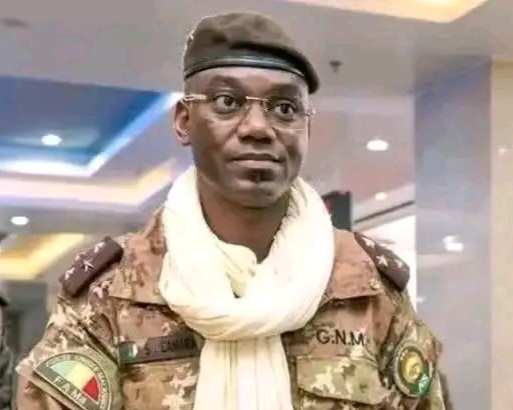
Mali’s Defence Minister, Sadio Camara, has been killed following a wave of coordinated attacks targeting military installations across the country.
Camara reportedly died from injuries sustained during an attack on his residence in Kati, a key military garrison town located about 15 kilometres from Bamako.
The assault, which occurred barely 24 hours before his death, involved a suicide car bomb and formed part of a broader offensive across the country.
The attacks were reportedly carried out by fighters linked to Jama’at Nusrat al-Islam wal-Muslimin, an al-Qaeda-affiliated group, alongside Tuareg rebels from the Liberation Front of Azawad.
According to Al Jazeera, the attackers were able to breach Kati, considered one of the most secure military locations in Mali.
Camara, a key figure in Mali’s military leadership, rose to prominence after playing a central role in the coups of 2020 and 2021 that brought the current junta to power.
Al Jazeera’s Nicolas Haque described his death as significant.
“He was one of the most influential figures within the ruling military leadership… His death is a major blow to the country’s armed forces,” he said.
The coordinated offensive extended beyond Kati, with gunmen attacking several locations including Bamako, Gao, Kidal and Sevare.
“As we speak, people in the garrison town of Kidal can still hear heavy gunfire and loud explosions,” Haque said, adding that the operation remained ongoing more than 24 hours after it began.
The attacks have intensified pressure on Mali’s interim leadership, with analysts suggesting that security forces were overwhelmed by the scale and coordination of the violence.
However, Interim President, Assimi Goita, was reportedly moved to safety and remains in control of the military.
International bodies, including the African Union, the Organisation of Islamic Cooperation, and the United States Bureau of African Affairs, have condemned the attacks and called for urgent measures to restore stability.
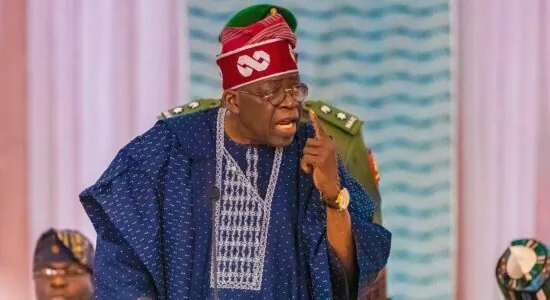
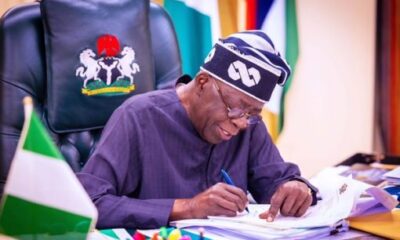
President Bola Tinubu has declared Nigeria’s support for countries in the Gulf region following rising tension linked to the ongoing conflict involving the United States, Israel, and Iran.
Naija News reports that he made this known in Abuja during a formal ceremony where he received letters of credence from several foreign diplomats. The event had representatives from countries such as Qatar and Saudi Arabia, alongside envoys from Lebanon, Sudan, Namibia, Rwanda, Somalia, Argentina, and Congo.
During the meeting, the president assured the visiting diplomats that Nigeria stands with nations in the Gulf, including the United Arab Emirates, Saudi Arabia, Qatar, Kuwait, Bahrain, Oman, and Jordan. He praised their calm approach in handling the situation and stressed the need for peace across the region.
Tinubu described the diplomatic gathering as an important step in strengthening Nigeria’s relationship with other countries. He encouraged the envoys to build stronger partnerships with Nigeria that would benefit both sides.
He also spoke about his government’s economic direction, saying efforts are being made to position Nigeria as an attractive destination for investors. He pointed out opportunities in areas like infrastructure, economic growth, and diaspora involvement, inviting the diplomats to explore these sectors.
On regional matters, the president restated Nigeria’s role in the Economic Community of West African States, especially in maintaining democratic order, improving trade among member states, and addressing instability in the Sahel region.
Tinubu further noted that global issues such as climate change, energy challenges, terrorism, and unfair financial systems require countries to work together.
He said Nigeria is ready to cooperate with other nations both directly and through international platforms to promote a safer and fairer global system.

According to a report by Telegraph, on Thursday April 23, 2026, Israel’s defence minister has declared the country stands prepared to resume military operations against Iran, but only upon receiving authorisation from the Trump administration, as tensions between the two nations continue to simmer beneath a fragile ceasefire.
The statement came amid fresh alarm in the Iranian capital on [date], after Iranian state media reported that explosions were heard above Tehran and air defence systems were activated across the city. The developments immediately triggered speculation of a new Israeli strike, drawing swift attention from regional observers and international monitors tracking the volatile situation.
However, a source within the Israeli military moved quickly to dismiss those claims. Speaking to Israeli outlet Ynet, the source firmly stated that Israel had not carried out any attacks on Iran, offering a direct contradiction to the wave of concern that had swept through diplomatic circles following the reports from Tehran.
A ceasefire between the two countries has been in effect since April 8, and Israeli officials have so far indicated no public breach of that agreement. Despite this, the defence minister’s earlier remarks have raised serious questions about how durable that truce remains, particularly given its apparent dependency on political decisions emanating from Washington.
The reference to a required “green light” from the Trump administration underscores the degree to which Israeli military calculations are now intertwined with American foreign policy direction. Analysts note that this framing places significant weight on Washington’s posture toward Tehran, effectively making U.S. political will a trigger mechanism for potential renewed hostilities in the region.
Iran has not officially responded to the Israeli defence minister’s statement at the time of reporting. The sounds heard over Tehran, while alarming to residents and regional watchers, remain unexplained by Iranian authorities beyond initial media reports of activated air defences.
The situation reflects the precarious nature of the current ceasefire, with both nations maintaining high military readiness even as formal hostilities remain paused. Observers warn that the combination of unexplained aerial activity and bellicose ministerial language represents a dangerous mix that could rapidly destabilise the existing arrangement.


Filling Stations Adjust Petrol Prices Again as New Landing Cost Emerges

Bandits Strike Again, Kill Vice Principal in Fresh School Attack

BREAKING: Court Takes Action on APC Primaries

Former Super Eagles Star Loses Life Savings, Duped By A Pastor of ₦1.2 Billion

I’m A Married Man, I Can Never Get Myself Involved With Such A Thing, Delta Gov Aide Reveals Why He Offered Comfort ₦500,000 Job

Lagos Imposes ₦250,000 Fine For Illegal Waste Disposal

-
 Politics2 days ago
BREAKING: Kwankwaso Breaks Silence on Dumping NDC
-
 News1 day ago
FG to Declare Nationwide Public Holiday, Date Revealed
-

 Business2 days ago
JUST IN: Marketers Crash Petrol Prices Nationwide, New Pump Prices Emerge
-
 News10 hours ago
Bandits Strike Again, Kill Vice Principal in Fresh School Attack
-

 News1 day ago
BREAKING: Top Nigerian Emir is Dead, Details Emerge
-
 Politics10 hours ago
BREAKING: Court Takes Action on APC Primaries
-
 Business7 hours ago
Filling Stations Adjust Petrol Prices Again as New Landing Cost Emerges
-

 News14 hours ago
BREAKING: Tinubu’s Ex-Minister in Trouble Over Certificate Scandal