Connect with us

Business

Consumers Rejoice As Bean Prices Collapse By Over 100%

Published

on

Consumers Rejoice As Bean Prices Collapse By Over 100%

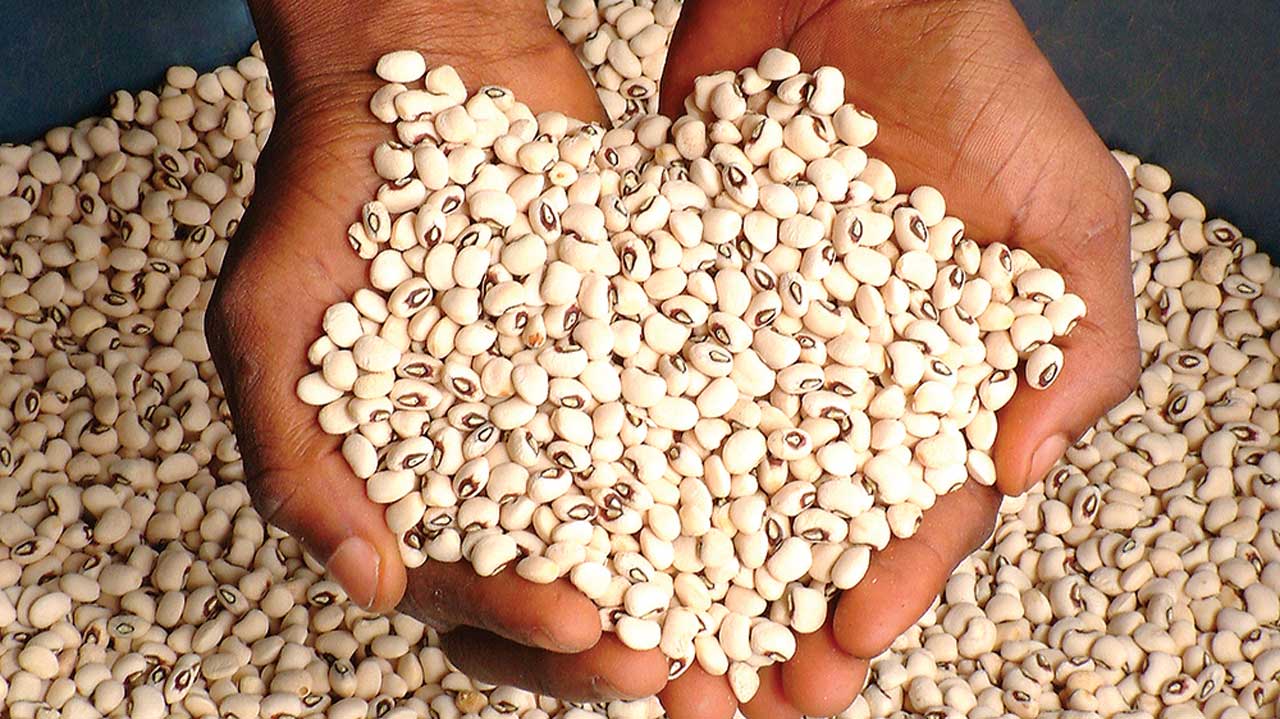
The Cowpea and Beans Farmers, Processors, and Marketers Association of Nigeria (C&BFPMAN) has attributed the recent crash in the price of beans and cowpeas to a bumper harvest across farming regions.

Speaking in separate interviews with the News Agency of Nigeria (NAN) on Sunday, stakeholders, including farmers, wholesalers, and consumers, highlighted increased yields, fewer pest attacks, and improved farm access as the key drivers behind the price drop.

Just last year, a 100kg bag of beans sold for as high as ₦210,000 to ₦240,000, up from ₦90,000 in 2023. But by the first quarter of 2025, the price steadily declined. Today, that same bag goes for ₦80,000 to ₦120,000, depending on the variety.

According to the President of C&BFPMAN, Kabir Shuaibu, last year’s high prices were a result of poor harvests caused by flooding and other climate-related challenges.

Shuaibu explained, “The main reason for the drop in price is the increase we got from our cultivation. We harvested over 10 times what we usually harvested in the past years.

“You can imagine a farmer who planted a hectare expecting 10,000 bags but ended up with just a few due to flooding. That scarcity caused the spike last year.”

Shuaibu said farmers learned from the hardship and adapted by intercropping beans with corn to maximise yields.

Shuaibu further stated, “Another reason for the surplus is that farmers didn’t take chances this time. While cultivating corn, they also planted beans and cowpeas in the same rows. That method increased harvest and brought down prices.

“A bag of beans in the North now sells between ₦80,000 and ₦120,000, depending on the species. As of this time last year, it was over ₦200,000.

He expressed hope that the trend continues, benefiting both farmers and consumers.

Wholesalers, Consumers React To Falling Prices
Mrs. Esther Umeileka, Managing Director of Fresh2Home Ltd. in Lagos, said the reduced price is not only due to higher yields but also because of improved crop quality.

“Last year, we dealt with insect and weevil attacks. This year, we didn’t experience that. There was less spoilage, and government policies have helped too,” Umeileka said.

At Oyingbo market in Lagos, beans trader Mrs. Zainab Ahmed noted a major boost in patronage.

Ahmed said, “Last year, customers just priced and walked away. A paint bucket of beans sold for ₦13,000 to ₦14,000. Now, it goes for ₦6,000 to ₦7,000. Everyone can afford it again.”

For many Nigerian households, the affordability of beans has brought relief. Mrs. Tonia Sanwo, a consumer, described the staple as a necessity in her home.

Sanwo stated, “We used to buy a small cup for ₦2,000 to ₦2,500 last year. Now it sells between ₦800 and ₦1,000. We’re really glad.”

Another consumer, Mrs. Favour Braye, a civil servant, linked the price drop to improved farm security.

She said, “The price of beans has really dropped in comparison to the prices last year.

“The farmers complained that insecurity on their farms resulted in poor yields the previous year.

“However, with ease of access to their farms, the price of beans has dropped and we are all happy about it. More people can now afford beans as it is a common staple in Nigerians homes.”

Naijanews.com

Click to comment

Leave a Reply

Your email address will not be published. Required fields are marked *

Business

Fresh Trouble For Dangote As FG Gives Directive On Petrol, Diesel

Published

on

Nigeria is set to resume the issuance of petrol and diesel import permits as early as mid-February 2026, a move that could reshape supply dynamics in the downstream market and pose fresh challenges for the Dangote Refinery.

Industry sources say approvals by the Nigerian Midstream and Downstream Petroleum Regulatory Authority (NMDPRA) may begin later this month or, at the latest, early March.

If implemented, this would mark the first batch of import licences for 2026, following a temporary regulatory pause aimed at restricting imports to volumes needed only to cover gaps in domestic refining output.

The decision signals government concern about a potential tightening of fuel supply amid shifting market conditions.

According to a ThisDay repport, sources quoted by Argus linked the delay in issuing permits to leadership changes at the NMDPRA after the exit of its former chief executive, Farouk Ahmed, in December.

The transition reportedly slowed internal decision-making at the authority during the early weeks of the year.

Traditionally, import permits are issued on a quarterly basis and remain valid for three months.

Issuing licences midway into the first quarter has raised questions among market participants about how the existing framework will be applied and whether approvals will be prorated.

Market pressure has also intensified following a drop in crude deliveries to the Dangote Refinery. . Receipts reportedly fell to around 250,000 barrels per day in January, down from roughly 350,000 barrels per day in December, the lowest level in about 16 months.

The decline points to lower run rates at the refinery’s crude distillation unit and increases the likelihood of refined product shortfalls.

Earlier reports indicated maintenance activities on key processing units, including the residue fluid catalytic cracking unit that produces petrol.

Although petrol demand eased during the Christmas and early January holidays, traders say tighter local supply and rising refinery asking prices have renewed interest in imported cargoes.

Petrol asking prices climbed by about 14 per cent to N799 per litre by late January, after falling to around N699 per litre in December. The rebound has made imported fuel more competitive in recent trading sessions.

Market participants believe new import permits would allow marketers to supplement domestic supply while regulators continue to prioritise local refining. However, increased imports could dilute Dangote Refinery’s growing dominance in the downstream market.

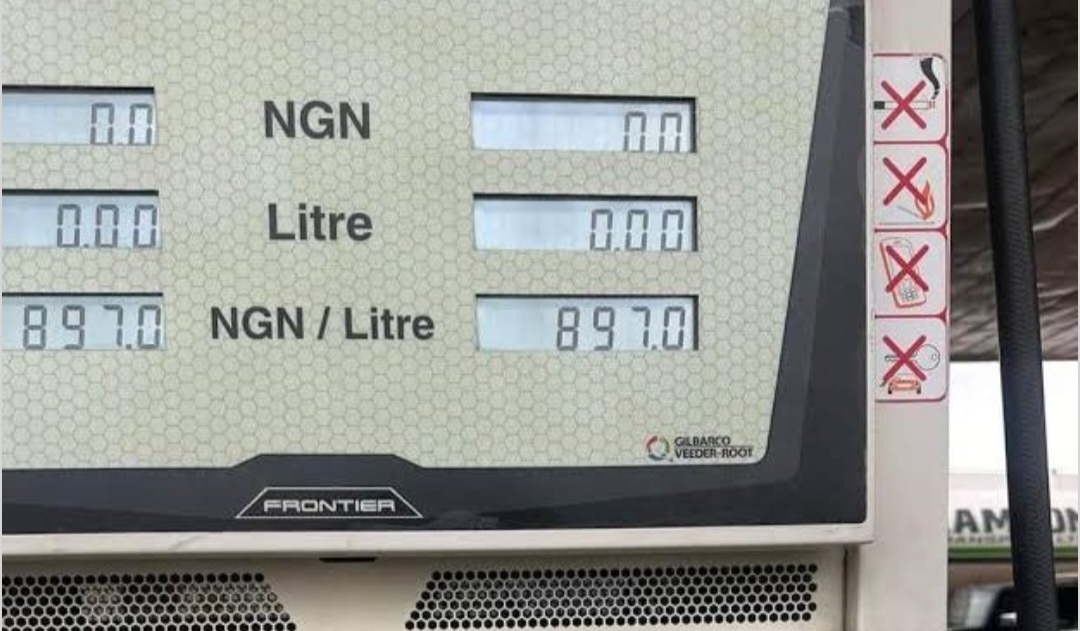
Amid the shifting landscape, the Dangote Refinery has warned that petrol pump prices could approach N1,000 per litre if marketers increasingly rely on coastal transportation rather than gantry loading for fuel evacuation.

In a statement, the refinery said coastal logistics can add about N75 per litre to petrol costs due to port charges, maritime levies and vessel-related expenses.

With Nigeria’s daily consumption estimated at 50 million litres of petrol and 14 million litres of diesel, the extra cost could translate into an annual burden of roughly N1.75 trillion if passed on to consumers.

The company stressed that gantry loading remains the most cost-efficient option and that marketers are free to choose their preferred evacuation method. It cautioned, however, that widespread reliance on coastal shipping would undermine recent price relief achieved through domestic refining.

Continue Reading

Business

‘Cooking Gas, Petrol Prices Crash Nationwide’  [DETAILS]

Published

on

Petrol and cooking gas prices declined year-on-year in December 2025, signalling a gradual easing of household energy costs, according to separate reports released by the National Bureau of Statistics (NBS).

Naija News reports that data from the bureau showed that both Liquefied Petroleum Gas (LPG), commonly used for cooking, and Premium Motor Spirit (PMS), also known as petrol, recorded notable price reductions compared with December 2024, alongside modest month-on-month declines.

The NBS noted that while the downward trend was observed across most states and geopolitical zones, prices continued to vary widely depending on location.

5kg Of Cooking Gas Price Drops By 25%
According to the report, the average price for refilling a 5kg cylinder of LPG declined by 1.20 per cent month-on-month, falling from ₦5,425.78 in November 2025 to ₦5,360.43 in December 2025.

On a year-on-year basis, the price fell sharply by 25.31 per cent, down from ₦7,177.27 recorded in December 2024.

Confirming the trend, the NBS stated, “The average retail price for refilling a 5kg cylinder of Liquefied Petroleum Gas (Cooking Gas) decreased by 1.20 per cent on a month-on-month basis,” adding that the year-on-year decline stood at 25.31 per cent.”

A state-level analysis showed that Kaduna recorded the highest average price for refilling a 5kg cylinder at ₦5,838.66, followed by Jigawa at ₦5,825.09 and Osun at ₦5,777.80.

On the lower end, Katsina recorded the cheapest average price at ₦4,855.80.

Similarly, the average retail price for refilling a 12.5kg cylinder of LPG fell by 0.74 per cent month-on-month, declining from ₦13,538.79 in November 2025 to ₦13,438.90 in December 2025.

Year-on-year, the price dropped by 22.20 per cent from ₦17,274.16 recorded in December 2024.

On a state-by-state basis, Abia recorded the highest average price for refilling a 12.5kg cylinder at ₦14,489.96, followed by Osun at ₦14,444.50 and Delta at ₦14,393.17, the bureau said.

Petrol Price Dips To ₦1,048
The NBS also reported a decline in the average retail price of petrol.

According to the report, the average price of Premium Motor Spirit stood at ₦1,048.63 in December 2025, representing an 11.81 per cent decrease compared with ₦1,189.12 recorded in December 2024.

The bureau stated, “The average retail price paid by consumers for Premium Motor Spirit (Petrol) for December 2025 was ₦1,048.63.”

On a month-on-month basis, petrol prices declined by 1.20 per cent, down from ₦1,061.35 recorded in November 2025.

Further analysis showed that Kogi State recorded the highest average petrol price at ₦1,104.45, while Oyo State had the lowest at ₦996.55.

Regionally, the North East emerged as the most expensive zone for petrol, while the South West recorded the lowest average prices.

Continue Reading

Business

BREAKING: Naira Hits Two-Year High In Official Window As External Reserves Rise 

Published

on

Nigeria’s naira recorded one of its strongest performances in months on Tuesday, January 27, 2026, appreciating sharply against the US dollar at the official foreign exchange window amid improving liquidity and rising confidence in the country’s FX reforms.

The local currency strengthened to around ₦1,400 per dollar at the official market, marking its firmest level since the Central Bank of Nigeria (CBN implemented sweeping FX reforms.

The move signals easing pressure on the naira and renewed optimism among investors and market participants.

According to the CBN’s daily foreign exchange report, the naira closed at ₦1,401.22 per dollar, representing a 1.27 percent appreciation on the day.

Market operators described the move as a reflection of improved dollar supply and stronger participation by banks and other authorised dealers.

Traders said the official window saw increased volumes, with the improved liquidity helping to narrow volatility and reduce speculative demand.

The latest performance reinforces the view that the reforms aimed at unifying exchange rates and improving price discovery are beginning to yield results.

The positive momentum extended to the parallel market, where the naira also posted modest gains.

Channel checks showed the local currency appreciating by about 0.33 per cent to trade around ₦1,476 per dollar. While the gap between the official and parallel rates remains, analysts say the narrowing spread reflects improving confidence across both the regulated and informal segments of the FX market.

According to a report by MarketForces Africa, reduced arbitrage opportunities and stronger supply conditions are helping to stabilise pricing.

The naira’s rally comes against the backdrop of rising external reserves, which have strengthened the CBN’s ability to intervene when necessary and support market liquidity.

Higher reserves are widely viewed as a key confidence signal for foreign investors, particularly portfolio investors who remain sensitive to currency risk.

Market watchers say consistent inflows from export earnings, improved remittance flows, and cautious monetary management have all contributed to the improved outlook for the naira in recent weeks.

Continue Reading

Trending