Connect with us

Business

Banks Resume International Transactions On Naira Cards As Dollar Supply Rises

Published

on

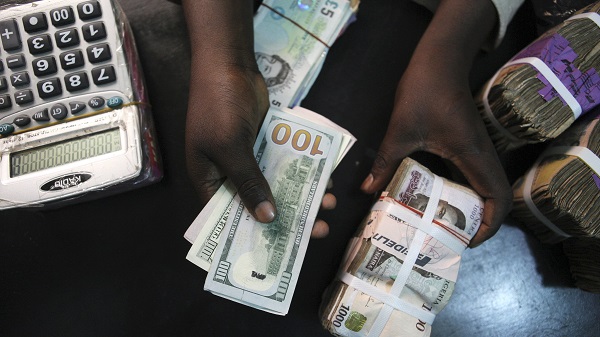
Commercial banks have lifted over three years moratorium on the use of naira-funded debit cards abroad as dollar liquidity rises.

A Tier-1 bank and mid-tier bank, United Bank for Africa (UBA) Plc and Wema Bank Plc respectively, have announced the resumption of international transactions on their naira debit cards.

In separate announcements to customers, UBA and Wema Bank said the service has recommenced on their naira cards.

The development comes about three years after many banks suspended international transactions on naira debit cards or dip in dollar liquidity, forcing many local lenders to restrict transactions of local cards abroad.

Transactions are, however, allowed for dollar-funded cards, usually linked to cardholders’ domiciliary accounts.

But all that changed following a steady surge of forex inflows into the domestic economy.

Analysis of FX inflows in the last few months showed that Nigeria attracted $5.96 billion monthly inflows from May 2025 till date.

Industry report showed that Nigeria’s foreign exchange market witnessed a significant boost in May, with total inflows rising by 62.0 per cent month-on-month (M-o-M) to $5.96 billion, driven largely by increased participation from domestic and foreign investors.

This marked one of the highest inflow levels in recent months and signals improving market sentiment amid macroeconomic reforms and a relatively stable naira.

In emailed note to investors, analysts at Financial Derivatives Company Limited attributed rising FX inflows to surge in oil prices and multiple inflow channels created by the Central Bank of Nigeria.

The Central Bank of Nigeria (CBN) has in recent months, activated multiple FX sources to increase dollar inflows, boost dollar access to manufacturers and retail end users and support naira recovery across markets.

Related News
From moves to improve diaspora remittances through new product development, granting licenses to new International Money Transfer Operators (IMTOs), implementing a willing buyer-willing seller FX model, and enabling timely access to naira liquidity for IMTOs, the apex bank has simplified dollar-inflow channels for authorised dealers and other players in the value chain.

In a notice to customers, the UBA said the resumption aligns with its continued commitment to providing clients with seamless and enhanced banking experiences.

“In line with our continued commitment to providing you with seamless and enhanced banking experiences, we are pleased to inform you that all UBA Premium Naira Cards, including Gold, Platinum, and World variants are now enabled for international transactions,” the bank said.

“This means you can now use your Premium Naira Card for everyday payments, online shopping, POS, and ATM transactions across the world, with more ease and flexibility.

“If you haven’t used your card recently, now’s a great time to rediscover the convenience and prestige that comes with being a UBA premium card holder.

Also announcing the development in a recent statement, Wema Bank said customers can now “pay in dollars” with their naira cards.

“Your Wema Naira Mastercard just went global! Now you can pay in dollars on all your favourite international platforms; Amazon, eBay, AliExpress? Netflix, Spotify, YouTube,” the bank said.

In a report, head of financial institutions ratings at Agusto & Co, Ayokunle Olubunmi, said the improved liquidity in the foreign exchange (FX) market supported banks’ decision to reactivate their naira cards for global transactions.

“The moderating premium on the parallel market transactions and the reduced arbitrage opportunities is also responsible for the decision,” he said.

Records showed that many banks, including Stanbic IBTC Bank, United Bank for Africa, Access Bank, Standard Chartered Bank Nigeria, GTBank among others have at some point reviewed international spending limit on naira cards, while at other times suspended transactions on such cards, unless they are linked to dollar-funded domiciliary accounts.

Analysts said that by allowing travelers use their naira-cards abroad, the banks are making it easy for cardholders to pay their hotel bills, make reservations and carry out other transactions using their debit cards.

 

Click to comment

Leave a Reply

Your email address will not be published. Required fields are marked *

Business

RVEALED: Meet The Owners of Nigeria’s Commercial Private Jet Companies

Published

on

In the past two decades, Nigeria’s skyline has become an unexpected stage for a drastic rise in private aviation, as reported by Nairametrics

What was once a rare symbol of elite mobility has grown into a fleet of well over a hundred business jets crisscrossing domestic and international routes.

According to industry figures, the number of private business aircraft operating in the country climbed from just 44 in 2005 to 157 by 2024, a surge of more than 350% that reflects both expanding wealth and shifting travel habits among the nation’s affluent.

Flying a private jet is not just about convenience; it’s about connecting business faster, offering access where commercial airlines cannot, flexibility, and providing a level of service that combines luxury, reliability, and exclusivity.

These jets allow business moguls, musicians, athletes, and other high-net-worth individuals to move quickly, either for work or leisure.

Flying a private jet is costly; flights start at around $3,000 and above, depending on the aircraft, distance, and level of luxury, making these jets accessible to only a select group of Nigeria’s economic elite.

The private jet business in Nigeria is built on relationships, trust, and discretion. Most clients come through referrals, with operators rarely advertising broadly.

Every flight is a careful balance of strict safety standards, experienced crews, and regulatory compliance from air operator certificates to international operational approvals.

This article explores the individuals driving Nigeria’s private jet market, investing heavily in one of the most elite forms of personal transport.

Here are the owners of commercial private jet companies in Nigeria

11. Yemi MacGregor- Stargate Jets Services Limited
10. Segun Demuren- Founder, Evergreen Apple Nigeria
9. Chukwuerika Achum- Founder, Falcon Aerospace Limited
8. Sam Iwuajoku- Founder, Quits Aviation Services and CEO ExecuJet Aviation Nigeria
7. Atedo Peterside- Founder, Anap Business Jets Limited
6. Samuel Salihu – CEO Private Business Jet Charter
5. Wisdom Ntoto – CEO Jetlyfe Aviation Ltd
4. Captain Ahmed Borodo- CEO Flybird Aviation
3. Dr. Ernest Azudialu Obiejesi -CEO Nesto Aviation Services Limited
2. Captain Edward Boyo –CEO Landover / Overland Airways
1. Dr. Elizabeth Jack-Rich- Founder, Elin Group Limited

Continue Reading

Business

Black Market Naira To Dollar Exchange Rate Today 12th January 2026

Published

on

What is the Dollar to Naira Exchange rate at the black market, also known as the parallel market (Aboki fx)?

You can swap your dollar for Naira at these rates.

How much is a dollar to naira today in the black market?

The exchange rate for a dollar to naira at Lagos Parallel Market (Black Market) players buy a dollar for N1490 and sell at N1505 on Sunday, 11th January 2026 according to sources at Bureau De Change (BDC).

Black Market Exchange Rate Today 12th January, 2026
Buying Rate N1485
Selling Rate N1500

The exchange rate between the US dollar (USD) and the Nigerian naira (NGN) which rate we have given above; is a topic of high constant interest for people who are Nigerian and businesses and policymakers in Nigeria.

This rate of dollars to naira exchange rate influences not only the cost of imported goods but also the cost of travel, international education, and even local prices of certain commodities.

Please note that the Central Bank of Nigeria (CBN) does not recognize the parallel market (black market), as it has directed individuals who want to engage in Forex to approach their respective banks.

Continue Reading

Business

BREAKING: Petrol Depot Owners Crash Prices To Cheapest; Details Emerge

Published

on

Petrol prices at Nigerian depots have dropped to their lowest levels in months as intense competition grips the downstream market, following the apparent collapse of the fuel supply agreement between the Dangote Petroleum Refinery and independent marketers.

Fresh findings show that depot owners have slashed ex-depot prices to as low as N710 per litre, a sharp reversal from the steep hikes recorded just weeks earlier.,

In the first week of January 2026, depot owners sharply increased gantry prices after reports emerged that the Dangote Refinery had shut down its petrol production unit for maintenance.

Although the refinery denied the reports, the speculation was enough to jolt the market.

Depot prices surged, and the increases quickly filtered through to filling stations nationwide.

Independent marketers raised gantry prices from around N720 per litre to over N800 per litre, with analysts noting that depot operators were exploiting uncertainty surrounding Africa’s largest refinery.

Depot owners reverse course as competition intensifies
The price spike, however, has proven short-lived.

Checks reveal that depot owners have now reversed course, cutting prices aggressively to stay competitive with Dangote Refinery’s pricing structure, especially as fresh fuel imports enter the Nigerian market.

Data from PetroleumPriceNG shows that several major depots reduced prices significantly in recent days.

As of Sunday, January 11, 2026, ShellPlux sold petrol at N710 per litre, MAO at N715, while A.Y.M.

Falling crude oil prices add more pressure
Energy experts say global oil market dynamics are also contributing to the decline in local petrol prices.

“Crude oil is currently trading between $50 and $60 per barrel in the international market,” energy policy analyst Adeola Yusuf told Legit.ng.

According to him, ongoing geopolitical tensions involving Venezuela and Iran have pushed crude prices lower, with direct implications for refined fuel costs.

“Crude oil is often used as a political tool and is highly sensitive to geopolitical developments. When prices drop, refined product prices usually follow, especially in domestic markets,” Yusuf explained.

Continue Reading

Trending