
Politics
Nentawe Yilwatda: List of 9 APC National Chairmen From 2013 to 2025

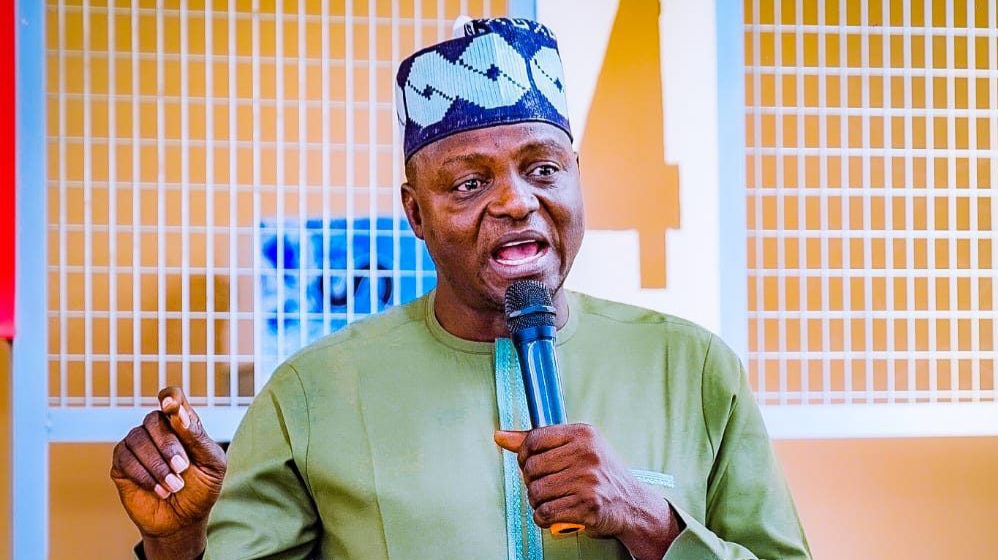
The history of the All Progressives Congress (APC) dates back to 2013, following a merger between at least three opposition parties
In 2023, the merger paid off, and the APC ended the 16-year dominance of the PDP, but this would not have been possible without the party’s leadership
As Prof. Nentawe Yilwatda takes over as APC national chairman, Legit.ng highlights all the party’s national chairmen from 2013 to 2025
The ruling All Progressives Congress (APC) has been a significant powerhouse in the Nigerian political scene since its establishment in 2013.
APC was born out of a merger between three major opposition parties in Nigeria: the Action Congress of Nigeria (ACN), the Congress for Progressive Change (CPC), and the All Nigeria Peoples Party (ANPP).
As a prominent political party, the leadership of the APC has seen several changes over the years, with Prof. Nentawe Yilwatda being the new sheriff in town
Bisi Akande (2013 – 2014)
The elder statesman and former governor of Osun state held the position of the national chairman of the APC briefly on an interim basis when the party was first formed.
He played a pivotal role in uniting various opposition parties to form a cohesive platform to challenge the Peoples Democratic Party (PDP), the ruling party at the time.
Akande’s leadership set the foundation for the APC’s future success, and he is still a party member.
2. John Oyegun (2014 – 2018)
John Oyegun is the party’s longest-serving chairman since its formation in 2013.
Following the APC’s official registration as a political party in 2014, Oyegun became the first substantive national chairman.
Under his leadership, the party made significant gains, winning the 2015 general elections and forming the government at the federal level.
Oyegun’s tenure saw the APC’s expansion and consolidation of its position in Nigerian politics.
Today, Oyegun is part of the African Democratic Congress (ADC) coalition and has even gotten his membership card in his state of origin, Edo.
3. Adams Oshiomhole (2018 – 2020)
Oshiomhole, a former labour leader and Edo governor, took over the reins of the APC in 2018.
During his tenure, the party faced both successes and challenges. Oshiomhole’s strong-willed approach contributed to the APC’s victory in several state-level elections, but internal disputes and factionalism also emerged within the party.
This development led to his ouster as the chairman of the party.
4. Mai Mala Buni (2020-2022)
Mai Mala Buni was famously known for his caretaker role as the party leader following the controversies that led to the ouster of Oshiomhole, BBC reported.
Following the dissolution of the national working committee (NWC), Buni became the acting chairman and later became the substantive chairman after the party’s convention.
When he held the position, he was serving as the executive governor of Yobe state. His leadership has been marked by efforts to unite the party and enhance its electoral prospects. 5. Senator Abdullahi Adamu (2022 – 2023)
5. Senator Abdullahi Adamu (2022 – 2023)
Arguably, the most controversial of them all, Senator Abdullahi Adamu’s emergence as national chairman was laced with wranglings and reservations following his long-term affiliations with the PDP.
The Nasarawa-born politician once shared that he did not support President Bola Tinubu at the APC presidential primaries.
On Monday, July 17, 2023, reports surfaced that he had tendered his resignation letter from being the national chairman of the APC.
In December of that year, he quit politics.
6. Abubakar Kyari (July 2023 to August 2023)
After Senator Adamu’s resignation, the deputy national chairman (North) of the APC, Senator Abubakar Kyari, emerged as the party’s national chairman.
Channels TV reported that Kyari’s emergence as interim APC chairman was announced at a press briefing in Abuja on Monday, July 17, 2023. Kyari, who represented Borno North senatorial district in the 9th national assembly, presided over the APC NWC meeting that day.
7. Abdullahi Ganduje (August 2023 to June 2025)
Abdullahi Umar Ganduje, the present board chairman Federal Airports Authority of Nigeria (FAAN), served as the governor of Kano state from 2015 to 2023. He previously served as Rabiu Kwank
waso’s deputy governor twice, from 1999 to 2003 and from 2011 to 2015. He is a member and former national chairman of the ruling APC from August 2023 to June 2025.
8. Ali Bukar Dalori (June to July 2025)
A deputy national chairman (North) of the APC, Ali Bukar Dalori, replaced Ganduje as the national chairman of the Nigerian ruling party Ganduje’s resignation, which took effect on Friday, June 27, 2025, was confirmed by senior party officials in Abuja as his official letter cited health reasons.
9. Nentawe Yilwatda: APC chairman (July 2025)
On Thursday, July 24, 2025, Yilwatda emerged as the new national chairman of the APC, permanently replacing Ganduje, who stepped down. Yilwatda is a technocrat and politician with roots in engineering, governance, and party politics.
Until his appointment as APC national chairman, he was Nigeria’s humanitarian affairs minister.


Taraba State Governor Agbu Kefas has won the gubernatorial ticket of the All Progressives Congress (APC). He polled 166,375 votes to defeat former Minister of Transport, Mu’azu Jaji Sambo, who got 4,110 votes.
Speaking shortly after he was declared winner, Kefas noted that the victory belongs to all members of his party.
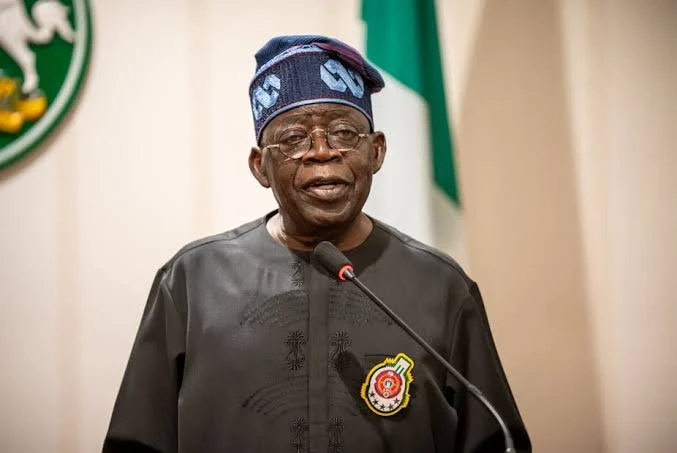
The decision by some former ministers of President Bola Tinubu to resign from the Federal Executive Council in pursuit of elective offices ahead of the 2027 general elections appears to be yielding mixed fortunes, with only two securing party tickets so far.
Five former cabinet members stepped down from their positions after the Presidency directed political appointees seeking elective offices to resign before participating in party primaries.
Their resignation was in line with the Electoral Act 2026.
Among those affected were former Minister of Foreign Affairs, Yusuf Tuggar, who resigned to contest for the All Progressives Congress governorship ticket in Bauchi State; and former Minister of State for Humanitarian Affairs, Yusuf Sununu, who resigned to pursue Kebbi senatorial ticket.
Others are former Minister of Transportation, Saidu Alkali, who resigned to contest Gombe governorship ticket; former Minister of State for Labour and Employment, Nkeiruka Onyejeocha, pursuing House of Representatives ticket in Abia State; and former Minister of Power, Adebayo Adelabu, who resigned to contest the Oyo governorship primaries.
Of the five, only Onyejeocha and Sununu have secured their tickets.
Onyejeocha clinched the APC ticket for Isuikwuato/Umunneochi Federal Constituency in Abia after emerging as an unopposed candidate.
Sununu also secured the APC ticket for Yauri/Shanga/Ngaski Federal Constituency after withdrawing from the Kebbi South senatorial race.
Adelabu, Alkali lose out, Tuggar’s fate hangs
Adelabu, who resigned after the deadline set by the President, had hoped to secure the party’s governorship ticket in Oyo State ahead of the 2027 elections.
The former minister was, however, defeated in the contest by Senator Sarafadeen Alli.
Alli polled 578,143 votes to defeat Adelabu, who got 19,193 votes.
Following the outcome of the exercise, Adelabu alleged manipulation in the primary process, insisting that the election did not reflect the true wishes of party members.
He vowed to challenge the outcome of the election, adding that his team was preparing to petition the party leadership at the national level.
Speaking to journalists during the exercise, the ex-minister said, “In some wards, our people were prevented from voting; they were intimidated, they were chased away violently. And in some wards, voting did not take place at all, but they recorded numbers for them.
“All these kinds of misconduct are not good at this stage of our democracy in Nigeria and something has to be done about it. We are going to write serious petitions against all these things that took place.”
Similarly, former transport minister Alkali failed to secure the APC governorship ticket in Gombe State after boycotting the primary process over alleged irregularities.
Alkali lost to Jamilu Gwamna, who is backed by the incumbent, Governor Inuwa Yahaya.
Gwamna emerged winner of the primary after polling 247,161 votes to defeat Alkali, who polled 11, 612 votes and the former Minister of Communications and Digital Economy, Professor Isa Pantami, who scored 12,120 votes.
Alkali had earlier boycotted the primaries over alleged lack of fairness, inclusivity, and credibility.
He also alleged that the exercise lacked the basic hallmarks of a credible democratic process.
While Adelabu and Alkali have lost out in their political bids, the fate of Tuggar hangs in the balance.
His supporters threatened to leave the APC if the party imposed a governorship candidate.
The supporters made their position known on Friday amid speculations that former Bauchi State governor, Muhammad Abubakar, may emerge as the party’s consensus candidate.
Speaking with Saturday PUNCH, the Director of Media, Tuggar Foundation, Ibrahim Malam, said members of the movement would not remain in a party where internal democracy was allegedly being undermined.
According to him, the position being canvassed was that of members of the movement and not that of Tuggar himself.
“Regarding this narration of somebody becoming the APC flag bearer who is not competent, somebody who lost an election, we can’t remain in the party where democracy is not practised.
“I’m saying this on behalf of my team, not on behalf of the former minister Yusuf Tuggar. But this is our collective mind with the people coordinating his social media. We cannot support a party where democracy is not being practised,” he said.
Also speaking, a pharmacist and social media influencer, Bello Adamu, popularly known as Elder Karofi, rejected what he described as an attempt to impose a candidate on party members.
Adamu alleged that the reported consensus arrangement in favour of Abubakar amounted to injustice and warned that many supporters of Tuggar might refuse to support the APC if the decision stood.
“We reject this imposition and I don’t think any one of us is going to support anybody if that happens,” he stated.
He further disclosed that consultations were ongoing among supporters on the next political step to take, including the possibility of defecting from the APC to another political party.
Adamu also criticised the former governor’s record in office, insisting that Tuggar remained a more competent option among the aspirants seeking the APC governorship ticket in the state.
Alkali not leaving APC
Speaking with Saturday PUNCH, Umar Alkali, the media aide to ex-minister Alkali, clarified that his principal did not withdraw from the governorship race but merely boycotted the APC primary process.
He said, “He (Alkali) is still in the race; he only boycotted the primaries. Given what happened during the previous House of Representatives and Senatorial primaries, after consultations, he deemed it fit to boycott the exercise.”
Alkali explained that many people misunderstood the situation and wrongly concluded that the former minister had withdrawn from the contest.
“He is not withdrawing from the governorship race. This is what most people misunderstood. He is still in the race; he only boycotted the process,” he added.
He also dismissed speculation that the former minister was planning to leave the ruling party, saying “No, he (Alkali) is not quitting the party. He is still in the APC.”
The aide further stated that Alkali remained loyal to the leadership of the APC and the Tinubu-led administration.
Meanwhile, Adelabu has dismissed the outcome of the primary election.
Speaking with Saturday PUNCH through his media aide, Femi Awogboro, the former minister said he was unaware of any officially declared result.
“I don’t know what you are talking about. We don’t know of any result because we have not seen any result. The result has not been announced by anybody,” Awogboro said.
Asked whether Adelabu would challenge the outcome of the election or consider leaving the party, Awogboro said, “I won’t be able to say anything as regards that,” he added.

Ahead of the 2027 general elections, the All Progressives Congress (APC) on Thursday conducted primary elections for aspirants interested in contesting on the party’s platform.
According to Naija News, most first-term governors secured return tickets to seek re-election, while several outgoing governors also successfully delivered their preferred successors in consensus-driven primaries across the country.
Governors who clinched tickets unopposed to fly the APC flag in 2027 included Dauda Lawal (Zamfara), Umaru Bago (Niger), Dikko Radda (Katsina), Nasir Idris (Kebbi), Ahmad Aliyu (Sokoto), Sheriff Oborevwori (Delta), Uba Sani (Kaduna), Umo Eno (Akwa Ibom), and Umar Namadi (Jigawa).
Also, Lagos Deputy Governor, Dr Obafemi Hamzat; Senator Olamilekan Adeola in Ogun; Kingsley Chinda in Rivers; and Mustapha Gubio in Borno all emerged as consensus candidates in their respective states.
In Rivers, Governor Siminalayi Fubara, Tonye Cole and Dakorinama George-Kelly withdrew from the race, paving the way for Chinda to emerge as the sole aspirant.
The exercises, however, were not smooth sailing in Oyo, Kwara, Bauchi and Taraba states.
As earlier reported by Naija News, the APC national headquarters halted the Kwara governorship primary midway on Thursday and announced that the exercise has been rescheduled for Friday.
In Taraba, Governor Agbu Kefas faced a tough challenge from former Minister of Transportation, Mu’azu Sambo, who insisted the process must be transparent and credible.
Similarly, in Oyo, former Minister of Power, Adebayo Adelabu, rejected the process, alleging intimidation, manipulation and falsification of results in parts of the state.
Members of the party in Bauchi State decried alleged moves to impose a governorship candidate, insisting on a transparent, credible and competitive process.
Following some hitches, the APC leadership also postponed the governorship primary in Bauchi to Friday while the party has approved the rescheduling of the State House of Assembly Primary Elections for Maradun I and Maradun II Constituencies in Zamfara State to Sunday, May 24, 2026.
These developments were confirmed in a statement on Thursday by the APC National Publicity Secretary, Felix Morka.
“The decision was approved by the National Working Committee NWC following consultations with relevant stakeholders and in furtherance of the Party’s commitment to ensuring transparent, orderly, peaceful, and credible primary election process,” he said.


NNPC Releases New Petrol Prices at Filling Stations Nationwide; State-by-state Costs Emerge

Yorubaland No Longer Safe, Terror Cells Expanding — Gani Adams

Taraba 2027: Kefas Secures APC Ticket For Second Term

Former Super Eagles Star Loses Life Savings, Duped By A Pastor of ₦1.2 Billion

I’m A Married Man, I Can Never Get Myself Involved With Such A Thing, Delta Gov Aide Reveals Why He Offered Comfort ₦500,000 Job

These ’90s fashion trends are making a comeback in 2017
-
 Politics2 days ago
List Of Tinubu Ex- Ministers Crash Out Of APC Governorship Primaries
-
 News2 days ago
Yorubaland No Longer Safe, Terror Cells Expanding — Gani Adams
-

 Entertainment2 days ago
Failed Relationships Made Me Freeze My Eggs — Ashmusy
-

 Business2 days ago
35 Million Nigerians Risk Acute Hunger In Coming Months — UN
-

 Sports2 days ago
Galatasaray President Rules Out Osimhen Exit
-

 Sports2 days ago
Five Gold Medals And African Record Highlight Nigeria’s Success In Algeria
-
 Politics2 days ago
Taraba 2027: Kefas Secures APC Ticket For Second Term
-
 Business12 hours ago
NNPC Releases New Petrol Prices at Filling Stations Nationwide; State-by-state Costs Emerge