
Politics
Judgement: Jonathan Can Run For 2027 Presidential Election

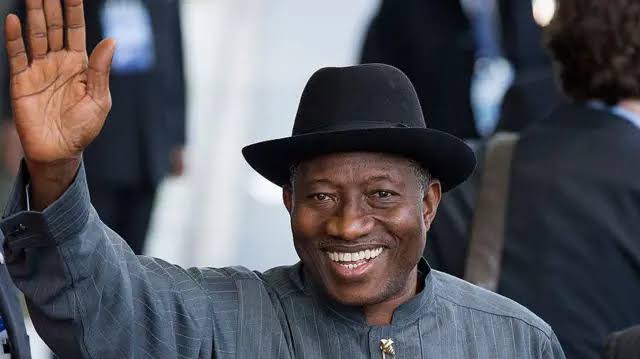
As the possibility of former President Goodluck Jonathan contesting the 2027 presidential election continues to heat up political discussions, a previously unpublished judgment delivered by a Federal High Court in Yenagoa, Bayelsa State, affirmed that Jonathan was well qualified to contest presidential election.
Two members of the APC in Bayelsa had gone to court in 2022 to determine Jonathan’s position, given the high stakes northern lobby to mobilise Jonathan to replace late President Muhammadu Buhari before the now President Tinubu eventually clinched the APC ticket.
Aides to the former President said he is still consulting on whether to throw his hat in the ring for 2027. Sources close to the former President told THISDAY last night, that he has been approached by three political parties – each wanting him to contest the presidency on their platforms. The Peoples Democratic Party, PDP, the New Nigeria Peoples Party, NNPP and the recently formed coalition, the African Democratic Congress, ADC – all jostling for the former President who many see as one of the most viable candidates that can give the incumbent President Bola Ahmed Tinubu a good run for his money.
This calculation is based on the fact that Jonathan can only legally seek one more term and could assuage the feelings of northern voters who accuse President Tinubu of marginalisation.

A claim that the presidency has vigorously denied.
The judgment delivered by Justice Isah Dashem of the Federal High Court, Yenagoa, on May 27, 2022 but obtained by THISDAY yesterday, put to rest the contentious constitutional amendment of Section 137(1)(b) and 3, as it affects Jonathan.
Various analysts led by the Minister of Aviation and Aerospace Development and Learned Silk, Festus Keyamo, had claimed that the PDP may put its presidential chances in 2027 at “risk” should they field Jonathan going by the provisions of the above section from the amended Constitution in 2018. However, Keyamo did not disclose or was unaware of the judgement of Justice Dashem.
The judgment, which has not been appealed or set aside remains subsisting. And it is now out of time for any appeal after 3 years since it was delivered
In the 2022 suit with number: FHC/YNG/CS/86/2022, the two APC members sued Jonathan, APC and the Independent National Electoral Commission (INEC), over rumour that the APC had planned to field the former president as its presidential candidate in the 2023 general elections.

Their grouse was that Jonathan’s participation would ruin the chances of the APC having taking oath of office twice as president.
The sole issue raised for determination was “Whether, in view of the provisions of | Section 137(1)(b) and (3) of the Constitution of the Federal Republic of Nigeria 1999 (as altered) and the fact that Jonathan had earlier been sworn-in as the President of the Federal Republic of Nigeria in 2010 and 2011 respectively, whether he is qualified to contest for the office of the President of the Federal Republic of Nigeria in the 2023 General Elections to be organized by the 3rd Defendant.”
The plaintiffs, Andy Solomon and Idibiye Abraham, through their lawyer, Seigha Egbuwabe, further urged that if the answer to (1) above was in the negative, then the court should determine “Whether the no 2” Defendant was entitled to field the 1st Defendant as its Presidential Candidate in the 2023 General Elections”.
The court was also to determine, “Whether the 3rd Defendant is entitled to disqualify the 1st Defendant from contesting and/or from being presented as the 2nd Defendant Presidential Candidate in the 2023 General Elections.”
Dashem, after taking arguments from plaintiffs’ lawyer and Jonathan, who was represented by Eric Omare, held that Jonathan was eminently qualified to contest in 2023.
Before arriving at the conclusion, Dashem observed that Jonathan was elected first as president in 2011.
“The office into which the ‘election’ stated in Section 137(1)(b) of the Constitution applies to the Office of the President of the Federal Republic of Nigeria and not into the Office of the Vice President. I have perused the entirety of the Plaintiffs supporting affidavit and Written Address and I am unable to find where the Plaintiffs referred this Court contested apart from the elections conducted in year 2011.
“I, therefore, find the Plaintiffs’ contention that the 1st Defendant has been elected to the Office of President on Two (2) previous occasions spurious, baseless and unsubstantiated.
“And I so hold.”
He clarified that although elections into the offices of President and Vice President were conducted simultaneously and upon a joint ticket submitted by a political party, such as the 2nd Defendant, to the 3rd Defendant, the positions of President and Vice President were two different offices.
According to the judge, election of a person, such as the 1st Defendant, into the Office of the Vice President is not the same as his election into the Office of the President and vice-versa.
The judge stated, “A person who is elected into the Office of Vice President cannot by virtue of such election simpliciter, occupy the position of the President of the Federal Republic of Nigeria. I so hold.
“As I have noted above, the Plaintiff did not file a Reply Affidavit to dispute the facts contained in paragraphs 4(i) — (y) of the 1st Defendant’s Counter Affidavit. The legal implication of this failure is that the contentions of the 1st Defendant are deemed to be true.
“In the final analysis, I find that, the evidence before this Court points to the conclusion that the 1st Defendant has only been elected into the Office of the President of the Federal Republic of Nigeria on one (1) previous occasion, which said occasion was in the General Elections conducted in year 2011. And I so hold.
On the provisions of Section 137(3) of the Constitution, Dashem stated that Jonathan was sworn in as president in 2010, to complete the tenure of late President Umaru Yar’Adua and again in 2011, after he won the 2011 presidential election.
He agreed with Jonathan’s submissions that the said provisions, which sought to bar persons who completed another’s tenure from contesting twice, did not apply to him because the law was passed in 2018, when he already had the right to contest and contested in the 2015, general elections.
Dashem said, “As I have held above, the provisions of sub-Section (3) of Section 137 of the Constitution was not part of our Constitution prior to June 7, 2018, when same took effect. It, therefore, follows that the provisions of sub-section (3) was not the position of our law at all material times before June 7, 2018. It also follows that, prior to June 7, 2018, no restriction was placed on the number of times a person who was sworn-in to complete the term of office of a President of the Federal Republic of Nigeria can be re-elected into that Office.
“The 1st Defendant has argued that, since he acquired his right to contest and, if successful, be sworn-in as President after he lost his re-election bid, in 2025, to the current President – President Muhammadu Buhari – it would be unethical to the spirit and intendment of the legislature to take away the right he acquired in year 2015 on the basis of a law that came into effect in 2018.
“Now, the position of the law on retroactive or retrospective application of laws is quite settled. Retroactive laws are which relate or cover matters or acts which occurred before its commencement date.”
The judge added, “Despite my best efforts, I fail to see where the legislature expressed their intention, by express and unequivocal words, that the provisions of subsection (3) of Section 137 of the Constitution should be accorded retrospective application.
“In the absence of such express words, I am constrained to hold that the provisions of Section 137(3) do not enjoy retrospective application. The application and enforceability of the said subsection can only be construed to apply with effect from June 7, 2018. And I so hold.
“In my opinion, the position being propounded by the 1st Defendant is not only tenable but accords with the position of the law. It is the duty of the Plaintiffs to point or direct this Court to where the legislature stated that the provisions of Section 137(3) of the Constitution apply to events and/or rights which have been acquired and/or have been vested in parties prior to June 7, 2018.
“The law is that, he who asserts must prove. See: Section 131(1) of the Evidence Act, 2011. It therefore, behoved the Plaintiffs to provide this Court with facts to support their case. In the absence of such proof, I find that the Plaintiffs have not discharged the burden of proof placed on them by law.
“I, therefore, find merit in the argument of the 1st Defendant that the introduction of sub-section (3) of Section 137 of the Constitution does not affect his right to contest for the Office of the President of the Federal Republic of Nigeria in the 2023 General Elections and be sworn-in as such, should he be victorious at the polls.
“As I have noted above, before, in year 2015 when the 1st Defendant lost his re-election bid into the Office of the President, the restriction imposed by subsection (3) to Section 137 was not in existence. This is why the 1st Defendant despite having been sworn-in as President on May 6, 2010 and May 29, 2011, was able to contest for the Office of the President in the 2015 General Elections.
“Had the 1st Defendant been victorious at the 2015 polls, he would have been sworn-in for a third time without any legal impediment. Therefore, the 1st Defendant acquired his right to contest for the Office of the President immediately his term as President ended on May 29, 2015. Clearly, it is incontrovertible that the Ist Defendant’s right to contest and be sworn-in as President accrued to and was vested in him on May 29, 2015. And I so hold.
“In the final analysis, I answer Question 1 formulated by the Plaintiffs in their Originating Summons in the affirmative.
“I declare that, the provisions of Section 137(3) of the Constitution acquired the force of law with effect from June 7, 2018 and same does not have retrospective application.
“I also declare that, the 1st Defendant is not disqualified by the provisions of Section 137(1)(b) and (3) of the Constitution from contesting for election into the Office of the President of the Federal Republic of Nigeria in the 2023 General Elections.
“Having answered Question 1 in the affirmative, the necessity to answer Questions 2 and 3 have been obviated. However, for the avoidance of doubt, I answer Question 2 in the affirmative also whilst I answer Question 3 in the negative.
“In the final analysis, I answer questions 1 and 2 posed in the Originating Summons in favour of the 1st Defendant and question 3 in the negative and therefore against the 3rd Defendant.
“Consequently, I enter Judgement for the I Defendant and all the reliefs sought by the Plaintiffs in their Originating Summons dated May 16, 2022 (but filed on May 17, 2022) fail and are all hereby dismissed.”
-THISDAY
The Federal High Court sitting in Gusau, the Zamfara State Capital, has adjourned the hearing of the suit filed to challenge the results of the senatorial primary election of the All Progressives Congress (APC) for the Zamfara North senatorial district to June 25, 2026.
Sani Abdullahi Shinkafi, an aggrieved aspirant in the election, challenged the outcome of the primary election, citing irregularities. He had mentioned the Independent National Electoral Commission (INEC), the APC and Sahabi Ya’u Kaura, the party’s senatorial candidate for Zamfara North.
The Tribune reported that when the matter was called for hearing on Tuesday, June 9, the court could not continue with the proceedings over the absence of INEC and the APC, who are the defendants in the suit.
Justice Hassan Dikko of the trial court then adjourned the suit to June 25 for further hearing. Shinkafi is challenging the process and outcome of the ruling party’s national assembly primary election, where Senator Kaura had emerged as the APC candidate for the Zamfara North senatorial district.
Barrister Bello Galadi, the lawyer to the plaintiff, who addressed journalists after the hearing, said Shinkafi was seeking the intervention of the court over what he tagged as a flawed primary election process.
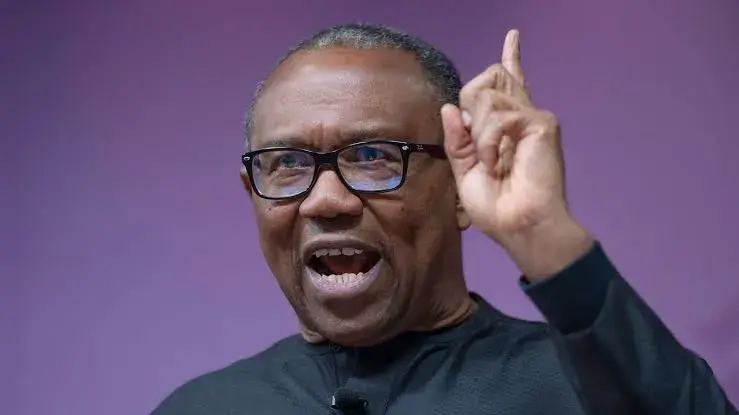
Veteran journalist and publisher of Ovation International, Chief Dele Momodu, has disclosed that former Labour Party presidential candidate, Peter Obi, once turned down his suggestion to work closely with former Vice President Atiku Abubakar ahead of the 2027 political battle because he believed he had a stronger political following.
Momodu made the revelation while speaking during an interview on the Naija Unfiltered Podcast, where he reflected on his relationship with both politicians and the discussions he had with Obi after the 2023 general election.
According to him, he encouraged the former Anambra State governor to rebuild his political alliance with Atiku, arguing that the ex-Vice President played a major role in bringing Obi to the national stage when he selected him as his running mate in the 2019 presidential election.
“I told Peter why don’t you go and work with Atiku. Atiku was the person who brought him to national prominence,” Momodu said.
The media entrepreneur recalled that Atiku’s decision to settle for Obi as his running mate was not welcomed by some influential figures within the Peoples Democratic Party at the time.
“When Atiku picked Peter, the governors were angry but one thing about Atiku is that once he makes up his mind, he’s a very focused man,” he added.
Momodu explained that he tried to convince Obi by pointing to examples of leaders in different countries who eventually rose to the highest political office after serving as deputies.
“So, I told Peter, I said sir, Your Excellency, try and work with this man (Atiku), then I gave him copious examples. I said if Mahama was not a VP to Prof Atta Mills, maybe he would never be President of Ghana because he came from a minority just like Jonathan in Nigeria,” he said.
“I gave the example of Jonathan, I gave the example in America. Even Joe Biden, who was much older than Obama, still came back to become president because you’re able to demonstrate your capacity.”
Despite the advice, Momodu said Obi was not convinced that such a political arrangement would benefit him.
“You’ve always been a governor of a state but Peter told me he’s more popular than Atiku,” Momodu stated.

The Independent National Electoral Commission (INEC) has updated its official political party portal, removing Ahmed Yayari and Daniel Woyengikuro from their respective positions as Peoples Democratic Party (PDP) National Treasurer and National Financial Secretary.
The electoral body replaced them with Odeyemi Mackson Oladiran as the new National Treasurer and Eyim Donatus Henry as the new National Financial Secretary.
POLITICS NIGERIA reports that the development comes amid an ongoing internal power struggle within the main opposition party.
The ousted officials, Ahmed and Daniel, belong to the Turaki faction backed by Oyo State Governor Seyi Makinde. Conversely, the newly listed executives, Odeyemi and Eyim, are loyalists of the Federal Capital Territory (FCT) Minister, Nyesom Wike, whose camp is recognized by the commission.
The portal before change
Prior to this update, the commission had already recognized the FCT Minister’s camp by listing Abdulrahman Mohammed as the PDP National Chairman and Samuel Anyanwu as the National Secretary.
However, keeping the names of Ahmed Yayari and Daniel on the roster had initially caused confusion. With this latest portal revision, the entirety of the PDP leadership listed on the electoral umpire’s website reflects the camp loyal to Wike.
The party has been embroiled in a leadership contest between the camp under FCT Minister Nyesom Wike and a rival group led by Kabiru Tanimu Turaki, who emerged from a late 2025 party convention.
In the convention in Ibadan where Turaki was elected National Chairman, steps were taken to suspend Wike along with several associates.
The portal showing the recent changes
However, the pro-Wike camp dismissed the convention and established an alternative 13-member Caretaker Committee under the leadership of Abdulrahman Mohammed.
This led to court cases with conflicting judicial outcomes.
An Oyo State High Court originally validated the Ibadan convention and the Turaki-led National Working Committee, directing the electoral body to acknowledge them.
This decision was later overturned by the Court of Appeal in Abuja, which nullified the Ibadan convention and set aside Turaki’s election.
Source: Politics Nigeria


BREAKING: Court Takes Action on APC Primaries

BREAKING: Tinubu’s Ex-Minister in Trouble Over Certificate Scandal

BREAKING: Peter Obi Drags Kenneth Okonkwo to Court, Reasons Emerge

Former Super Eagles Star Loses Life Savings, Duped By A Pastor of ₦1.2 Billion

I’m A Married Man, I Can Never Get Myself Involved With Such A Thing, Delta Gov Aide Reveals Why He Offered Comfort ₦500,000 Job

Lagos Imposes ₦250,000 Fine For Illegal Waste Disposal

-
 Politics2 days ago
BREAKING: APC Releases List of Qualified Senatorial Candidates Ahead 2027
-
 News2 days ago
JUST IN: INEC Releases Final List Of Candidates For 2026 elections
-
 Politics1 day ago
BREAKING: Kwankwaso Breaks Silence on Dumping NDC
-
 News18 hours ago
FG to Declare Nationwide Public Holiday, Date Revealed
-

 Business1 day ago
JUST IN: Marketers Crash Petrol Prices Nationwide, New Pump Prices Emerge
-

 News1 day ago
BREAKING: Top Nigerian Emir is Dead, Details Emerge
-
News2 days ago
BREAKING: Tinubu Swears In Two New Ministers
-
 News4 hours ago
BREAKING: Tinubu’s Ex-Minister in Trouble Over Certificate Scandal