
News
ASUU Rejects Tinubu’s Pay Rise Offer

The ongoing salary renegotiation between the Federal Government and the Academic Staff Union of Universities (ASUU) may suffer another setback as the union has rejected the proposed 35 per cent pay increase for lecturers.
All 89 ASUU branches in public universities are said to have voted against the offer at the union’s recent National Executive Council (NEC) meeting held in Abuja.
Naija News reports that the rejection raises concerns about a possible breakdown in discussions between the government’s re-negotiation team and the university lecturers’ union.
ASUU President, Prof. Chris Piwuna, confirmed the development, explaining that the union remains firm on the salary structure recommended by the former government re-negotiation committee led by Prof. Nimi Briggs.
The recent offer by the Federal Government to us was a 35 per cent increase. When we had our meeting to suspend the warning strike, none of the 89 branches accepted the 35 per cent increase,” Piwuna told Daily Sun.
“All the 89 branches of ASUU in Nigeria rejected the 35 per cent increase. So, it’s a non-starter for us. We have Prof. Nimi Briggs’ benchmark, which we are discussing with them in the team, and we believe that’s what they should use.”
Naija News reports that the Nimi Briggs committee, which concluded its work in 2022, recommended a new salary scale for university lecturers, including a monthly pay of ₦1.2 million for professors in public universities.
The report, however, was shelved by the government. Currently, professors in Nigeria’s public universities earn less than ₦500,000 per month, less than half of what was proposed.
The union maintains that implementing the Briggs report is crucial to restoring dignity to the teaching profession and halting the exodus of academic talent from Nigeria’s university system.
In 2022, the Committee of Vice-Chancellors of Nigerian Universities (CVCNU) had recommended a compromise salary of ₦800,000 for professors, representing a 50 per cent increase, as against the ₦1.2 million earlier proposed by the Briggs panel.
That recommendation was also not implemented by the Federal Government, further widening the gap between the two parties.
With ASUU insisting on the Nimi Briggs template and rejecting the government’s 35 per cent offer, analysts fear that the ongoing renegotiation could reach a dead end, potentially setting the stage for renewed industrial unrest in the tertiary education sector.
Union leaders have repeatedly warned that without fair remuneration and improved working conditions, the nation’s universities will continue to lose qualified lecturers to better-paying institutions abroad.
For now, the ball appears to be in the Federal Government’s court as the academic union stands its ground on a deal it says reflects both economic realities and the true value of intellectual labour.
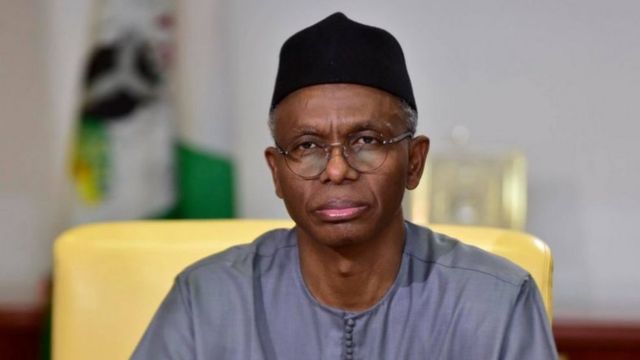
The Independent Corrupt Practices and Other Related Offences Commission (ICPC) has filed fresh criminal charges against former Kaduna State Governor, Nasir El-Rufai, and seven others over alleged fraud and money laundering linked to a ₦10.8 billion CCTV security project in the state.
According to court documents filed at the Federal High Court in Kaduna on April 17, the anti-graft agency brought 11 counts against the former governor and the other defendants under the Money Laundering (Prevention and Prohibition) Act, 2022.
A former Kaduna State Commissioner for Information and Chairman of Liberty Television, Alhaji Tijjani Ramalan, disclosed the development in a post on his Facebook page.
Ramalan said El-Rufai and the seven other accused persons would soon face the new charges.
The ICPC alleged that El-Rufai approved the award of an ₦8.68bn CCTV contract in December 2015 to a company it claimed lacked the required competence.
The commission also alleged that several large sums were received and transferred between 2017 and 2022 by individuals and companies linked to the project.
The firms mentioned include Singularity Network Security Limited and other companies allegedly connected to the CCTV security project.
Others named in the case include a former Kaduna State government official, Jimi Lawal; senior executives of IHS Towers; and five companies.
One of El-Rufai’s sons, Bashir El-Rufai, was also mentioned in the allegations but was not listed as a defendant.
The fresh charge is the third set of charges filed by the ICPC against the former governor since March.
El-Rufai is already facing separate corruption-related cases involving other state projects, including a light rail contract and severance payments.
He had denied wrongdoing in earlier court appearances.
Other agencies, including the Department of State Services (DSS) and the Economic and Financial Crimes Commission (EFCC), are also investigating or prosecuting him over separate allegations.
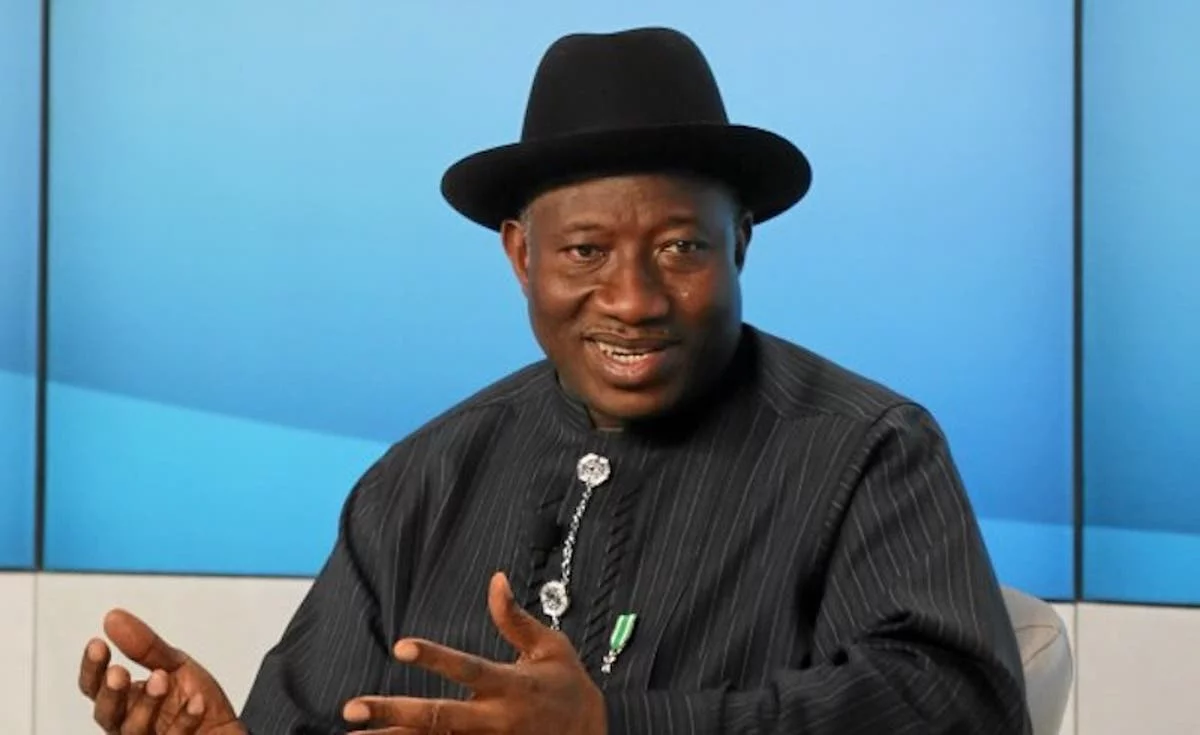
A statement by former President Goodluck Jonathan has been read before the Southwark Crown Court in the United Kingdom in the ongoing trial of Diezani Alison-Madueke.
The statement was presented during proceedings on Tuesday, according to BBC reports.
In the statement, Jonathan said it was not unusual for third parties to make payments on behalf of ministers during official overseas duties.
“Any properly incurred incidental or in-kind assistance from third parties would be recorded and reimbursed where applicable,” the former president was quoted as saying.
He also confirmed that he approved Alison-Madueke’s use of private jets for certain foreign trips.
Alison-Madueke, who served as minister of petroleum resources from 2010 to 2015, is standing trial alongside Olatimbo Ayinde and Doye Agama.
They are facing a five-count charge bordering on accepting bribes but have all pleaded not guilty.
Earlier in the trial, prosecutors accused the former minister of accepting luxury goods and access to high-end properties from individuals seeking favourable treatment in oil contracts.
They alleged that the benefits were provided in exchange for influence within the petroleum sector.
Counsel to Alison-Madueke, Jonathan Laidlaw, told the court that his client had no real influence over the award of oil contracts during her time in office.
Meanwhile, Nigerian businessman Igho Sanomi and Ghanaian businessman Kevin Okyere have denied allegations of bribery.
Their statements, read in court, indicated that payments made on behalf of the former minister were later reimbursed.
Okyere stated that he paid about £3,900 for items purchased by Alison-Madueke in 2014, adding that the money was later refunded in cash.
Sanomi also said items he purchased on behalf of the former minister were reimbursed, insisting that his companies secured contracts through fair competition.
The trial is ongoing, with further proceedings expected as the court continues to examine evidence and witness statements.
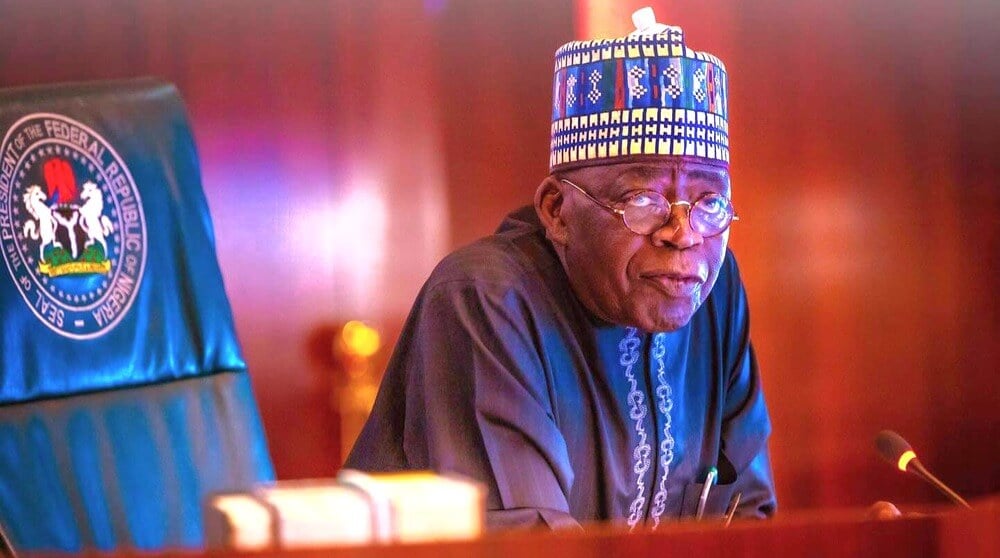
There is growing tension within the All Progressives Congress (APC) as members of the party’s National Working Committee (NWC) move to resist President Bola Tinubu’s directive granting state governors significant control over party tickets ahead of the primaries.
An uneasy calm pervades the party, with findings indicating a widening rift between the presidency and the APC leadership.
Insiders warn that the directive risks eroding the authority of the party’s central structure, weakening internal democracy and triggering widespread disaffection across states.
The development followed Tinubu’s conferment of powers on the 31 governors under the APC to decide the fate of aspirants in their states ahead of the 2027 general election.
Sources within the NWC told THE WHISTLER that the president’s position, which effectively empowers governors to determine candidates in their states, has sidelined the party leadership and undermined its relevance.
“What the president has done is to remove powers from the party leadership, make them redundant and kill the party,” an NWC member said.
Consequently, multiple sources disclosed that some within the NWC are already weighing options to push back against the directive, including leveraging aggrieved aspirants as a pressure point to force a rethink.
According to one official, “If this stands, the party structure becomes irrelevant. There are already suggestions that those who feel shortchanged should be allowed to ventilate their grievances, even if it unsettles the system, in order to compel a reversal.”
The controversy follows recent remarks by President Tinubu in which he signalled that state governors should take the lead in determining party candidates ahead of the primaries, arguing that they best understand the political dynamics within their states and should therefore guide the process.
The president said this was necessary to preserve the party’s unity and cohesion ahead of the poll in 2027.
However, party insiders insist the pronouncement has had unintended consequences, emboldening state-level power blocs, intensifying rivalries, and triggering open contests for control.
Infighting Spreads Across States
The directive has already fuelled internal battles in several states and widened already existing crises in some states. In Abia State, a fierce supremacy contest has erupted between Deputy Speaker of the House of Representatives, Benjamin Kalu, and former governor, Senator Orji Uzor Kalu, with both men laying claim to presidential backing as the party’s leader in the state.
Abia is led by a governor under the platform of the Labour Party, Dr Alex Otti.
The Deputy Speaker said he has been chosen by Tinubu to lead the APC in the state.
Orji Uzor Kalu – an outspoken campaigner for Tinubu’s second term – has dismissed the claims, insisting that Tinubu chose him to lead the party in the state.
Delta, Nasarawa Crises Deepen
In Delta State, the directive has intensified a brewing contest between Senator Ifeanyi Okowa and former Deputy Senate President Ovie Omo-Agege. Governor Sheriff Oborevwori is reportedly backing Okowa, his predecessor, for a return to the Senate – placing him at odds with Omo-Agege and his loyalists.
A serving commissioner in the state hinted that all three serving senators may fail to secure return tickets, a development that has heightened anxiety and uncertainty among party stakeholders.
Party leaders argue that such outcomes reflect the diminishing role of the NWC in ensuring fairness and balance.
“All the privileges and influence tied to purchasing tickets and conducting primaries have been lost,” an NWC member lamented. “Rather than creating a level playing field, the president has made things difficult by lighting an over-dried grass.”
In Nasarawa State, a similar crisis is unfolding. Governor Abdullahi Sule’s alleged backing of Senator Ahmed Wadada – who only recently defected from the Social Democratic Party (SDP) – has sparked resistance among long-standing party members.
Former Inspector-General of Police, Mohammed Adamu Idris, has rejected the governor’s position and is preparing to challenge the arrangement, with the backing of former governor Tanko Al-Makura, setting the stage for a high-stakes internal showdown.
Cross River, Others on Edge
In Cross River State, tensions are also mounting as founding members of the party push back against recent defectors, insisting they should have priority in the allocation of tickets.
They are reportedly pressuring Governor Bassey Otu to sideline new entrants from the Peoples Democratic Party (PDP), a move that could reshape the state’s political calculations.
As a result, figures like Senator Jarigbe Agom are said to be at risk of losing out to former governor Ben Ayade, while several House of Representatives seats – particularly in northern Cross River – are being pencilled in for long-standing party members as compensation.
The development has created palpable tension, with defectors threatening a showdown if denied fair opportunities.
Warning Signs from Party Leadership
The crisis is not limited to a few states. Similar fault lines are reportedly emerging in Rivers, Akwa Ibom, Enugu, Benue, Kwara, Lagos, Ogun and Ondo, raising concerns about a nationwide ripple effect ahead of the primaries.
In Rivers State, the contest which portends danger for the APC is between the Governor, Siminalayi Fubara, and FCT Minister Nyesom Wike. Wike was instrumental to the emergence of Tinubu as president while Fubara is the party leader as a governor in the state.
With the president’s pronouncement, Fubara camp said they have been given the upper hand, which would pit him against Wike.
However, some APC leaders in the state have said there is likely to be a sharing formula where the Governor will concede some candidates to the Wike-led PDP as the APC, including the president, would not allow the APC to lose out completely during the elections in the state.
Meanwhile, in Benue, the power struggle is between Governor Hyacinth Alia and the Secretary to the Government of the Federation, George Akume, which has effectively split the party’s structure in the state and forced elected officials to take sides.
Party sources have expressed worries that the struggle portends danger and could imperil the prospects of the party in 2027.
Similarly, in Plateau State, the Governor, Caleb Mutfwang, who decamped from the PDP to the APC, is seen as an outsider who wants to usurp power and has been told by the old guards that he would have no control over the party tickets despite the president’s directive.
In Akwa Ibom State, the conflict is between the governor and the third most powerful constitutional officer, Senate President Godswill Akpabio.
Akpabio, as the presiding officer of the Senate and the leader of the delegation that went to Tinubu to lobby unsuccessfully for automatic tickets, carries with him the institutional prestige of an office that the President’s directive has now, in effect, subordinated to that of his home-state governor.
That this arrangement has begun to generate friction.
The senators’ meeting with Tinubu, at which the plea for automatic tickets was rebuffed, was led by Akpabio, who returned from that encounter with the knowledge that the President had, in effect, signalled that the governor of Akwa Ibom, not the Senate President, would determine who gets the APC ticket in that state.
A member of the APC National Executive Committee (NEC) warned that the directive could significantly weaken the party’s electoral strength, as aggrieved members may withdraw from mobilisation efforts.
“No one would be interested again in mobilising for the party because they would be aggrieved that they lost out unfairly,” the source said.
He added that “party politics is dicey and tricky and requires careful management, not pronouncements that can unsettle unity and give the opposition the opportunity to capitalise and wreak havoc.”
When contacted, the spokesman of the APC, Felix Morka expressed reservations about making comments that he may be misunderstood. Questions sent to him for further comments were not answered.


REVEALED: Tension Rises As Suspects Admit Knowledge Of Plot Against Tinubu

BREAKING: Full List Of ADC Reps Defecting With Peter Obi And Kwankwaso

ADC Crises Deepens As Court Nullifies State And LG Congresses

Former Super Eagles Star Loses Life Savings, Duped By A Pastor of ₦1.2 Billion

These ’90s fashion trends are making a comeback in 2017

I’m A Married Man, I Can Never Get Myself Involved With Such A Thing, Delta Gov Aide Reveals Why He Offered Comfort ₦500,000 Job
-
 Politics8 hours ago
BREAKING: Full List Of ADC Reps Defecting With Peter Obi And Kwankwaso
-

 Opinion1 day ago
BREAKING: Segun Ajiboye Emerges POMPA Chairman
-

 Business1 day ago
Good News: Chinese Firm In Fresh Moves To Restart Nigeria’s Refineries
-
Entertainment1 day ago
Tension As Teddy A Unveils Mystery Woman Amid Rumours of Marriage Crash With BamBam
-
 Politics1 day ago
ADC Crises Deepens As Court Nullifies State And LG Congresses
-
 Politics7 hours ago
REVEALED: Tension Rises As Suspects Admit Knowledge Of Plot Against Tinubu