Business
FG Defers 70% Of 2025 Capital Projects To 2026
The Federal Government has ordered ministries, departments, and agencies to carry over 70 per cent of their 2025 capital budget into the 2026 fiscal year as the administration moves to prioritize the completion of existing projects and contain spending pressures in the face of weak revenues.
This directive is contained in the 2026 Abridged Budget Call Circular issued by the Federal Ministry of Budget and Economic Planning and circulated to all ministers, service chiefs, heads of agencies and top government officials in Abuja.
The circular, which was seen by The PUNCH on Monday, stated that the annual budget estimates must follow strict guidelines and that all officers responsible for budget preparation were expected to comply fully. The circular made clear that the preparations for the 2026 budget would not allow the introduction of new capital projects.
It stated that ministries and agencies must continue with the allocations already approved in the 2025 budget rather than seeking fresh projects. The document said MDAs are required to upload 70 per cent of their 2025 budget to continue next year, and that this must be done in line with national priorities.
It explained that the rollover is based on what it described as the immediate needs of the country and the development priorities of the administration. It listed the priorities that align with the policy direction of the government, such as national security, the economy, education, health, agriculture, infrastructure, power and energy, as well as social safety nets, including women and youth empowerment.
According to the circular, “MDAs are to upload 70 per cent of their 2025 FGN Budget to continue in FY2026. All such rollover and uploads MUST be in line with the immediate needs of the country as well as government’s development priorities that aligns with the policy direction of the new administration which hinges on National Security, the Economy, Education, Health, Agriculture, Infrastructure, Power & Energy as well as social safety nets, women & youth empowerment.”
The circular stated that the government had established a framework that sets capital budget ceilings for 2026 at 70 per cent of the 2025 project allocations. It also explained that only 30 per cent of the 2025 capital budget would be released within the current fiscal year, while the remaining 70 per cent would serve as the foundation for the 2026 capital budget, replacing the previous method of a traditional rollover.
It said this would ensure continuity for ongoing projects and eliminate wasteful duplication. The document emphasized that ministries must not attempt to exceed their overhead ceilings from 2025 when preparing their 2026 submissions.
It acknowledged that inflation is affecting costs but said the government is constrained by revenue challenges. It added that the government would sustain the effort to achieve full release of the overhead budget but warned that proposals that go beyond approved ceilings would be adjusted downward.
According to the circular, “MDAs are required to work within and not exceed their 2025 overhead ceilings (Executive Proposal) for the purpose of preparing their 2026 Overhead budget submissions. While we note the impact of inflation on overhead costs, we are, however, constrained by revenue challenges in providing significantly more for overheads. We will, however, sustain the effort to achieve full release of the overhead budget.”
The circular explained that budget estimates must take into consideration the policies and strategies contained in the 2026 to 2028 Medium Term Expenditure Framework and Fiscal Strategy Paper, which it described as the Federal Government’s pre-budget statement.
It said the MTEF outlines development priorities and that the annual budget must be prepared in line with the policy thrust of the administration. It referred to the direction under the Renewed Hope Agenda, including the Renewed Hope Infrastructure Development Plan and Ward Development Plan, the National Development Plan, and other programmes, including the Accelerated Stabilization and Actualization Plan.
The circular said all expenditure would be properly scrutinized to allow only essential spending and to ensure value for money. It stated that the government remains committed to improving the efficiency and quality of spending and to strengthening budget formulation, implementation, monitoring, and evaluation.
MDAs were informed that they must submit their budgets online using the GIFMIS Budget Preparation Subsystem, while government-owned enterprises must submit theirs through the Budget Information Management and Monitoring System. Both submissions must be completed not later than Tuesday, December 9, 2025.

Business
After Dangote, Another World Class Refinery to Be Built in Nigeria, CEO Confirms Location
Clarivo Oil and Gas, led by Chief Obidike Chukwuebuka, has announced plans to build a world-class oil refinery in Calabar, Cross River State, aimed at boosting Nigeria’s downstream oil and gas sector.
Speaking to journalists, Chief Obidike said the project will be implemented in phases, in collaboration with foreign partners to bring advanced technical expertise and international industry standards.
The planned refinery will feature state-of-the-art technologies, including crude distillation, catalytic cracking, and hydrotreating units, enabling the production of high-quality petroleum products such as petrol, diesel, and aviation fuel.
The phased approach will begin with feasibility studies and front-end engineering design, followed by construction of core processing units, and conclude with installation of secondary units and commissioning.
Chief Obidike noted that the refinery aims to increase domestic refining capacity, reduce dependence on imported petroleum products, and enhance Nigeria’s energy security. He added that the project is expected to create significant employment across engineering, construction, operations, and logistics, while facilitating technology transfer through partnerships with international EPC contractors and investors.
On funding, he revealed that agreements with foreign stakeholders are being finalized to provide both technical and financial support. The refinery is projected to come online within five years, following the completion of all project phases and regulatory approvals.
Business
CBN Releases New Exchange Rate As Dollar Crashes Against Naira; Details Emerge
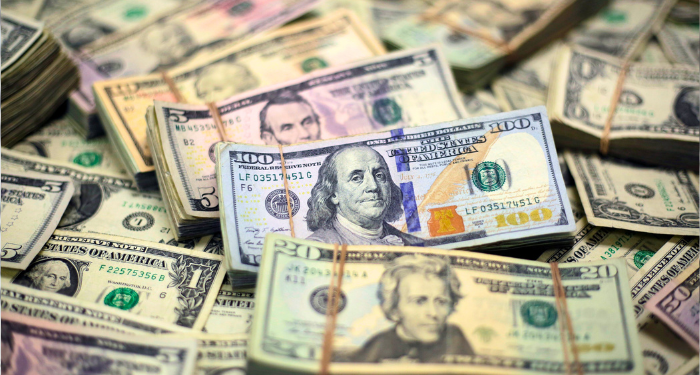
The Nigerian naira strengthened against the US dollar at the official foreign exchange window on Tuesday, supported by strong dollar supply and muted international payment demands, according to a daily FX update from the Central Bank of Nigeria (CBN).
At the Nigerian Foreign Exchange Market (NFEM), the naira appreciated by 7 basis points, or 94 kobo, to close at N1,419.35 per dollar.
Trading data showed the currency exchanged within a narrow band of N1,421 to N1,418.40, reflecting steady liquidity conditions.
Market operators said the appreciation was driven largely by improved dollar supply from non-bank corporates, exporters, and foreign portfolio investors, which outpaced FX requests submitted for foreign payments during the session.
The naira’s modest gain coincided with renewed weakness in the US dollar on the global forex market, triggered by escalating geopolitical tensions involving President Donald Trump’s renewed push to take control of Greenland.
The greenback came under pressure after Trump said there was “no going back” on his Greenland campaign, a stance that has strained relations between the United States and its European allies.
Although he signalled openness to talks, markets interpreted the comments as a precursor to deeper transatlantic friction.
As investors moved into safe-haven assets, the dollar fell 0.8 per cent against the euro, while the S&P 500 declined about 1.7 per cent.
Nigeria’s external reserves continued their upward trend, rising by $49.34 million to reach $45.95 billion, further reinforcing confidence in near-term FX stability.
Analysts expect the naira to remain relatively firm in the short term, supported by higher oil receipts, improved foreign portfolio investment inflows, and consistent FX management by the CBN.
However, the picture was mixed across markets. In the parallel market, the naira weakened slightly by 0.02 per cent to trade around N1,481 per dollar, reflecting lingering speculative pressures
Business
Dollar to Naira exchange rate today, January 21, 2026
The Nigerian Naira maintained a stable trajectory against the United States Dollar during the mid-week trading session, reflecting the positive sentiment surrounding the Central Bank of Nigeria’s (CBN) 2026 macroeconomic outlook. Market participants observed a consistent performance across both the official and parallel windows as the year’s economic activity enters full gear.
Official Market Trends
In the Nigerian Foreign Exchange Market (NFEM), the Naira showed minor fluctuations but remained within a controlled range. Opening at approximately 1,419.29 per dollar, the currency saw early morning price discovery settle at 1,419.77 per dollar. This level is consistent with the closing figures from the previous session, where the rate hovered around the 1,420 mark.
The stability in the official window is attributed to a steady supply of foreign exchange and the central bank’s ongoing commitment to price transparency. Financial experts note that the 2026 projections, which forecast external reserves potentially exceeding $50 billion later this year, have helped bolster investor confidence, preventing the sharp volatility seen in previous January cycles.
Parallel Market Realities
The informal or parallel market remains slightly higher than the official rate, but the spread continues to stay within a manageable corridor. In major currency hubs across Lagos, Abuja, and Kano, the dollar is being traded between 1,480 and 1,485.
Bureau De Change operators indicate that while retail demand for personal and business travel is present, there has been a notable absence of the aggressive speculation that historically pressured the local currency. This stability is partly credited to improved diaspora remittances and a more predictable flow of foreign currency through formal banking channels.
Market Outlook
The broader outlook for the Naira remains cautiously optimistic. With inflation projected to moderate to 12.94 percent over the course of the year and real GDP growth expected to hit 4.49 percent, analysts believe the current exchange rate levels are sustainable. The transition into a “stabilization year” has so far been marked by improved crude oil output and a surplus in the balance of payments, providing a solid cushion for the Naira.
However, market watchers remain attentive to global oil price trends and domestic production levels, as these remain the primary drivers of foreign exchange liquidity in the Nigerian economy.
-
News1 day agoBREAKING: Rivers Lawmakers in Fresh Trouble: Account For ₦350m or Face Action, 7-Day Deadline Given
-
Business2 days agoAfter Dangote, Another World Class Refinery to Be Built in Nigeria, CEO Confirms Location
-
News2 days agoJUST IN: PDP Senatorial Candidate Is Dead
-
News4 hours agoBREAKING: Tinubu Makes U-Turn, Cancels Ambassadorial Posting of Top Former Governor