Business
Govt Restores 450MW To Grid After Power Fleet Revamp
The four-week extended minor inspection, coThe Federal Government, through the Niger Delta Power Holding Company, has restored 450 megawatts of generation capacity to the national grid following the completion of scheduled maintenance works on the Geregu National Integrated Power Project plant in Kogi State.nducted by Siemens Energy, was executed to improve the facility’s reliability and operating efficiency. The intervention also extended the plant’s Equivalent Operating Hours, strengthening one of the country’s most strategic generation assets.
The development was disclosed in a statement on Monday by the Head of Corporate Communications and External Relations at NDPHC, Emmanuel Ojor.
According to the Managing Director/Chief Executive Officer, Jennifer Adighije, the Geregu recovery forms part of a wider effort to revive previously dormant assets across the company’s power fleet.
The statement read, “The Niger Delta Power Holding Company has successfully restored an additional 450MW of generation capacity to the national grid following the completion of scheduled maintenance on the Geregu NIPP plant.
“The four-week extended minor inspection, undertaken by Siemens Energy, was executed to enhance the facility’s operational reliability, performance, and efficiency, thereby extending the plant’s Equivalent Operating Hours and operational life span.”
She revealed that six gas turbines that had been idle for years have been restored within the last 12 months, including GT4 at the Calabar NIPP, GT1 at Omotosho II, GT1 and GT2 at Benin NIPP, GT4 at Sapele NIPP, and GT3 and GT4 at Alaoji NIPP, which are now awaiting pre-commissioning once gas supply constraints are resolved.
Collectively, the restored units will contribute about 875MW to NDPHC’s mechanically available capacity, one of the largest single-year recoveries by a power generation company in recent years.
“The company has also recovered six previously dormant gas turbines across the NDPHC fleet of gas turbines. These include GT4 at the Calabar NIPP, GT1 at Omotosho II, GT1 and GT2 at Benin NIPP, GT4 at Sapele NIPP, and currently GT3 and GT4 at Alaoji NIPP on standby for pre-commissioning after gas supply remedial works,” the statement added.
Adighije also announced the commencement of restoration works on the 225MW Gbarain NIPP plant in Bayelsa State, which has been out of service since 2020.
She described the project as “a major step toward recovering dormant national power assets,” adding that its rehabilitation will support the company’s commercialisation plans aimed at powering key industrial and commercial clusters in the Niger Delta.
Despite persistent challenges relating to gas supply shortages, grid instability, and liquidity pressures across the power sector, NDPHC said it had recorded significant operational and financial breakthroughs.
These include the recovery of 110 containers loaded with critical turbine parts and Heat Recovery Steam Generator components, which were abandoned at Onne Port for more than nine years.
Other milestones include: commencement of the Light Up Nigeria, Agbara industrial cluster project designed to deliver stable electricity to the Agbara Industrial Estate; development of a 10MW embedded solar plant for an industrial zone in Kano; completion of key transmission and distribution projects in Borno and Delta States; and completion of the Afam–Ikot Ekpene 330kV double-circuit line, a long-delayed grid-expansion project.
NDPHC also recovered over $10m from legacy bilateral customers, secured $15m insurance claims for the Alaoji power plant fire incident, and is currently working with the Nigerian Electricity Regulatory Commission on mechanisms for recovering its investments in Transmission Company of Nigeria’s infrastructure.
The company further resolved longstanding commercial disputes with ACCUGAS, leading to an amendment of the gas supply agreement that reduces exposure to the Federal Government.
Beyond infrastructure, Adighije said the company had introduced internal reforms to improve accountability and staff welfare. These include a procurement benchmarking desk to streamline processes, computer-based testing for performance evaluation, and a management support allowance to cushion the impact of fuel subsidy removal.
She explained, “Other success stories include recovery of over $10 million in legacy debts from bilateral customers, securing $15 million in insurance claims for the Alaoji plant fire incident, advanced engagements with NERC on recovering NDPHC’s investments in TCN’s transmission expansion projects, resolution of longstanding commercial issues with ACCUGAS, leading to an amendment of gas supply agreement which reduces government’s exposure.
“To strengthen accountability and staff welfare, the management of NDPHC has introduced a procurement benchmarking desk for streamlining procurement practices, Computer-Based Testing for enhanced staff performance management, and a management support allowance to cushion the impacts of fuel subsidy removal.”
Reaffirming NDPHC’s long-term mandate, Adighije said the company remained committed to “restoring dormant capacity, stabilising operations and supporting Nigeria’s goal of a more reliable and sustainable electricity supply chain.”
She added that the management would continue to prioritise transparency, accountability, and stakeholder engagement as it works to “unlock universal access to electricity that powers businesses and households across the country.”
NDPHC is the special-purpose vehicle managing Nigeria’s National Integrated Power Project, created in 2005 to accelerate power infrastructure development. Many NIPP plants have suffered years of underutilisation due to gas shortages, delayed transmission projects, and liquidity challenges in the electricity market.
The recent restoration efforts mark one of the most aggressive recovery drives undertaken by the company since its inception.

Business
Black Market Naira To Dollar Exchange Rate Today 20th January 2026
What is the Dollar to Naira Exchange rate at the black market, also known as the parallel market (Aboki fx)?
You can swap your dollar for Naira at these rates.
How much is a dollar to naira today in the black market?
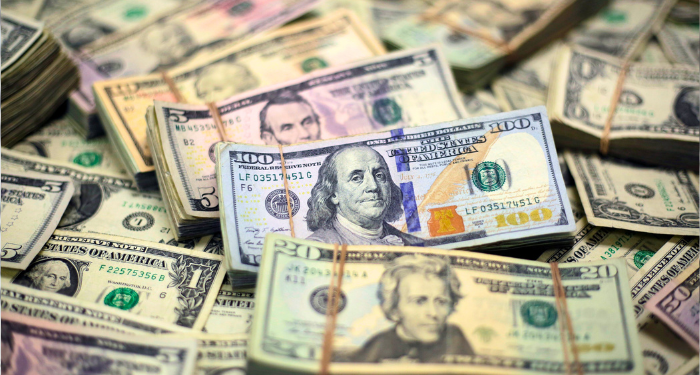
The exchange rate for a dollar to naira at Lagos Parallel Market (Black Market) players buy a dollar for N1480 and sell at N1494 on Monday, 19th January 2026 according to sources at Bureau De Change (BDC).
Black Market Exchange Rate Today 20th January, 2026
Buying Rate N1480
Selling Rate N1498
CBN (Official): ₦1,420
The exchange rate between the US dollar (USD) and the Nigerian naira (NGN) which rate we have given above; is a topic of high constant interest for people who are Nigerian and businesses and policymakers in Nigeria.
This rate of dollars to naira exchange rate influences not only the cost of imported goods but also the cost of travel, international education, and even local prices of certain commodities.
Please note that the Central Bank of Nigeria (CBN) does not recognize the parallel market (black market), as it has directed individuals who want to engage in Forex to approach their respective banks.
Business
BREAKING: Cooking Gas Price Crashes; New Rates Emerge
Many residents of the Federal Capital Territory (FCT), Lagos and other cities have expressed relief over the drop in price of Liquefied Petroleum Gas (LPG), popularly known as cooking gas.
Findings by Legit.ng show that prices have eased in Lagos, Abuja, and other urban centres, with dealers attributing the decline to improved product availability and relative stability in the foreign exchange market.
In Lagos, residents report that refilling cylinders now costs less than it did just weeks ago, a development many describe as a rare win in Nigeria’s inflation-ridden economy.
The residents, who spoke to the News Agency of Nigeria (NAN) on Sunday in Abuja, urged the Federal Government to sustain the price reduction, saying it would ease the financial burden on households.
NAN reports that one kilogramme (kg) of cooking gas now sells for between N1,080 and N1,400 across various outlets in the FCT, with NIPCO selling at the lowest price of N1,080 per kg.
Mrs Victoria Ahaneku, a civil servant, described the reduction as a positive development, saying it could have far-reaching benefits for consumers and the economy.
“ The reduction in the price of cooking gas will increase consumer spending power because they have more disposable income to spend on other goods and services.”
Ahaneku called for further reduction, noting that many Nigerians still found cooking gas unaffordable and had resorted to charcoal, which was also costly.
Similarly, Mrs Mary Olobeyo, a businesswoman, said the price drop was a relief but stressed the need for sustainability and further reductions to make the product affordable.
Olobeyo said transportation, storage, and retail costs also contributed to the price of cooking gas.
“The government at all levels should adopt a combination of infrastructural, regulatory, and diversification strategies.
“This can be achieved by investing in alternative transportation and distribution methods, such as pipelines and rail, to reduce dependence on expensive road tanker trucks, ” she said.
Aisha Abubukar, a Teacher, also welcomed the reduction but expressed concern over frequent price fluctuations.
According to her, the price of cooking gas is always unstable. What Nigerians want is a sustained reduction.
“ A further drop in cooking gas prices will encourage domestic usage and increase penetration across the country, she said.
Mr Adebayo Olurunfemi, a businessman, said that although the price reduction was commendable, it was not significant enough considering the prevailing cost of living in the country.
“ I commend the government for intervening and ensuring the issues at the Dangote Refinery and other depots were resolved, but more still needs to be done.
“The cost of living remains high in Nigeria with all sorts of taxes now, coupled with high rent, school fees, petrol prices, and bank charges, among others.
“Nigerians are still struggling daily. So the government still has a lot to do to make life easy for the people,” he said.
Charity Samuel, a public servant, also expressed satisfaction with the price reduction, urging the government to ensure further reduction to improve affordability.
“Nigerians are experiencing low purchasing power, so cheaper essential items like cooking gas will greatly help us.
“Many families rely on cooking gas because it is the cleanest cooking option. The government should ensure it is readily available and affordable to encourage wider usage,” she said.
NAN recalls that the Federal Government had assured Nigerians that cooking gas prices would normalise after rising to as high as N1,800 per kg in September 2025, following the strike by the Petroleum and Natural Gas Senior Staff Association of Nigeria (PENGASSAN).
The Minister of State for Petroleum Resources (Gas), Dr Ekperikpe Ekpo, had attributed the price surge to the industrial action at the Dangote Refinery and maintenance activities at the Nigeria LNG Train Four facility.
Ekpo said the Federal Government had directed the Nigerian Midstream and Downstream Petroleum Regulatory Authority (NMDPRA) to intensify monitoring of LPG depots nationwide to prevent hoarding.
Business
BREAKING: Dollar Crashes As Naira Gains In Official, Black Markets; Traders Sell At New Rate
The naira rallies, strengthening against the US dollar amid improved economic outlook and easing demand pressures.
Central Bank reports modest gains, with the naira closing at N1,419.28 per dollar in the official market
The Nigerian currency showed some strength in the Nigerian foreign exchange market.
Naira strengthened to N1,418 against the U.S dollar on the official Nigerian Foreign Exchange Market, the CBN’s trading window for foreign currencies.
CBN data show the rate improved from N1,428 on Wednesday, a modest gain of N10.
However, on the black market, the Nigerian currency declined to N1,503/$ on Wednesday after closing at N1,480/$ on Thursday. a modest gain of N13.
Stronger growth outlook lifts confidence
The currency rally comes amid projections of stronger economic growth and moderating inflation this year.
At a hybrid roundtable organised by the Chartered Institute of Bankers of Nigeria Centre for Financial Studies in collaboration with B. Adedipe Associates, the CBN projected real GDP growth of 4.49% in 2026. International institutions share a similar outlook.
The International Monetary Fund has forecast Nigeria’s economy to grow by 4.2% in 2026, driven by higher oil production, improved security conditions, and sustained policy discipline.
-
Lifestyle1 day agoDuchess International Hospital Faces Allegations Over Paediatric Care Lapses, Child Rights Concerns & Unresolved ₦14.3m Medical Bill
-
Politics1 day agoTinubu: Popular Anambra Prophet Reveals Shocking Prophecy To Obi, Atiku; What They Must Do
-
Politics1 day agoBREAKING: Fresh Dimension As Buhari’s Former Minister Declares For 2027 Presidency In ADC
-
Uncategorized1 day agoTENSION: Gunshot As Protesters Block Minister From Accessing Ministry In FCT
-
Politics1 day agoINC Protests Over Fubara Impeachment Plot
-
Entertainment1 day agoVIDEO: Man Exposes Herbalist Who Allegedly Did ‘Money Ritual For Late Musician Destiny Boy
-
Politics1 day agoBREAKING: Ex-Imo Governor Joins ADC, Registers As 001
-
Business1 day agoBREAKING: Cooking Gas Price Crashes; New Rates Emerge