Foreign
Senate Approves Tinubu’s Request To Deploy Troops In Benin

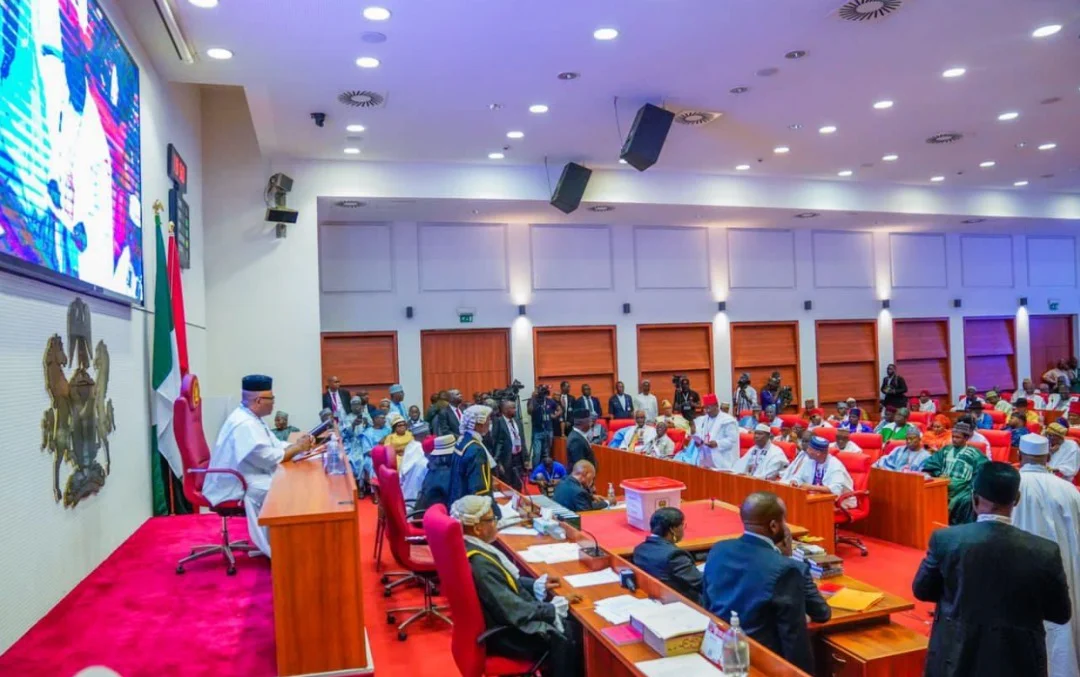
The Senate has given its approval for President Bola Tinubu’s request to send Nigerian troops to the Republic of Benin as part of efforts to help restore calm and stability after last weekend’s attempted military takeover.
The endorsement was announced on Tuesday by Senate President Godswill Akpabio during plenary, following a review of the president’s letter in the Committee of the Whole, in accordance with Section 5, Part II of the Constitution, Channels reports.
Lawmakers voted unanimously to support the deployment, effectively granting parliamentary authorization for the regional security mission.
Akpabio hailed the resolution as timely, stressing that unrest in any neighboring country could easily destabilize the wider region.
“An injury to one is an injury to all,” he stated.
He added that Nigeria has an obligation to stand with its partners under the Economic Community of West African States framework.
The Senate is expected to immediately forward its formal approval to Tinubu.
Tinubu, in his letter to the upper chamber, had requested permission for the deployment, noting that Nigeria bears a historic responsibility to assist Benin under existing ECOWAS security arrangements. He warned that the situation requires “urgent external intervention” to prevent further deterioration.
The attempted coup in Benin occurred on Sunday when a faction of soldiers identifying themselves as the “Military Committee for Refoundation” appeared on national television to declare that they had resolved that “Mr Patrice Talon is removed from office as president of the republic”.
The move was swiftly contained, as Benin’s loyal military forces pushed back and reclaimed control.
“The regular army is regaining control. The city (Cotonou) and the country are completely secure. It’s just a matter of time before everything returns to normal. The clean-up is progressing well,” sources close to Talon said.
Following the failed takeover, ECOWAS announced plans to deploy its standby force.
“After consultation among members of the Mediation and Security Council at the level of Heads of State and Government, the Chair of ECOWAS Authority of Heads of State and Government has ordered the deployment of elements of the ECOWAS Standby Force to the Republic of Benin with immediate effect,” the bloc stated.
“The Regional Force shall be made up of troops from the Federal Republic of Nigeria, the Republic of Sierra Leone, the Republic of Côte d’Ivoire, and the Republic of Ghana.
“The Force shall support the Government and the Republican Army of Benin to preserve constitutional order and the territorial integrity of the Republic of Benin”.

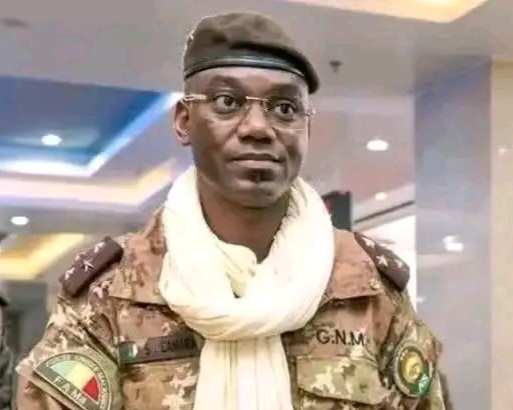
Mali’s Defence Minister, Sadio Camara, has been killed following a wave of coordinated attacks targeting military installations across the country.
Camara reportedly died from injuries sustained during an attack on his residence in Kati, a key military garrison town located about 15 kilometres from Bamako.
The assault, which occurred barely 24 hours before his death, involved a suicide car bomb and formed part of a broader offensive across the country.
The attacks were reportedly carried out by fighters linked to Jama’at Nusrat al-Islam wal-Muslimin, an al-Qaeda-affiliated group, alongside Tuareg rebels from the Liberation Front of Azawad.
According to Al Jazeera, the attackers were able to breach Kati, considered one of the most secure military locations in Mali.
Camara, a key figure in Mali’s military leadership, rose to prominence after playing a central role in the coups of 2020 and 2021 that brought the current junta to power.
Al Jazeera’s Nicolas Haque described his death as significant.
“He was one of the most influential figures within the ruling military leadership… His death is a major blow to the country’s armed forces,” he said.
The coordinated offensive extended beyond Kati, with gunmen attacking several locations including Bamako, Gao, Kidal and Sevare.
“As we speak, people in the garrison town of Kidal can still hear heavy gunfire and loud explosions,” Haque said, adding that the operation remained ongoing more than 24 hours after it began.
The attacks have intensified pressure on Mali’s interim leadership, with analysts suggesting that security forces were overwhelmed by the scale and coordination of the violence.
However, Interim President, Assimi Goita, was reportedly moved to safety and remains in control of the military.
International bodies, including the African Union, the Organisation of Islamic Cooperation, and the United States Bureau of African Affairs, have condemned the attacks and called for urgent measures to restore stability.
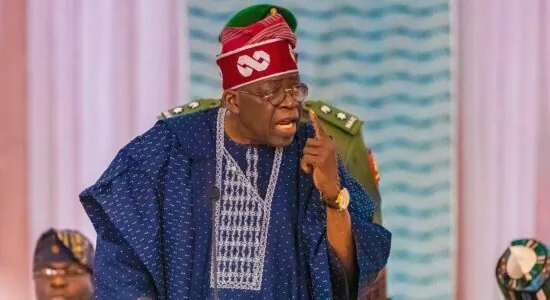
President Bola Tinubu has declared Nigeria’s support for countries in the Gulf region following rising tension linked to the ongoing conflict involving the United States, Israel, and Iran.
Naija News reports that he made this known in Abuja during a formal ceremony where he received letters of credence from several foreign diplomats. The event had representatives from countries such as Qatar and Saudi Arabia, alongside envoys from Lebanon, Sudan, Namibia, Rwanda, Somalia, Argentina, and Congo.
During the meeting, the president assured the visiting diplomats that Nigeria stands with nations in the Gulf, including the United Arab Emirates, Saudi Arabia, Qatar, Kuwait, Bahrain, Oman, and Jordan. He praised their calm approach in handling the situation and stressed the need for peace across the region.
Tinubu described the diplomatic gathering as an important step in strengthening Nigeria’s relationship with other countries. He encouraged the envoys to build stronger partnerships with Nigeria that would benefit both sides.
He also spoke about his government’s economic direction, saying efforts are being made to position Nigeria as an attractive destination for investors. He pointed out opportunities in areas like infrastructure, economic growth, and diaspora involvement, inviting the diplomats to explore these sectors.
On regional matters, the president restated Nigeria’s role in the Economic Community of West African States, especially in maintaining democratic order, improving trade among member states, and addressing instability in the Sahel region.
Tinubu further noted that global issues such as climate change, energy challenges, terrorism, and unfair financial systems require countries to work together.
He said Nigeria is ready to cooperate with other nations both directly and through international platforms to promote a safer and fairer global system.

According to a report by Telegraph, on Thursday April 23, 2026, Israel’s defence minister has declared the country stands prepared to resume military operations against Iran, but only upon receiving authorisation from the Trump administration, as tensions between the two nations continue to simmer beneath a fragile ceasefire.
The statement came amid fresh alarm in the Iranian capital on [date], after Iranian state media reported that explosions were heard above Tehran and air defence systems were activated across the city. The developments immediately triggered speculation of a new Israeli strike, drawing swift attention from regional observers and international monitors tracking the volatile situation.
However, a source within the Israeli military moved quickly to dismiss those claims. Speaking to Israeli outlet Ynet, the source firmly stated that Israel had not carried out any attacks on Iran, offering a direct contradiction to the wave of concern that had swept through diplomatic circles following the reports from Tehran.
A ceasefire between the two countries has been in effect since April 8, and Israeli officials have so far indicated no public breach of that agreement. Despite this, the defence minister’s earlier remarks have raised serious questions about how durable that truce remains, particularly given its apparent dependency on political decisions emanating from Washington.
The reference to a required “green light” from the Trump administration underscores the degree to which Israeli military calculations are now intertwined with American foreign policy direction. Analysts note that this framing places significant weight on Washington’s posture toward Tehran, effectively making U.S. political will a trigger mechanism for potential renewed hostilities in the region.
Iran has not officially responded to the Israeli defence minister’s statement at the time of reporting. The sounds heard over Tehran, while alarming to residents and regional watchers, remain unexplained by Iranian authorities beyond initial media reports of activated air defences.
The situation reflects the precarious nature of the current ceasefire, with both nations maintaining high military readiness even as formal hostilities remain paused. Observers warn that the combination of unexplained aerial activity and bellicose ministerial language represents a dangerous mix that could rapidly destabilise the existing arrangement.


NNPC Releases New Petrol Prices at Filling Stations Nationwide; State-by-state Costs Emerge

Yorubaland No Longer Safe, Terror Cells Expanding — Gani Adams

Taraba 2027: Kefas Secures APC Ticket For Second Term

Former Super Eagles Star Loses Life Savings, Duped By A Pastor of ₦1.2 Billion

I’m A Married Man, I Can Never Get Myself Involved With Such A Thing, Delta Gov Aide Reveals Why He Offered Comfort ₦500,000 Job