Connect with us

Business

Cashless Payments, Tax Reforms, Other FG Policies Kick Off In 2026

Published

on

The Federal Government has announced that several key reforms and directives will officially take effect in 2026, marking a significant shift in governance, revenue administration, and public service delivery.

The measures, aimed at improving transparency, boosting revenue, and modernising government operations, are expected to reshape how citizens and businesses interact with the Federal Government.

PUNCH Online highlights some of the major policies set to take effect next year.

Nigeria Revenue Service (NRS) Tax Reforms

The government has reformed its tax laws, replacing the former Federal Inland Revenue Service (FIRS) with the Nigeria Revenue Service (NRS).

The new tax framework will come into effect on January 1, 2026, requiring all taxpayers—individuals and businesses alike—to comply with the updated tax administration procedures.

Fully Digital Public Services & Revenue Collection (Cashless Government Payments)

Starting in 2026, all federal revenue collections will require digital payments.

Services such as passports, licences, and regulatory fees will no longer accept cash.

This move represents a major shift toward digital public services and is intended to improve transparency while reducing leakages in revenue collection.

National Single Window (NSW) for Trade and Customs

The government has directed the NSW Steering Committee to ensure the platform is fully operational by the first quarter of 2026.

The NSW is expected to streamline trade and Customs procedures, reduce bureaucracy, and facilitate easier import/export processes for businesses.

Digital Public Infrastructure (DPI) / Nigerian Data Exchange (NGDX)

Set for rollout in early 2026, the DPI and NGDX platforms aim to support e-government services, enhance data exchange between government agencies, and improve service delivery to citizens and businesses.

Budget Rollover: Focus on Completing Ongoing Projects

For the 2026 fiscal year, the government has directed that 70% of 2025’s capital budget be rolled over, effectively freezing the launch of many new major projects.

This strategy is designed to focus resources on completing existing projects in areas such as security, infrastructure, and social services, reflecting caution under revenue constraints.

Revenue Optimisation Platform (RevOp)

The Revenue Optimisation Platform will centralise revenue collection, reconciliation, and monitoring across all Ministries, Departments, and Agencies (MDAs).

The system integrates with existing Treasury‑Single Account frameworks, financial management systems, and banks, helping to prevent revenue leakages and improve transparency.


Click to comment

Leave a Reply

Your email address will not be published. Required fields are marked *

Business

Black Market Naira To Dollar Exchange Rate Today 20th January 2026

Published

on

What is the Dollar to Naira Exchange rate at the black market, also known as the parallel market (Aboki fx)?

You can swap your dollar for Naira at these rates.

How much is a dollar to naira today in the black market? 

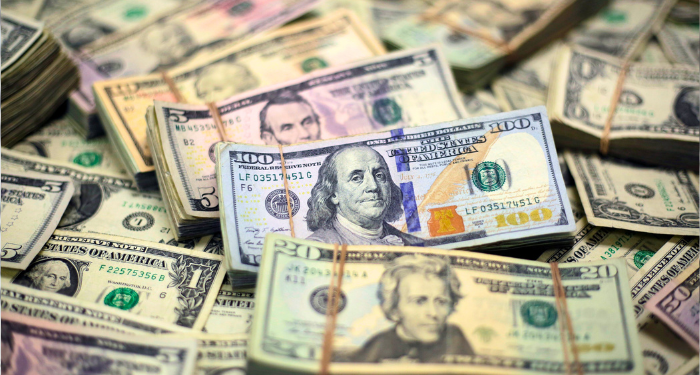
The exchange rate for a dollar to naira at Lagos Parallel Market (Black Market) players buy a dollar for N1480 and sell at N1494 on Monday, 19th January 2026 according to sources at Bureau De Change (BDC).

Black Market Exchange Rate Today 20th January, 2026
Buying Rate N1480
Selling Rate N1498

CBN (Official): ₦1,420

The exchange rate between the US dollar (USD) and the Nigerian naira (NGN) which rate we have given above; is a topic of high constant interest for people who are Nigerian and businesses and policymakers in Nigeria.

This rate of dollars to naira exchange rate influences not only the cost of imported goods but also the cost of travel, international education, and even local prices of certain commodities.

Please note that the Central Bank of Nigeria (CBN) does not recognize the parallel market (black market), as it has directed individuals who want to engage in Forex to approach their respective banks.

Continue Reading

Business

BREAKING: Cooking Gas Price Crashes;  New Rates Emerge

Published

on

Many residents of the Federal Capital Territory (FCT), Lagos and other cities have expressed relief over the drop in price of Liquefied Petroleum Gas (LPG), popularly known as cooking gas.

Findings by Legit.ng show that prices have eased in Lagos, Abuja, and other urban centres, with dealers attributing the decline to improved product availability and relative stability in the foreign exchange market.

In Lagos, residents report that refilling cylinders now costs less than it did just weeks ago, a development many describe as a rare win in Nigeria’s inflation-ridden economy.

The residents, who spoke to the News Agency of Nigeria (NAN) on Sunday in Abuja, urged the Federal Government to sustain the price reduction, saying it would ease the financial burden on households.

NAN reports that one kilogramme (kg) of cooking gas now sells for between N1,080 and N1,400 across various outlets in the FCT, with NIPCO selling at the lowest price of N1,080 per kg.

Mrs Victoria Ahaneku, a civil servant, described the reduction as a positive development, saying it could have far-reaching benefits for consumers and the economy.

“ The reduction in the price of cooking gas will increase consumer spending power because they have more disposable income to spend on other goods and services.”

Ahaneku called for further reduction, noting that many Nigerians still found cooking gas unaffordable and had resorted to charcoal, which was also costly.

Similarly, Mrs Mary Olobeyo, a businesswoman, said the price drop was a relief but stressed the need for sustainability and further reductions to make the product affordable.

Olobeyo said transportation, storage, and retail costs also contributed to the price of cooking gas.

“The government at all levels should adopt a combination of infrastructural, regulatory, and diversification strategies.

“This can be achieved by investing in alternative transportation and distribution methods, such as pipelines and rail, to reduce dependence on expensive road tanker trucks, ” she said.

Aisha Abubukar, a Teacher, also welcomed the reduction but expressed concern over frequent price fluctuations.

According to her, the price of cooking gas is always unstable. What Nigerians want is a sustained reduction.

“ A further drop in cooking gas prices will encourage domestic usage and increase penetration across the country, she said.

Mr Adebayo Olurunfemi, a businessman, said that although the price reduction was commendable, it was not significant enough considering the prevailing cost of living in the country.

“ I commend the government for intervening and ensuring the issues at the Dangote Refinery and other depots were resolved, but more still needs to be done.

“The cost of living remains high in Nigeria with all sorts of taxes now, coupled with high rent, school fees, petrol prices, and bank charges, among others.

“Nigerians are still struggling daily. So the government still has a lot to do to make life easy for the people,” he said.

Charity Samuel, a public servant, also expressed satisfaction with the price reduction, urging the government to ensure further reduction to improve affordability.

“Nigerians are experiencing low purchasing power, so cheaper essential items like cooking gas will greatly help us.

“Many families rely on cooking gas because it is the cleanest cooking option. The government should ensure it is readily available and affordable to encourage wider usage,” she said.

NAN recalls that the Federal Government had assured Nigerians that cooking gas prices would normalise after rising to as high as N1,800 per kg in September 2025, following the strike by the Petroleum and Natural Gas Senior Staff Association of Nigeria (PENGASSAN).

The Minister of State for Petroleum Resources (Gas), Dr Ekperikpe Ekpo, had attributed the price surge to the industrial action at the Dangote Refinery and maintenance activities at the Nigeria LNG Train Four facility.

Ekpo said the Federal Government had directed the Nigerian Midstream and Downstream Petroleum Regulatory Authority (NMDPRA) to intensify monitoring of LPG depots nationwide to prevent hoarding.

Continue Reading

Business

BREAKING: Dollar Crashes As Naira Gains In Official, Black Markets; Traders Sell At New Rate

Published

on

The naira rallies, strengthening against the US dollar amid improved economic outlook and easing demand pressures.

Central Bank reports modest gains, with the naira closing at N1,419.28 per dollar in the official market

The Nigerian currency showed some strength in the Nigerian foreign exchange market.

Naira strengthened to N1,418 against the U.S dollar on the official Nigerian Foreign Exchange Market, the CBN’s trading window for foreign currencies.

CBN data show the rate improved from N1,428 on Wednesday, a modest gain of N10.

However, on the black market, the Nigerian currency declined to N1,503/$ on Wednesday after closing at N1,480/$ on Thursday. a modest gain of N13.

Stronger growth outlook lifts confidence

The currency rally comes amid projections of stronger economic growth and moderating inflation this year.

At a hybrid roundtable organised by the Chartered Institute of Bankers of Nigeria Centre for Financial Studies in collaboration with B. Adedipe Associates, the CBN projected real GDP growth of 4.49% in 2026. International institutions share a similar outlook.

The International Monetary Fund has forecast Nigeria’s economy to grow by 4.2% in 2026, driven by higher oil production, improved security conditions, and sustained policy discipline.

Continue Reading

Trending