
News
2027 Election: Fresh Twist As Tinubu’s Campaign Posters Suddenly Disappear On Abuja Road; Reactions Emerge


Posters of President Bola Ahmed Tinubu disappeared from Abuja roads amid debate over premature campaigning
Traders, residents and social media users reported mixed reactions and could not identify those who removed the posters
INEC and the Presidency distanced themselves from the posters while civil society called for stricter enforcement of electoral laws
This is coming amid debate over premature campaigning ahead of the 2027 general elections.
As reported by Daily Trust, the campaign-style posters, which initially dotted the stretch from the City Gate to Nnamdi Azikiwe International Airport and other strategic locations, were no longer visible as of this week.
Instead, spaces previously occupied by the president’s images have been taken over by commercial advertisements and posters announcing religious programmes.
The posters appeared several months ago, triggering public debate and criticism, with many Nigerians, civil society organisations and electoral observers questioning their timing and legality.
The controversy was heightened by repeated warnings from the Independent National Electoral Commission (INEC) that early campaigning contravenes the law.
Presidency distances itself from the posters
INEC has consistently frowned on premature campaigns. Amid the controversy generated by the posters, the Presidency repeatedly distanced itself from the displays, insisting that President Tinubu neither authorised nor endorsed any campaign materials ahead of the 2027 polls.
In April, Bayo Onanuga, Special Adviser to the President on Information and Strategy, said: “While President Tinubu and Vice President Shettima greatly appreciate their teeming and loyal supporters across the country for their enthusiasm and continuing support, the two leaders do not support any campaign that breaches the laws of the land.”

Mixed reactions from traders and residents
A visit by Daily Trust along the Airport Road this week showed a clear absence of the president’s posters from the City Gate through Lugbe and Gosa corridors down to the airport.
Billboards and lamp posts that once carried the images now display adverts for telecommunications companies, real estate firms and upcoming religious programmes.
Some traders, commercial motorcyclists (okada riders) and passersby operating along the corridor who were spoken with could not identify the individuals responsible for removing the posters.
Malam Sani Abdullahi, a roadside trader at Gosa, said: “I don’t know who removed them, but I saw some people taking them down in the afternoon, like normal workers. They were not wearing any political shirts.”
Another trader, Aisha Musa, who sells bottled water around the Shoprite area, said: “We just noticed one day that the posters were no longer there.”
An okada rider, Ibrahim Lawal, operating between Kuchigoro and Karomajiji near the City Gate, added: “I can’t tell whether it was during the day or night, but this is where we spend most of our time. If those who removed them had done it openly with political displays, we would have noticed. They did not wear any politically distinctive clothing.”
Social media reacts to the disappearance
Social media users also took to X (formerly Twitter) to comment on the disappearance of the posters, offering varying accounts and interpretations of how and when they were removed.
One user, John Ezeakolam (@JohnEzeakolam), wrote that the posters were taken down late at night.
Another, KRISSNIVU (@DonChrisnivu), claimed: “From Monday, Nov. 10, all Tinubu posters and banners on the Abuja Airport Road have been removed. Is this about
@realDonaldTrump warning to Nigeria? All the streetlight poles had his posters from the international airport to the National Stadium, Abuja.”
Similarly, Paul Ofuokwu (@Flexible4Obidient) described the development as an aftermath of political pressure, suggesting the removal occurred during the night.
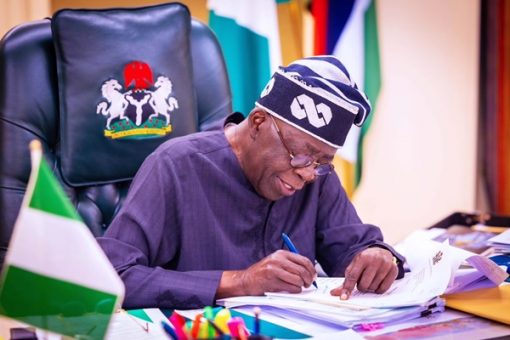
Nigeria’s Ministry of Interior is set to declare a nationwide public holiday across all sectors to mark Democracy Day 2026, potentially granting a one-day break for both private and public sector employees.
The federal government’s announcement regarding Democracy Day will be the only national public holiday observed in Nigeria in June 2026.
Democracy Day commemorates the 1993 presidential election and the nation’s struggle for democratic freedom. June 12, 2026, falls on a Friday.
On June 6, 2018, the late former president Muhammadu Buhari, in a public statement, changed the Democracy Day from May 29 to June 12, in honour of the June 12, 1993, presidential election and its winner, Moshood Kashimawo Olawale Abiola, who died in prison.
Abiola was born on August 14, 1937 and passed away under suspicious circumstances on July 7, 1998. A popular Ogun businessman, publisher, and politician of the Egba clan, he is often referred to as MKO Abiola.
He ran for the presidency in 1993 and was widely regarded as the presumed winner of the election, which was annulled by former military head of state, General Ibrahim Babangida.
Some southwest states had been celebrating June 12 as a public holiday and are holding ceremonies in Abiola’s honour until Buhari officially declared the day as Nigeria’s real democracy day. The former president, on Monday, June 10, 2018, signed the Public Holiday Amendment Bill into law.
The law, according to the former president’s ex-senior special assistant on National Assembly Matters (Senate), Ita Enang, allows a public holiday to be declared on June 12 every year, while May 29 is to be a handing-over date.

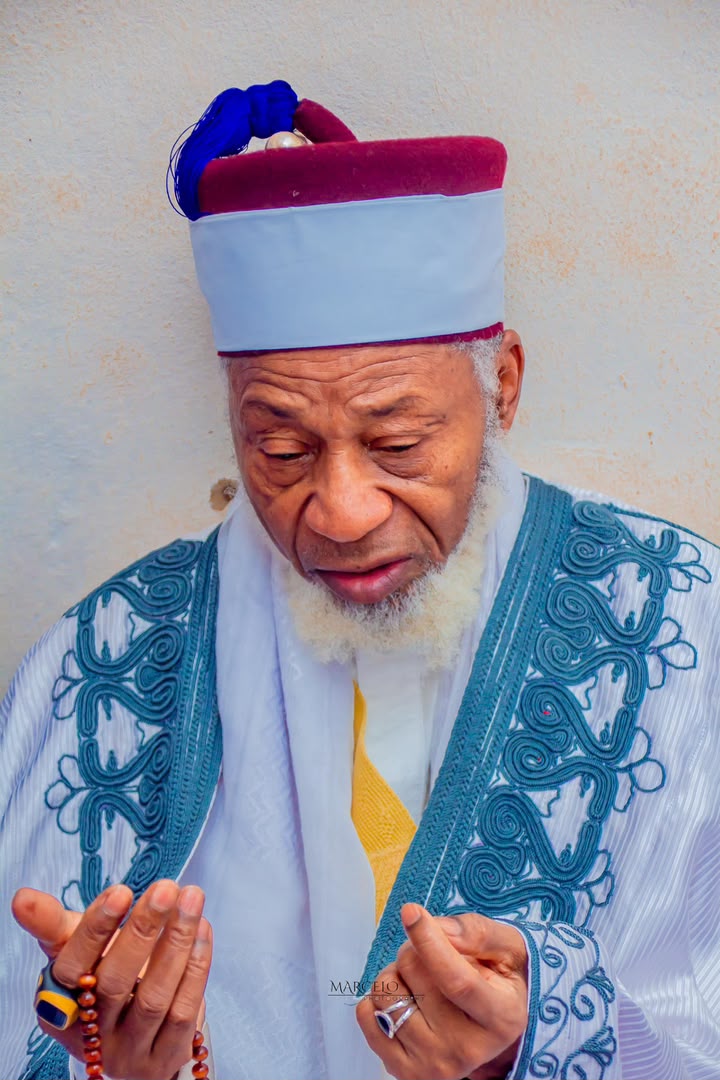
A top Nigerian monarch, the Emir of Gazargamu in Yobe State, His Royal Highness Alhaji Ahmad Tijjani Ibn Saleh, has died after a prolonged illness.
The monarch passed away on Tuesday in Cairo, Egypt, where he had been receiving medical treatment.
His son, Engr. Tijjani Hamisu Bala, who is the General Manager of the Yobe State Road Maintenance Agency (YORMA), confirmed the development to Daily Trust in Damaturu.
In a statement announcing the death, Bala described the late emir as a father, mentor and traditional ruler whose life was devoted to the service of his people and humanity.
“With profound sorrow and total submission to the will of Almighty Allah, I announce the passing of my beloved father, namesake and traditional ruler, His Royal Highness Alhaji Ahmad Tijjani Ibn Saleh, the Emir of Gazargamu, who returned to his Creator today, June 9, 2026, in Cairo, Egypt, after a protracted illness,” he said.
He said the late emir’s life was marked by wisdom, humility, courage and unwavering dedication to the service of his people.
“His fatherly guidance, leadership and legacy will remain a source of inspiration to us all,” he added.
Bala prayed to Allah to forgive the late monarch’s shortcomings and grant him Al-Jannatul Firdaus; and give the family and the entire emirate strength and patience to bear the painful loss.
As of the time of filing this report, details of the burial arrangements were yet to be announced, while it remained unclear whether the late emir would be buried in Nigeria or in Egypt.

The Independent National Electoral Commission (INEC) has confirmed that it has appealed two Federal High Court judgments challenging aspects of its Timetable and Schedule of Activities for the 2027 General Election, maintaining that the processes outlined in the timetable are interconnected and cannot be separated without disrupting the entire electoral programme.
INEC Chairman, Prof. Joash Amupitan (SAN), disclosed this on Tuesday during the Commission’s Second Quarterly Consultative Meeting with leaders of political parties in Abuja.
According to him, the Commission carefully reviewed the two court rulings and subsequently approached the appellate courts to seek definitive legal interpretations on the issues raised.
The first judgment, delivered on May 20, 2026, in the case of Youth Party vs INEC (Suit No. FHC/ABJ/CS/517/2026), questioned certain timelines contained in the electoral timetable. The second judgment, delivered on May 26, 2026, in Social Democratic Party (SDP) vs INEC (Suit No. FHC/ABJ/CS/720/2026), upheld INEC’s authority to issue an election timetable but nullified specific timelines relating to the nomination and substitution of candidates.
Prof. Amupitan noted that the court, in the SDP judgment, acknowledged the importance of a comprehensive timetable, stating that “an election timetable, without date for submission of parties’ membership register, timeframe for primaries, etc. is inchoate. Without this timetable, there would be chaos in our electoral system.”
“While the Commission remains fully respectful of the decisions of the Courts and of the judicial process generally, these judgments raise important legal questions concerning the extent of the Commission’s constitutional and statutory powers in coordinating and regulating electoral activities,” he said.
The INEC chairman stressed that the election timetable is built around a series of interdependent processes designed to ensure the orderly, transparent and successful conduct of elections.
He explained that although the Electoral Act prescribes timelines for some activities, several critical electoral processes are not assigned specific statutory deadlines and must therefore be accommodated within the Commission’s broader election calendar.
Among the activities listed by the Commission are the submission and verification of party membership registers, monitoring of party primaries nationwide, uploading of primary election results to INEC’s portal, candidate nomination processes, printing of ballot papers and result sheets, quality assurance procedures, deployment of election materials, training of electoral personnel, voter education campaigns, procurement of sensitive materials, configuration of BVAS machines, and compliance with statutory requirements such as allowing political parties to inspect electoral materials under Section 42 of the Electoral Act, 2026.
“The Commission therefore considers it imperative that all electoral activities be harmonised within a coherent and workable framework that promotes certainty, transparency, administrative efficiency and equal treatment of all political parties,” Amupitan stated.
He assured political parties and the Nigerian public that despite the pending appeals, INEC remains committed to conducting the 2027 General Election in strict compliance with the Constitution, the Electoral Act and all valid court rulings.
The chairman also announced that on June 26, 2026, the Commission would provide all political parties with official access codes to its Candidate Nomination Portal, enabling authorised national officers to upload the names, personal details and other required information of nominated candidates.
He warned that the nomination portal is fully automated and will automatically shut down once the stipulated deadline expires.


BREAKING: Peter Obi Drags Kenneth Okonkwo to Court, Reasons Emerge

FG to Declare Nationwide Public Holiday, Date Revealed

2027 Election: What Peter Obi Told Me About Atiku – Dele Momodu Reveals

Former Super Eagles Star Loses Life Savings, Duped By A Pastor of ₦1.2 Billion

I’m A Married Man, I Can Never Get Myself Involved With Such A Thing, Delta Gov Aide Reveals Why He Offered Comfort ₦500,000 Job

Lagos Imposes ₦250,000 Fine For Illegal Waste Disposal

-
 Politics2 days ago
BREAKING: APC Releases List of Qualified Senatorial Candidates Ahead 2027
-
 News2 days ago
JUST IN: INEC Releases Final List Of Candidates For 2026 elections
-
 Politics1 day ago
BREAKING: Kwankwaso Breaks Silence on Dumping NDC
-
 Politics2 days ago
JUST IN: INEC Validates Only Three Parties for 2026 Senatorial By-Election; Gives Reason
-
 News14 hours ago
FG to Declare Nationwide Public Holiday, Date Revealed
-

 Business1 day ago
JUST IN: Marketers Crash Petrol Prices Nationwide, New Pump Prices Emerge
-

 News20 hours ago
BREAKING: Top Nigerian Emir is Dead, Details Emerge
-
 Politics2 days ago
Tension as Fresh Move to Remove NDC Before 2027 Emerges –