
Business
States, LGs Repay N547.5bn Bank Debts


States and Local Government councils reduced their bank borrowings by about N547.52bn in one year, as Federation Account inflows surge, according to findings by Saturday PUNCH.
Figures from the Central Bank of Nigeria’s latest Quarterly Statistical Bulletin reveal that the banking sector’s “claims on state and Local Governments” fell from N2.68tn in June 2024 to N2.13tn in June 2025.
This means sub-national governments collectively cut their indebtedness to commercial and merchant banks by 20.4 per cent year-on-year.
Further analysis shows that in January 2024, banks’ exposure to states and councils stood at N2.73tn. One year later, in January 2025, the figure had dropped to N2.44tn, indicating that about N292bn was cleared during that period.
The outstanding balance then ticked up slightly in February 2025 to N2.59tn and eased again to N2.55tn in March 2025. By April and May 2025, exposure steadied around N2.44tn–N2.45tn, before a sharp decline to N2.13tn in June 2025, representing the largest single-month adjustment during the year.
Year-on-year, June provided the clearest shift. The banks owed N2.68tn in June 2024, but the balance had fallen by more than half a trillion naira a year later.
Month-on-month, the drop from May 2025’s N2.45tn to June 2025’s N2.13tn amounted to about N313bn, signaling an aggressive push to unwind bank obligations at the end of the second quarter amid high interest rates and rising FAAC allocations.
It was observed that throughout 2024, the Central Bank of Nigeria’s Monetary Policy Committee aggressively tightened policy, lifting the Monetary Policy Rate from 18.75 per cent at the start of the year to about 27.50 per cent by November, through multiple successive hikes to rein in inflation and stabilize the exchange rate.
In 2025, the MPC largely held rates steady at 27.50 per cent for much of the year, signaling a cautious pause after the earlier tightening cycle as inflation began to moderate. However, in September 2025, the committee delivered its first rate cut in five years, trimming the MPR to 27.00 per cent, reflecting slowing price pressures and a gradual shift toward supporting broader economic activity.
By November 2025, the CBN reaffirmed the 27.00 per cent benchmark, balancing the need to sustain disinflation with financial stability concerns as borrowing costs remained high but gradually more accommodative.
The high interest rate likely pushed sub-nationals to reduce borrowing as FAAC allocations rise. Further analysis of FAAC records shows a jump in what state governments and local government councils jointly received in 2025 compared with 2024, reflecting the scale of the revenue windfall now flowing through the federation account.
Data from the Office of the Accountant-General of the Federation show that states and local governments jointly received N12.67tn in 2025, up from N8.96tn in 2024. These figures exclude the 13 per cent derivation fund for oil-producing states. The difference of N3.71tn represents a 41.4 per cent surge in year-on-year statutory inflows to the two tiers of government.
When the 13 per cent derivation fund is added, the gap remains just as stark. States and councils together received N14.28tn in 2025, compared with N10.31tn in 2024, meaning an extra N3.98tn, or about 38.6 per cent more than the previous year.
The Nigerian National Petroleum Company Limited has signed a fresh agreement with two Chinese firms in a move aimed at accelerating the long-delayed rehabilitation and commercial restart of Nigeria’s refineries, while opening a new window for technical equity partnerships.
The deal, structured as a Memorandum of Understanding, was signed with Sanjiang Chemical Company Limited and Xingcheng (Fuzhou) Industrial Park Operation and Management Co. Ltd, marking what the national oil company described as a “critical milestone” in its refinery transformation drive.
The agreement was executed in Jiaxing City, China, on April 30, 2026, by the Group Chief Executive Officer of NNPC Ltd, Bashir Bayo Ojulari, alongside the Chairman of Sanjiang Chemical Company, Guan Jianzhong, and Chairman of Xingcheng Industrial Park, Bill Bi.
According to a statement issued on Monday by the Chief Corporate Communications Officer of NNPC Ltd, Andy Odeh, the MoU sets the stage for a potential Technical Equity Partnership aimed at completing outstanding work at the Port Harcourt and Warri refineries, as well as ensuring their long-term operational efficiency.
The statement read, “The NNPC Ltd has signed a Memorandum of Understanding (MoU) with two Chinese companies, Sanjiang Chemical Company Limited and Xingcheng (Fuzhou) Industrial Park Operation and Management Co. Ltd, for collaboration through a potential Technical Equity Partnership in support of the completion and operation of the Port Harcourt and Warri Refineries.”
The national oil firm said the collaboration would go beyond rehabilitation, extending into full-scale operation and maintenance of the facilities to achieve “best-in-class, sustainable performance.”
It added that the arrangement would also explore expansion projects that would reposition the refineries to produce cleaner fuels and higher-value petroleum products, in line with evolving global standards.
Ojulari, speaking shortly after the signing ceremony, described the agreement as the outcome of more than six months of intensive technical and commercial engagements between NNPC and the Chinese firms.
He said, “All parties recognise mutually beneficial opportunities for the development and long-term sustainable profitability of NNPC’s refining assets in Nigeria, and the collective weight required for success.”
The NNPC boss stressed that the MoU represents a transition from traditional contractor-led rehabilitation to a more performance-driven partnership model anchored on shared risks and returns.
He added, “This is an important step on the journey towards identifying potential technical equity partner or partners to restart and expand NNPC’s refineries, and to explore opportunities in co-located petrochemicals and gas-based industries.”
The shift to a technical equity model signals a strategic departure from past refinery turnaround maintenance programmes, many of which failed to deliver lasting results despite significant financial outlays.
Under the proposed framework, the Chinese partners are expected to bring not just engineering expertise, but also operational discipline and investment capacity, aligning their returns with the performance of the refineries.The scope of the collaboration, as outlined by NNPC, includes the development of co-located gas-based industrial hubs, which could transform the Port Harcourt and Warri complexes into integrated energy and petrochemical centres.
Such hubs are expected to unlock additional value from Nigeria’s vast gas reserves, while supporting domestic manufacturing and export-oriented industries.
The company noted that while the MoU reflects a shared intention to advance discussions in good faith, any binding agreements would be subject to regulatory approvals and the conclusion of detailed commercial negotiations.
The latest deal aligns with Ojulari’s earlier position at the Nigeria International Energy Summit 2026, where he openly canvassed for global technical partners to take equity positions in Nigeria’s refining assets.
At the summit, Ojulari had argued that Nigeria’s refining challenges were not just financial, but deeply technical and operational, requiring experienced partners with proven track records.
He said, “What we are doing differently is moving away from just funding projects to bringing in partners who have skin in the game, partners who will operate, optimise, and guarantee performance.”
He further explained that the technical equity model would ensure accountability and efficiency, as partners would only profit when the refineries perform optimally.
He stated, “The days of spending billions on rehabilitation without sustainable output are behind us. We are now focused on partnerships that deliver value, technology transfer, and operational excellence.”
Ojulari also highlighted the importance of integrating refining with petrochemicals and gas-based industries, noting that modern refineries globally are designed as energy hubs rather than standalone fuel-processing plants.
Refineries must evolve into integrated industrial platforms. That is where the future lies, petrochemicals, fertilizers, gas monetisation. That is how you create real economic value,” he said.
Nigeria’s state-owned refineries, located in Port Harcourt, Warri, and Kaduna, have suffered decades of underperformance, frequent shutdowns, and failed rehabilitation efforts, forcing the country to rely heavily on imported petroleum products.
Despite multiple turnaround maintenance projects, the facilities have consistently operated far below capacity, raising concerns over efficiency, transparency, and value for money.
The current administration has prioritised refinery revival as part of its broader energy security strategy, while also supporting private sector investments such as the Dangote Refinery.
The NNPC’s renewed push for technical equity partners comes amid growing pressure to reduce fuel import dependence, stabilise domestic supply, and conserve foreign exchange.
With this latest China deal, the national oil company appears to be betting on a new partnership model, one that ties investment returns directly to performance, in a bid to finally unlock the long-elusive potential of Nigeria’s refining sector.

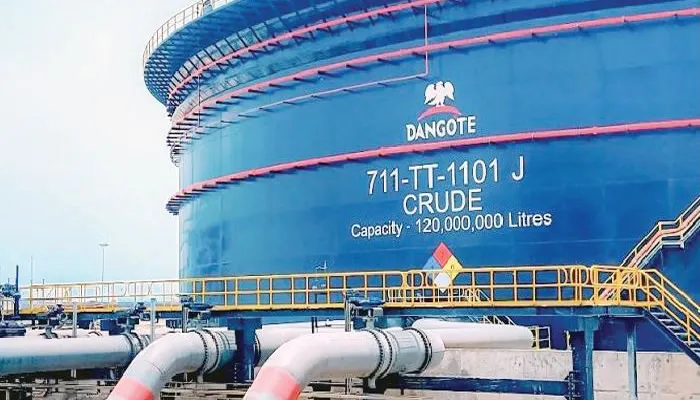
Fresh pressure is building in Nigeria’s fuel market after Dangote Refinery raised the price of petrol and halted supply operations.
The development has triggered concerns among marketers and consumers, as the impact is expected to ripple across the country in the coming days.
The refinery increased its ex-depot price of Premium Motor Spirit by N75 per litre. This pushed the loading cost from N1,200 per litre to N1,275 per litre.
Coastal supply price was also adjusted upward to N1,215 per litre. The new pricing structure has already begun to influence activities in the downstream sector.
A senior official at the facility confirmed the adjustment. According to the official, “Yes, the increase of PMS to N1,275 per litre is true. Coastal price is N1,215.”
The confirmation puts to rest earlier uncertainty among marketers who had reported sudden changes in depot pricing.
At the same time, operations were disrupted after the refinery suspended its Proforma Invoice process. This system is critical for product allocation and loading schedules.
Sources familiar with the situation said the process was halted at about 4:00 pm on Tuesday. The decision affected the normal flow of transactions within the loading system.
The disruption immediately led to a pause in the sale of petrol and Automotive Gas Oil. Trucks waiting for loading were reportedly left stranded, while marketers struggled to secure fresh allocations. The halt in supply has created anxiety across distribution channels.

Nigeria’s credit sector has, in the space of just a few years, moved from a niche fintech offering to a mainstream financial tool used by millions.
A major driver of this surge is mostly limited access to traditional bank loans, and the speed at which digital platforms can deliver cash when it is needed most.
By mid-2025, the market will have expanded sharply, with approved digital lenders rising to about 425 as of May 2025, up from 320 a year earlier.
According to a 2024 report based on a five-year historical analysis, Nigeria’s online loan & credit platforms market is valued at approximately $600 million.
According to the report, recent market estimates indicate that Nigerian digital lending apps issued about 145 million loans worth over $2 billion in a recent year, reflecting the sector’s scale and consumer appetite for digital credit solutions
However, the speed and accessibility of digital loans have also created a crowded and uneven market, where hundreds of platforms compete with different pricing models, especially around one key factor that directly affects borrowers: interest rates.
Based on the list of approved digital lending platforms by the Federal Competition and Consumer Protection Commission (FCCPC), this article ranks apps that offer monthly interest rates below 3%.
Here are 10 loan apps with the lowest interest rates in Q1 2026
10. Renmoney – 2.12% to 2.65% monthly interest rate
9. Nmoney – 2.4% monthly interest rate
8. Singacash – 2.4% monthly interest rate
7. Ease Cash – 2.1% monthly interest rate
6. Letshego – from 2% monthly interest rate
5. Futurecash –1.5% to 2.7% monthly interest rate
4. Flash Loan – 1.8% to 2.7% monthly interest rate
3. Airmoni – 1.5% monthly interest rate
2. True Loan –1.2%–2.7% daily interest rate
1. NiNiMoney – 0.3% monthly interest rate


REVEALED: Tension Rises As Suspects Admit Knowledge Of Plot Against Tinubu

BREAKING: Full List Of ADC Reps Defecting With Peter Obi And Kwankwaso

ADC Crises Deepens As Court Nullifies State And LG Congresses

Former Super Eagles Star Loses Life Savings, Duped By A Pastor of ₦1.2 Billion

These ’90s fashion trends are making a comeback in 2017

I’m A Married Man, I Can Never Get Myself Involved With Such A Thing, Delta Gov Aide Reveals Why He Offered Comfort ₦500,000 Job
-
 Politics12 hours ago
BREAKING: Full List Of ADC Reps Defecting With Peter Obi And Kwankwaso
-

 Opinion1 day ago
BREAKING: Segun Ajiboye Emerges POMPA Chairman
-
 Business1 day ago
Good News: Chinese Firm In Fresh Moves To Restart Nigeria’s Refineries
-
Entertainment1 day ago
Tension As Teddy A Unveils Mystery Woman Amid Rumours of Marriage Crash With BamBam
-
 Politics1 day ago
ADC Crises Deepens As Court Nullifies State And LG Congresses
-
 Politics11 hours ago
REVEALED: Tension Rises As Suspects Admit Knowledge Of Plot Against Tinubu