
Opinion
Why Ukraine Peace Talks Are Failing

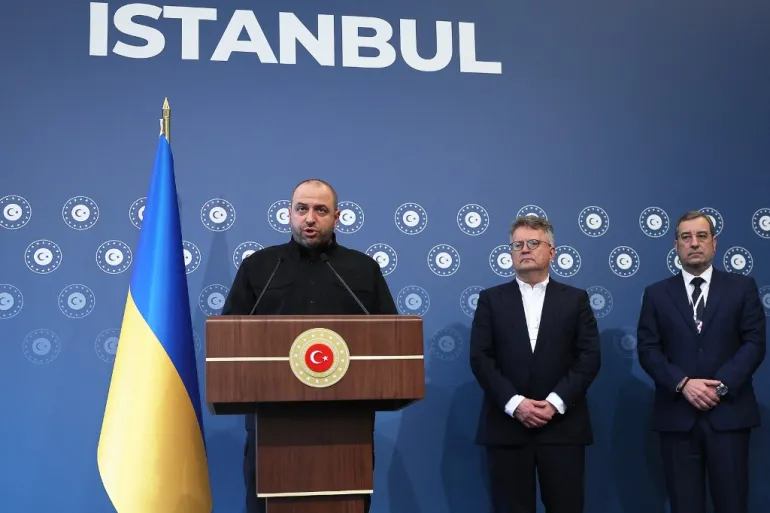
The current process ignores justice, trauma and truth – and risks locking in endless war.
This month’s peace talks between Russia and Ukraine in Istanbul have once again failed to bring the war any closer to a ceasefire. The only outcome – a limited agreement on prisoner exchanges – underscores a troubling truth: the current negotiation framework is not working.
Meanwhile, military escalation on both sides shows no signs of slowing. In such an atmosphere, diplomacy becomes increasingly difficult. A ceasefire feels out of reach, and uneasy comparisons with the Korean Peninsula’s frozen armistice are beginning to surface – a scenario that would only entrench division, fuel resentment, and leave key territorial issues unresolved.
That is why we must fundamentally rethink how these talks are structured and led. Yes, a full, unconditional 30-day ceasefire – as Ukraine proposed in Istanbul – is the bare minimum needed to create space for diplomacy. Talks must be convened without preconditions, offering all parties a seat at the table on neutral ground.

There is no shortage of thoughtful policy proposals in Western circles outlining feasible paths to peace. We support calls for stronger international engagement, particularly from the United Nations, the United States and the European Union. What is needed now is urgent, coordinated global action – before tit-for-tat escalations spiral even further out of control.
But there is a deeper flaw in the way current negotiations are being facilitated – often by foreign ministers approaching the conflict as a technical problem to be solved: add a concession here, subtract a demand there. Each side calculates whether the outcome adds up in its favour. That arithmetic approach cannot work – not in a conflict defined by trauma, identity, loss and justice.
What continues to be absent from these discussions is any real conversation about justice, accountability and healing. There can be no sustainable peace without a process of transitional justice. As scholars and practitioners have long noted, a frozen conflict without accountability only prolongs suffering and sets the stage for future violence. Likewise, there is too little attention paid to societal trauma – the emotional and psychological toll of war on civilians, soldiers and entire communities.
Too much blood has been shed to exclude these dimensions from the peace process. A negotiation cannot succeed if one side is focused on saving face at the expense of the truth. A durable outcome is only possible when facts are acknowledged – the aggression, the occupation and the suffering of millions.

What is required now is a new kind of diplomacy – one that accounts for the deep trauma of this war. The mood in Ukraine is heavy, haunted by daily reminders of loss: the sirens, the shattered homes, the soldier’s coffin quietly passing by on an otherwise ordinary street. Peace must begin with recognition – not only of legal borders and security guarantees, but of pain.
This is the essential – and too often overlooked – precondition for any meaningful dialogue, in Turkiye or elsewhere. Recognising the human cost is not weakness; it is strength. Without it, any ceasefire will remain fragile, any agreement incomplete.
Peace in Ukraine requires more than a political settlement. It demands social reconciliation – a process as vital as the diplomatic one. History, language, identity: these are not peripheral issues in this war; they are its heart.
That means rethinking everything – who hosts the talks, where they happen, and how they are facilitated. We need less of a closed-door negotiation in Istanbul and more of a public-facing truth and reconciliation process, with real international backing.
It all hinges on who convenes this process, and how. The United States is uniquely positioned to lead, perhaps more effectively than a divided European Union. But recent statements from the Trump camp – seen by many in Ukraine as indifferent or incendiary – have only inflamed tensions. They do more harm than good.
What is needed now is serious, strategic engagement – led by the US, in concert with the EU and UN – that meets this moment with the gravity it demands. This is not a maths problem. It is a matter of justice, healing and human survival.
It is time we approached it that way.
Aljazeera.com



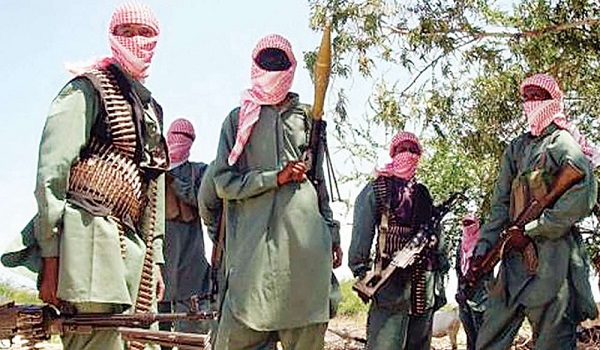
Seven students of Federal Polytechnic, Kaura Namoda, Zamfara State, have been abducted by suspected bandits who invaded their off-campus residence located on the outskirts of the Low-Cost area of Kaura Namoda town.
The Chairman of Kaura Namoda Local Government Area, Hon. Mannir Haidara Kaura, confirmed the incident to Daily Trust, stating that security agencies had launched operations to secure the safe return of the abducted students.
“The incident occurred, and security operatives are currently carrying out rescue operations to ensure the safe return of the kidnapped students,” Haidara said.
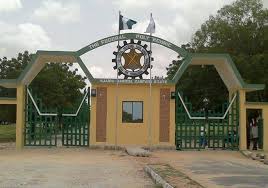
One of the students of the institution, Ibrahim Ahmad, disclosed that one of the abducted students had managed to escape, leaving three male and three female students still in captivity.
Meanwhile, a group known as the Concerned Citizens of Kaura Namoda expressed alarm over what it described as the worsening security situation in the area, allegedly perpetrated by a notorious bandit leader, Kachalla Bello Dansadiya, and his gang.
In a statement, the group recalled previous incidents, including the abduction of two senior lecturers who were held captive for more than two months despite the payment of ransom.
It also cited the kidnapping of three residents and a district head from his residence located near a military base.
“Alarmingly, all these victims are reportedly still being held in a well-known bandit camp around Dajin Yamma, yet no rescue operations have taken place. Where are the fighter jets and armoured vehicles?” the group queried.
The Zamfara State Police Command also confirmed the abduction, saying security operatives had intensified efforts to rescue the victims.
The command’s spokesperson, DSP Yazid Abubakar, said the incident occurred at the students’ residence on the outskirts of the Low-Cost area of Kaura Namoda.
He confirmed that one of the victims escaped, while efforts were ongoing to rescue the remaining six students.
According to him, the institution itself remains well secured.
“The school premises have been fortified with adequate security personnel, making it extremely difficult for bandits to penetrate,” he said.
Explaining how the incident happened, Abubakar said one of the students reportedly stepped outside at night to relieve himself and inadvertently left the door open.
“One of the students went outside during the night, claiming he wanted to urinate. In the process, he left the door open. Coincidentally, bandits passing through the area entered the house and abducted the students,” he said.
The police spokesperson added that members of the Command’s Violent Crime Response Unit (VCRU), in collaboration with troops of Operation Fansan Yamma, had launched a coordinated rescue operation.
“Our VCRU personnel, together with troops of Operation Fansan Yamma, are working to ensure the safe rescue of the abducted students,” Abubakar said.
-Source: Daily Trust

Alfa Iliasu, a prominent cleric in Ilesha-Baruba, Baruten Local Government Area of Kwara State, has been hacked to death.
Community leaders confirmed that the cleric, who was widely respected across Baruten and neighbouring communities, was killed under controversial circumstances.
The member representing Okuta/Yashikira constituency in the Kwara State House of Assembly, Muhammed Baba Saliu, said the community was still piecing together details of the tragedy.
“We know the cleric has been butchered and buried. Along the line, there are reports that among those who killed him, one of them was killed, another was arrested and another one went away. There are many reports coming in and I will speak further when I have a fuller grasp of the whole situation,” the lawmaker said.
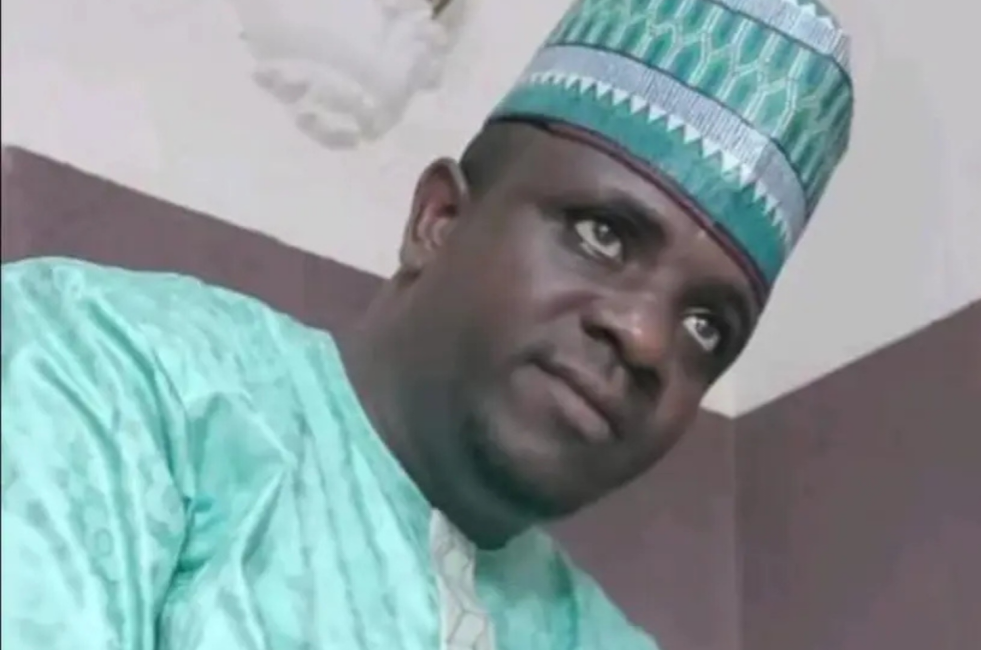
A former chairman of Baruten Local Government, Abdulrasheed Ibrahim, said preliminary accounts indicated that the attack occurred around 9 a.m. while Quranic lessons were ongoing within the cleric’s compound.
He said the cleric was rushed to hospital but later died from the injuries sustained in the attack, adding that the suspect was later lynched.
Ibrahim added that the suspect was apprehended and taken into police custody before events escalated, leading to mob action and wider unrest within the community.
The Emir of Ilesha-Baruba, Alhaji Halidu Abubakar, confirmed the incident in a chat with Daily Trust.
He said traditional and religious leaders immediately intervened to prevent a breakdown of law and order.
“One man went and killed a prominent Islamic cleric, Alfa Ilyas, with a cutlass. Nobody really knows what transpired between them before the attack,” the monarch said, adding that they later appealed to the youths over the matter.
The emir, however, acknowledged that despite the appeals, some angry youths allegedly attacked properties belonging to some residents before security operatives restored order.
But the Seriki Fulani of Ilesha-Baruba, Ardo Muhammed Abdullahi, alleged that the violence extended beyond the suspect and affected innocent residents.
Abdullahi claimed that the suspected attacker, identified only as Seke, popularly known as “Boso,” was a labourer known within the community and had previously been involved in disputes over unpaid wages.
“Only God knows what happened between him and Alfa Iliasu, but it appears there may have been a disagreement. He entered the cleric’s house and attacked him before trying to escape,” he said.
According to the Fulani leader, the suspect was initially apprehended by residents and taken to a police station before a mob allegedly overpowered security personnel, removed him from custody and lynched him.
He alleged that the violence later spread to other residents who had no connection to the attack.
“They burnt my three houses completely, including those belonging to members of my family. My wife and children narrowly escaped. As I speak, two of my children are still missing and I do not know whether they are alive or dead,” he said.
Abdullahi further claimed that several people were killed during the unrest and warned that failure to address the situation could heighten tensions between communities that have coexisted for decades.
He said he had reported the incident to security agencies and expressed disappointment that properties belonging to individuals he described as long-standing contributors to peace and security in the area were targeted.
The Fulani leader also disclosed plans to relocate from the community, citing concerns over the safety of his family and property
Isaac Fayose, brother of former Ekiti State Governor, Ayo Fayose, has announced the death of his wife after a prolonged battle with cancer.
According to Naija News, the social commentator shared the sad news on Instagram with a candle image, alongside a farewell message.
“Rest in peace my darling wife, odabo oyinbo mi”, he wrote.
Before her death, Fayose had opened up about the severity of her illness.
He said he travelled to Australia to spend time with his family, but was met with a painful reality as his wife had become extremely weak due to cancer.
He explained that she was no longer able to speak or carry out basic daily activities. According to him, the woman who once welcomed him at the airport could no longer do so, and he had to make his way from the airport by Uber.
He also described how roles had reversed in the home, saying he now had to take care of her, including cooking for her, as she could no longer do so herself. He added that he spent time beside her, singing her favourite songs, while she responded only by holding his hand.
In his emotional reflection, he also spoke about life and wealth, stressing that money and material possessions could not stop illness or death, and questioned the actions of those who use public office to take what belongs to others.


Tragedy as Adeleke Dies On Official Assignment in Switzerland

BREAKING: Femi Falana, Others Announce Date for Nationwide Protest Over Insecurity, Hunger

Filling Stations Adjust Petrol Prices Again as New Landing Cost Emerges

Former Super Eagles Star Loses Life Savings, Duped By A Pastor of ₦1.2 Billion

I’m A Married Man, I Can Never Get Myself Involved With Such A Thing, Delta Gov Aide Reveals Why He Offered Comfort ₦500,000 Job

Lagos Imposes ₦250,000 Fine For Illegal Waste Disposal

-
 News2 days ago
FG to Declare Nationwide Public Holiday, Date Revealed
-

 Business2 days ago
JUST IN: Marketers Crash Petrol Prices Nationwide, New Pump Prices Emerge
-
 News18 hours ago
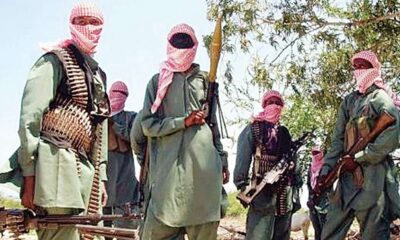
Bandits Strike Again, Kill Vice Principal in Fresh School Attack
-
 News2 days ago
BREAKING: Top Nigerian Emir is Dead, Details Emerge
-

 Politics19 hours ago
BREAKING: Court Takes Action on APC Primaries
-
 Business15 hours ago
Filling Stations Adjust Petrol Prices Again as New Landing Cost Emerges
-

 News22 hours ago
BREAKING: Tinubu’s Ex-Minister in Trouble Over Certificate Scandal
-

 Politics2 days ago
BREAKING: INEC Updates Portal, Lists New PDP National Executives