
Opinion
What Jonathan Need To Win 2027 Election – Northern Leader Reveals


Prof Tukur Muhammad-Baba, Publicity Secretary of the Arewa Consultative Forum, ACF, has said that former President needs to do more if he will stand in for the forthcoming presidential election in 2027.
The Arewa’s spokesman said GEJ needs to sell and offer himself as an alternative, showing he’s now different from the Goodluck Jonathan we knew as a person.
Muhammad-Baba stated this on Thursday while fielding questions on Arise Television’s Morning Show programme.
The statement comes amid indications are emerging that Jonathan is ready to contest the 2027 presidential election.
The Bayelsa politician is said to be getting set to battle President Bola Tinubu for the nation’s number one job.
There has been speculation about whether Jonathan will fly the flag of the Peoples Democratic Party, PDP.
He said: “But, you know, Goodluck Jonathan will be a candidate. But of course, he needs to do a lot more to sell himself, to offer himself as an alternative, to show that he’s now different from the Goodluck Jonathan we knew as a person. Circumstances have turned out that some of the criticisms against him were simply political and so on.
“Well, anybody could be a candidate. But I think, given the circumstances right now in the country, the difficulties people are facing the challenging the economic conditions, it will take a lot more for a politician, whether they are from the south, the north or from the moon, to convince themselves, to convince the electorate, that they are different, or that they offer a new alternative.”
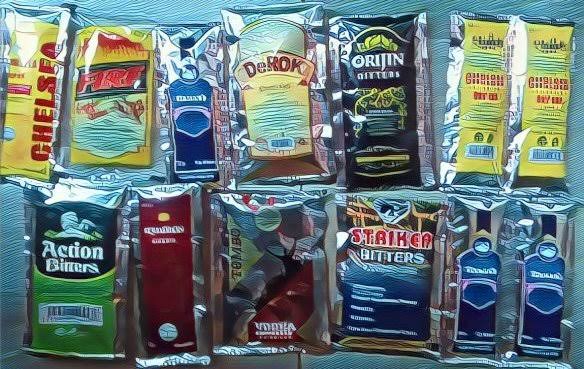
Nationwide tensions are on the rise as the National Agency for Food and Drug Administration and Control (NAFDAC) sticks to its guns over the full enforcement of a ban on alcoholic beverages in sachets and small bottles (200ml and below). The prevailing narrative surrounding the enforcement has been framed as a moral battle: profiteers on one side and public health defenders on the other. It is a powerful headline. It is also a misleading one.
To suggest that industry stakeholders are prioritising profit over public health is to oversimplify a complex policy issue and to mischaracterise the motivations of thousands of Nigerians whose livelihoods are directly tied to the sector. This debate is not about corporate greed. It is about economic survival, regulatory balance, and the interconnectedness of health and livelihoods.
Public health does not exist in isolation from economic stability. When policies trigger large-scale job losses, destabilise value chains, and threaten billions in local investments, the consequences ripple far beyond factory gates. They reach homes, schools, hospitals, and communities. They affect the same families whose welfare regulators say they are protecting. It is therefore disingenuous to reduce legitimate economic concerns to “profit-seeking.” What is at stake extends beyond balance sheets.
The sector impacted by the ban supports a vast ecosystem: manufacturers, distributors, small-scale retailers, logistics providers, packaging suppliers, marketers, and informal traders. Estimates referenced by labour groups indicate that millions of livelihoods may be affected directly and indirectly. Whether the precise figure is debated or not, the scale of economic exposure is undeniable.
When factories scale down or shut production lines, it is not shareholders who suffer first. It is line workers, drivers, depot staff, retail shop owners, and their dependents. In an economy already grappling with inflation, currency volatility, and high unemployment, the social consequences of abrupt regulatory shocks must be carefully weighed.
Economic displacement carries health consequences of its own. Poverty correlates strongly with deteriorating health outcomes. Job loss leads to reduced access to healthcare, increased stress, poorer nutrition, and vulnerability to mental health challenges. A regulatory action that triggers economic shockwaves can indirectly undermine public health in ways that are less visible but no less severe.
What’s more, the Director-General of NAFDAC, Mojisola Adeyeye, has emphasised concerns about underage access to alcohol in small, concealable packaging. The protection of minors is unquestionably a legitimate policy objective. No responsible stakeholder disputes the need to prevent underage drinking or substance abuse.
However, the central question remains: “does banning a packaging format sufficiently address the root causes of alcohol abuse?”
Product size alone does not create consumption behaviour. Underage access is primarily an enforcement issue. Retail compliance, age verification, perimeter control around schools, parental supervision, and community-level enforcement mechanisms play decisive roles. If minors are able to purchase alcohol, regardless of packaging size, then the regulatory focus must interrogate points of sale and enforcement gaps.
Furthermore, alcohol in larger containers remains legally available. The removal of sachet and small PET formats does not eliminate alcohol from the market. It merely alters packaging dynamics. If consumption is driven by behavioural and socio-economic factors, the packaging shift may not produce the intended public health outcome.
There is also the matter of proportionality. Regulatory action should be measured, targeted, and responsive to evolving economic conditions. The 2018 agreement referenced by NAFDAC outlined a phased approach. Yet between 2018 and 2024, Nigeria experienced unprecedented economic turbulence — including pandemic disruptions, supply chain shocks, foreign exchange volatility, and inflationary pressures that strained manufacturing capacity.
Phased compliance assumes a relatively stable economic environment. When that stability collapses, regulators must evaluate whether timelines remain feasible without disproportionate harm. Flexibility in policy implementation is not weakness. It is responsible governance.
Another dimension that deserves serious reflection is the risk of unintended consequences. Sudden restrictions on regulated products can create market distortions. When legitimate supply chains contract abruptly, informal and unregulated alternatives often emerge. Counterfeit production, illicit distribution, and unsafe substitutes become attractive gaps to exploit.
Nigeria’s regulatory history across multiple sectors has demonstrated that prohibition-style measures, if not carefully calibrated, may push demand underground rather than eliminate it. An unregulated alternative market would pose far greater public health risks than a monitored, licensed production environment.
It is therefore imperative to interrogate whether the current approach optimally balances health protection with economic stability and enforcement realism.
Equally troubling is the language deployed in public discourse. Framing the debate as a binary moral question — “Do we want children to die or do we want money?” — may resonate emotionally, but it does not elevate policy analysis. Such rhetoric risks polarising stakeholders rather than fostering collaborative solutions.
No serious industry actor advocates harm to children. No responsible labour union is indifferent to public health. The argument advanced by stakeholders is not that economic interests trump health; it is that both must be protected simultaneously.
Public health and economic health are not adversaries. They are interdependent pillars of national stability.
The involvement of labour organisations such as the Nigeria Labour Congress and the Trade Union Congress of Nigeria underscores that this debate transcends corporate interests. When labour unions raise alarms about job losses, they are fulfilling their mandate to defend workers, not to undermine health objectives.
In democratic governance, engagement with policymakers is neither subversive nor unethical. Consultation, advocacy, and dialogue are legitimate mechanisms for resolving complex policy conflicts. Casting stakeholder engagement as clandestine lobbying undermines the very participatory governance structures that sustain accountability.
The broader issue at hand is regulatory balance. Effective regulation should aim for outcomes that are sustainable, enforceable, and economically coherent. It should incorporate data transparency, measurable impact assessments, and periodic review mechanisms. It should also align with a comprehensive National Alcohol Policy framework to ensure consistency rather than fragmentation.
A policy that destabilises millions of livelihoods without conclusively addressing root behavioural drivers risks creating parallel crises: economic distress and public health strain.
Nigeria’s current socio-economic climate demands prudence. Youth unemployment remains high. Small and medium-scale enterprises are navigating a volatile operating environment. Manufacturing costs continue to rise. In this context, policy shocks reverberate intensely.
The country cannot afford solutions that inadvertently deepen economic fragility.
The question, therefore, should not be framed as “profit versus public health.” It should be reframed as “How do we protect public health while safeguarding livelihoods and economic resilience?”
That is the conversation worthy of a serious nation.
Protecting children from alcohol abuse requires comprehensive enforcement strategies, educational campaigns, community engagement, retailer accountability, and behavioural interventions. Packaging restrictions may form part of a broader toolkit, but they cannot substitute for systemic solutions.
Public health objectives are noble and necessary. Yet they must be pursued with economic intelligence and regulatory foresight.
In the final analysis, a nation’s strength lies in its ability to harmonise competing interests without sacrificing either. Health without livelihoods breeds poverty. Livelihoods without regulation breed disorder. The challenge is not choosing one over the other; it is integrating both responsibly.
According to key industry stakeholders, the economic disruption projected to arise from NAFDAC’s wholesale enforcement is in the region of 500,000 direct job losses, 5 million indirect job losses, and the loss of over N800 billion in investments. While NAFDAC is hell bent on the ban, the Office of the Secretary to the Government of the Federation (OSGF) and the National Security Adviser (NSA) had earlier directed a suspension, citing security and economic risks.
Some industry thought leaders also maintain that the ban may drive a radical and harmful shift with consumers gravitating toward dangerous, unregulated, or illicit alcohol alternatives.
Suffice it to say that reducing the debate to a morality play does not serve the Nigerian public. What is required is sober assessment, collaborative engagement, and a recalibration that ensures children are protected, workers are not abandoned, and economic stability is preserved.
Opinion
Edo State To Spend N1billion On Armoured Car For Speaker, N4.6billion On Vehicles For Lawmakers

The budget also reveals that N4.6 billion is planned for vehicles for the 25 members of the State House of Assembly.
Reporters’ review of the Edo State approved budget for 2026 shows that N1billion has been allocated to purchase an armoured vehicle for the Speaker of the State House of Assembly.
The budget also reveals that N4.6 billion is planned for vehicles for the 25 members of the State House of Assembly.
Also, N50million is planned for the purchase of refrigerators and other equipment for four directors. The House of Assembly Commission also plans to spend 200 million naira on roof and window replacement for its office building.
Earlier, a civic accountability group, MonITng, raised concerns over the execution of a multi-million-naira education project in Edo State, citing poor quality, procurement irregularities, and a recurring pattern of questionable contract awards.
“A project titled ‘Building of Blocks of Classrooms at Ojah Comprehensive High School, Akoko LGA, Edo State’ with project code ZIP20240448, valued at ₦222,000,000.00, and awarded under the Federal Polytechnic Auchi, Federal Ministry of Education, has raised serious concerns about the quality of execution, contract pricing, and procurement integrity.”
According to MonITng, its team tracked and inspected the project site. “Our team tracked and visited the project site and confirmed that although the classrooms were completed, they were poorly constructed.”
The group further noted: “The structure lacks basic finishing elements such as landscaping, proper drainage, and standard finishing works, all of which should have been included and adequately executed, given the huge sum budgeted for the project.”
It added that “the poor quality of work raises questions about project supervision, contract oversight, and how the allocated funds were spent.”
MonITng also linked the project to a contractor allegedly tied to multiple controversial contracts. “Even more troubling is the pattern we uncovered. The project was executed by Sam Sedi Nig. LTD, a company that has consistently received major contracts facilitated by Senator Adams Oshiomhole.”
The group claimed that “this same contractor handled the abandoned ERGP20245252 project, Construction of Warake to Ivbiaro Road in Owan East LGA, valued at ₦200,000,000.00, which remains incomplete despite significant disbursements.”
“Additionally, the same company implemented a controversial agricultural empowerment programme in Etsako communities, also facilitated by Senator Oshiomhole.”
MonITng alleged that “the recurring involvement of this contractor in multiple projects, combined with substandard delivery and abandoned works, suggests a pattern of procurement manipulation, inflated contracts, and possible diversion of public resources.”
It added that “the situation reflects how public projects, although completed on paper, often fail to deliver a meaningful impact due to corruption, poor supervision, and a lack of accountability.”
The Ogun State chapter of the Labour Party has accused the All Progressives Congress of using its ongoing electronic membership registration to allegedly manipulate figures ahead of the 2027 general elections.
In a statement issued on Wednesday, the state chairman of the Labour Party, Chief Oluwabukola Soyoye, claimed that the APC’s e-registration exercise was designed to digitally inflate its membership strength and project a false image of popularity in the state.
Soyoye alleged that the ruling party had resorted to electronic registration because it could no longer mobilise people openly, insisting that the administration of Governor Dapo Abiodun had suffered widespread rejection due to what he described as underperformance.
According to him, the APC’s e-registration, presented as a routine membership drive, was in reality “a political referendum that exposes the deep rejection of Governor Dapo Abiodun and his black-market style of governance by the people of Ogun State.
“The people of Ogun are now wiser. They have deliberately refused to participate in any open, physical APC registration because they know the ruling party has failed them,” Soyoye said.
“That is why the APC has resorted to this so-called electronic registration — a system that allows figures to be fabricated behind closed doors without the presence of real members.”
The LP further alleged that the electronic platform could be used to manipulate membership data, inflate figures and create a misleading narrative of political dominance ahead of 2027
“What we are witnessing is not a genuine political exercise but a fraudulent digital operation designed to manufacture legitimacy for a government that has lost the confidence of the people,” Soyoye added.


TRAGEDY: APC Chieftain Dies 24 Hours After Re-Election

EFCC Arraigns Chayomi Aluminum Boss Titilayo Eboh Over Alleged N1.8bn Fraud

BREAKING: Powerful Minister To Resign From Tinubu’s Cabinet; Reason Emerges

Former Super Eagles Star Loses Life Savings, Duped By A Pastor of ₦1.2 Billion

These ’90s fashion trends are making a comeback in 2017

I’m A Married Man, I Can Never Get Myself Involved With Such A Thing, Delta Gov Aide Reveals Why He Offered Comfort ₦500,000 Job
-
 News18 hours ago
BREAKING: Powerful Minister To Resign From Tinubu’s Cabinet; Reason Emerges
-

 News2 days ago
BREAKING: Tinubu Appoints New Minister of State For Finance
-

 News24 hours ago
Another Nigerian Pastor’s Prophecy On Winner Of Israel-Iran War After TB Joshua Trends
-
 Health1 day ago
Profit Or Public Health? A False Choice In The Sachet Alcohol Debate
-
 Politics4 hours ago
TRAGEDY: APC Chieftain Dies 24 Hours After Re-Election
-
 News6 hours ago
EFCC Arraigns Chayomi Aluminum Boss Titilayo Eboh Over Alleged N1.8bn Fraud