
Business
Cashless Payments, Tax Reforms, Other FG Policies Kick Off In 2026

The Federal Government has announced that several key reforms and directives will officially take effect in 2026, marking a significant shift in governance, revenue administration, and public service delivery.
The measures, aimed at improving transparency, boosting revenue, and modernising government operations, are expected to reshape how citizens and businesses interact with the Federal Government.
PUNCH Online highlights some of the major policies set to take effect next year.
Nigeria Revenue Service (NRS) Tax Reforms
The government has reformed its tax laws, replacing the former Federal Inland Revenue Service (FIRS) with the Nigeria Revenue Service (NRS).
The new tax framework will come into effect on January 1, 2026, requiring all taxpayers—individuals and businesses alike—to comply with the updated tax administration procedures.
Fully Digital Public Services & Revenue Collection (Cashless Government Payments)
Starting in 2026, all federal revenue collections will require digital payments.
Services such as passports, licences, and regulatory fees will no longer accept cash.
This move represents a major shift toward digital public services and is intended to improve transparency while reducing leakages in revenue collection.
National Single Window (NSW) for Trade and Customs
The government has directed the NSW Steering Committee to ensure the platform is fully operational by the first quarter of 2026.
The NSW is expected to streamline trade and Customs procedures, reduce bureaucracy, and facilitate easier import/export processes for businesses.
Digital Public Infrastructure (DPI) / Nigerian Data Exchange (NGDX)
Set for rollout in early 2026, the DPI and NGDX platforms aim to support e-government services, enhance data exchange between government agencies, and improve service delivery to citizens and businesses.
Budget Rollover: Focus on Completing Ongoing Projects
For the 2026 fiscal year, the government has directed that 70% of 2025’s capital budget be rolled over, effectively freezing the launch of many new major projects.
This strategy is designed to focus resources on completing existing projects in areas such as security, infrastructure, and social services, reflecting caution under revenue constraints.
Revenue Optimisation Platform (RevOp)
The Revenue Optimisation Platform will centralise revenue collection, reconciliation, and monitoring across all Ministries, Departments, and Agencies (MDAs).
The system integrates with existing Treasury‑Single Account frameworks, financial management systems, and banks, helping to prevent revenue leakages and improve transparency.

The cost of importing petrol into Nigeria has dropped sharply following the recent decline in global crude oil prices, creating fresh competition for local refiners, including the $20 billion Dangote Refinery.
New data released by the Major Energy Marketers Association of Nigeria (MEMAN) shows that the landing cost of imported Premium Motor Spirit (PMS), also known as petrol, has fallen to N1,117 per litre.
The figure is now significantly lower than Dangote Refinery’s gantry price of N1,250 per litre, leaving a difference of N133 per litre.
The development comes days after the mega refinery reduced its ex-depot petrol price from N1,275 to N1,250 per litre in response to changing market conditions.
The latest MEMAN pricing template suggests that fuel importers may now enjoy a competitive edge over domestic refiners as international crude prices continue to soften. Aside from petrol, the landing costs of other petroleum products also recorded notable declines.
According to the data, diesel landing cost dropped to N1,470 per litre, compared to Dangote Refinery’s price of N1,700 per litre. Aviation Turbine Kerosene (ATK), commonly known as aviation fuel, also fell to N1,426 per litre, while Dangote’s price remains N1,650 per litre.
MEMAN estimated the exchange rate for fuel imports at N1,366.85 per dollar, reflecting the prevailing official foreign exchange rate at the time of the calculation.
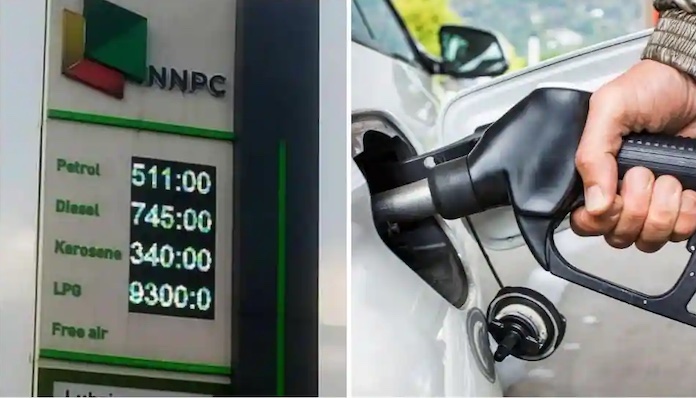
Some filling stations along the Lagos-Ibadan Expressway and in other locations across Lagos and Ogun states have reduced petrol prices below N1,300 per litre.
This follows a price cut announced by the Dangote Petroleum Refinery on Sunday.
The refinery adjusted its ex-depot gantry price of petrol down to N1,250 per litre from N1,275 per litre, while also slashing the price of diesel to N1,700 per litre from N1,800 per litre.
According to Dangote officials, the price review reflects a recent decline in global oil prices and reinforces the company’s commitment to making refined products more affordable while providing cost relief to Nigerian consumers and businesses.
Following the announcement, observations across the Mowe/Ibafo axis of the Lagos-Ibadan Expressway in Ogun State showed that several independent marketers immediately adjusted their pumps. For instance, MRS filling stations reduced their petrol pump price to N1,286 per litre, NIPCO and Heyden retailed the product at N1,290 per litre, and SGR adjusted its price to N1,297 per litre.
Reductions were also recorded in the diesel market, with many filling stations dropping their prices to N1,800 per litre from the previous N1,900 per litre.
Despite these downward adjustments, many retail outlets still sell petrol above the N1,300 mark. Outlets operated by the Nigerian National Petroleum Company Limited (NNPC) in Ibafo adjusted their pumps to N1,305 per litre, while Mobil and Asharami sold the product at N1,310 and N1,320 per litre, respectively.
The overall price drop comes after a prolonged period of high fuel costs in Nigeria, which saw petrol skyrocket from N830 per litre to over N1,300 after global crude oil climbed past $115 per barrel due to tensions between the United States and Iran.
Barely 24 hours after announcing a reduction in the price of premium motor spirit (PMS), commonly known as petrol, Dangote Refinery has adjusted its ex-depot price upward, joining several other fuel depot operators in responding to renewed volatility in the global oil market.
The latest development comes after the refinery had cut petrol prices twice within two days, lowering its ex-depot rate from N1,275 per litre to N1,250 per litre.
However, fresh market data now indicates a reversal of that trend as rising crude oil prices continue to influence domestic fuel pricing.
Industry observers attribute the latest increase to growing uncertainty in the international energy market, particularly concerns surrounding the Strait of Hormuz, a critical shipping route for global oil supplies.
Data from PetroleumPriceNG shows that Dangote Refinery increased its petrol price by 0.46 per cent to N1,256 per litre, up from N1,250 per litre announced earlier.
The refinery’s adjustment was mirrored by several major depot operators across the country. According to the data, AIPEC raised its petrol price to N1,252 per litre, while Ardova also fixed its rate at N1,252 per litre. Bulk Strategic and Liquid Bulk both increased their prices to N1,285 per litre.
The coordinated adjustments reflect growing concerns among marketers and depot operators over the rising cost of crude oil and the need to manage pricing risks.


BREAKING: Peter Obi Drags Kenneth Okonkwo to Court, Reasons Emerge

FG to Declare Nationwide Public Holiday, Date Revealed

2027 Election: What Peter Obi Told Me About Atiku – Dele Momodu Reveals

Former Super Eagles Star Loses Life Savings, Duped By A Pastor of ₦1.2 Billion

I’m A Married Man, I Can Never Get Myself Involved With Such A Thing, Delta Gov Aide Reveals Why He Offered Comfort ₦500,000 Job

Lagos Imposes ₦250,000 Fine For Illegal Waste Disposal

-
 Politics2 days ago
BREAKING: APC Releases List of Qualified Senatorial Candidates Ahead 2027
-
 News2 days ago
JUST IN: INEC Releases Final List Of Candidates For 2026 elections
-
 Politics1 day ago
BREAKING: Kwankwaso Breaks Silence on Dumping NDC
-

 Politics2 days ago
JUST IN: INEC Validates Only Three Parties for 2026 Senatorial By-Election; Gives Reason
-

 Business23 hours ago
JUST IN: Marketers Crash Petrol Prices Nationwide, New Pump Prices Emerge
-
 News13 hours ago
FG to Declare Nationwide Public Holiday, Date Revealed
-

 News19 hours ago
BREAKING: Top Nigerian Emir is Dead, Details Emerge
-

 Politics2 days ago
Tension as Fresh Move to Remove NDC Before 2027 Emerges –