
Foreign
Israel Launches Airstrikes On Iran

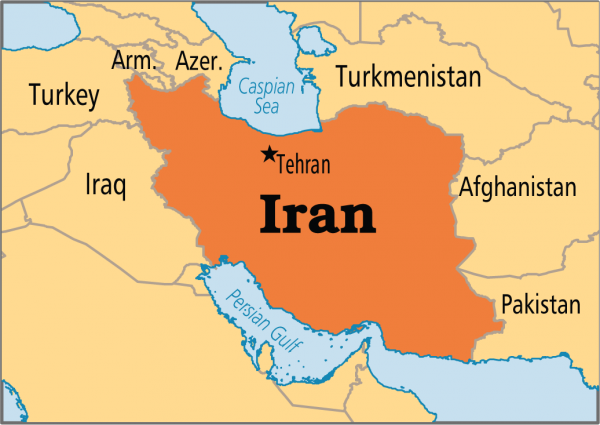
Israeli military officials said that the Israeli Air Force targeted Iranian nuclear and military sites in the attacks.
Sounds of explosions have been reported in Iran after Israel attacked the country’s capital, Tehran, early Friday.
The Israeli military officials said that the Israeli Air Force targeted Iranian nuclear and military sites in the attacks.
President Benjamin Netanyahu, in a YouTube video on Friday morning, said the strikes targeted Iran’s nuclear facilities and ballistic missile production sites.
“This operation will take as long as is needed to complete the task of fending off the threat of annihilation against us,” Mr Netanyahu said.
However, images circulating in the media showed the airstrike destroyed buildings in residential areas.
The Chief Commander of Iran’s Islamic Revolution Guards Corps, Hossein Salami, has reportedly been killed.
Audience Feedback Survey
Iran, in response, has vowed to launch a swift and forceful retaliation against the airstrikes.
Tensions over Iran’s nuclear programme escalated on Thursday after the International Atomic Energy Agency’s Board of Governors censured the country for the first time in two decades over its lack of cooperation with inspectors.
In a swift response, Iran announced it would build a third uranium enrichment facility and upgrade its centrifuges to more advanced models.
Also, talks between the United States and Iran have largely stalled, primarily due to an impasse over uranium enrichment. Both countries have held five rounds of nuclear talks since April, as President Trump pushed for a deal that would limit Iran’s uranium enrichment.
The US had insisted that Iran halt all uranium enrichment activities, but Iran rejected the demand.
Multiple reports from Tehran indicated that loud explosions were heard northeast of the Iranian capital. Iran’s state media also announced that all flights at Imam Khomeini International Airport, the city’s main air hub, have been suspended.
The United States has, however, distanced itself from the attack against Iran.
The Secretary of State, Marco Rubio, has declared that the US was not involved in the strikes and warned Iran not to target American interests or personnel in the region.
“Tonight, Israel took unilateral action against Iran. We are not involved in strikes against Iran, and our top priority is protecting American forces in the region.
“Let me be clear: Iran should not target US interests or personnel,” Mr Rubio said in a statement.
President Trump had earlier warned Prime Minister Netanyahu against an attack on Iran.
A few hours before the strike, he had also posted on Truth Social that his administration was committed to a diplomatic resolution with Iran on its nuclear development.
“We remain committed to a Diplomatic Resolution to the Iran Nuclear Issue! My entire Administration has been directed to negotiate with Iran. They could be a Great Country, but they first must completely give up hopes of obtaining a Nuclear Weapon,” he said.
The Iranian spokesperson for the Armed Forces’ General Staff, Abolfazl Shekarchi, has said both the US and Israel will pay a “heavy price” for the “deadly airstrikes” against the country.
He declared that Israel “will pay a heavy price and should await a strong response from the Iranian armed forces.”
Both Iran and Israel have closed their airspace.
Israel has also signed “a special order declaring an emergency situation on the home front,” in anticipation of Iran’s response.
Premiumtimesng.com

South Sudan President Salva Kiir fired Finance Minister Bak Barnaba Chol in a reshuffle that was unveiled on state television on Monday evening.
Chol was appointed to the post in November, following the president’s firing of Athian Diing Athian just two months after his appointment.
Kiir appointed Salvatore Garang, an economist trained at the University of Khartoum in Sudan, as the new Minister of Finance.
Garang previously served as finance minister from 2018 to 2020, a period marked by economic reforms and fiscal strains.
During his first stint in the role, local media reported that Garang faced corruption allegations, including that he allocated 100,000 dollars to cover the cost of his son’s funeral.
He has not commented on the allegations.
The decree also removed several other senior officials, including the commissioner general of the National Revenue Authority, as part of the broader administrative changes.
Analysts say Kiir regularly makes changes to ranks in the military and government to maintain control as he contends with armed conflict and speculation about his eventual succession.
No reason was given for the ninth change in the finance minister since 2020.
-Source: (Reuters/News Agency of Nigeria NAN)
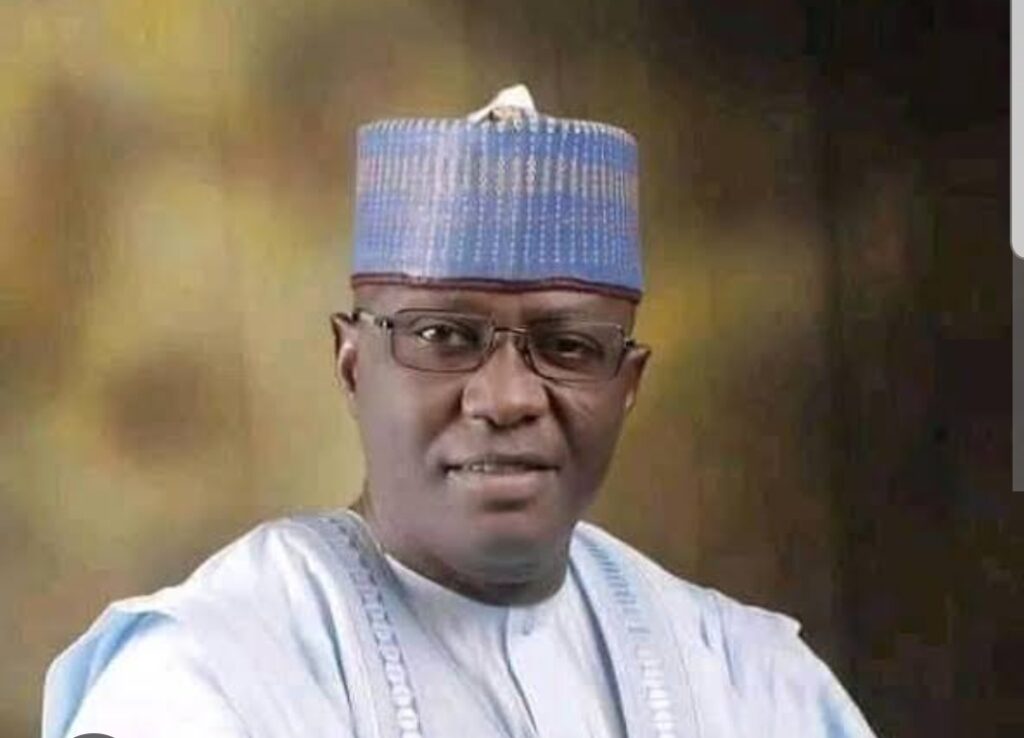
National Commission for Refugees, Migrants and Internally Displaced Persons (NCFRMI), has reiterates its commitment to effective implementation of the Global Compact for Migration.
The Honourable Federal Commissioner, NCFRMI, Hon. Dr. Tijani Aliyu Ahmed disclosed this in his opening remark at the just concluded Voluntary National Review (VNR) on the implementation of the Global Compact for Safe, Orderly and Regular Migration (GCM) ahead of the 2026 International Migration Review Forum (IMRF).
The event which was held between February 17 and 21 at the Lagos Continental Hotel, Victoria Island Lagos, had the International Organisation for Migration, other international partners, members of the civil society, federal and state government agencies among others in attendance.
Speaking, Dr Tijani extended appreciation to the Federal Government, the United Nations Network on Migration for the sustained technical guidance, institutional support and capacity building provided to Nigeria in the implementation of the Compact.
“I equally acknowledge the invaluable support of the Resident Coordinator’s Office for strengthening system-wide coherence and coordination across the United Nations Country Team and partners in Nigeria.”
He recalled that Nigeria adopted the Global Compact for Migration following its endorsement by the United Nations General Assembly in December 2018, and “since then we have demonstrated sustained political will and institutional commitment to its implementation. As a Champion Country, Nigeria has taken deliberate steps to domesticate the principles and objectives of the GCM within our national migration governance framework.
“The recently validated revised National Migration Policy and its integrated Implementation Plan, which doubles as Nigeria’s National GCM Implementation Plan, stand as clear evidence of this alignment between global commitments and national action.”
He added that in preparation for the first IMRF in 2022, Nigeria conducted its inaugural Voluntary National Review in Lagos through a whole-of-government and whole-of-society approach. “The process strengthened coordination among stakeholders and informed Nigeria’s national report, pledge and interventions at IMRF 2022. Building on that foundation, Nigeria convened a second Voluntary National Review in August 2024 in Abuja, structured around Technical Working Groups covering Labour Migration, Migration Data, Border Management, Return, Readmission and Reintegration, and Diaspora Engagement. The outcomes informed Nigeria’s engagement at the regional review and reinforced sustained national monitoring.”
This 2026 Review according to him is required to track progress since the 2024 regional review, assess implementation across the twenty-three objectives of the Compact, and consolidate national priorities, challenges and areas for improvement ahead of IMRF 2026. “Over the next three days, discussions will follow the GCM review template and align with the thematic areas of the IMRF roundtables. Breakout sessions chaired by members of the United Nations Network on Migration and supported by national thematic leads will evaluate progress, identify lessons learned and generate structured talking points to guide Nigeria’s participation at IMRF 2026.
“This consultation also provides an opportunity to stock take Nigeria’s pledges made at IMRF 2022, highlighting achievements, gaps and opportunities for renewed commitment. Furthermore, building on the evidence of impact from Nigeria’s side event at IMRF 2022, preparations are underway for a side event at IMRF 2026 to showcase practical achievements, lessons learned and pathways for strengthening regular migration channels.
“At this juncture, I would like to reiterate the unwavering commitment of the National Commission for Refugees, Migrants and Internally Displaced Persons, to the effective implementation of the Global Compact for Migration and to sustaining the whole-of-government and whole-of-society approach that underpins this national process.
“We remain deeply appreciative of the consistent support of the International Organization for Migration and other members of the United Nations Network on Migration in strengthening Nigeria’s migration governance efforts. As we prepare for IMRF 2026, we look forward to sustained technical collaboration and partnership to facilitate Nigeria’s effective engagement at the Review Forum and the successful delivery of our proposed side event. Continued cooperation will be critical in transforming commitments into tangible, evidence-based results.”

A bombing at Khadija Al-Kubra mosque on Islamabad’s outskirts killed 31 people and injured at least 169 during Friday prayers. Witnesses described scenes of chaos, with bodies and wounded lying inside the mosque as rescuers transported victims to hospitals. Pakistani authorities and leaders condemned the attack, launched investigations, and called for urgent medical assistance and blood donations.
A devastating bombing struck the Shiite mosque of Khadija Al-Kubra on the outskirts of Islamabad, Pakistan, during Friday prayers, leaving at least 31 people dead and 169 others injured, officials said. Police are investigating who wa was behind the explosion, AP reported.
Witnesses described scenes of chaos as worshippers were caught in the blast. Television footage and social media posts showed rescuers and residents rushing the wounded to nearby hospitals. Hussain Shah, who was praying in the mosque courtyard, recounted the moment of the attack. “I immediately thought that some big attack has happened,” he said. Entering the mosque, he saw bodies on the carpeted floor and people screaming for help. Shah estimated around 30 bodies inside, while many more were wounded.
Authorities have not received a claim of responsibility for the bombing, though suspicion is expected to fall on militant groups such as the Pakistani Taliban or regional affiliates of the Islamic State, which have previously targeted Shiite communities.
Militants in Pakistan often strike security forces and civilians, with recent months seeing a rise in attacks across the country. Islamabad Deputy Commissioner Irfan Memon updated the casualty numbers shortly after the initial reports. President Asif Ali Zardari and Prime Minister Shehbaz Sharif condemned the attack and extended condolences to the victims’ families. “Targeting innocent civilians is a crime against humanity,” Zardari said. Sharif ordered a full investigation, saying, “Those who are responsible must be identified and punished.”
Interior Minister Mohsin Naqvi urged hospitals to provide the best possible care for the wounded. Shiite leader Raja Nasir called the attack a serious failure in protecting human life and appealed for blood donations, noting that hospitals were in urgent need. The bombing occurred near an event attended by Uzbekistan’s President Shavkat Mirziyoyev in Islamabad, several miles from the mosque. Islamabad has previously suffered major attacks, including a 2008 bombing at the Marriott Hotel that killed 63 people. The incident comes days after multiple attacks in Balochistan by the outlawed Baloch Liberation Army, which killed roughly 50 people and prompted security forces to eliminate more than 200 militants.


BREAKING: “Serial Disrespect” Sparks Drama As Senate Order Arrest Of Tinubu’s Appointee

Edo State To Spend N1billion On Armoured Car For Speaker, N4.6billion On Vehicles For Lawmakers

Opposition Leaders Urge N’Assembly To Begin Fresh Electoral Act Amendment

Former Super Eagles Star Loses Life Savings, Duped By A Pastor of ₦1.2 Billion

These ’90s fashion trends are making a comeback in 2017

I’m A Married Man, I Can Never Get Myself Involved With Such A Thing, Delta Gov Aide Reveals Why He Offered Comfort ₦500,000 Job
-

 Politics2 days ago
Assembly Confirms Popular Redeemed Pastor As Deputy Governor
-

 Foreign2 days ago
Cabinet Reshuffle: President Sacks Finance Minister
-

 Business2 days ago
JUST IN: 13 Banks May Shut Down In March As CBN Confirms 20 Safe For Recapitalisation Deadline
-
 Politics9 hours ago
BREAKING: “Serial Disrespect” Sparks Drama As Senate Order Arrest Of Tinubu’s Appointee
-
 Politics10 hours ago
Opposition Leaders Urge N’Assembly To Begin Fresh Electoral Act Amendment
-
 Opinion9 hours ago
Edo State To Spend N1billion On Armoured Car For Speaker, N4.6billion On Vehicles For Lawmakers