
Lifestyle
10 Most Educated Tribes In Nigeria – See Who Tops The List

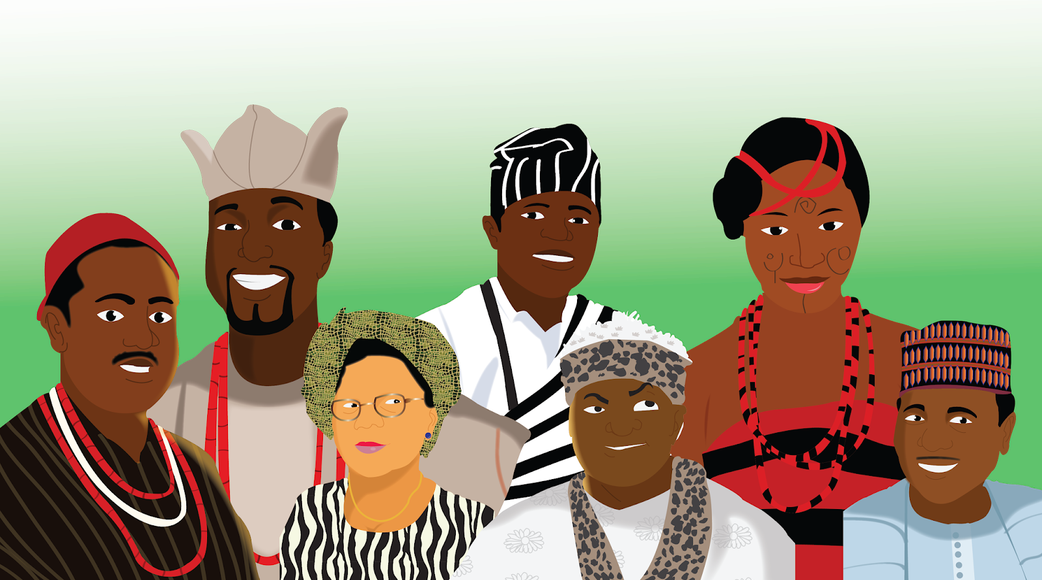
There are over 250 ethnic groups in Nigeria and they have their unique culture, values, and relationship with education.
Some tribes value education, and some others don’t, and this inequality exists particularly between the southern and northern parts of the country. Despite decades of national investment in education, Nigeria’s literacy and education levels are still quite low and don’t even rank among countries with the highest IQs globally.
In 2022, Nigeria’s national literacy rate reached 69%, according to the National Bureau of Statistics (NBS), a modest improvement since 2007. But this progress hides vast regional and tribal disparities. While states like Imo and Lagos boast literacy levels as high as 96%, states like Yobe and Zamfara still struggle far below the national average.
Southern tribes consistently lead, while many northern communities continue to face educational barriers. Here’s the top 10 most educated tribes, ranked by youth literacy (ages 15–24) and tertiary education rates:
Top 10 Most Educated Tribes in Nigeria
1. Igbo
The youth literacy is 74.2% for males and 73.1% for females, and these figures rank top for both genders among all tribes. The Igbo tribe in Nigeria is renowned for its business acumen and entrepreneurial spirit. However, they are also highly educated and have made significant contributions to the country’s educational landscape. They have a strong emphasis on education and believe in the power of knowledge to empower their community.
2. Edo
The youth literacy for males in Edo is 74.2% and 59.56% for females. The Edo tribe, known for their rich civilisation and high migration rates, is also recognised for their commitment to education. They place a strong emphasis on the value of knowledge and learning, making them one of the most educated tribes in Nigeria. Education among the Edo tribe goes beyond academic achievements. It is also intertwined with the preservation and promotion of their rich cultural heritage.
3. Yoruba
The youth literacy for Yoruba males is 70.3% and 56.8% for the females. The Yoruba tribe in Nigeria is widely recognised as one of the most educated tribes in the country. They have a long history of embracing Western education, and as a result, have achieved remarkable educational milestones. The Yoruba tribe has a significant number of professors within their community, and these individuals serve as inspiring role models to the younger generations.
4. Tiv
The youth literacy for Tiv males is 68.4% and 37.4% for females. There is a huge disparity in education between the genders. Tiv isa major ethnic group in Nigeria, primarily residing in Benue State and neighbouring regions. Historically, they relied on oral tradition and practical activities for knowledge transmission, with women often having less access to formal Western education. While Western education has opened up opportunities for Tiv women, these challenges remain.
5. Ijaw
The youth literacy for Ijaw males is 63.3% and 47.7% for females. The Ijaw tribe, prominent in the Niger Delta region, is not only politically influential but also highly educated. With a strong emphasis on education, the Ijaw people have produced a significant number of educated individuals who play significant roles in society.
6. Hausa
The youth literacy for Hausa men is 63.3% and 47.7% for women. Northern states have historically lagged due to limited colonial-era schooling in the North. Recent improvements only began through adult and rural literacy initiatives. This tribe is known for its political dominance, and despite their cultural and population challenges, those who pursue education within the Hausa tribe have proven their intellectual capabilities.
7. Ibibio
The youth literacy for males in Ibibio is 57.7% and for females, 62.2%. The Ibibio people are found in the South-South region of Nigeria in Akwa Ibom State, Cross River State, and Eastern Abia State (Arochukwu and Ukwa East LGAs). This tribe benefited from community and government literacy programs, which have shown strong improvements in literacy across both genders over the years.
8. Other Ethnicities
Other ethnicities like Urhobo / Itsekiri / Isoko / Calabar, and many others, fall under this category. For example, Urhobo (Delta), Itsekiri (Western Niger Delta), Isoko, and Calabar/Efik communities have historical ties to early education via missionaries/trade.
9. Kanuri
The youth literacy for Kanuri males is 42% and 22.7% for females. The Kanuri people, primarily located in northeastern Nigeria, have a complex relationship with education, influenced by their cultural values and the introduction of modern schooling. While education is valued, some Kanuri communities have experienced a disconnect between traditional Kanuri culture and the formal school curriculum, leading to resistance to modern education in certain areas.
10. Fulani
The youth literacy for Fulani men is 26.2% and 13.8% for females. This tribe is traditionally nomadic, which makes formal education access more difficult.
Education Trends (2000 – 2024)
2000–2004: The Igbo and Yoruba led in literacy, while the Hausa and Fulani lagged. Nigeria’s literacy rate in 2003 was 54.77%.
2005–2009: The literacy rate rose to 70.20%. The rate of increase for the Edo and Tiv peoples was impressive, while that of the Fulani and Kanuri still lagged far behind.
2010–2014: Nigeria’s literacy rate in 2010 was 68.11%. Igbo and Yoruba continued to lead, while Edo and Tiv showed improvements with targeted programmes, but Fulani and Kanuri remained disadvantaged.
2015–2019: By 2018, the Fulanis saw gains of about 35%, aided by government programmes directed at nomadic and rural populations.
2020–2024: Nigeria’s literacy rate was 77.62% in 2021 but declined to 59.57% by 2024. The Igbo and Yoruba remained at the top, while the Fulani and Kanuri improved.
In conclusion, Igbo, Edo, and Yoruba top Nigeria’s educational rankings.
Pulse.ng
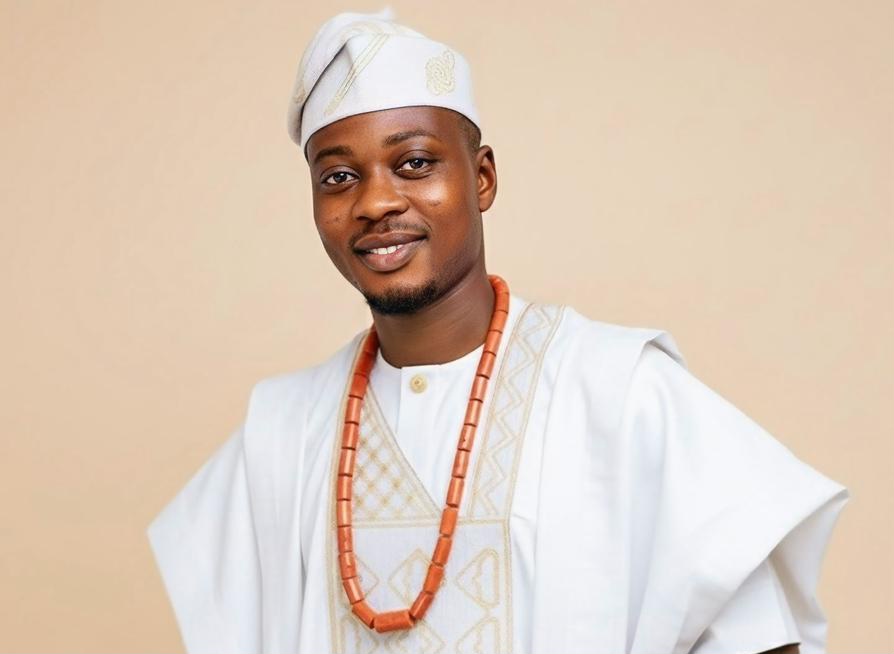
The Permanent Chairman of the Southern Nigeria Traditional Rulers Council (SNTRC), Arole Oodua Olofin Adimula and the Natural Head of the Oduduwa race worldwide, the Ooni of Ife, Ooni Adeyeye Enitan Ogunwusi, CFR, Ojaja II has congratulated Prince Sunday Adekanmbi Olayode Asinloye II on his emergence as the Oniko-Elect of Ikolaje Idiriko Kingdom in Ipokia Local Government Area of Ogun State.
Prince Adekanmbi was elected and formally appointed as the Oniko-Elect on 10th February, 2026, by the Ikolaje Idiriko Council of Kingmakers, following due traditional processes and consultations in line with the customs of the ancient kingdom.
In a press statement issued on Monday and signed by the Director of Media and Public Affairs, Ooni’s Palace, Otunba Moses Olafare, the Ooni described the emergence of Prince Adekanmbi as a testament to divine favour and the collective will of his people.
According to the statement, the Ooni commended the kingmakers for conducting a peaceful and credible selection process, noting that the stability of traditional institutions remains vital to cultural preservation and grassroots development across Yorubaland.
The Ooni urged the Oniko-Elect to embrace humility, wisdom and inclusiveness in the discharge of his royal duties, stressing that the throne is a sacred trust that demands selfless service, integrity and unwavering commitment to the welfare of the people.
He further prayed for divine guidance, long life and a peaceful reign for Prince Adekanmbi, expressing confidence that his ascension would usher in a new era of unity, growth and prosperity for Ikolaje Idiriko Kingdom.
The Ooni also reaffirmed the importance of synergy among traditional rulers in Ogun State and beyond, emphasising the need for collaboration in promoting peace, security and socio-economic advancement within their respective domains.
Signed,
Otunba Moses Olafare,
Director, Media & Public Affairs,
Ooni’s Palace,
Ile-Ife.
Lifestyle
Watch: Trending Video Of Gen. Diya Crying, Begging Late General Sani Abacha Surfaces Online
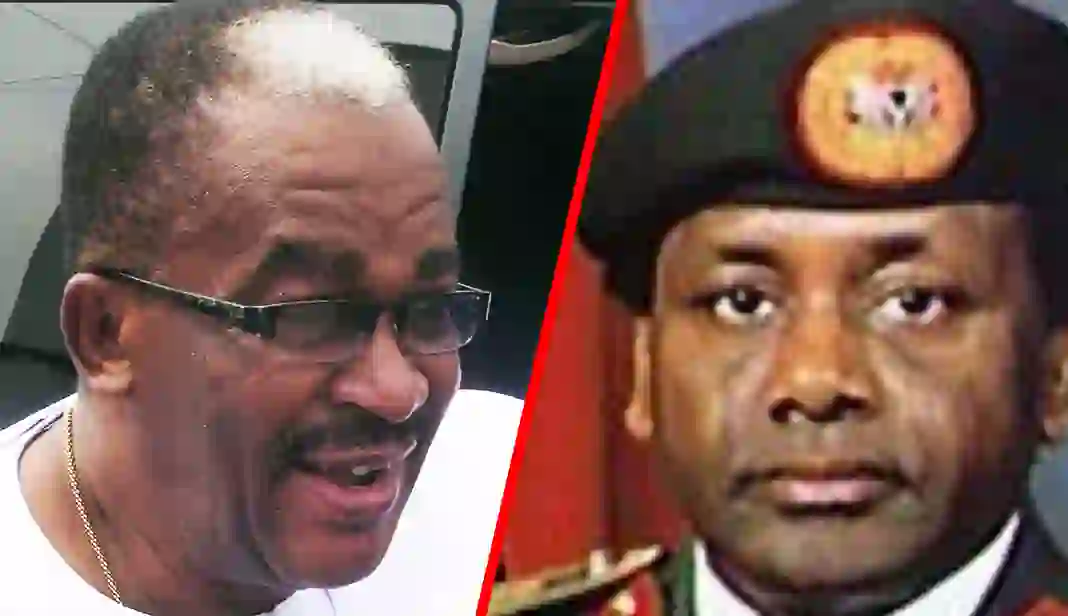
Former Ogun State Leader, General Oladipo Diya, grovelling at General Sani Abacha’s feet, crying and begging the late Head Of State over the 1997 coup allegation.
Gen. Diya was crossed examined at the Human Rights Violation Commission (HRVIC) on the coup plan 1997 to overthrow Gen. Sanni Abacha. He bluntly denied the fact that he was part of the plan but he admitted he knew about the plan.
He further explained that he was afraid of being killed by the Coup Master Planner if he revealed the plan. He denied pleading with Gen. Sanni Abacha but was shocked to see the video where he truly knelt down before Gen. Sanni Abacha as tendered by the Lawyer.
Gen. Diya Oladipo then was appointed as Chief of Defense Staff. He was appointed Chief of General Staff in 1993 and Vice Chairman of the Provisional Ruling Council in 1994. In 1997 Diya and dissident soldiers in the military allegedly planned to overthrow the regime of Sani Abacha.
The alleged coup was uncovered by forces loyal to Abacha, and Diya and his cohorts were jailed. Diya was tried in a military tribunal and was given the death penalty. pon the untimely death of Abacha in 1998, Diya was pardoned by the late Head of State’s successor, Abdusalami Abubakar.
Below is a leaked video clip
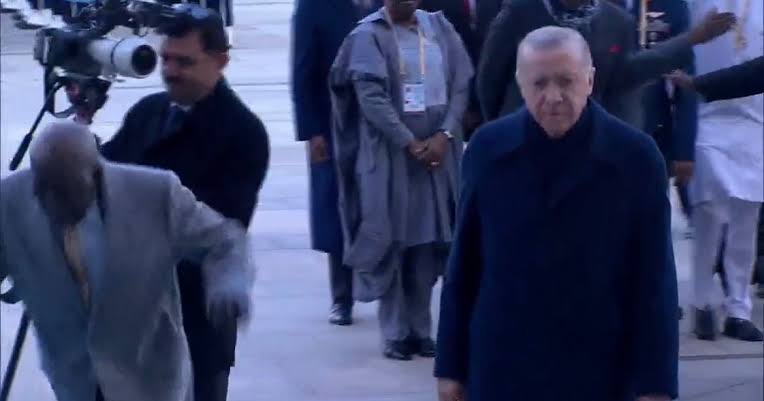
A video has emerged showing the moment President Bola Ahmed Tinubu momentarily tripped during his state visit to Turkey, according to Naija News.
Naija News reports that President Tinubu had on Monday arrived Ankara, the capital of Turkey for a state visit.
According to a statement by the Special Adviser to the President on Information and Strategy, Bayo Onanuga, the visit to Turkiye is aimed at deepening cooperation in key sectors including security, education, social development, innovation, and aviation.
Onanuga noted that the trip follows an earlier official visit to Nigeria by Turkish President Recep Tayyip Erdoğan between October 19 and 20, 2021, which reinforced diplomatic ties between Abuja and Ankara.
During President Tinubu’s visit, both countries are expected to hold strategic political and diplomatic engagements focused on shared interests in finance, communication, trade, and investment.
The programme will also feature meetings between senior government officials from both nations, alongside the signing of several memoranda of understanding (MoUs) covering scientific research, energy, technical cooperation, media and communications, military collaboration, and protocol.
A business forum will be held on the sidelines of the visit, bringing together Nigerian and Turkish investors to explore opportunities for mutual economic growth, the presidency noted.
Members of the President’s delegation participating in the bilateral engagements include the Minister of Foreign Affairs, Yusuf Tuggar; the Attorney General of the Federation and Minister of Justice, Lateef Fagbemi, SAN; the Minister of Defence, General Christopher Musa (rtd); and the Chairman of the House Committee on Defence, Jimi Benson.
Others on the entourage are the Minister of Women Affairs and Social Development, Hajiya Suleiman-Ibrahim; the Minister of Interior, Olubunmi Tunji-Ojo; the Minister of Culture and Creative Economy, Hannatu Musawa; the National Security Adviser, Malam Nuhu Ribadu; and the Director-General of the National Intelligence Agency, Mohammed Mohammed.
Culled from Naija News


BREAKING: “Serial Disrespect” Sparks Drama As Senate Order Arrest Of Tinubu’s Appointee

Edo State To Spend N1billion On Armoured Car For Speaker, N4.6billion On Vehicles For Lawmakers

Opposition Leaders Urge N’Assembly To Begin Fresh Electoral Act Amendment

Former Super Eagles Star Loses Life Savings, Duped By A Pastor of ₦1.2 Billion

These ’90s fashion trends are making a comeback in 2017

I’m A Married Man, I Can Never Get Myself Involved With Such A Thing, Delta Gov Aide Reveals Why He Offered Comfort ₦500,000 Job
-
 Politics2 days ago
Assembly Confirms Popular Redeemed Pastor As Deputy Governor
-

 Foreign2 days ago
Cabinet Reshuffle: President Sacks Finance Minister
-
 Business2 days ago
JUST IN: 13 Banks May Shut Down In March As CBN Confirms 20 Safe For Recapitalisation Deadline
-
 Politics11 hours ago
BREAKING: “Serial Disrespect” Sparks Drama As Senate Order Arrest Of Tinubu’s Appointee
-
 Politics11 hours ago
Opposition Leaders Urge N’Assembly To Begin Fresh Electoral Act Amendment
-
 Opinion11 hours ago
Edo State To Spend N1billion On Armoured Car For Speaker, N4.6billion On Vehicles For Lawmakers