
Opinion
Appraising Komolafe’s Regulatory Renaissance At NUPRC

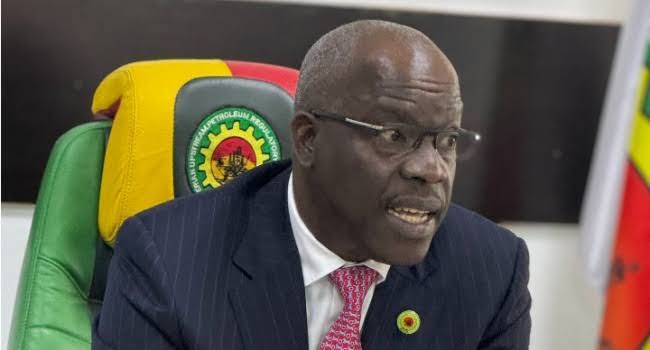
It is not every day that a nation finds itself blessed with a technocrat whose commitment to due process, institutional reform, transparency, and administrative sanity resonates perfectly with the revered ethos of nation-building. Engineer Gbenga Komolafe, Chief Executive of the Nigerian Upstream Petroleum Regulatory Commission (NUPRC), is leading a seismic regulatory renaissance in a period marked by pervasive institutional fragility and operational mediocrity in Nigeria’s oil and gas sector. His leadership is restoring regulatory compliance with surgical precision and deliberate execution, fronting the NUPRC as the guiding tenet of regulatory excellence under the Renewed Hope Agenda of President Bola Ahmed Tinubu.
Engineer Komolafe isn’t just a man of vision who only sees the future, but one who dares to design it. With a rare combination of technical sagacity and administrative rectitude, he has imbued NUPRC with a sense of mission, purpose, and order. Before he assumed office, Nigeria’s upstream petroleum space was a chaotic mosaic of institutional overlaps, the industry was bleeding, investor confidence was waning, and regulatory confusion reigned supreme.
Komolafe came into the sector at the right time when a man of deep institutional insight and procedural fidelity was needed to calm the storm. The turnaround that was seen in the NUPRC within a short span was a bewilderment. It was hard to comprehend that the same agency embattled with a long list of crises could be transformed from a dormant regulatory outfit into an active bastion of reform, accountability, and efficiency. The level of regulatory discipline that was being reinstated within the agency is enough to usher in wonder and the needed hope.
One of the cardinal hallmarks of Engr. Komolafe’s leadership is his unflinching commitment to aligning the NUPRC vision with that of Mr President’s Renewed Hope Agenda. He understands that without systemic design, regulation becomes arbitrary, and without sanctity, compliance becomes a mirage. His approach to governance is not whimsical; it is rooted in institutional theory, policy analysis, and data-driven study.
Under his watch, the NUPRC has transitioned from analogue supervision to algorithm accountability. The Commission has deployed cutting-edge digital platforms to track and fix revenue leakages in oil production and sales. This has further helped in detecting under-reporting, over-lifting, and unremitted royalties that were existing in the Commission. Engr. Komolafe’s insistence on the sector’s compliance with existing laws and international standards has engineered a systemic reordering that is not just reformist in intent but revolutionary in impact.
Perhaps, when the Petroleum Industry Act (PIA) was signed into law in 2021, it became the most transformative shift in Nigeria’s oil governance history, providing the most holistic legislative framework for oil sector regulation. Engr. Komolafe’s leadership operationalised the spirit and letter of the PIA in a manner that stuns even the most sceptical observers, sending a clear message that the law is only effective when it’s implemented. From licensing rounds to environmental management, stakeholder engagement to host community trust implementation, the NUPRC under Komolafe has become a living, breathing model of PIA compliance.
To put Komolafe’s efforts into perspective. For instance, the new model marginal field licensing reflects a deliberate and inclusive process that gives room for equity, transparency, and competitiveness. The bidding processes are now technically sound, commercially viable, and publicly verifiable. This has increased investors’ trust and restored Nigeria’s reputation as a stable and credible investment hub in Africa’s oil theatre.
A profound achievement of the NUPRC under Komolafe that’s also noteworthy is the agency’s emphasis on environmental sustainability. For long have Nigeria’s oil-producing communities have suffered from mental, physical, and health hazards of oil spills, environmental degradation, and gas flaring. These were issues that previous regulatory heads treated with lethargy or outright indifference. But not Komolafe.
His administration has operationalised stringent environmental regulations that are now prerequisites for licensing, operations, and facility expansion. He has worked closely with both operators and environmental agencies to ensure that upstream activities do not become ecological crimes. From mandating Environmental Impact Assessments (EIAs) to enforcing community development trusts as provided under the PIA, the NUPRC has emerged as not only a regulator of profit but a protector of people and planet.
What makes this particularly commendable is the delicate balancing act Komolafe has achieved, ensuring economic efficiency without compromising environmental responsibility. That is the hallmark of true technocratic leadership. At this point, it would be a profound misreading of history to discuss Komolafe’s regulatory renaissance without aligning it with the broader architecture of President Bola Ahmed Tinubu’s Renewed Hope Agenda.
At its root, the Renewed Hope Agenda on its own is a call for economic diversification, fiscal discipline, institutional reform, and a surge of national reawakening. When observed meticulously, whether consciously or instinctively, one could tell that Komolafe has become one of its foremost soldiers. However, Komolafe’s fight against revenue leakage directly complements President Tinubu’s aggressive revenue mobilisation strategies. His environmental sustainability policies are in tune with Mr President’s green economic blueprint and transition plan.
His emphasis on institutional transparency is a reflection of President Tinubu’s administration’s desire for inclusivity and open governance. It is almost as if both leaders are engaged in a regulatory choreography— as Mr President is providing the policy beat, Komolafe is executing the operational dance in synchronisation. Through the visionary leadership of Komolafe, the abstract ideals have found a concrete expression in the petroleum regulatory space. What makes this outstanding is that it has been achieved without theatrical noise.
Perhaps, in a country where many agencies have been reduced to conduits for patronage, extortion, and policy lethargy, NUPRC is emerging as an archetype of institutional excellence. Komolafe has institutionalised the use of big data analytics in production forecasting. He has developed and implemented an automated platform for crude oil and gas accounting. He is investing in human capacity, research, and continuous policy innovation. The agency’s strategic plan for 2024–2030 is both aspirational and actionable, complete with timelines, metrics, and monitoring frameworks.
In truth, Engr. Komolafe has not just restored regulatory compliance—he has restored regulatory dignity. The growth attained by the NUPRC under his leadership has affirmed that sanity is not a utopian abstraction—it is a deliberate outcome of vision matched with competence. It is to admit, with refreshing humility, that transformational leadership is not alien to Nigeria. It is here. It is working. And it is astonishing.
Nigerians have become so absorbed in the achievements of the NUPRC that we forgot the man orchestrating them behind the scenes. But that would be a grave injustice and omission. Even though he’s a silent achiever who detests his praises being sung, Engr Gbenga Komolafe is undoubtedly a rare breed— a bureaucrat of substance, a technocrat of vision, a good representation of an extraordinary deviation, and a patriot of deep conviction.
He is a man whose quiet demeanour belies the intensity of his purpose. His modesty and sheer humility camouflage his brilliance. But make no mistake: Nigeria has found in him a national asset—one that must be protected, celebrated, and emulated. He stands today in history as a public servant who embodies regulatory purpose, and as a man who did not come to the NUPRC to enrich himself, but to enrich the nation through service and sanity.
With every policy implemented, every loophole sealed, every investor reassured, and every community empowered, the NUPRC under Komolafe is restoring what had nearly been lost: national confidence, sectoral credibility, and institutional trust.
Authorityngr.com

Opinion
Edo State To Spend N1billion On Armoured Car For Speaker, N4.6billion On Vehicles For Lawmakers

The budget also reveals that N4.6 billion is planned for vehicles for the 25 members of the State House of Assembly.
Reporters’ review of the Edo State approved budget for 2026 shows that N1billion has been allocated to purchase an armoured vehicle for the Speaker of the State House of Assembly.
The budget also reveals that N4.6 billion is planned for vehicles for the 25 members of the State House of Assembly.
Also, N50million is planned for the purchase of refrigerators and other equipment for four directors. The House of Assembly Commission also plans to spend 200 million naira on roof and window replacement for its office building.
Earlier, a civic accountability group, MonITng, raised concerns over the execution of a multi-million-naira education project in Edo State, citing poor quality, procurement irregularities, and a recurring pattern of questionable contract awards.
“A project titled ‘Building of Blocks of Classrooms at Ojah Comprehensive High School, Akoko LGA, Edo State’ with project code ZIP20240448, valued at ₦222,000,000.00, and awarded under the Federal Polytechnic Auchi, Federal Ministry of Education, has raised serious concerns about the quality of execution, contract pricing, and procurement integrity.”
According to MonITng, its team tracked and inspected the project site. “Our team tracked and visited the project site and confirmed that although the classrooms were completed, they were poorly constructed.”
The group further noted: “The structure lacks basic finishing elements such as landscaping, proper drainage, and standard finishing works, all of which should have been included and adequately executed, given the huge sum budgeted for the project.”
It added that “the poor quality of work raises questions about project supervision, contract oversight, and how the allocated funds were spent.”
MonITng also linked the project to a contractor allegedly tied to multiple controversial contracts. “Even more troubling is the pattern we uncovered. The project was executed by Sam Sedi Nig. LTD, a company that has consistently received major contracts facilitated by Senator Adams Oshiomhole.”
The group claimed that “this same contractor handled the abandoned ERGP20245252 project, Construction of Warake to Ivbiaro Road in Owan East LGA, valued at ₦200,000,000.00, which remains incomplete despite significant disbursements.”
“Additionally, the same company implemented a controversial agricultural empowerment programme in Etsako communities, also facilitated by Senator Oshiomhole.”
MonITng alleged that “the recurring involvement of this contractor in multiple projects, combined with substandard delivery and abandoned works, suggests a pattern of procurement manipulation, inflated contracts, and possible diversion of public resources.”
It added that “the situation reflects how public projects, although completed on paper, often fail to deliver a meaningful impact due to corruption, poor supervision, and a lack of accountability.”

The Ogun State chapter of the Labour Party has accused the All Progressives Congress of using its ongoing electronic membership registration to allegedly manipulate figures ahead of the 2027 general elections.
In a statement issued on Wednesday, the state chairman of the Labour Party, Chief Oluwabukola Soyoye, claimed that the APC’s e-registration exercise was designed to digitally inflate its membership strength and project a false image of popularity in the state.
Soyoye alleged that the ruling party had resorted to electronic registration because it could no longer mobilise people openly, insisting that the administration of Governor Dapo Abiodun had suffered widespread rejection due to what he described as underperformance.
According to him, the APC’s e-registration, presented as a routine membership drive, was in reality “a political referendum that exposes the deep rejection of Governor Dapo Abiodun and his black-market style of governance by the people of Ogun State.
“The people of Ogun are now wiser. They have deliberately refused to participate in any open, physical APC registration because they know the ruling party has failed them,” Soyoye said.
“That is why the APC has resorted to this so-called electronic registration — a system that allows figures to be fabricated behind closed doors without the presence of real members.”
The LP further alleged that the electronic platform could be used to manipulate membership data, inflate figures and create a misleading narrative of political dominance ahead of 2027
“What we are witnessing is not a genuine political exercise but a fraudulent digital operation designed to manufacture legitimacy for a government that has lost the confidence of the people,” Soyoye added.
By Kola Odepeju
“Calumny Is Only The Noise Of Madmen” –Diogenes
As Osun state gubernatorial election draws nearer, we’re now at the dawn of the campaigns for the coming election and so as characteristic of Nigeria’s democracy, wrong accusations, blackmails, character assassinations and all manner of negative campaigns aimed at demarketing the most popular candidate with the highest chances of coasting home to victory in a major election of this nature, must surface. And so in our own dear Osun state here this ugly trend has started surfacing. The mudslinging that has started from Governor Ademola Adeleke’s Accord Party’s camp against the APC gubernatorial candidate, Asiwaju Munirudeen Bola Oyebamiji AMBO is ‘normal’ and expected because with the massive support for AMBO across the nook and cranny of the state, it’s crystal clear that he’s the candidate to beat.
As mentioned above, a candidate to beat in any major election is bound to face vilifications by his opponents who see him as a threat and a stumbling block against the success of their own ambitions. Therefore given the nature of our politics in this part of the world, the negative campaigns that have started against AMBO are no surprise. We witnessed the same thing against the incumbent president, Asiwaju Bola Tinubu during the 2023 electioneering campaigns for the office of the country’s president. But against all odds, Asiwaju Tinubu emerged victorious. So as Asiwaju Tinubu emerged victorious in 2023, l have that strong conviction that our own Asiwaju Bola Oyebamiji will also become victorious in the coming August gubernatorial election in the state irrespective of whatever negative campaigns that may come up against him. This is because the AMBO governorship project is divinely ordained.
Amongst other attacks that are still likely to come up against him as we face the election and as the election faces us, we have heard from those who are afraid of losing power that AMBO is the architect of half salaries in Osun (as if he was the governor in that era). We have also heard from them that he’s not youth-friendly. The spokesperson to governor Adeleke, Malam Olawale Rasheed also amplified these two negative points in his latest article aimed at demarketing AMBO. Like I mentioned, the negative campaigns have just started. We are still going to hear more. I wonder why people cannot engage in issues-based campaigns instead of vilifying candidates.
Ambo has told Osun youths the program he has for them. He has promised to take care of them. And as a God-fearing and honest leader who keeps to his words, l believe he will not renege on his promise for the youths and also his promises for Osun people generally. So let those who revel in vilifying a credible candidate like AMBO tell Osun youths the programs they have for them rather than calumniating a visionary and capable leader who has what it takes to deliver the goods. Of course AMBO – being a focused leader – needs not to bother himself about the negative campaigns being circulated against him by his political detractors because William Shakespeare had for long told us that “*Be thou as chaste as ice, and as pure as snow, thou shall not escape calumny*”. And George Washington also mentioned it that “*Silence is the best answer to false accusations*”.
Finally, the Yorubas in their words do say that “maligning the honey doesn’t reduce its sweetness”. No matter the level of negative campaigns against the APC gubernatorial candidate towards the election, it won’t reduce the love the Osun people have for him while it won’t deter them from casting their votes for him in the upcoming gubernatorial election in the state. He will surely come out victorious by the special Grace of God Almighty 🙏. For, Vox populi vox dei. AMBO should continue on the path of issues-based campaigns and close his eyes against malignant talks by those who are already on their way out of power.
● Odepeju, newspaper columnist and political activist, writes from Iragbiji, Osun state.


BREAKING: “Serial Disrespect” Sparks Drama As Senate Order Arrest Of Tinubu’s Appointee

Edo State To Spend N1billion On Armoured Car For Speaker, N4.6billion On Vehicles For Lawmakers

Opposition Leaders Urge N’Assembly To Begin Fresh Electoral Act Amendment

Former Super Eagles Star Loses Life Savings, Duped By A Pastor of ₦1.2 Billion

These ’90s fashion trends are making a comeback in 2017

I’m A Married Man, I Can Never Get Myself Involved With Such A Thing, Delta Gov Aide Reveals Why He Offered Comfort ₦500,000 Job
-

 Politics2 days ago
Assembly Confirms Popular Redeemed Pastor As Deputy Governor
-

 Foreign2 days ago
Cabinet Reshuffle: President Sacks Finance Minister
-

 Business1 day ago
JUST IN: 13 Banks May Shut Down In March As CBN Confirms 20 Safe For Recapitalisation Deadline
-
 Politics7 hours ago
BREAKING: “Serial Disrespect” Sparks Drama As Senate Order Arrest Of Tinubu’s Appointee
-
 Politics7 hours ago
Opposition Leaders Urge N’Assembly To Begin Fresh Electoral Act Amendment
-
 Opinion7 hours ago
Edo State To Spend N1billion On Armoured Car For Speaker, N4.6billion On Vehicles For Lawmakers