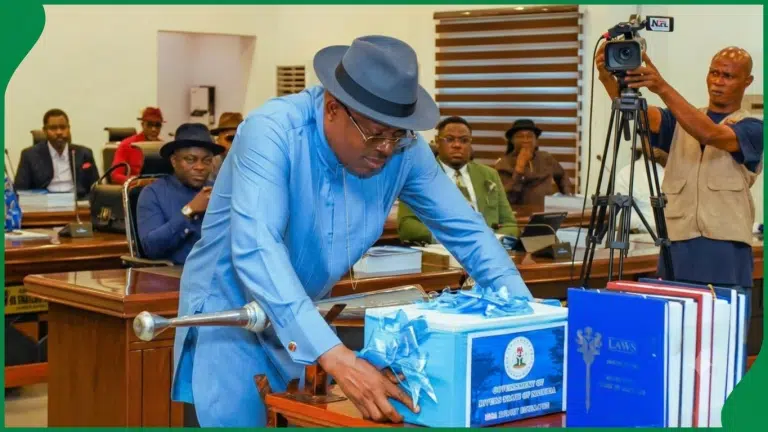
From the sacred precincts of Makkah to the corridors of presidential power, the BUA billionaire’s remarkable proximity to President Bola Ahmed Tinubu tells a compelling story of friendship, trust, influence and the quiet privileges of belonging to the President’s innermost circle.
There are friendships that flourish beneath the chandeliers of power, and there are relationships that endure long after the ceremonial lights have dimmed and the corridors have emptied of their ambitious visitors. The distinction is neither trivial nor accidental. In the rarefied universe where political authority encounters stupendous private wealth, proximity is a coveted currency, access is an exquisite privilege, and the ability to walk through doors before which other powerful men must patiently wait is perhaps the most eloquent advertisement of influence.

For billionaire industrialist Abdul Samad Rabiu, the founder and chairman of BUA Group, that privilege appears to have acquired an almost effortless familiarity.
In the increasingly crowded constellation of businessmen orbiting the presidency of Bola Ahmed Tinubu, Rabiu has emerged as one of its most conspicuous and enduring stars. His presence around the Nigerian leader has become so recurrent, so conspicuous in its geographical reach and so seemingly unencumbered by the elaborate rituals of officialdom, that it invites an irresistible question: Has the Kano-born industrialist quietly become the President’s favourite billionaire?
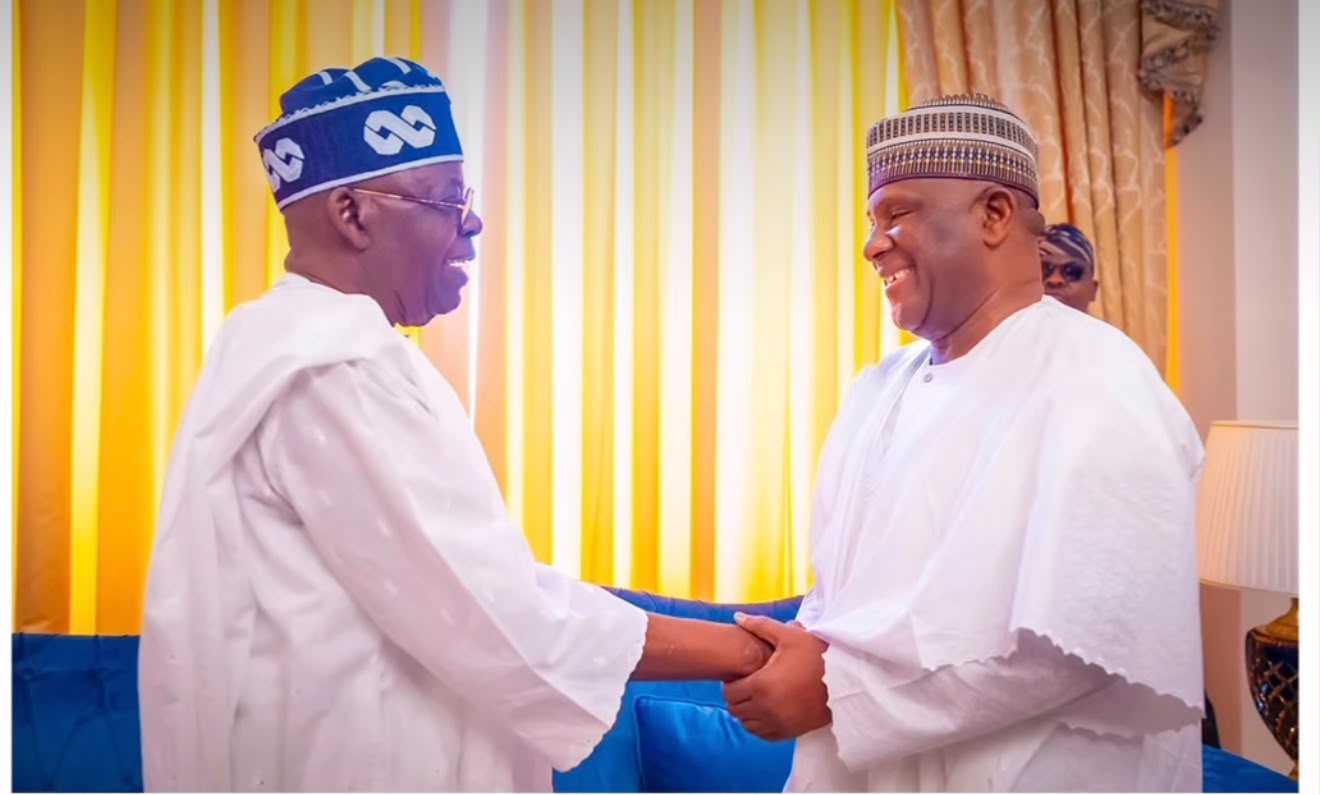
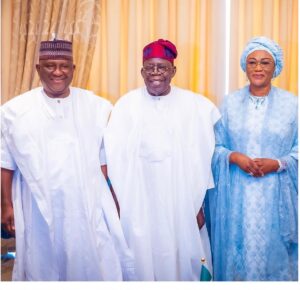
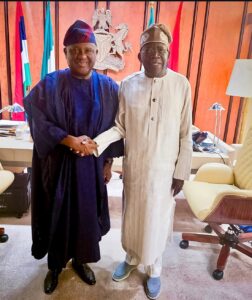
The photographs offer a fascinating chronicle. In Abuja, the men are pictured in the stately surroundings of presidential authority, exchanging the pleasantries of familiarity. In Lagos, their encounters carry the warmth of an association that Rabiu himself describes as a longstanding tradition. And now, in the sacred city of Makkah, thousands of kilometres from the familiar theatre of Nigerian politics, the billionaire has once again appeared in the President’s company, this time beneath the solemn canopy of shared faith and supplication.
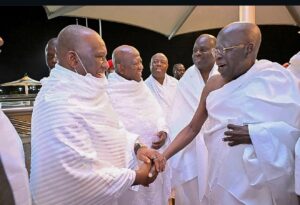
The latest images from Saudi Arabia are particularly evocative. On October 30, 2026, President Tinubu performed Umrah, offering prayers for Nigeria’s peace, unity and stability. Rabiu was among those who accompanied him, speaking of the privilege of joining the President in the holy city and praying for the country’s future. It was another chapter in a relationship that increasingly commands attention beyond the boardrooms of Nigerian enterprise.
And perhaps that is where the true significance of their association lies. For although money may purchase the grandest mansions and command the attention of the marketplace, it cannot, on its own, manufacture genuine familiarity with a President. The corridors of power are littered with wealthy supplicants who possess everything except the one commodity they desire most: the confidence of the man at the summit.
Rabiu, by every outward indication, appears to enjoy an enviable measure of that confidence.
The story stretches beyond the familiar geography of Aso Rock. In March 2026, when King Charles III hosted President Tinubu at Windsor Castle during the Nigerian leader’s state visit to the United Kingdom, Rabiu was among the distinguished guests at the royal banquet. Beneath the splendour of British royalty, amid the ancient rituals of monarchy and diplomacy, the Nigerian industrialist once again occupied a place within the President’s wider circle.
There is something profoundly revealing about such appearances. For in the theatre of power, invitations are seldom without meaning. A seat at a royal banquet may be an honour bestowed upon a distinguished businessman, but when considered alongside a succession of presidential encounters, it becomes another illustration of the remarkable visibility Rabiu enjoys in the highest reaches of national life.
From the cosmopolitan world of Paris, where Rabiu has cultivated formidable business relationships through the France-Nigeria Business Council, to the royal splendour of Windsor, the presidential residences of Lagos and Abuja, and the sacred precincts of Makkah, the industrialist’s international engagements have acquired a fascinating political dimension. His association with Tinubu appears to transcend the occasional courtesy call and the predictable handshakes of ceremonial business diplomacy.
There is, indeed, a certain elegance to the way the relationship has unfolded. Rabiu does not appear to need a public declaration of intimacy with the President. The encounters, the photographs and the recurring gestures of goodwill have done much of the talking.
Perhaps even more instructive is the President’s own assessment of the industrialist.
In August 2025, Tinubu publicly described Rabiu as a trusted partner in Nigeria’s progress, praising his entrepreneurial achievements, philanthropic commitments and contributions to domestic industrialisation. Such an endorsement, delivered from the highest office in the land, provides more tangible evidence of presidential regard than any speculation about the private conversations between the two men.
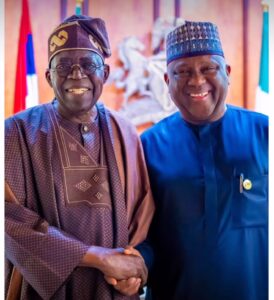
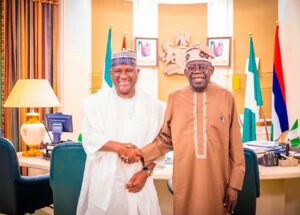
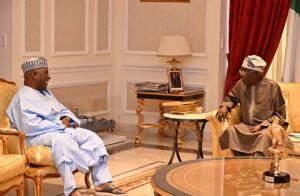
It is easy to understand the foundations upon which their association may have prospered. Tinubu is a politician whose economic philosophy places considerable emphasis on private enterprise, investment and industrial expansion. Rabiu, for his part, has spent decades constructing a sprawling commercial empire across cement, food production, sugar, infrastructure and other strategic sectors. One occupies the summit of political authority; the other commands an industrial establishment whose factories, investments and commercial ambitions are intimately connected to Nigeria’s economic fortunes.
Their interests therefore intersect at a particularly consequential point in the nation’s history.
But the relationship appears to possess something beyond the transactional necessities of government and business. In April 2026, following a visit to Tinubu’s Lagos residence, Rabiu described his habit of extending Sallah greetings to the President as a longstanding tradition. It was a seemingly simple admission, yet it illuminated a dimension of familiarity that official communiqués do not always capture.
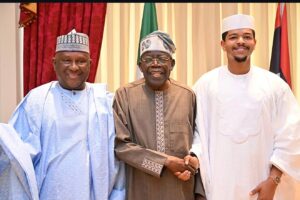
That sense of continuity was reinforced in October when Rabiu visited the President alongside his son, Khalifa, during the country’s Independence anniversary celebrations. The photograph of father, son and President carried a symbolism that was difficult to overlook. It suggested not merely the continuing association of two powerful men but the introduction of another generation into the social landscape of that relationship.
Of course, Nigeria’s presidential orbit is inhabited by other formidable figures. Aliko Dangote, Femi Otedola, Tony Elumelu and several other leading industrialists maintain their own relationships with the administration. Each commands influence in different spheres, and the frequency of photographed meetings cannot conclusively establish who enjoys the greatest private access.
Yet Rabiu’s increasingly visible presence makes him difficult to ignore. While other billionaires are photographed with the President at economic summits, business engagements and ceremonial occasions, Rabiu’s encounters extend conspicuously into the more personal territories of religious observance, festive greetings and family introductions.
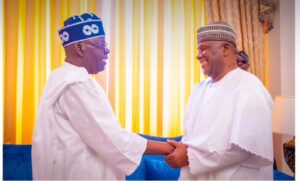
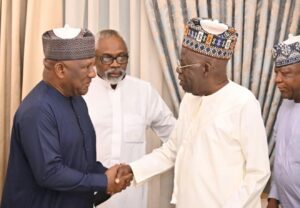
It is this combination of the official and the personal that makes his story particularly intriguing.
The latest pilgrimage to Makkah has only deepened that impression. There, stripped of the ostentatious accessories of earthly achievement, the President and the billionaire participated in a sacred exercise that recognises neither the grandeur of presidential office nor the magnificence of accumulated wealth. Before the Almighty, the distance between the occupant of Aso Rock and the chairman of BUA is rendered inconsequential.
And yet, in the earthly calculations of influence, the significance of their shared journey is unlikely to escape discerning observers.
For Rabiu, whose business interests span vital sectors of the Nigerian economy, proximity to the President can carry both opportunity and responsibility. The privilege of being heard by power is substantial, but so too is the expectation that such access should ultimately contribute to the welfare of the country, the growth of industry and the prosperity of ordinary Nigerians.
Therein lies the larger significance of his association with Tinubu. The true measure of influence is not merely the number of presidential photographs adorning a billionaire’s collection, nor the ease with which he enters rooms inaccessible to lesser mortals. It is what that influence accomplishes when the cameras have been lowered, the handshakes concluded and the doors closed upon conversations the public may never hear.
Still, the images remain compelling. They form a growing album of political familiarity and personal regard, each photograph another fragment in the portrait of a businessman whose relationship with the President has become one of the more fascinating narratives at the intersection of Nigerian wealth and power.
And perhaps, years from now, when historians attempt to reconstruct the intimate architecture of the Tinubu presidency, the photographs of Abdul Samad Rabiu will offer an intriguing glimpse into the social geography of the era.
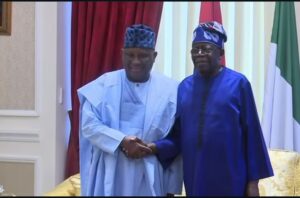
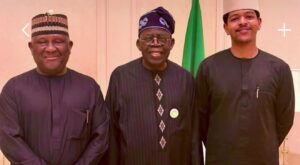
For now, one conclusion seems increasingly difficult to dispute: among Nigeria’s wealthiest entrepreneurs, Rabiu has established himself as one of the most visible and seemingly welcome presences in President Tinubu’s circle.
From the hallowed chambers of Aso Rock to the royal grandeur of Windsor and the sacred sanctuary of Makkah, the story continues to unfold with a remarkable consistency.
For in the magnificent theatre of power, many men possess the wealth to reach the palace gates. Far fewer appear to possess the familiarity that makes the welcome seem assured. And Abdul Samad Rabiu, it would seem, has mastered the delicate art of being not merely received, but repeatedly welcomed.