
Foreign
Trump Faces Hardest Iran Decision

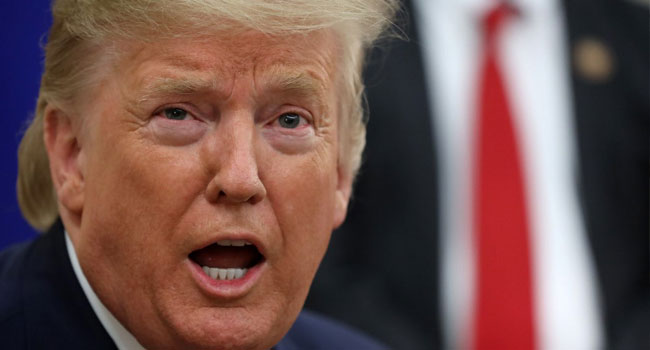
US officials said dismantling Iran’s nuclear program — which Western countries say Tehran is using to seek a nuclear weapon — remained Trump’s priority.
President Donald Trump faces potentially the hardest choice of his time in the White House, as he weighs up whether the United States should join Israel’s bombing campaign against Iran.
Trump fueled speculation about a US intervention as he dashed back from a G7 summit in Canada, warning Tuesday that the United States could kill Iran’s supreme leader, but would not “for now.”
The choice is a monumental one for a president who has vowed throughout both his first and second terms in the Oval Office to get the United States out of its “forever wars” in the Middle East.
“It’s a major political and military choice that could define his legacy in the Middle East,” Behnam Ben Taleblu, director of the Iran program at the Foundation for Defense of Democracies, told AFP.
As Trump met his National Security Council in the White House Situation Room on Tuesday, there were already hints that he was considering abandoning what was until recently his preferred diplomatic route.
The most likely option under consideration by Trump would be the use of giant US “bunker-buster” bombs against Iran’s deeply buried Fordow nuclear facility that Israel’s bombs could not reach.

US officials said dismantling Iran’s nuclear program — which Western countries say Tehran is using to seek a nuclear weapon — remained Trump’s priority.
Trump also implied that the assassination of Ayatollah Ali Khamenei is back on the table, just days after a US official said he had waved off such a move by Israel.
US officials stressed that Trump had not yet made a decision and was keeping all options on the table, with the situation fluid and changing “hourly.”
The Axios news site said Trump was even considering a new meeting between his top negotiator Steve Witkoff and Iranian foreign minister Abbas Araghchi.
A game-changer however would be any Iranian attack on US forces in the region, with an official saying that Trump would not tolerate a “hair on the back of an American” being harmed.
Trump’s change of tone is remarkable for coming less than a week after the US president — who has openly talked about wanting to win the Nobel Peace Prize — called on Israel to avoid strikes.
But amid frequent phone calls with Israeli Prime Minister Benjamin Netanyahu, and Netanyahu’s own hints about pursuing regime change in Iran, Trump has pivoted.
Trump has ordered the USS Nimitz aircraft carrier to the region along with a number of US military aircraft, raising questions about whether he will act.
‘Decisions on your shoulders’
A further hint that action may be on the cards came from the White House’s apparent efforts to see off any backlash from his own Make America Great Again (MAGA) movement.
There has been growing opposition to any Iran intervention from the isolationist wing of his base, who hold him to his pledge to keep the United States out of wars like those in Iraq and Afghanistan.
Vice President JD Vance defended his boss, saying Trump had “earned some trust” on the issue and “may decide he needs to take further action to end Iranian (uranium) enrichment.”
“Having seen this up close and personal, I can assure you that he is only interested in using the American military to accomplish American people’s goals,” the Iraq veteran said, in a nod to MAGA skeptics.
Trump himself meanwhile hinted at his mood as he mulled his critical decision.
He reposted a comment by US ambassador to Israel Mike Huckabee, an evangelical Christian, saying God had “spared” Trump from an assassination attempt last year.
“The decisions on your shoulders I would not want to be made by anyone else. You have many voices speaking to you Sir, but there is only ONE voice that matters. HIS voice,” Huckabee said.
Channelstv.com


No fewer than six people, including popular billionaire businessman, Wicknell Chivayo and his wife, Lucy Muteke, have been killed in a helicopter crash.
Naija News learnt that the family spokesperson, Herbert Chivayo, confirmed the deaths to ZBC News, saying those closest to the couple were struggling to come to terms with the loss.
Similarly, the Information, Publicity and Broadcasting Services Permanent Secretary, Nick Mangwana, also confirmed the incident in a statement on 𝕏.
He said the helicopter was carrying the businessman, three other passengers and two pilots when it crashed in Marondera, Mashonaland East on Wednesday, September 30, 2026.
The government extended its condolences to the victims’ families and friends.
The statement read, “The Government wishes to confirm that a helicopter crash has occurred, involving one high-profile businessman, three other passengers, and two pilots.
“Current information indicates that there were no survivors in this crash. The Zimbabwe Republic Police will confirm the names of the victims in due course.
“We extend our deepest condolences and prayers to the victims, their families, and their friends during this difficult time.”
In other news, the Chairman of the Nigeria Democratic Congress (NDC) in Fiidi Council Ward, Makurdi Local Government Area of Benue State, Igbu Job Terhemen, has reportedly been killed by unknown assailants.
Terhemen was allegedly attacked in the early hours of Wednesday and later found unconscious near his residence along the Makurdi-Otukpo Road.
According to Daily Trust, a friend of the deceased, who spoke on condition of anonymity, said Terhemen left his home on Tuesday evening to watch a local football match in the Kanshio area of Makurdi.
According to the source, he did not return home after the match, prompting relatives and friends to search for him.
The source said Terhemen was eventually found around 2 am in a bush near his residence, close to the NNPC depot.
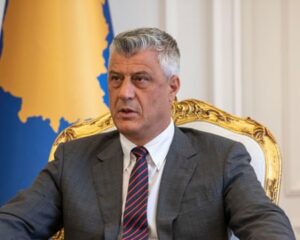
A court in The Hague sentenced Kosovo’s former president Hashim Thaci to 25 years in prison on Thursday after finding him guilty of war crimes committed during the late 1990s conflict in which Kosovo broke away from Serbia
The Kosovo Specialist Chambers convicted Thaci, 58, of murder, torture, cruel treatment, and the illegal detention of civilians
The tribunal determined that he bore criminal responsibility as the top commander of the Kosovo Liberation Army (KLA), the ethnic Albanian separatist force that fought Serbian security forces between 1998 and 1999. Presiding judge Charles Smith said Thaci “actively participated in and encouraged crimes.”
The court established that KLA forces under his command murdered 96 people identified as political opponents or perceived collaborators with Serbian authorities. A further 385 people were arbitrarily detained, 303 were tortured, and around 50 others suffered cruel treatment.
Judge Smith told the court: “The scale and nature of the crimes committed were very serious. The so-called intelligence on which many of these victims were arrested, detained and killed was little more than unverified rumours. Based on that information, victims were called and described as spies and collaborators and violently treated.”
The American judge was careful to clarify that the proceedings were “not about the legitimacy of the Kosovo Liberation Army” or Kosovo’s goal of independence. Thaci, who denied all charges, stood in silence as the sentence was delivered. He retains the right to appeal.
Three other former senior KLA figures were tried alongside Thaci. Jakup Krasniqi also received a 25-year sentence, while Kadri Veseli was jailed for 18 years and Rexhep Selimi for 13 years. All four had denied the charges.
The panel acquitted the four men on six counts of crimes against humanity, ruling that prosecutors failed to prove those crimes were part of a widespread and systematic attack on civilians.
The verdicts drew an immediate public response in Kosovo, where Thaci remains a revered figure for many ethnic Albanians. Thousands had gathered in the capital Pristina ahead of the ruling, with crowds filling a central square waving red and black Albanian flags and banners calling for the men’s acquittal. When the guilty verdicts were announced on a big screen, many in the crowd booed and wept.
Thaci had resigned from the Kosovo presidency in late 2020 to face the charges, after nearly three years of trial proceedings. In his closing address to the court in February, he said: “Throughout my life, I stood with the people of Kosovo defending freedom, life and dignity. I was always guided by the Western ideals of democracy, equality and justice.”
Albania’s Prime Minister Edi Rama reacted to the verdict by posting an image of barbed wire stretched across a map of Europe, with a single word: “Unbelievable.”
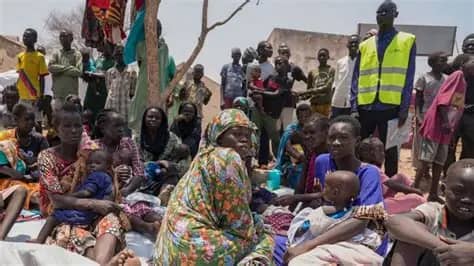
A new investigation by The New York Times claims Sudan’s military ran an organized program in 2024 to develop and produce chlorine-based munitions, escalating long-standing allegations of chemical weapons use in the country’s war.
According to the report, the Times reviewed nearly 150 documents, plus photos, videos, audio recordings and thousands of messages. The materials describe months of work to design, test and manufacture about 300 bombs filled with chlorine.
Brigadier General Tariq Hussein is named as one of the principal supervisors. The documents detail a munition that combined explosives with large quantities of chlorine, and tests carried out before production.
One of the most serious claims involves the source of the chemical. The dossier alleges that some chlorine was taken from a water-treatment facility in Omdurman, at a time when Sudan is facing cholera outbreaks and a collapse of basic services.
The investigation also points to senior leadership. Voice and text messages reportedly implicate army chief Gen. Abdel Fattah al-Burhan in knowledge of the program, and in orders to “remove all traces” after U.S. pressure and sanctions.
This is not the first time chemical weapons have been alleged in Sudan. Independent.ng reported that the Sudanese Alliance for Rights filed a case at the International Criminal Court against four senior Port Sudan Authority leaders, including al-Burhan, accusing them of using chemical weapons and committing serious violations against civilians. The lawsuit also names Yasser al-Atta, Shams al-Din al-Kabashi and Major General Taher Mohammed, and calls for an urgent ICC investigation.
The U.S. has already acted on earlier findings.
Independent.ng noted that Washington imposed additional penalties in May 2025 over the alleged use of chemical weapons, further linking Sudan’s war to international politics.
Chlorine is permitted for water purification, but using it as a weapon violates the Chemical Weapons Convention, which Sudan ratified. Experts say its civilian availability makes it easier to obtain and harder to monitor than military-grade agents.
With the conflict since April 2023 already causing mass displacement and famine, rights groups are now calling for an independent international investigation with access to sites, documents and the chain of command.


Salary: Fresh Update Emerges On Payment To Nigerian Workers

Obasanjo’s Son Picks Side In 2027 Race