Politics
Why I Refused To Challenge Emergency Rule – Fubara

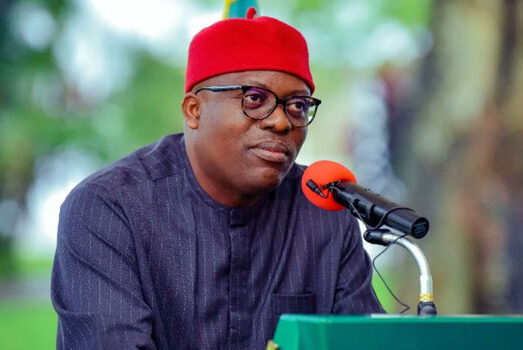
Rivers State Governor, Siminalayi Fubara, has explained why he resisted the pressure from his supporters to challenge the emergency rule declared in the state by President Bola Tinubu, saying his decision was guided by a desire to secure peace, stability, and progress for the people.
Fubara stated this on Friday during a statewide broadcast after his return to the state following the expiration of the emergency rule.
The governor and his deputy, Prof. Ngozi Odu, and the Chief of Staff, Rivers State Government House, Edison Ehie, arrived at the Port Harcourt International Airport, Omagwa, two days after President Bola Tinubu lifted the state of emergency imposed on the state and ordered his reinstatement.
Their aircraft with number 5N-BTX touched down at 12:15 pm and they were received to a heroic welcome.
On the ground to receive Governor Fubara were several of his supporters, including a former Commissioner for Information and Communications, Emma Okah; former Commissioner for Health, Dr Adaeze Oreh; former Nigerian Ambassador to the Netherlands, Orji Ngofa; former Commissioner for Environment, Sydney Gbara; and former factional Speaker of the State House of Assembly, Victor Oko-Jumbo.
Others present were former Commissioner for Youths, Chisom Gbali; former Commissioner for Physical Planning and Urban Development, Evans Bipi; former President of NUPENG, Igwe Achese; former Commissioner for Education, Dr. Tamunosisi Gogo-Jaja; as well as former council chairmen of Port Harcourt City, Ezebunwo Ichemati, among others.
President Tinubu, on Wednesday, announced an end to the emergency rule, which ended the six-month tenure of ex-naval chief, Vice-Admiral Ibok-Ete Ibas (retd.), as Rivers State sole administrator.

Rivers State has faced one of Nigeria’s fiercest political crises, pitting Fubara against his predecessor and FCT minister, Nyesom Wike.
Once allies, their fallout over control of state structures and resources split the House of Assembly, sparking impeachment moves, protests, and violence, including the burning of the Assembly complex.
President Tinubu intervened with a peace deal, which failed to calm frayed nerves, before the declaration of emergency rule.
In a statement on the cessation of the emergency rule on Wednesday, made available by the Presidency, the President said, “The Governor, His Excellency Siminalayi Fubara, the Deputy Governor, Her Excellency Ngozi Odu, and members of the Rivers State House of Assembly and the speaker, Martins Amaewhule, will resume work in their offices from September 18, 2025.
“It, therefore, gives me great pleasure to declare that the emergency in Rivers State of Nigeria shall end with effect from midnight today (Wednesday).”
Fubara was expected to resume on Thursday as many of his supporters thronged the gate of the Government House along Azikiwe Street, Port Harcourt, as early as 6am on Thursday, but the governor failed to resume.
Assembly begins plenary
On Thursday, at its first plenary after six months, the state House of Assembly called on the governor to immediately forward the list of commissioner-nominees to it for screening and confirmation.
The plenary was presided over by Speaker Martin Amaewhule at the Conference Hall of the Legislative Quarters in Port Harcourt on Thursday.
The Assembly also called on the governor to submit the Rivers State Appropriation Bill, while noting that members would review how funds were spent during the six months of emergency rule.
In a statement issued by the Special Assistant on Media to the Speaker, Martins Wachukwu, the Assembly gave details of the resolution.
The statement read, “Returning from a six-month emergency rule induced by the political impasse in the state in the recent past, the Rivers State House of Assembly, on Thursday, at its first legislative sitting, through a motion, set the legislative agenda for the remaining part of the third season of the 10th Assembly.”
The statement indicated that the House Leader, Major Jack, on behalf of eight co-sponsors, in a motion, averred that the House considered it imperative to set the agenda to reflect current realities, while House members, in their contributions to the debate on the motion, applauded the motion and expressed support for all the prayers therein.
Addressing the state, Fubara described the emergency rule period as “enormously challenging” but said he willingly abided by the declaration to allow room for peace to be restored.
“As your governor, I accepted to abide by the state of emergency declaration and chose to cooperate with Mr President and the National Assembly, guided by my conviction that the sacrifice was not too great to secure peace, stability, and progress of Rivers State.
“This was why I also resisted the pressure to challenge the constitutionality of the declaration of the state of emergency, the suspension of democratic institutions and all other actions that we endured during the difficult period,” he said.
The governor commended President Tinubu for brokering a peace deal between all parties involved in the crisis, noting that the intervention helped reconcile him, Federal Capital Territory Minister, Nyesom Wike, and members of the Rivers State House of Assembly.
“Our leader, Nyesom Wike, all members of Rivers State House of Assembly, and I as your governor have all accepted to bury the hatchet and embrace peace and reconciliation in the best interest of our dear state,” Fubara said.
Expressing gratitude to Tinubu, the governor reaffirmed his loyalty to the president, promising never to take his intervention for granted. He also appealed to residents who remain sceptical about the peace process.
“To those who have expressed genuine fear, frustration and uncertainty over the nature of the peace process, I assure you that your concerns are valid and understood.
“However, nothing has been irretrievably lost. There remain ample opportunities for necessary adjustments, continued reconciliation, and inclusiveness,” Fubara assured.
Fubara, however, charged political leaders, stakeholders, and institutions in the state to ensure that the peace achieved endures.
Fubara noted that with peace restored, his administration’s focus would now return fully to governance and service delivery.
‘Bond with Rivers continues’
Speaking shortly after he arrived at the Government House, Port Harcourt, the governor assured the people of the state that his government would continue to work in their best interest.
He expressed his gratitude to the people and residents of the state for the warm reception he received earlier at the Port Harcourt International Airport, Omagwa in IKwerre local government area of the state.
However, no prominent politician loyal to the Minister of the Federal Capital Territory, Nyesom Wike or any of his known supporters were present at the airport to welcome the governor.
-Punch

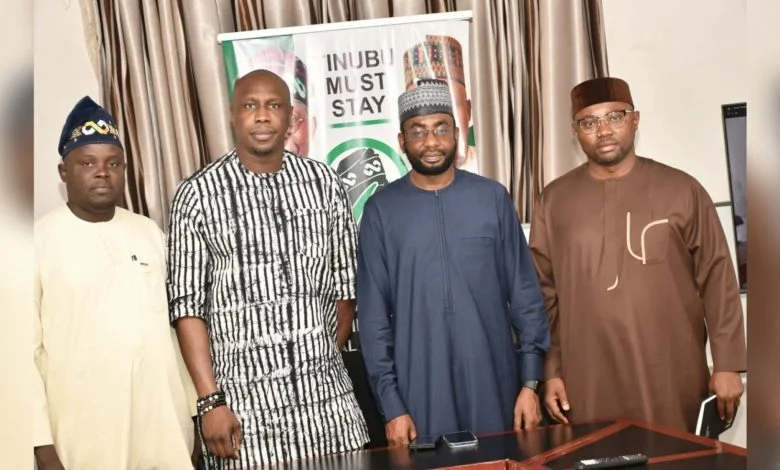
Olujonwo Obasanjo, son of former President Olusegun Obasanjo, has backed the re-election of President Bola Tinubu ahead of the 2027 presidential election.
He expressed his support after joining the Tinubu Movement for Sustainable Governance Foundation (TMS), popularly known as the “Tinubu Must Stay” movement, to promote the president’s re-election agenda.
Olujonwo said his decision to join the movement was informed by his longstanding association with the ruling All Progressives Congress (APC) and his belief in the need to sustain the policies and reforms introduced by the Tinubu administration.
He was formally received by the leadership of TMS at a forum in Abuja, where he expressed support for the government’s Renewed Hope Agenda and called for increased public awareness of its policies and achievements.
Olujonwo, who serves as president of the Buhari Youth Organisation (BYO) and Project One Nigeria, as well as Senior Special Assistant to the Ogun State Governor on Housing, said he had been associated with the APC since 2014.
Explaining his political background, he said he was familiar with the party’s formation and its relationship with key political figures, including his father, former President Obasanjo, the late President Muhammadu Buhari and President Tinubu.
“I have been in the APC since 2014. I was there when my father hosted the late President Muhammadu Buhari and President Bola Ahmed Tinubu to form the movement. I am not new to the party,” he said.APC party merchandise
He argued that some of the policies and achievements of the Tinubu administration were not being adequately communicated to Nigerians, adding that misinformation had contributed to negative perceptions of the government.
Olujonwo cited developments in the education sector, infrastructure and access to student loans as areas he believed deserved greater public attention.
“There is a lot of noise out there, and people are distorting what is going on. ASUU has had no strikes. Students have access to loans. Nigeria has become a massive construction site and an investors’ haven again. These are things we need to promote,” he said.
His decision to join the movement comes as political parties and their supporters begin positioning themselves ahead of the 2027 general election, in which Tinubu is expected to seek another presidential term.
The move also places the son of the former president within a political platform established to defend the current administration’s policies and encourage public support for continuity in governance.
Welcoming Olujonwo to the movement, the National Coordinator of TMS and Director-General of the National Information Technology Development Agency (NITDA), Kashifu Inuwa Abdullahi, said his background gave him an understanding of the importance of economic reforms.
Inuwa drew a comparison between the economic reforms introduced during Olusegun Obasanjo’s administration and those being pursued by Tinubu, arguing that both periods involved policies intended to reshape Nigeria’s economy.
He cited telecommunications liberalisation and banking reforms under the elder Obasanjo as measures that helped establish the foundation for subsequent economic development.
“You grew up in a family that led the second wave of reforms in Nigeria. Telecommunications liberalisation, banking reforms—these laid a solid foundation. Being raised in that family, you understand what reforms mean,” Inuwa said.
He urged Nigerians to consider the long-term implications of government policies, warning that reversing ongoing reforms could undermine investor confidence and disrupt economic progress.
According to him, maintaining policy consistency would be important for attracting investment and sustaining developments in key sectors of the economy.
“We are building investors’ confidence. The naira is becoming strong. Our stock exchange is one of the fastest-growing. The Dangote Refinery is a game changer. If we start reversing these policies, we’ll go back to where we were,” Inuwa added.
Also speaking at the event, Marcel Ngogbehei, Director-General of TMS and a former coordinator of the Obidient Movement, praised the economic policies implemented during Obasanjo’s presidency.
Ngogbehei highlighted the former president’s role in securing debt relief for Nigeria and supporting the liberalisation of the telecommunications sector, describing those measures as important contributions to the country’s economic development.
He said TMS intended to promote discussions about government policies through evidence, research and public engagement rather than propaganda.
“We’re happy you have decided to take this step. Your father was one of those who revolutionised this country. The debt was paid off, and major innovations were introduced in liberalising the economy. This is not about propaganda. We will engage respectfully, factually and transparently,” Ngogbehei said.
The organisation said it had established structures across the country, including a Board of Trustees, national coordinators and specialised directorates, to support its activities.
It also plans to use digital platforms, virtual town hall meetings, policy research and fact-checking initiatives to promote the government’s policies and address what it considers misinformation about the administration.
Following Olujonwo’s reception, TMS announced plans to expand its engagement with professional associations, youth organisations and community groups across the country.
The planned activities are intended to increase public participation in governance and communicate the administration’s policies to Nigerians across different states and geopolitical zones.
Meanwhile, Olusegun Obasanjo has previously expressed concerns about Nigeria’s economic challenges, arguing that the country has sufficient natural and human resources to become prosperous.
In an interview on C-Suite Cafe, hosted by Ikem Okuhu, the former president questioned why Nigeria continued to struggle with poverty despite its agricultural potential, vast land, water resources and large population.Buy Maps
“Give me one reason why Nigeria should be poor. Is it the land that we don’t have or the desert that we are in or the people that we don’t have or the water that we don’t have or the rain that we don’t have?” he asked.
Obasanjo also criticised policies that encourage the importation of goods that could be produced locally, arguing that such practices discourage domestic farmers and undermine local production.
He recalled how restrictions on rice imports were introduced in 1979 to encourage domestic production, claiming that subsequent administrations reversed the policy and allowed imported rice to compete with locally produced varieties.
“When our successors came, one of the first things they did was to lift importation of rice, not to encourage production of rice but to encourage importation of rice, and the farmers couldn’t sell their own rice,” he said.
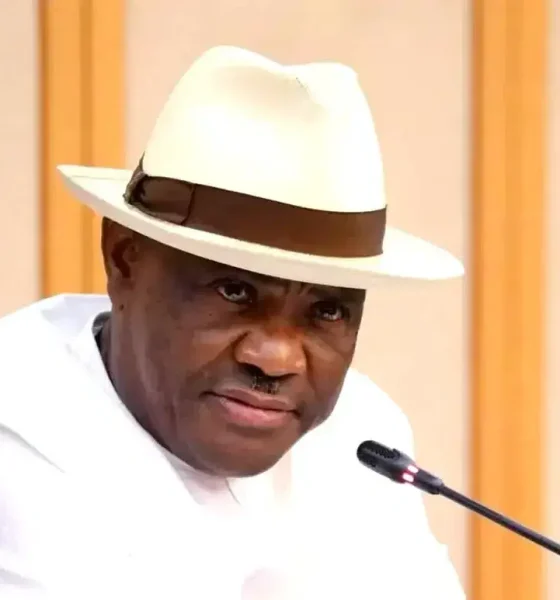
The Peoples Democratic Party (PDP) has indicated plans to take disciplinary action against members accused of working against its interests, with the Minister of the Federal Capital Territory, Nyesom Wike, among those facing criticism over his alleged support for the ruling All Progressives Congress (APC).Access Services
PDP chieftain Emmanuel Ogidi disclosed the party’s position during an interview on Arise Television on Wednesday.
He discussed the lingering crisis within the opposition party and the steps its leadership intends to take against members accused of undermining its activities.
Ogidi described the situation as internal sabotage and maintained that the party could no longer afford to tolerate actions that weaken its structure, particularly as political activities ahead of the 2027 general elections continue to gather momentum.
He accused Wike of maintaining a relationship with the PDP while allegedly supporting the interests of the APC, arguing that such conduct raised serious questions about loyalty and commitment to the opposition party.
“You can’t serve two masters. He (Wike) is supposed to be serving us in PDP, but he is serving APC. This is a threat to democracy. APC is using him to destroy democracy, and it’s deliberate, but we are very conscious of that and very soon you will hear what will happen,” Ogidi said. Access Services
The PDP chieftain’s comments suggest that the party may be preparing to take a firmer position against members it believes are contributing to its internal difficulties.
However, he did not disclose the specific disciplinary measures being considered or when any formal decision concerning Wike would be announced.
Ogidi also indicated that the party had moved beyond the demands previously presented by Wike’s camp during efforts to resolve the disagreements within the PDP.
His comments point to growing frustration among party members who believe that the disagreements have continued for too long and are affecting the party’s ability to prepare for future elections.
The dispute involving Wike and the PDP has remained a major issue within the party since the 2023 general elections, when divisions emerged over its presidential candidate, the distribution of party positions and disagreements surrounding the political future of its leadership.
Wike, a former governor of Rivers State, was a prominent PDP member before President Bola Tinubu appointed him as FCT minister in 2023.
His appointment placed him in the cabinet of an APC-led administration despite his continued association with the opposition party.
His role in the federal government has since generated disagreements among PDP members, with some questioning how a senior party figure can serve in an administration controlled by a political opponent while remaining associated with the PDP.
Ogidi, however, insisted that the PDP belongs to its members and supporters rather than any individual or faction.
He argued that no group should be allowed to dictate the party’s direction or prevent it from enforcing its rules.
He further warned that the party’s willingness to reconcile with aggrieved members should not be interpreted as an acceptance of indiscipline.
According to him, efforts to bring members together must be accompanied by accountability for actions considered harmful to the party.
The PDP remains one of Nigeria’s major political parties, but prolonged internal crises could affect its candidate-selection process, campaign planning and efforts to attract voters ahead of 2027.Nigeria travel guide
Despite these challenges, Ogidi maintained that the PDP remained strong and capable of overcoming its current difficulties.
He dismissed suggestions that defections, court cases and disagreements over zoning had rendered the party incapable of competing in future elections.
He said the party was focused on ensuring that its forthcoming convention was successful, describing the exercise as an important step in its preparations for the 2027 polls.
Nevertheless, the exact nature of the proposed action against Wike and other members remains unclear, pending any formal announcement by the party’s authorised organs.
The FCT minister has not been quoted in the remarks provided as responding directly to Ogidi’s latest comments.
The allegations against him should therefore be understood as the position expressed by the PDP chieftain rather than an established finding of wrongdoing.
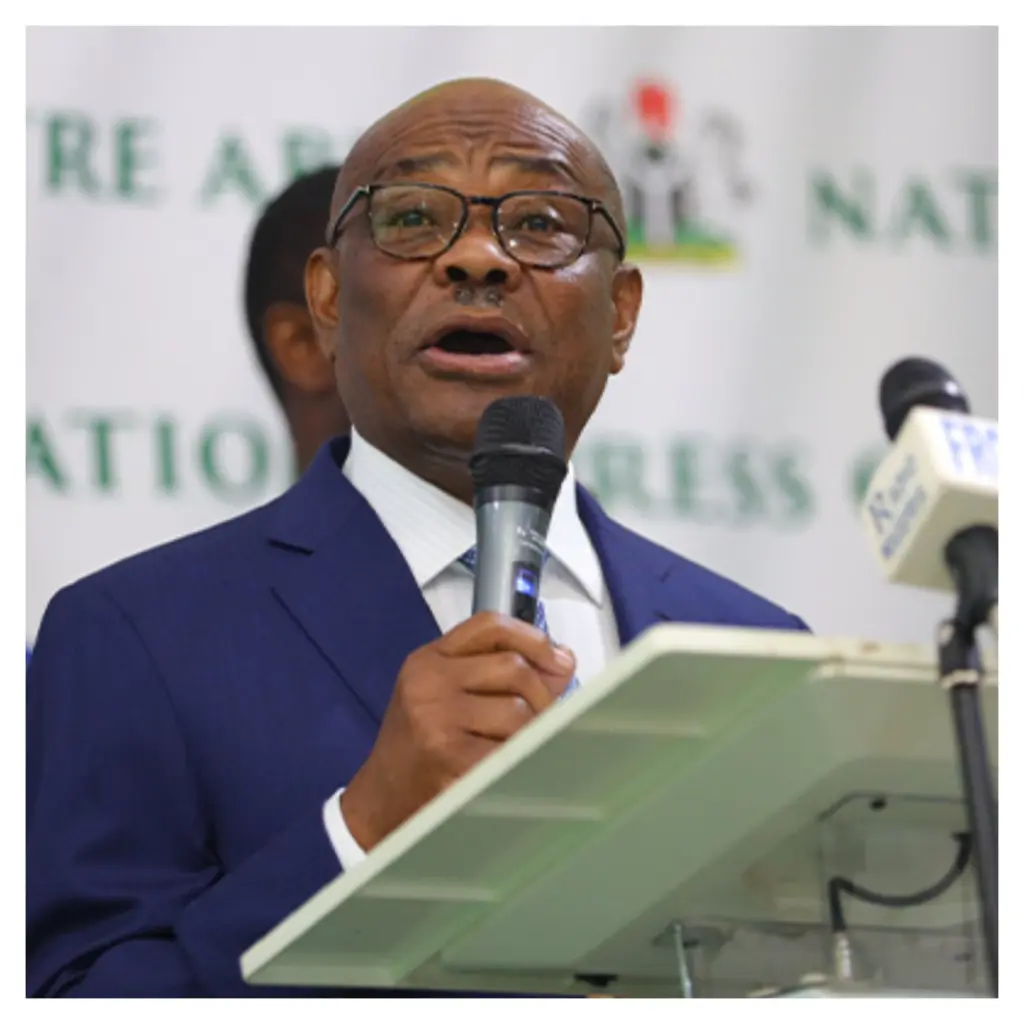
The All Progressives Congress (APC) has dismissed reports of a disagreement between its governors and the Minister of the Federal Capital Territory, Nyesom Wike, insisting that both sides remain committed to President Bola Ahmed Tinubu’s re-election in 2027.
The party’s National Publicity Secretary, Felix Morka, described the reported disagreement as a ‘false battle’.
He maintained that there was no genuine conflict between the minister and members of the Progressives Governors Forum.
Morka clarified this on Tuesday during an interview on Arise Television’s News Day, following Wike’s inclusion in the APC Presidential Campaign Council.
According to him, the governors and the FCT Minister share a common political objective of ensuring Tinubu’s victory in the next presidential election.
“It was a false battle to begin with. I mean, I don’t think there was any real tension between those positions because they united in their extraordinary commitment to the re-election of the president,” Morka said.
He noted that the Progressive Governors Forum comprised governors elected on the APC platform, while Wike, a former Rivers State governor, was a member of Tinubu’s cabinet and a vocal supporter of the President.
According to him, publication of the presidential campaign council list had also clarified the roles of those involved in Tinubu’s re-election campaign.
He said: “Governors, who are not of the APC, now [are] front and centre, coordinating some of our activities in their respective jurisdictions.”
Morka described the development as a new phase in Nigeria’s democratic politics, arguing that the President was bringing politicians from different parties together around a common objective.
The APC spokesperson claimed that the collaboration was unusual in a presidential system, stressing that Tinubu was transcending party differences by building a coalition of political actors to support his administration and re-election campaign.
He said: “We’re seeing a president who is transcending all of the divides and really nullifying what I call the politics of difference between these partisans and bringing them together under the same umbrella to pursue a common agenda for the good of the people.”


Salary: Fresh Update Emerges On Payment To Nigerian Workers

Obasanjo’s Son Picks Side In 2027 Race