
News
Federal High Court Warns Lagos Police Commissioner Moshood Against Declaring Sowore Wanted

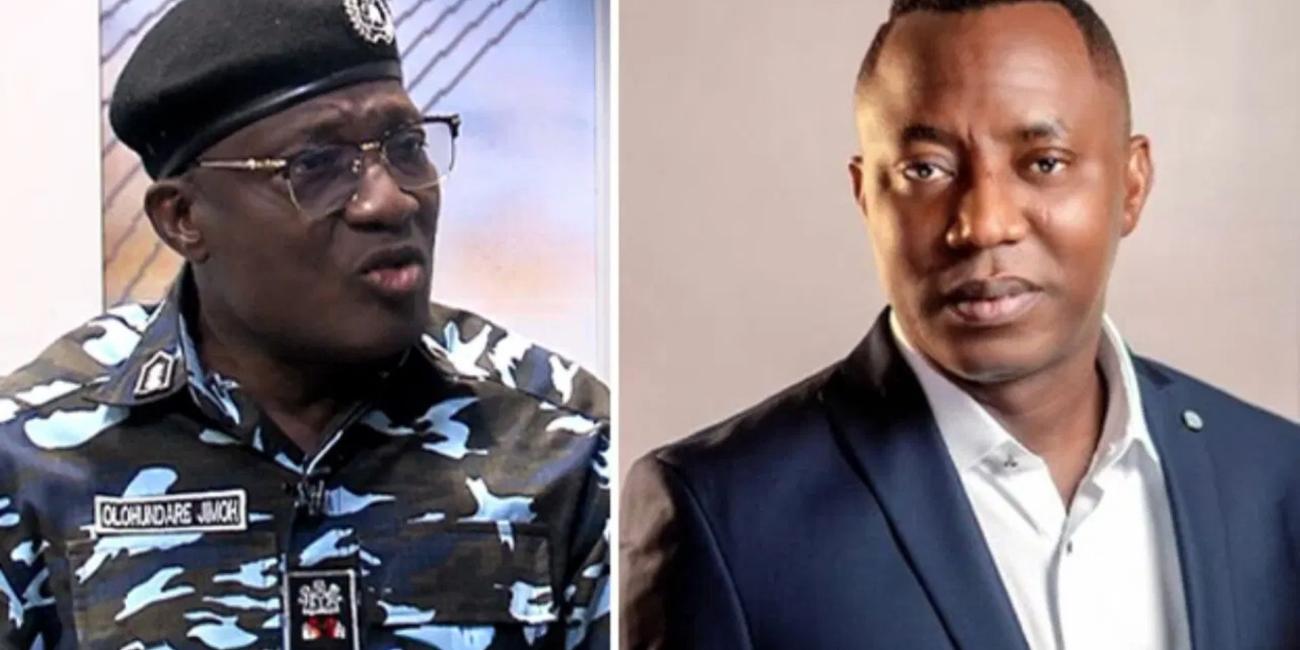
The Lagos CP Moshood made the boasts despite an existing court order restraining such actions.
The Federal High Court in Lagos State on Thursday issued a strong warning to the Lagos State Commissioner of Police, Mr. Jimoh Moshood, after receiving reports that he continued to boast publicly that an activist and former presidential candidate, Omoyele Sowore “remains wanted.”
The Lagos CP Moshood made the boasts despite an existing court order restraining such actions.
The warning came during proceedings in the fundamental rights enforcement suit filed by Sowore against the Commissioner of Police and other respondents.
The case, brought under the Fundamental Rights Enforcement Procedure Rules, requires the police to file their defense within five days.
However, at the resumed hearing on Friday, the police had not filed any response — two days after the deadline had already expired.

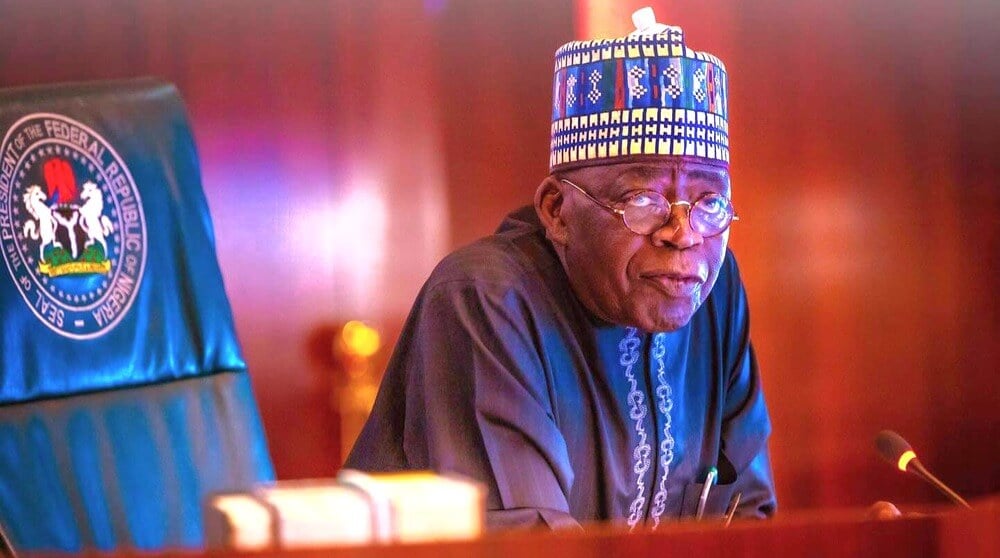
A civil servants’ group, the Federal Workers Forum (FWF), has formally written to President Bola Tinubu and the National Assembly demanding that the federal minimum wage be raised from N70,000 to N300,000, with a maximum salary of N1.5 million for Level 17 officers.
As reported on Thursday, September 3, by The Punch, the letter, dated September 2, 2026, was signed by National Coordinator Andrew Emelieze and General Secretary Ogundele Ayodele.
It was addressed to the Senate President and Speaker of the House of Representatives through the Clerk of the National Assembly, with President Tinubu, the Chief Justice of Nigeria, and the Head of the Civil Service of the Federation listed as additional recipients.
The forum argued that the N70,000 minimum wage passed in 2024 had not been properly carried out, saying workers received only a blanket N40,000 addition regardless of grade level.
“The Federal Government has not fully implemented the new national minimum wage since July 2024. We have been in the battle for full consequential adjustment of the new minimum wage,” the group said in the letter.
The FWF insisted that the statutory three-year review cycle should not stop the government from acting urgently, describing the current situation as an emergency.
“It is suicidal for the federal workers to continue in this ugly situation,” the letter read. “Federal workers are dying in instalments; we are suffering in silence; our salary is too poor; it is not taking us home.”

The group also claimed some workers had borrowed from microfinance banks and mobile loan applications just to cover transport to work, while others had resorted to cooking with firewood because they could no longer afford gas.
The forum attached a full pay scale to the letter.
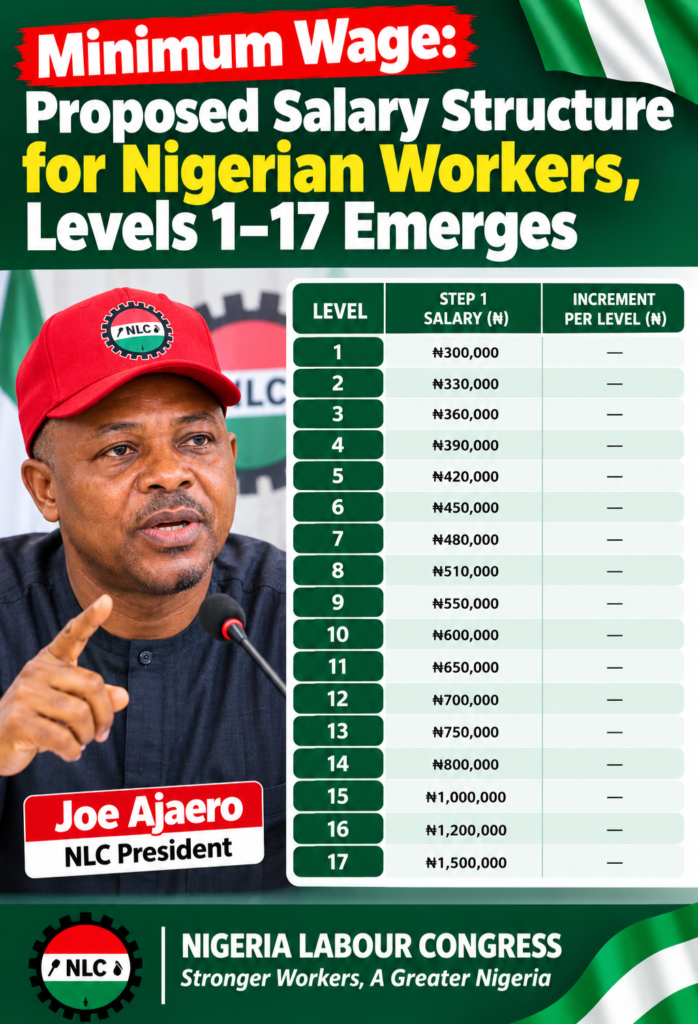
Beyond wages, the FWF demanded payment of all outstanding salaries and promotion arrears, implementation of a 40 per cent peculiar allowance, a permanent Cost of Living Allowance, family support payments, comprehensive health insurance, and housing and car loan schemes for federal workers.
The forum also called for free education for children of federal workers in federal institutions, reduced taxation on allowances, and a broader social security programme for unemployed Nigerians.
On pensions, the group asked the National Assembly to investigate claims that part of workers’ contributory pension savings was being borrowed by the executive, demanding an immediate stop and full refund if confirmed.

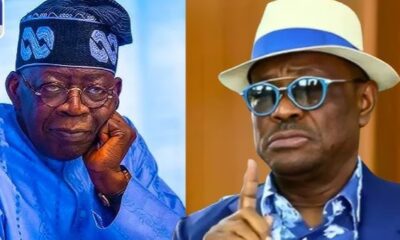
President Bola Ahmed Tinubu is set to give Minister of the Federal Capital Territory, Nyesom Wike, a defined role in his 2027 presidential campaign, with the former Rivers State governor expected to coordinate the campaign structure in Rivers State and the Federal Capital Territory.
The arrangement is expected to allow Tinubu’s campaign to benefit from Wike’s political network in the two territories while avoiding a formal change in the minister’s party affiliation.
Wike remains a member of the Peoples Democratic Party despite his open support for Tinubu’s re-election bid.
This appointment is coming against the background of disagreements between Wike and some APC governors over the best way to mobilise support for Tinubu.
Wike has consistently maintained that he does not need to join the APC before supporting the President in 2027.
He has also rejected the idea that his political relevance should be measured by whether he occupies a top position in the APC Presidential Campaign Council.
In August, Wike made his position clear after the APC unveiled its Presidential Campaign Council and appointed former Zamfara State Governor, Abdulaziz Yari, as Director-General.
The FCT minister said he would rather concentrate on Rivers State and the FCT than pursue the position of campaign director-general.
“What’s important is that you are able to deliver those two states. So it’s not about being DG. If you’re DG and you don’t win your state, what’s the essence of the DG?” Wike said.
“I don’t want to lose my state,” he added.
The proposed arrangement would therefore give Wike a specific responsibility without placing him under the formal hierarchy of the APC.
His expected assignment is particularly significant because of his political influence in Rivers State, where he served as governor for eight years, and the FCT, where he has served as minister since 2023.
Wike has repeatedly claimed responsibility for the political structure in both territories and has promised to work for Tinubu’s victory in the presidential election.
During a recent media engagement, he described himself as the “General Commander of the Political Infantry” and insisted that occupying the office of governor was not the only way to remain politically influential in a state.
“You do not need to be governor before you can be in charge. I am the General Commander of the Political Infantry; therefore, I am in charge,” Wike said.
The minister has also drawn a distinction between supporting Tinubu for president and supporting individual candidates seeking other elective positions.
He recently said his support for the President should not be interpreted as an undertaking to help politicians win their respective state-level contests.
Wike said his focus would remain the presidential election and that politicians seeking victories in governorship and legislative elections should handle their own political battles.
“Rainbow coalition has nothing to do with the APC. Rather, it is our own way of mobilising support across political parties for Mr President, who has done well to deserve a second term,” Wike said.
The Rainbow Coalition promoted by Wike is made up of politicians and political interests from different parties who support Tinubu’s return to office in 2027.
However, the arrangement has created tension with some APC governors who have questioned the need for a separate political structure outside the party.
The disagreement became more pronounced after Imo State Governor and Chairman of the Progressive Governors’ Forum, Hope Uzodimma, announced that APC governors had rejected the Rainbow Coalition.
Wike subsequently criticised some APC governors, including Uzodimma and Kwara State Governor AbdulRahman AbdulRazaq.
He accused some politicians of being more interested in being seen as the people working for Tinubu than in building genuine support for the President.
“You see, the problem with people, they want them to be seen, that they are the people working for the President. I don’t do that,” Wike said.
Under the new role, Wike would focus on Rivers and the FCT, while other senior members of the campaign would handle their own areas of responsibility.
Yari is expected to remain Director-General of the Presidential Campaign Council.
However, the proposed structure is not expected to operate strictly through a single chain of command.
Senate President Godswill Akpabio and Deputy Senate President Jibrin Barau are reportedly not expected to report directly to Yari despite their roles within the campaign structure.
Another prominent figure expected to play a major role in the campaign is Minister of Aviation and Aerospace Development, Festus Keyamo.
Keyamo is being considered for a major spokesperson position in the campaign.
He has considerable experience in presidential campaign communication.
He served as a spokesperson and Director of Public Affairs during Tinubu’s 2023 presidential campaign.
He also played a senior communications role in former President Muhammadu Buhari’s 2019 re-election campaign.
Keyamo later served as Minister of State for Labour and Employment under Buhari before becoming the Minister of Aviation and Aerospace Development under Tinubu.
The Niger State Government has imposed a 24-hour curfew following protests over the death of 37 suspected illegal miners in the state.
The state governor, Mohammed Umaru Bago, announced the curfew during a press conference on Friday.
According to the governor, the curfew takes effect immediately after Juma’at prayers on Friday.
The development follows protests sparked by the deaths of the 37 miners, who were reportedly arrested over alleged illegal mining activities.
Recall that the Commissioner of Police in Niger State, Adamu Abdullahi Elleman, ordered an investigation into the incident, which occurred in the early hours of Thursday, September 17, 2026.
According to a statement by the Police Public Relations Officer, Wasiu Abiodun, the suspects arrested over alleged illegal mining were found dead while in the custody of the Niger State Command of the Nigeria Security and Civil Defence Corps, NSCDC.


Minimum Wage: Proposed Salary Structure for Nigerian Workers, Levels 1–17 Emerges

‘You Will Hear Full Details Today’ – Wike Speaks On Clash With APC Govs

Tinubu To Appoint Wike As APC Campaign Coordinator For 2027 Election

Former Super Eagles Star Loses Life Savings, Duped By A Pastor of ₦1.2 Billion

I’m A Married Man, I Can Never Get Myself Involved With Such A Thing, Delta Gov Aide Reveals Why He Offered Comfort ₦500,000 Job

Lagos Imposes ₦250,000 Fine For Illegal Waste Disposal

-

 Tech2 days ago
BREAKING: Tears as Prominent Nigerian Ex-Governor Dies in UK
-
Tech2 days ago
Government Declares Monday, September 21 Public Holiday
-
 News1 day ago
Tinubu To Appoint Wike As APC Campaign Coordinator For 2027 Election
-
 Politics21 hours ago
‘You Will Hear Full Details Today’ – Wike Speaks On Clash With APC Govs
-
 News19 hours ago
Minimum Wage: Proposed Salary Structure for Nigerian Workers, Levels 1–17 Emerges