
Business
Lagos Must Think Bigger, Act Smarter — Adedipe, George


Renowned economist and Chief Consultant at B. Adedipe Associates Limited, Professor Biodun Adedipe, has said Lagos State must aggressively deepen wealth creation if it aims to build an inclusive, resilient, and globally competitive economy.
Speaking yesterday at the Roundtable Discussion on Lagos Economic Outlook 2026, Adedipe stressed that the state stands at a pivotal moment where deliberate policies, bold investments, and strategic innovation will determine its long-term economic future.
Adedipe noted that global challenges such as infrastructure gaps, housing shortages, and funding pressures are universal, adding that what separates successful economies is how governments deploy policy tools to expand opportunities.
According to him, Lagos must focus on producing quality jobs, expanding enterprise opportunities, and stimulating sustained wealth generation. “If I have to choose between job creation and wealth creation, I will choose wealth creation. When you create wealth, jobs follow naturally,” he said.

Ads by
He projected that Lagos will close 2025 with a Gross State Product of ¦ 66.47 trillion, representing 34.64% of Nigeria’s GDP. With a growth rate of 6.49%, Lagos is expanding at nearly twice the national average of 3.78%.
He argued that Lagos should no longer benchmark itself against African economies but against top-performing global sub-national economies. Citing California’s $3.37 trillion GSP, he noted that Lagos, already Africa’s second-largest city economy after Cairo, must now model the most competitive global state economies.
Adedipe identified technology, real estate, finance, creative industries, clean energy, and innovation-led manufacturing as critical sectors that will determine Lagos’ competitiveness in the next decade. He called for deeper investment in human capital, stronger infrastructure, and sustained collaboration between government and major industry actors. “Everything will be fine in the end. If it is not fine, it is not the end. Lagos must keep improving daily,” he added.

Earlier, Commissioner for Economic Planning and Budget, Mr. Ope George, said Lagos has reached a defining point in its development journey and must adopt smarter, more data-driven planning as it prepares for the 2026 economic cycle. He highlighted the proposed ¦ 4.2 trillion 2026 budget as evidence of Lagos’ bold economic ambition.
Also speaking, Permanent Secretary, Ministry of Economic Planning and Budget, Mrs. Olayinka Ojo, reaffirmed the state’s commitment to evidence-based governance, noting that Lagos has implemented over 94 percent of resolutions from previous economic summits. She commended researchers, analysts, and the state’s economic intelligence team for the insights that continue to shape policy direction.
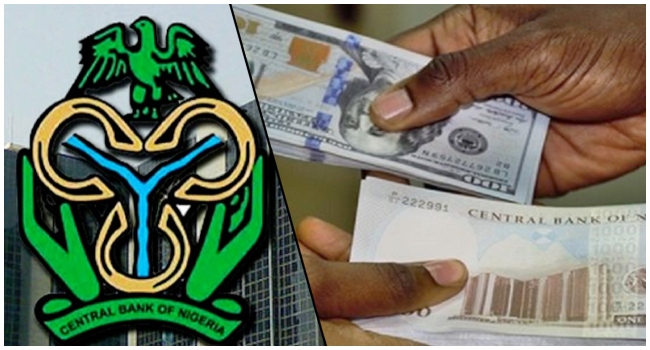
The Central Bank of Nigeria (CBN) has announced a new exchange rate for the dollar, with the naira closing at N1,357 per dollar despite high demand for the greenback.
According to data from the CBN, the naira closed flat at N1,357 to a dollar, indicating no change from the previous trading session.
The current rate comes as Nigeria’s external reserves hit $52 billion, a 17-year high. Experts have said the current naira stability has trickled down to other sectors, with imports now getting cheaper.
The CBN sharply ramped up its foreign exchange interventions in March 2026, selling $953.41m to the market in what the data shows is the strongest central bank FX activity since April 2025.
Figures published in the CBN’s latest Quarterly Statistical Bulletin showed that spot market transactions made up the bulk of the March sales, with $950.10m channelled through that route and a further $3.31m directed to Ministries, Departments and Agencies.
The March figure represents a dramatic swing from the opening months of 2026. The CBN sold just $58.93m in January and $244.13m in February, meaning March’s intervention was more than 16 times the January level and roughly 291 per cent above February’s sales.
The last time interventions reached a comparable scale was April 2025, when the CBN supplied $1.65bn to the market. Sales cooled significantly after that peak, falling to $838.93m in May, $676.31m in June, and then sliding further to $399.80m in September and $150.10m in October before picking up again towards the close of 2025.
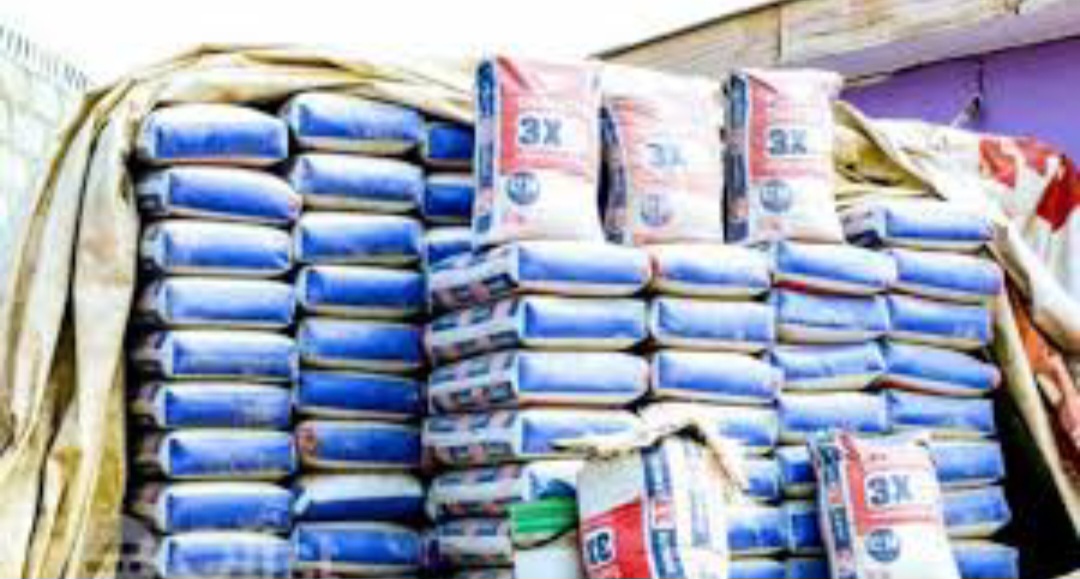
The chairman of Dangote Cement Plc, Emmanuel Ikazoboh, has explained why cement prices remain high across Nigeria, attributing the persistent increases to rising energy costs and the impact of foreign exchange on production expenses.
His comments come amid growing concerns from Nigerians over the soaring cost of building materials, with many calling on the government to intervene as cement prices continue to put pressure on construction projects and housing development.
Speaking during the 17th Annual General Meeting (AGM) of Dangote Cement Plc in Lagos, Ikazoboh said energy remains the biggest cost component in cement manufacturing, accounting for about 60 per cent of total production expenses.
Energy, dollar exchange rate driving costs According to Ikazoboh, cement manufacturers rely heavily on gas, coal, and diesel to power their operations. He noted that gas, one of the key energy sources, is sold in United States dollars, exposing manufacturers to exchange rate fluctuations. He explained that the continued depreciation of the naira against the US dollar has significantly increased production costs, making it difficult for manufacturers to maintain lower prices.
According to Ikazoboh, cement manufacturers rely heavily on gas, coal, and diesel to power their operations. He noted that gas, one of the key energy sources, is sold in United States dollars, exposing manufacturers to exchange rate fluctuations.
He explained that the continued depreciation of the naira against the US dollar has significantly increased production costs, making it difficult for manufacturers to maintain lower prices. “To produce a bag of cement, we need energy, which constitutes about 60 per cent of the production cost. To generate that energy, we use gas, coal or diesel,” he said.
“Gas is sold to us in US dollars, and its price continues to increase. We all know the impact of the exchange rate between the dollar and the naira. As a result, the cost of generating energy keeps rising.”
His remarks offer one of the clearest explanations yet from the country’s largest cement producer on the factors behind recent price increases.
Business
Dr. Deji Adeleke: How Davido’s Billionaire Father Built His Business Empire; Major Companies Linked to Him

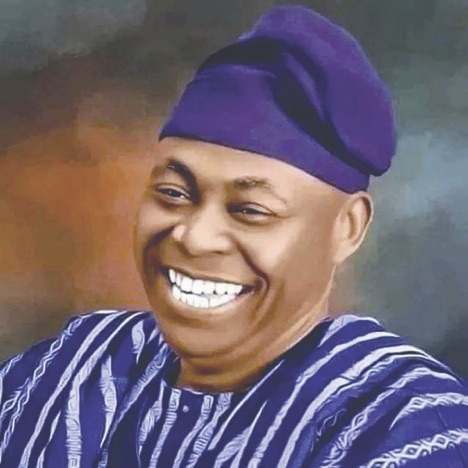
Dr. Deji Adeleke, the father of the globally recognized musician Davido, is not just known for his familial ties to the entertainment industry but also his immense wealth and substantial impact on Nigeria’s economic landscape. Born on March 6, 1957, in Enugu, Nigeria, Adedeji Adeleke has built a formidable empire through his business acumen and educational investments.
Adeleke’s Business Ventures
Dr. Adeleke founded Pacific Holdings Limited in 1983, which has grown into a major conglomerate in Nigeria, encompassing various sectors such as agriculture, energy, and real estate.
This company is a cornerstone of his financial success, with divisions like Pacific Farm Limited, Pacific Freightliners Limited, and Pacific Gas Company Limited contributing significantly to his wealth.
Adeleke’s Real Estate Investments
Adeleke’s real estate portfolio is vast and diversified. He owns properties across Nigeria, including high-value areas like Ikoyi, Lekki, Banana Island, and Victoria Island in Lagos. Additionally, he has invested in international properties, including a mansion in Atlanta, USA, which he acquired to celebrate his 60th birthday.
Adeleke’s University and Philanthropy
In line with his passion for education, Adeleke founded Adeleke University in Ede, Osun State, under the auspices of the Springtime Development Foundation, which he established in 1996. The university operates on the Seventh-day Adventist philosophy of education and offers various undergraduate and postgraduate programs.
His philanthropic efforts extend beyond education, impacting healthcare and community development. These initiatives not only enhance his public image but also contribute to long-term societal benefits, reinforcing his legacy as a socially responsible entrepreneur.

Adeleke’s Luxurious Lifestyle
Dr. Adeleke’s lifestyle reflects his financial success. He owns luxury cars such as a Rolls Royce Phantom and a 2017 Bentley Mulsanne, and he flies in style with his Bombardier Global Express 6000 private jet, valued at $62 million.
Adeleke’s Net Worth
Estimations of Adeleke’s net worth vary, with some sources placing it around $700 million, while others suggest it could be as high as $2 billion. His wealth is attributed to his diversified investments in real estate, stocks, and bonds, alongside the thriving operations of Pacific Holdings Limited.
Adeleke’s Family and Personal Life
Adeleke is a father to four children: Adewale, David (Davido), Sharon, and Coco Adeleke. Despite initial resistance to Davido’s music career, he eventually supported his son’s passion, even funding the establishment of a music department at Babcock University for him. Today, Davido is not only a successful musician but also a director in the family business.
Conclusion
Dr. Deji Adeleke’s story is one of remarkable success through strategic education, entrepreneurship, and philanthropy. His wealth and business acumen have positioned him as one of Nigeria’s most influential figures, contributing significantly to the nation’s economic and social development. As he continues to invest and expand his empire, his legacy is set to influence future generations both within and outside Nigeria.
Adeleke’s Early Life and Education
Adeleke’s journey began in an affluent family in Lagos. He attended Ansar-ud-Deen Primary School and Seventh-Day Adventist Grammar School before moving to the United States, where he earned a degree in Finance from Western Kentucky University in 1979, followed by an MBA. Furthering his education, he obtained a Ph.D. in International Business from Pacific Columbia University, and another Ph.D. in Business Administration from the University of Phoenix in 2010.
– kashgain


BREAKING: FG Makes New Appointment

Full List Of 2026 Headies Awards Nominees

It Was Not Yahaya Who Retired Me From Politics – Goje Fires Back At Critics

Former Super Eagles Star Loses Life Savings, Duped By A Pastor of ₦1.2 Billion

I’m A Married Man, I Can Never Get Myself Involved With Such A Thing, Delta Gov Aide Reveals Why He Offered Comfort ₦500,000 Job

Lagos Imposes ₦250,000 Fine For Illegal Waste Disposal

-

 Entertainment1 day ago
Another Yoruba Actor Dies Less Than 24 Hours After Ogogo’s Passing
-

 Sports2 days ago
Chukwueze Wins Man Of The Match In Milan’s Win At Torino
-

 News22 hours ago
2027: Atiku Vows To Boycott Any Presidential Debate Lacking Tinubu’s Appearance
-

 Sports19 hours ago
Man City’s Nico O’Reilly Wins PFA Young Player Of The Year
-
 News19 hours ago
Tinubu Inherited An Economy In Shambles — Akpabio
-
 News18 hours ago
It Was Not Yahaya Who Retired Me From Politics – Goje Fires Back At Critics
-

 Entertainment21 hours ago
It Wasn’t Easy – Johnny Drille Reveals How He Met His Wife At Mavin
-
 Entertainment18 hours ago
Full List Of 2026 Headies Awards Nominees