News
One-Party Dominance Threatens Federal System, SANs Warn

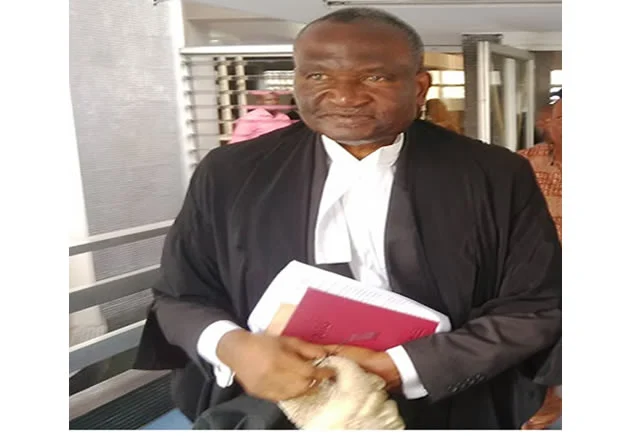
The Body of Senior Advocates of Nigeria has warned that Nigeria’s federal system is under serious threat due to the dominance of a single political party, stressing that the judiciary must remain strong where opposition is weak.
BOSAN said the current political landscape has weakened federalism and virtually eliminated effective opposition, thereby placing greater responsibility on the judiciary to protect the constitution and the rule of law.
The body made the remarks in a speech delivered at a special court session marking the ceremonial commencement of the 2025/2026 Legal Year of the Federal High Court and the 41st Annual Judges’ Conference held in Abuja on Monday.
Currently, the All Progressives Congress controls at least 26 of the 36 states in the federation, with opposition parties decrying a tilt toward a one-party state.
In the address, read on its behalf by a former Attorney-General of the Federation and Minister of Justice, Chief Kanu Agabi (SAN), BOSAN declared: “When there is no strong opposition, the judiciary must be strong. It must be adept. It must be innovative. It must defend the law and the constitution, and employ every inherent sanction of a court of law.
“The framers of the Constitution would never have entrusted the judiciary with the custody and control of the Constitution, without at the same time, giving it the necessary jurisdictional power to protect it at the time of mindless corruption.
“As I said before, it is midnight. It is you, judges, who will lead in this darkness. At such a time as this, you must be bold and courageous. You must be honest, you must be innovative.”

BOSAN further cautioned against what it described as the criminalisation of politics, urging judges to rise to the challenge of safeguarding constitutionally guaranteed rights
It said: “Criminalisation of politics means that you are the hope of the nation. If the electoral process continues to be dominated by money, if violence and ethnicity continue to prevail, if the checks and balances instituted by law have been eliminated or have ceased to be effective, if all the structures for accountability provided in the constitution are surprisingly ignored, in that case, we need a judiciary that can assert itself.
“Do so now! Do not fear and do not be afraid. If this generation does not appreciate you, generations to come will do so. Generations to come shall look back and wonder how you were able to save a nation so totally lacking in moderation.
“It has been said that as long as the nation is rife with corruption, we should not consider ourselves a democracy.
“The hope of the nation is in the judiciary to remove this cankerworm of corruption so that we can have a genuine democracy. This means that judges must be enlightened. You must spiritualise yourselves. You must be holy.”
The body added that it depended not so much on the priests, pastors, and imams to have a godly society, stressing that the men of God had taught the lessons they ought to teach.
“It remains for you, judges, to punish disobedience. The appropriate use of punishment. You have the means to compel criminals to give up crime.
“That is why it is said that a nation is as good as its judiciary. It is for this reason that some people blame not the politicians, but our judges and magistrates,” the body said.
The Chief Justice of Nigeria, Justice Kudirat Kekere-Ekun, acknowledged that public expectations of the judiciary had risen significantly in recent years, noting that scrutiny had intensified.
She stressed that the judiciary remained the last line of defence for the constitution and the rights it guaranteed.
“In an age where misinformation travels swiftly, and institutional trust is increasingly fragile, we must continually demonstrate, through both conduct and decisions, that justice in Nigeria is anchored firmly on impartiality, transparency, and integrity.
“The Judiciary does not speak through press statements or public commentary; our judgments constitute our voice, and the manner in which we discharge our duties defines the authority and credibility of that voice.
“Beyond the substance of our judgments, the public increasingly measures justice by the discipline of our daily processes.
“Punctuality in sitting, consistency in court schedules, and the courtesy of giving advance notice when a court will not sit are no longer minor administrative matters,” she said.
She emphasised that these expectations were essential expressions of respect for litigants, counsel, and citizens whose time, resources, and confidence are invested in the justice system.
She noted that it would be unrealistic to ignore the fact that public confidence in judicial institutions was fragile, and that perceptions, whether fair or otherwise, carried real consequences.
“Where court processes appear unpredictable, opaque, or inefficient, the credibility of even sound decisions may suffer.
“Restoring confidence is not achieved by rhetoric, but by reliability, professionalism, and visible order in the administration of justice.
“Judicial independence must therefore be upheld, not as an abstract ideal, but as a lived and daily discipline grounded in courage, restraint, and fidelity to the law.
“Independence is not an adornment of democracy; it is its lifeblood. Yet independence, standing alone, is insufficient unless exercised with responsibility and moral clarity,” she added.
She also said that the Bench and the Bar must remain partners in the administration of justice.
“A weak link on either side diminishes the system as a whole. I therefore urge members of the Bar to uphold the highest standards of advocacy, to eschew tactics that frustrate proceedings, and to work constructively with the courts in advancing efficiency, professionalism, and the Rule of Law,” Justice Kekere-Ekun said.
The Chief Judge of the Federal High Court, Justice John T. Tsoho, disclosed that the court disposed of a total of 16,019 cases at the end of the 2023/2024 legal year.
He said 3,113 were civil cases, while 5,818 were criminal matters.
He added that 3,724 motions and 3,374 fundamental human rights cases were filed within the same period.
Justice Tsoho said the annual ceremony served as a reminder of the court’s collective responsibility to uphold the rule of law, administer justice fairly and impartially, and safeguard the rights of citizens.
He further disclosed that, in line with efforts to modernise the judiciary, the Federal High Court had commenced an e-filing system at its Lagos Division, with plans to extend it to all divisions nationwide.
“We are intensifying investment in infrastructural development such as construction of court buildings, judges’ quarters, renovation of courtrooms and staff quarters where needed.
“We also strive to provide essential technological equipment in our courts,” he said.
Justice Tsoho noted that the initiatives were aimed at enhancing service delivery despite limited resources.
The President of the Nigerian Bar Association, Afam Osigwe (SAN), urged the judiciary to guard its independence jealously, noting that its authority rests on public confidence in its neutrality.
While commending the Federal High Court for its resilience and fidelity to the law, he called for continued courage, saying judicial decisions remained vital in shaping governance and ensuring national stability.

Former Commissioner of Police in Niger State, Diseye Desire Nsirim, rtd, has died after a brief illness.
Nsirim died on Monday, September 21, 2026, in a hospital, according to the Niger State Police Command.
The late police officer, who hailed from Kolokuma/Opokuma Local Government Area of Bayelsa State, served as the 27th Commissioner of Police in Niger State between 2012 and 2014.
She was the first and, according to the command, the only female Commissioner of Police to have served in the state.
The command said that during her tenure, Nsirim contributed to crime prevention, public safety and the maintenance of law and order in the state.
It listed the dismantling of the Darul-Salam group in Mokwa and the busting of another terrorist group in Minna among her notable achievements as Commissioner of Police.
In a statement issued on Tuesday, the Niger State Police Public Relations Officer, SP Wasiu Abiodun, said the command’s current Commissioner of Police, Adamu Abdullahi Elleman, commiserated with Nsirim’s family, relatives, colleagues and associates.
Elleman described the late officer’s contributions to policing in Niger State and national security as significant.
He prayed for strength and fortitude for the family to bear the loss.

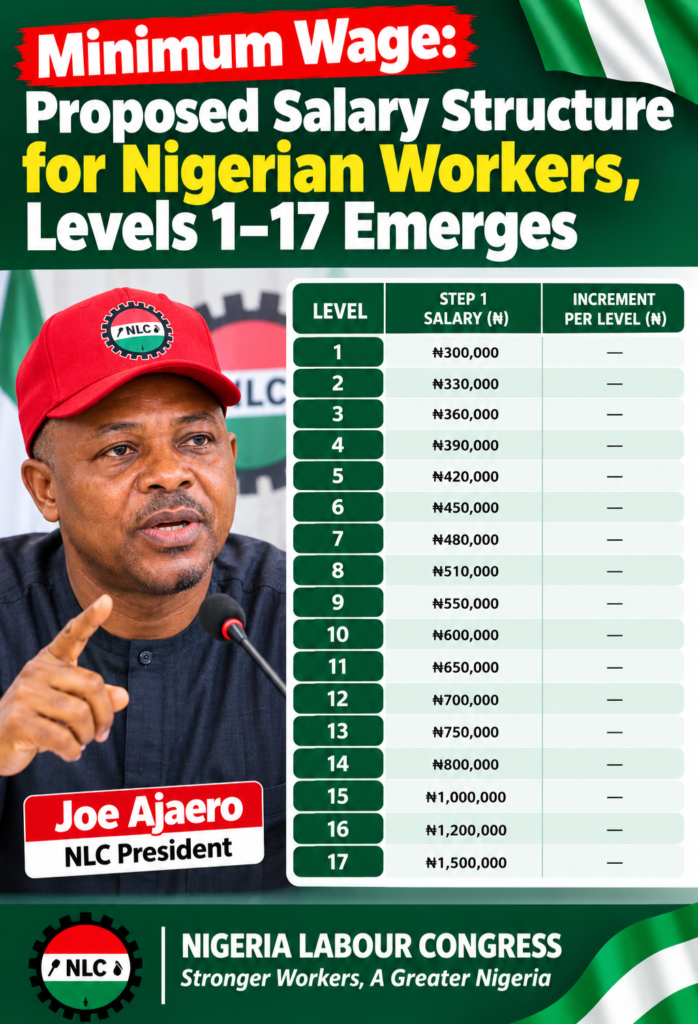
A civil servants’ group, the Federal Workers Forum (FWF), has formally written to President Bola Tinubu and the National Assembly demanding that the federal minimum wage be raised from N70,000 to N300,000, with a maximum salary of N1.5 million for Level 17 officers.
As reported on Thursday, September 3, by The Punch, the letter, dated September 2, 2026, was signed by National Coordinator Andrew Emelieze and General Secretary Ogundele Ayodele.
It was addressed to the Senate President and Speaker of the House of Representatives through the Clerk of the National Assembly, with President Tinubu, the Chief Justice of Nigeria, and the Head of the Civil Service of the Federation listed as additional recipients.
The forum argued that the N70,000 minimum wage passed in 2024 had not been properly carried out, saying workers received only a blanket N40,000 addition regardless of grade level.
“The Federal Government has not fully implemented the new national minimum wage since July 2024. We have been in the battle for full consequential adjustment of the new minimum wage,” the group said in the letter.
The FWF insisted that the statutory three-year review cycle should not stop the government from acting urgently, describing the current situation as an emergency.
“It is suicidal for the federal workers to continue in this ugly situation,” the letter read. “Federal workers are dying in instalments; we are suffering in silence; our salary is too poor; it is not taking us home.”
The group also claimed some workers had borrowed from microfinance banks and mobile loan applications just to cover transport to work, while others had resorted to cooking with firewood because they could no longer afford gas.
The forum attached a full pay scale to the letter.
Beyond wages, the FWF demanded payment of all outstanding salaries and promotion arrears, implementation of a 40 per cent peculiar allowance, a permanent Cost of Living Allowance, family support payments, comprehensive health insurance, and housing and car loan schemes for federal workers.
The forum also called for free education for children of federal workers in federal institutions, reduced taxation on allowances, and a broader social security programme for unemployed Nigerians.
On pensions, the group asked the National Assembly to investigate claims that part of workers’ contributory pension savings was being borrowed by the executive, demanding an immediate stop and full refund if confirmed.

President Bola Ahmed Tinubu is set to give Minister of the Federal Capital Territory, Nyesom Wike, a defined role in his 2027 presidential campaign, with the former Rivers State governor expected to coordinate the campaign structure in Rivers State and the Federal Capital Territory.
The arrangement is expected to allow Tinubu’s campaign to benefit from Wike’s political network in the two territories while avoiding a formal change in the minister’s party affiliation.
Wike remains a member of the Peoples Democratic Party despite his open support for Tinubu’s re-election bid.
This appointment is coming against the background of disagreements between Wike and some APC governors over the best way to mobilise support for Tinubu.
Wike has consistently maintained that he does not need to join the APC before supporting the President in 2027.
He has also rejected the idea that his political relevance should be measured by whether he occupies a top position in the APC Presidential Campaign Council.
In August, Wike made his position clear after the APC unveiled its Presidential Campaign Council and appointed former Zamfara State Governor, Abdulaziz Yari, as Director-General.
The FCT minister said he would rather concentrate on Rivers State and the FCT than pursue the position of campaign director-general.
“What’s important is that you are able to deliver those two states. So it’s not about being DG. If you’re DG and you don’t win your state, what’s the essence of the DG?” Wike said.
“I don’t want to lose my state,” he added.
The proposed arrangement would therefore give Wike a specific responsibility without placing him under the formal hierarchy of the APC.
His expected assignment is particularly significant because of his political influence in Rivers State, where he served as governor for eight years, and the FCT, where he has served as minister since 2023.
Wike has repeatedly claimed responsibility for the political structure in both territories and has promised to work for Tinubu’s victory in the presidential election.
During a recent media engagement, he described himself as the “General Commander of the Political Infantry” and insisted that occupying the office of governor was not the only way to remain politically influential in a state.
“You do not need to be governor before you can be in charge. I am the General Commander of the Political Infantry; therefore, I am in charge,” Wike said.
The minister has also drawn a distinction between supporting Tinubu for president and supporting individual candidates seeking other elective positions.
He recently said his support for the President should not be interpreted as an undertaking to help politicians win their respective state-level contests.
Wike said his focus would remain the presidential election and that politicians seeking victories in governorship and legislative elections should handle their own political battles.
“Rainbow coalition has nothing to do with the APC. Rather, it is our own way of mobilising support across political parties for Mr President, who has done well to deserve a second term,” Wike said.
The Rainbow Coalition promoted by Wike is made up of politicians and political interests from different parties who support Tinubu’s return to office in 2027.
However, the arrangement has created tension with some APC governors who have questioned the need for a separate political structure outside the party.
The disagreement became more pronounced after Imo State Governor and Chairman of the Progressive Governors’ Forum, Hope Uzodimma, announced that APC governors had rejected the Rainbow Coalition.
Wike subsequently criticised some APC governors, including Uzodimma and Kwara State Governor AbdulRahman AbdulRazaq.
He accused some politicians of being more interested in being seen as the people working for Tinubu than in building genuine support for the President.
“You see, the problem with people, they want them to be seen, that they are the people working for the President. I don’t do that,” Wike said.
Under the new role, Wike would focus on Rivers and the FCT, while other senior members of the campaign would handle their own areas of responsibility.
Yari is expected to remain Director-General of the Presidential Campaign Council.
However, the proposed structure is not expected to operate strictly through a single chain of command.
Senate President Godswill Akpabio and Deputy Senate President Jibrin Barau are reportedly not expected to report directly to Yari despite their roles within the campaign structure.
Another prominent figure expected to play a major role in the campaign is Minister of Aviation and Aerospace Development, Festus Keyamo.
Keyamo is being considered for a major spokesperson position in the campaign.
He has considerable experience in presidential campaign communication.
He served as a spokesperson and Director of Public Affairs during Tinubu’s 2023 presidential campaign.
He also played a senior communications role in former President Muhammadu Buhari’s 2019 re-election campaign.
Keyamo later served as Minister of State for Labour and Employment under Buhari before becoming the Minister of Aviation and Aerospace Development under Tinubu.


Courts Sacks ADC Prominent Candidate

Ex Police Commissioner Dies

Minimum Wage: Proposed Salary Structure for Nigerian Workers, Levels 1–17 Emerges

Former Super Eagles Star Loses Life Savings, Duped By A Pastor of ₦1.2 Billion

I’m A Married Man, I Can Never Get Myself Involved With Such A Thing, Delta Gov Aide Reveals Why He Offered Comfort ₦500,000 Job