Business
2026 Tax Laws Will Ease Burden On Businesses, Poor Nigerians – Tinubu

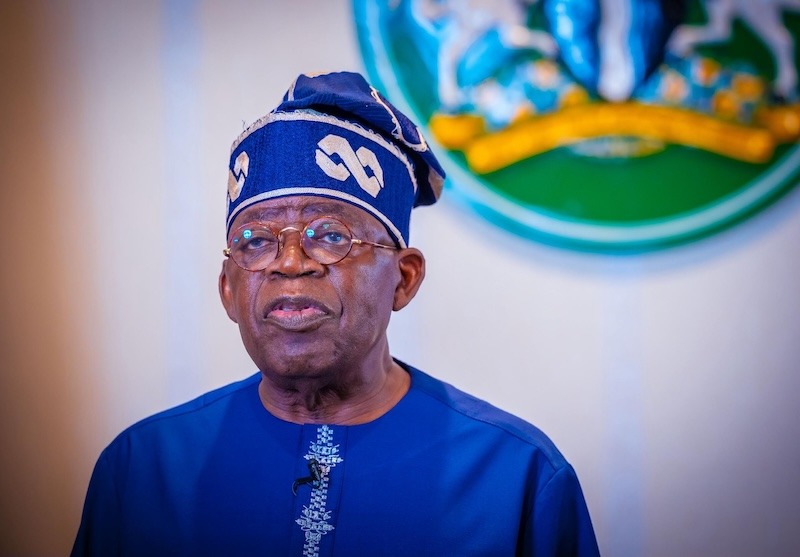
President Bola Ahmed Tinubu has urged Nigerians not to panic over the new tax regime scheduled to take effect in 2026, assuring that the policy is designed to ease the burden on the poor, low-income earners and small businesses.
The President gave the assurance on Tuesday, December 16, at the 8th Annual Senator Abiola Ajimobi Roundtable and the 76th posthumous birthday lecture of the late former Governor of Oyo State, held at the University of Ibadan.
The event, themed “Pathways to Electoral Credibility: Reforming Political Parties, Re-engineering Citizens, and Restoring Trust in Nigerian Democracy,” was organised by the Senator Abiola Ajimobi Foundation in collaboration with the Institute of Peace and Strategic Studies, University of Ibadan.
It was attended by friends, associates, family members and partners of the late governor, and chaired by a former Governor of Ogun State, Olusegun Osoba.
Ajimobi, who governed Oyo State between 2011 and 2019, died in June 2020, a year after leaving office.
Economic Reforms Yielding Results – Says The President
Tinubu’s message, delivered by the Executive Chairman of the Federal Inland Revenue Service, Zaccheus Adedeji, highlighted the necessity of recent economic reforms undertaken by the administration.
The President said the reforms, though initially painful, were already producing positive outcomes across key economic indicators.

“As recent evidence has shown, the drastic economic measures our administration undertook were necessary to revitalise the economy. Investors have since reaffirmed their confidence as the fruits of our reforms become manifest through robust macroeconomic indicators,” he said.
According to him, improvements are being recorded in several areas.
“Our GDP is growing, inflation is tumbling, and improvements are being recorded in the fiscal deficit. Companies that were previously posting losses have returned to profitability, with improved capacity utilisation and increased investment levels,” Tinubu added.
New Tax Laws To Bring Relief
The President said Nigerians would begin to feel the impact of the reforms more strongly in the coming year, particularly through the implementation of the new tax laws.
He explained that the laws would exempt critical sectors from burdensome taxes and eliminate multiple taxation on businesses.
“The impact of these improvements will be felt more by Nigerians, particularly in the new year, with huge reliefs coming from the new tax laws, which exempt food, medication, education, agriculture and shared transportation from burdensome taxes and free businesses from multiple taxation,” he said.
Tinubu further assured Nigerians that there was no cause for fear.
“I want to assure Nigerians that there should be no apprehension about the new tax laws, which implementation will begin next year. The laws come with good news for the poor, low-income earners and small businesses,” he added.
Tribute To Ajimobi
Commending the late former governor, Tinubu said Ajimobi exemplified leadership that prioritized long-term development, even when it involved making difficult decisions.
“We shared many ideals. He believed that a leader must take the people he governs to the height they ought to be, even if it involves making tough choices and decisions that may engender initial discomfort but would, in the long run, catapult the state to greater development,” the President said.
He also praised Ajimobi’s wife, Ambassador-designate Florence Ajimobi, for sustaining the family’s legacy.
In his concluding remarks, Tinubu urged leaders and members of the All-Progressives Congress in Oyo State to unite ahead of the 2027 general elections.
“The best tribute and honour you can give to our departed statesman is to unite and strengthen the party to take over the reins of government in this state in 2027. This is achievable, and it must be achieved,” he said.
Gov Makinde, Gambari Speak On Democracy
In his remarks, Oyo State Governor, Seyi Makinde, represented by his deputy, Bayo Lawal, described the roundtable as a fitting platform to honour Ajimobi’s legacy while addressing pressing issues affecting Nigeria’s democracy.
Makinde said the late governor made lasting contributions to governance in the state, leaving behind lessons that transcended partisan politics.
He stressed that rebuilding trust in democracy required sincerity, accountability and inclusive governance, adding that electoral credibility could only be achieved when political parties practised internal democracy and delivered on their promises.
Delivering the lead paper, former Chief of Staff to ex-President Muhammadu Buhari, Prof Ibrahim Gambari, identified political party reform as the most critical factor for democratic renewal in Nigeria.
He listed voter apathy, democratic disillusionment, weak internal party democracy, institutional weaknesses, electoral violence, insecurity and trust deficits as persistent challenges undermining electoral credibility.
Earlier, the President of the Senator Abiola Ajimobi Foundation, Florence Ajimobi, commended Tinubu for what she described as his unwavering loyalty to the late statesman and their shared values of good governance and democratic commitment.
She said the President’s consistent participation in the annual event and continued support reflected a genuine commitment to the ideals Ajimobi stood for.
Dignitaries at the event included the Speaker of the House of Representatives, Tajudeen Abbas, who was the Special Guest of Honour, Imo State Governor, Hope Uzodimma, traditional rulers, community leaders and students.

The Emir of Kano, Muhammadu Sanusi II, has warned prospective investors against using their children’s school fees or selling their homes to invest in shares.
Sanusi gave the warning on Thursday while speaking at the Dangote Refinery Initial Public Offering investor roadshow in Kano.
He urged Kano residents and other prospective investors to invest only money they could afford to set aside for some time, saying they could consider amounts such as N10,000, N20,000 or N30,000.
He said, “Do not take your children’s school fees and put in shares, Do not sell the house that you live in and put in shares.
“But what you can afford,10,000, 20,000, 30,000, what you can afford to set aside for some time, set it aside. And if you look at the fundamentals of the economy, over time you can be assured that this investment will grow, and you will not regret it.”
The Emir was speaking as part of the ongoing investor outreach for the Dangote Refinery IPO, which opened on September 14.
Sanusi urged Kano residents to participate in the capital market, saying they should seek to become shareholders in the refinery founded by Kano-born businessman, Aliko Dangote.
“I speak as the Emir of Kano, I would like my people to be owners of this company.
“I do not want us to be left behind in the capital markets. I do not want us to be left behind in financial inclusion. So this is the time and this is the opportunity,” he said.
The Emir also urged representatives of unions and other groups to educate their members about the opportunity to invest.
He advised prospective investors to adopt a long-term approach rather than buying shares in anticipation of quick profits.
“And I’m not talking about someone who will buy 5,000 shares and want to sell tomorrow and believe he will get 10,000. No, I’m talking about you have some money, put it in, leave it there for some time, and just watch your money grow.
“Forget about it for some time. You’ll be surprised in five years the 10,000 Naira you invest today, what it will be. The 100,000 Naira you invest, what it will be,” Sanusi said.
Sanusi also said the location of the refinery should not discourage Kano residents from investing, stressing that shareholders, rather than the location of the facility, determine ownership of the company.
“It doesn’t matter where the refinery is located. It could be located in Lagos, or Ibadan, or on the moon. It is the shareholders who own it.
“It is the shareholders who own it. It’s the shareholders who take the return. It is the shareholders who own the profit,” he said.
The Emir described Dangote as a son of Kano and urged residents to take advantage of the IPO to have a stake in the company.
“We have heard Lagos claim Aliko. I know very soon even Egypt will claim him, America will claim him. But we all know where he comes from,” Sanusi said.
He added, “I would like to say that this is his grand homecoming. We are happy to donate him.
“We are happy to share him, but please do not take him away from us.”
Sanusi also highlighted the refinery’s operations, saying prospective shareholders could see the assets and activities of the company, including its production of refined petroleum products and fertiliser.
He said the refinery was also creating direct and indirect jobs and had secured its gas supply, port access and markets.
-Punch
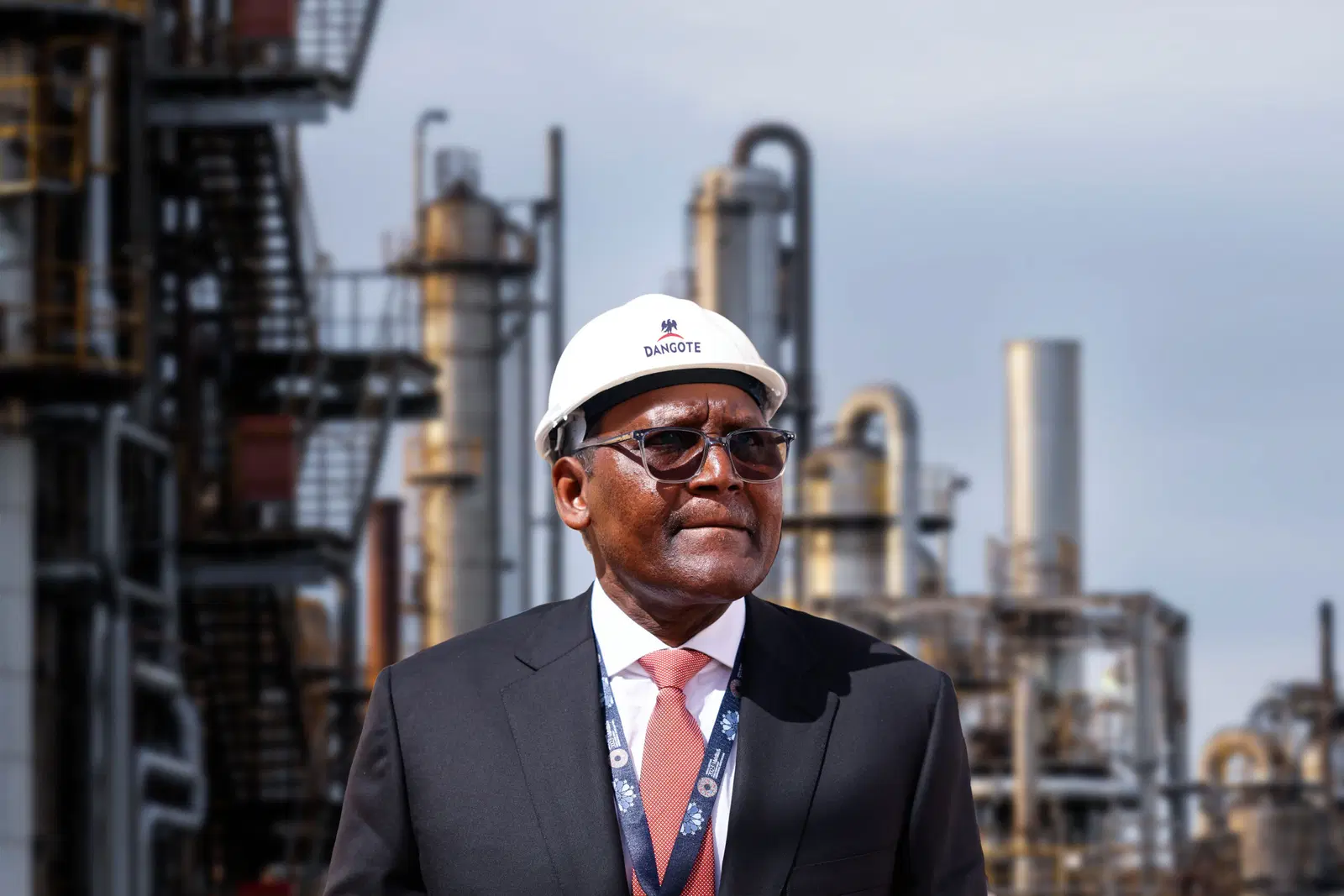
Alhaji Aliko Dangote, President and Chief Executive Officer of Dangote Industries Limited, has said the Initial Public Offering, IPO, of Dangote Petroleum Refinery and Petrochemicals, FZE, would democratise wealth creation by giving Nigerians and investors globally an opportunity to own shares in one of Africa’s major industrial projects.
Dangote stated this yesterday at the “Facts Behind the Offer” presentation and opening gong ceremony for the refinery’s IPO in Lagos, where the Nigerian Exchange Limited, NGX, formally opened the N2.2 trillion offer.
The IPO comprises 4.1 billion new ordinary shares offered at N525 per share, with a minimum subscription of 10 shares valued at N5,250. The offer is scheduled to close on October 13, subject to the terms contained in the prospectus.
Describing the offer as a historic moment for Nigeria’s capital market, the Dangote Group and Africa, Dangote said: “It would enable ordinary Nigerians and investors globally to own shares in one of Africa’s major industrial projects.
“What initially belongs to a country, begins in a deeper sense, now belongs to the people. Today is such a moment; today is a historic day
“The IPO is not simply about listing a company but creating a new possibility for Nigeria and Africa by broadening ownership of a major industrial asset.
“The decision to offer shares to the public was driven by the desire to allow more people participate in and benefit from the prosperity created by the refinery.
“An asset of this magnitude should not create value for only a very few people. It should create value for millions of people, not only Nigerians, but all over the world.”
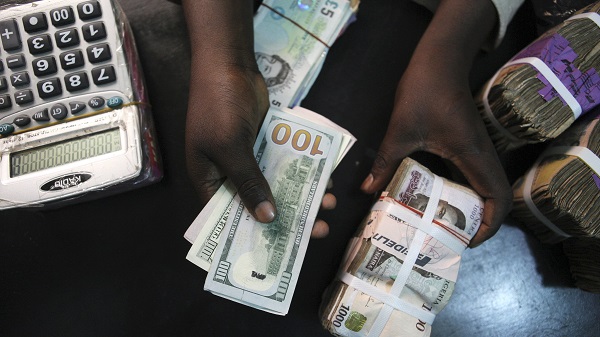
The Nigerian currency, Naira (₦), continued its battle against the United States dollar at the official foreign exchange market on Saturday.
Daily Voice reports that data from the Central Bank of Nigeria (CBN) showed that the local currency sold at ₦1,321.2160/1$ on Sunday.
The latest rate is the same as Saturday’s rate of ₦1,321.2160/1$.
At the parallel market (black market), however, the naira closed on Sunday at ₦1,400 to the dollar.
The offers by commercial banks, Bureau de Change (BDC) operators, and other foreign exchange dealers may, however, differ from the reference rates due to transaction margins and prevailing demand and supply conditions.
Market participants will continue to monitor foreign exchange inflows, demand for dollars, and CBN policies for indications of whether the naira can sustain its gains through the month.


Courts Sacks ADC Prominent Candidate

Ex Police Commissioner Dies

Minimum Wage: Proposed Salary Structure for Nigerian Workers, Levels 1–17 Emerges

Former Super Eagles Star Loses Life Savings, Duped By A Pastor of ₦1.2 Billion

I’m A Married Man, I Can Never Get Myself Involved With Such A Thing, Delta Gov Aide Reveals Why He Offered Comfort ₦500,000 Job