
News
Autonomy Battle: LGs Demand Direct Funds As States Receive N7.43tn

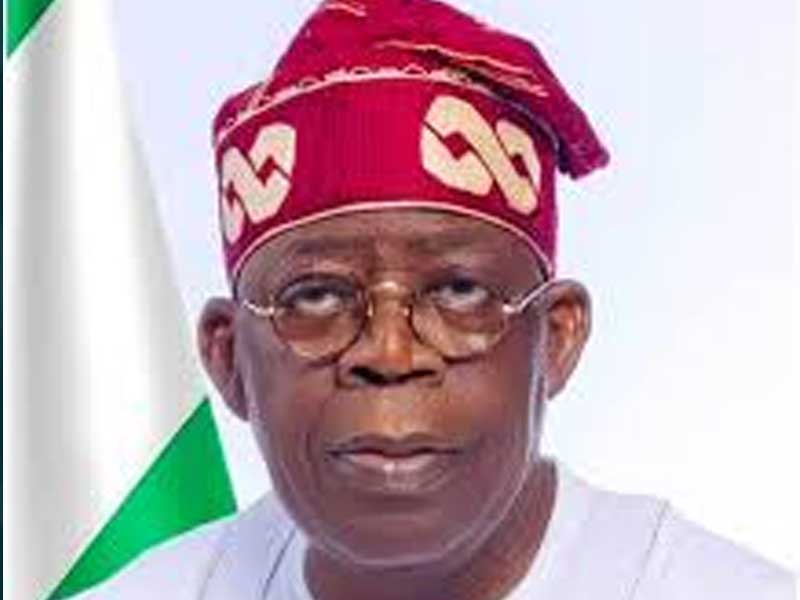
The Association of Local Governments of Nigeria and the National Union of Local Government Employees have thrown their weight behind President Bola Tinubu’s plan to enforce direct deductions of council funds from the Federation Account Allocation Committee, even as state governments continue to retain control over allocations to local governments.
During the 15th National Executive Committee meeting of the All Progressives Congress at the State House Conference Centre, Abuja, Tinubu urged state governors to comply with the Supreme Court ruling granting financial autonomy to local governments.
The President warned that failure by governors to honour the verdict may compel him to issue an Executive Order to ensure direct allocations from the Federation Account to local councils.
Tinubu’s remarks followed the July 11, 2024, judgment by the Supreme Court, which upheld the Federal Government’s suit seeking to enforce financial independence for local governments.

In a unanimous decision, a seven-member panel of the apex court declared that it is unconstitutional for state governments to retain or manage funds meant for local councils.
The judgment held that the use of a caretaker committee amounts to the state government taking control of the local government and is in violation of the 1999 Constitution.
However, 18 months after the judgment, findings by The PUNCH show that the process remains largely unimplemented.
Local government allocations have continued to pass through state governments amid delays and disputes between the Central Bank, state governments, local government authorities, and other relevant agencies.

The PUNCH learnt that state governments received control over at least N7.43tn meant for local government councils between July 2024 and December 2025, despite the landmark Supreme Court ruling mandating direct financial autonomy for councils across the federation.
An analysis of Federation Account Allocation Committee disbursements, based on official press statements issued by the Office of the Accountant General of the Federation after each FAAC meeting, shows that local governments were allocated N7.43tn over the 18-month period, even as the structure for direct access to the funds remained largely unchanged.
The amount was derived from allocations to the 774 local councils from July to December 2024 and the full 12 months of 2025.
In the second half of 2024 alone, councils received N2.08tn, rising sharply to N5.35tn in 2025.
FAAC data show that in July 2024, local governments received N337.02bn as revenue earned in June.
This rose to N343.70bn in August and moderated to N306.53bn in September. Allocations rebounded in the final quarter, climbing from N329.86bn in October to N355.62bn in November, before peaking at N402.55bn in December 2024.
Despite the rising inflows, funds continued to be paid through the long-criticised State Joint Local Government Account framework, allowing governors to retain significant influence over council finances.
The trend accelerated in 2025. Local governments received N361.75bn in January, rising steadily to N434.57bn in February and N410.56bn in March.
By mid-year, monthly allocations crossed N440bn, reaching N444.85bn in July and N485.04bn in August.
The highest monthly allocation to councils during the period was recorded in October 2025, when N529.95bn was shared as revenue earned in September.
This was followed by N505.80bn in November before moderating to N445.27bn in December 2025.
In total, local governments received N5.35tn in 2025, compared with N3.77tn in 2024, representing an increase of N1.58tn or about 42 per cent year on year.
The surge mirrored broader growth in FAAC distributions. Total allocations to the three tiers of government rose from N13.91tn in 2024 to N20.28tn in 2025, while total distributable revenue, including 13 per cent derivation, climbed from N15.26tn to N21.89tn.
Federal Government allocations increased from N4.95tn in 2024 to N7.61tn in 2025, while states’ allocations rose from N5.19tn to N7.31tn over the same period.
However, the continued routing of council funds through state structures has raised concerns that the gains from higher revenues are not translating into improved grassroots governance.
ALGON, NULGE back Tinubu
In an interview with our correspondent in Abuja, the Secretary General of ALGON, Muhammed Abubakar, affirmed support for President Bola Tinubu’s move to mandate the deduction of funds meant for LGs directly from the Federation Account Allocation Committee.
Muhammed said the President had made his warning directly to the governors and anchored it on the Supreme Court judgment, which he described as the highest authority in the land.
“So basically, as you are aware, he said it in their presence, not in their absence. So, my belief is that they will actually carry that out before the president will also do the needful, like he rightly told them in the meeting,” he said.
He expressed confidence that the governors would comply with the ruling without further prompting, noting that Tinubu’s remarks were clear and left no ambiguity about the consequences of continued non-compliance.
“So I guess they will obey the Supreme Court’s order and do the needful. But basically, if that is not carried out, I think we will all be in support of the president to go ahead with whatever threat he has made,” he added.
Also commenting, NULGE Bauchi State chapter has applauded Tinubu’s proposed executive order aimed at stopping state governments from diverting local government funds.
Speaking with The Punch correspondent on Monday, the President of NULGE in the state, Muhammad Yunusa, described the move as a welcome development that would bring relief to local government workers across the country.
Yunusa said, “If the President invokes an executive order to stop governors from diverting local government funds, it is we, the local government workers, that will be honoured.”
He noted that the issue of local government financial autonomy had lingered for years despite legal interventions, including a Supreme Court judgment delivered last year.
“This matter has been on for a long time. Even after the Supreme Court passed its judgment last year, up till today it has not seen the light of the day,” he said.
According to him, full implementation of the executive order would strengthen grassroots governance and improve the welfare of local government workers.
Punch efforts to get the reaction of the Chairman of ALGON Bauchi State chapter, Mahmood Baba-Ma’aji, proved unsuccessful, as calls and messages sent to him were not responded to as of the time of filing this report.
Also speaking, the Chairman of NULGE in Kano, Comrade Ibrahim Muhammad, has expressed cautious optimism about the state administration’s management of local government funds.
He told PUNCH that while there is currently no formal discussion with the state government regarding direct allocation of funds to local government areas, the union is satisfied with how the funds are being handled.
“The governor is not relenting in releasing funds for meaningful projects across the state,” he said. “We also commend the current NNPP-led administration for clearing billions of naira in debts owed to civil servants. That is commendable.”
Muhammad added that he is optimistic that Kano State would comply fully with the president’s directive on local government autonomy.


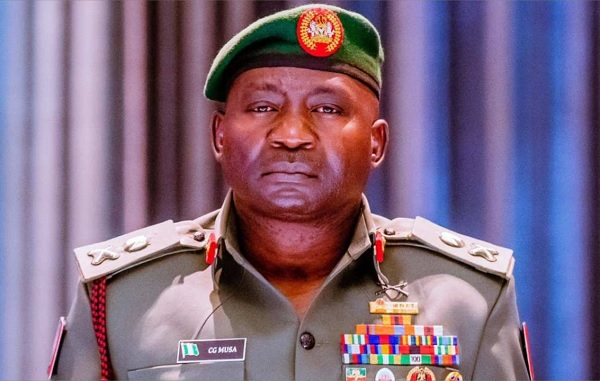
An Islamic human rights group has given Nigeria’s Minister of Defence, retired General Christopher Gwabin Musa, a fortnight to demonstrate a clear improvement in security across Sokoto state or step down from office.
As reported by Leadership, the Muslim Rights Concern (MURIC) issued the ultimatum in a press statement on Saturday, August 22, 2026, signed by its executive director, Prof. Ishaq Akintola.
The group said the minister had failed to honour a pledge he made when he assumed office to end killings across the country. PM News also noted MURIC’s calls.
MURIC said at least 43 people and an Imam were killed in Sokoto state within the past three weeks, while 19 others were kidnapped in the same period.
The group described the victims as all being Muslims and framed the attacks as an assault on the symbolic heart of Islam in Nigeria.
“If Abuja is Nigeria’s political capital, if Lagos is the country’s economic hub, then Sokoto is the heart of Islamdom in Nigeria,” Akintola wrote in the statement.
“Any attack on Sokoto is deemed by Nigerian Muslims as an attack on Muslims in general.”
The group held the Nigerian Army directly responsible for the security failures in and around the state, and demanded what it called an “iron-clad defence mechanism” in the area.
MURIC also pointed to a recent warning from the Department of State Services (DSS) that terrorists were planning to attack tertiary institutions in Sokoto state, describing it as the moment that pushed the group to act.
“The Defence Minister has reneged on his pledge to stop killings. He has failed the people of Sokoto. He has failed Nigerians,” the statement read.
The group recalled Musa’s own words on assuming office: “I knew that I could not afford to fail myself, fail my nation, fail my family,” and said his conduct in office had contradicted that commitment.
MURIC gave the minister until Monday, August 24, 2026, as the start date of the 14-day countdown, demanding visible and verifiable changes to the security apparatus in and around Sokoto within that window.
The group was explicit that the city must be made, in its words, “impregnable and unassailable,” adding that “no single ant must climb on the Sultan’s skin.”
“The alternative is for the minister to submit his letter of resignation on or before the ultimatum. There is no other option on the table,” the statement concluded.
The All Progressives Congress (APC) Chairman in Ijumu Local Government Area of Kogi State, Oyewole Mayowa Solomon, has reportedly died.
It was gathered that the APC Chairman died after slumping during a party reconciliation meeting in Iyara, the council headquarters.
According to TVC, Solomon collapsed on Friday while participating in a meeting convened by Funsho Olumoko, a former Chairman of the Ijumu Local Government Area.
The meeting was held to strengthen unity among APC stakeholders in the area ahead of the 2027 general election. Sources said Solomon suddenly collapsed while proceedings were ongoing, causing confusion among participants.
Efforts were reportedly made to revive him before he was rushed to a hospital in Kabba for medical attention. However, he was said to have died shortly after arriving at the hospital.
The reconciliation meeting came amid ongoing efforts by APC stakeholders in Ijumu to resolve internal disagreements and promote greater unity ahead of the 2027 general elections.
Earlier in August, APC stakeholders in the local government gathered in Iyara, where they endorsed President Bola Tinubu and Governor Usman Ododo for re-election.
The stakeholders also called for unity among party members. However, the earlier gathering was reportedly characterised by disagreements over the leadership of the local government, with Solomon and some other officials said to have walked out of the meeting.
Tension and grief have gripped the political community in Enugu State following the reported death of Chisimdiri Ngwu, chairman of the African Democratic Congress (ADC) in Udenu Local Government Area.
Ngwu, described as one of the longest-serving members of the ADC in the state, was reportedly found dead in the early hours of Wednesday, August 19, 2026, in circumstances believed to be suspicious.
The deceased, who hailed from Orba in Udenu Local Government Area, was reportedly strangulated, according to information gathered by The Trumpet.
A family source, who spoke, said Ngwu left his home shortly after waking up on Wednesday morning, but never returned alive.
“He woke up early in the morning on Wednesday and walked out and that was the last we heard of him,” the source said.
The source said family members became alarmed after discovering that Ngwu was missing, only to later find his lifeless body outside the compound.
“When we woke up, we didn’t see him only to discover his lifeless body in front of our compound. We saw scratches on his neck which was twisted backwards,” the source added.
The circumstances surrounding the politician’s death have heightened concerns among members of the ADC and residents of the community, with calls for a thorough investigation to unravel what led to his death.
Reports indicate that two persons have been arrested in connection with the incident, although details of their identities and the circumstances of their arrest were not immediately available.
The development has cast a pall over the ADC in Enugu State, coming at a politically sensitive period ahead of the 2027 general elections.


BREAKING: Minister of Defence Musa Told to Resign from Tinubu’s Cabinet; Reason Emerges

Turkey: Osimhen Climbs To Third On Galatasaray’s All-Time Foreign Scorers List

Ronaldo Scores 977th Career Goals, 130 For Al Nassr

Former Super Eagles Star Loses Life Savings, Duped By A Pastor of ₦1.2 Billion

I’m A Married Man, I Can Never Get Myself Involved With Such A Thing, Delta Gov Aide Reveals Why He Offered Comfort ₦500,000 Job

