
Politics
Battle for Lagos 2027: Between Tokunbo Abiru, Akinwumi Ambode, Who Will Succeed Sanwo-Olu?


● Lagosians Embrace Abiru’s Ascendant Star as Ambode Chants Redemption Song
● The Tinubu Factor: Kingmaker’s Shadow Over Lagos
The race for the Lagos State governorship in 2027 is poised to be one of the most gripping political contests in recent memory, as two formidable figures—Tokunbo Abiru, a financial titan turned politician, and Akinwunmi Ambode, the once-revered former governor—vie for the mantle of leadership. Amid the clamor, one poser rings loudly in political circles: Between Tokunbo Abiru and Akinwunmi Ambode, who is best suited to succeed Babajide Sanwo-Olu?

Highly placed sources within the ruling All Progressives Congress (APC) suggest that the eventual flagbearer will need the blessing of President Bola Ahmed Tinubu, whose shadow looms large over Lagos politics. But as the tide of public opinion swells, it is clear that this contest transcends party politics—it is a battle for the soul of Lagos.
The drumbeats of support for Akinwunmi Ambode’s return to Alausa echo across Lagos. Residents, civic groups, and political stakeholders are rallying behind the man they believe was unjustly denied a second term in 2019. The Lagos Residents Association (LRA), a prominent civic group, has openly called on the APC to grant Ambode the ticket, describing his previous tenure as transformative.
“Ambode’s achievements in infrastructure, human capital development, and total transformation of Lagos are undeniable,” said Dr. Olumuyiwa Adesanmi, President General of the LRA. “He positively impacted the lives of residents, and we believe he deserves the opportunity to complete the good work he started.”

Ambode’s supporters argue that the controversial APC primary election that led to his 2019 ousting was riddled with intrigue, leaving Lagosians with a sense of unfinished business. The LRA’s statement reflects this sentiment: “The events that denied Ambode a second term were questionable. We urge him to step forward and contest in 2027.”
Though Ambode has yet to officially declare his candidacy, the groundswell of support from civic groups and residents may leave him little choice. The LRA has even pledged to purchase his nomination and expression of interest forms, a move that underscores the depth of their commitment.
While Ambode basks in nostalgia-fueled support, Tokunbo Abiru is carving a new path to the Lagos governorship. A banker of impeccable pedigree and a consummate professional, Abiru’s foray into politics has been marked by strategic brilliance and undeniable success.
Since his entry into public service as Lagos State Commissioner for Finance in 2011, Abiru has distinguished himself as a trailblazer. During his tenure, Lagos successfully floated an N80 billion bond that drew international accolades. His expertise in financial management later saw him rescue Skye Bank from the brink of collapse, transforming it into Polaris Bank.

Abiru’s transition to politics came in 2020 after the death of Senator Adebayo Osinowo. Backed by Tinubu, he contested and won the Lagos East senatorial bye-election, a victory that cemented his position as a rising star in the APC. Despite losing out on the finance ministerial appointment to Wale Edun earlier this year, Abiru remains a frontrunner for the Lagos governorship.
Critics who dismiss Abiru as a mere beneficiary of Tinubu’s influence ignore his impressive track record. His tenure in the Senate has been marked by impactful legislation and initiatives that have directly benefited his constituents. “The world offers glittering prizes only to those with stout hearts and sharp swords,” a political pundit remarked, alluding to Abiru’s resilience and ambition.
In the APC’s tightly knit hierarchy, the imprimatur of Bola Ahmed Tinubu often determines the outcome of major political contests. As the architect of modern Lagos, Tinubu’s endorsement carries weight far beyond the party’s structure. Both Abiru and Ambode are keenly aware of this, and their paths to the governorship may hinge on securing his favor.
Sources close to the presidency suggest that Tinubu views both men as capable leaders, though whispers of his preference for Abiru have begun to circulate. However, Tinubu’s decision will likely be informed by more than personal loyalty; it will also depend on who can best consolidate the APC’s base and steer Lagos through its next phase of development.
While Ambode and Abiru represent different eras and approaches to governance, their aspirations for Lagos are rooted in a shared commitment to progress. Ambode’s legacy is etched in the grand infrastructure projects of his tenure, from the rejuvenation of the Oshodi transport hub to the construction of new bridges and roads. His supporters argue that he is best positioned to complete the work he started.
On the other hand, Abiru’s vision for Lagos is grounded in fiscal prudence and economic innovation. As a former banker, he is keenly attuned to the challenges of managing a megacity’s finances. His supporters believe his expertise in financial management and governance makes him the ideal candidate to lead Lagos into a new era of economic prosperity.
As the 2027 gubernatorial election draws closer, Lagosians are faced with a profound choice: Do they restore Ambode, the man of unfinished projects and undeniable charisma? Or do they embrace Abiru, the financial genius with a vision for the future? The stakes could not be higher for Nigeria’s commercial capital, a city that serves as both the engine of the nation’s economy and a symbol of its potential.
In the words of a political observer, “This is not just a contest between two men; it is a referendum on Lagos’ future. The winner will inherit both the challenges and opportunities of leading Africa’s largest city.”
The journey to 2027 promises to be a riveting spectacle, as Abiru and Ambode navigate the treacherous waters of Lagos politics. But one thing is certain: whoever emerges as the APC flagbearer will have to prove not only their mettle but also their ability to unite a city that thrives on its diversity and dynamism.
For now, Lagosians watch and wait, their hopes and dreams suspended between the brilliance of Abiru’s future and the nostalgia of Ambode’s past. In this high-stakes duel, the race for Lagos has just begun.

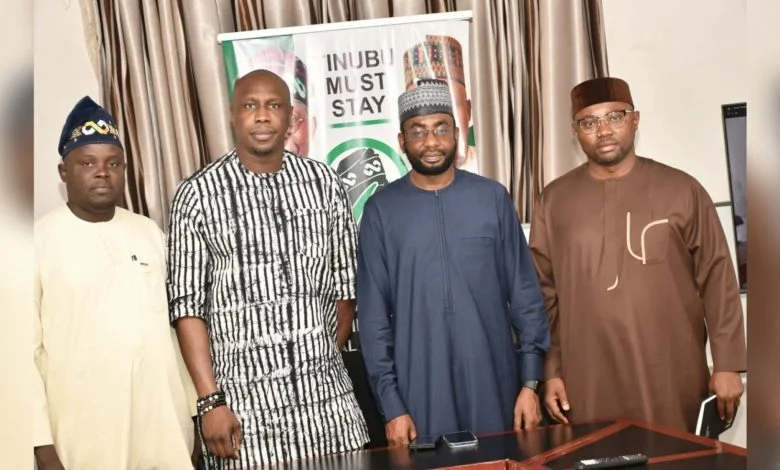
Olujonwo Obasanjo, son of former President Olusegun Obasanjo, has backed the re-election of President Bola Tinubu ahead of the 2027 presidential election.
He expressed his support after joining the Tinubu Movement for Sustainable Governance Foundation (TMS), popularly known as the “Tinubu Must Stay” movement, to promote the president’s re-election agenda.
Olujonwo said his decision to join the movement was informed by his longstanding association with the ruling All Progressives Congress (APC) and his belief in the need to sustain the policies and reforms introduced by the Tinubu administration.
He was formally received by the leadership of TMS at a forum in Abuja, where he expressed support for the government’s Renewed Hope Agenda and called for increased public awareness of its policies and achievements.
Olujonwo, who serves as president of the Buhari Youth Organisation (BYO) and Project One Nigeria, as well as Senior Special Assistant to the Ogun State Governor on Housing, said he had been associated with the APC since 2014.
Explaining his political background, he said he was familiar with the party’s formation and its relationship with key political figures, including his father, former President Obasanjo, the late President Muhammadu Buhari and President Tinubu.
“I have been in the APC since 2014. I was there when my father hosted the late President Muhammadu Buhari and President Bola Ahmed Tinubu to form the movement. I am not new to the party,” he said.APC party merchandise
He argued that some of the policies and achievements of the Tinubu administration were not being adequately communicated to Nigerians, adding that misinformation had contributed to negative perceptions of the government.
Olujonwo cited developments in the education sector, infrastructure and access to student loans as areas he believed deserved greater public attention.
“There is a lot of noise out there, and people are distorting what is going on. ASUU has had no strikes. Students have access to loans. Nigeria has become a massive construction site and an investors’ haven again. These are things we need to promote,” he said.
His decision to join the movement comes as political parties and their supporters begin positioning themselves ahead of the 2027 general election, in which Tinubu is expected to seek another presidential term.
The move also places the son of the former president within a political platform established to defend the current administration’s policies and encourage public support for continuity in governance.
Welcoming Olujonwo to the movement, the National Coordinator of TMS and Director-General of the National Information Technology Development Agency (NITDA), Kashifu Inuwa Abdullahi, said his background gave him an understanding of the importance of economic reforms.
Inuwa drew a comparison between the economic reforms introduced during Olusegun Obasanjo’s administration and those being pursued by Tinubu, arguing that both periods involved policies intended to reshape Nigeria’s economy.
He cited telecommunications liberalisation and banking reforms under the elder Obasanjo as measures that helped establish the foundation for subsequent economic development.
“You grew up in a family that led the second wave of reforms in Nigeria. Telecommunications liberalisation, banking reforms—these laid a solid foundation. Being raised in that family, you understand what reforms mean,” Inuwa said.
He urged Nigerians to consider the long-term implications of government policies, warning that reversing ongoing reforms could undermine investor confidence and disrupt economic progress.
According to him, maintaining policy consistency would be important for attracting investment and sustaining developments in key sectors of the economy.
“We are building investors’ confidence. The naira is becoming strong. Our stock exchange is one of the fastest-growing. The Dangote Refinery is a game changer. If we start reversing these policies, we’ll go back to where we were,” Inuwa added.
Also speaking at the event, Marcel Ngogbehei, Director-General of TMS and a former coordinator of the Obidient Movement, praised the economic policies implemented during Obasanjo’s presidency.
Ngogbehei highlighted the former president’s role in securing debt relief for Nigeria and supporting the liberalisation of the telecommunications sector, describing those measures as important contributions to the country’s economic development.
He said TMS intended to promote discussions about government policies through evidence, research and public engagement rather than propaganda.
“We’re happy you have decided to take this step. Your father was one of those who revolutionised this country. The debt was paid off, and major innovations were introduced in liberalising the economy. This is not about propaganda. We will engage respectfully, factually and transparently,” Ngogbehei said.
The organisation said it had established structures across the country, including a Board of Trustees, national coordinators and specialised directorates, to support its activities.
It also plans to use digital platforms, virtual town hall meetings, policy research and fact-checking initiatives to promote the government’s policies and address what it considers misinformation about the administration.
Following Olujonwo’s reception, TMS announced plans to expand its engagement with professional associations, youth organisations and community groups across the country.
The planned activities are intended to increase public participation in governance and communicate the administration’s policies to Nigerians across different states and geopolitical zones.
Meanwhile, Olusegun Obasanjo has previously expressed concerns about Nigeria’s economic challenges, arguing that the country has sufficient natural and human resources to become prosperous.
In an interview on C-Suite Cafe, hosted by Ikem Okuhu, the former president questioned why Nigeria continued to struggle with poverty despite its agricultural potential, vast land, water resources and large population.Buy Maps
“Give me one reason why Nigeria should be poor. Is it the land that we don’t have or the desert that we are in or the people that we don’t have or the water that we don’t have or the rain that we don’t have?” he asked.
Obasanjo also criticised policies that encourage the importation of goods that could be produced locally, arguing that such practices discourage domestic farmers and undermine local production.
He recalled how restrictions on rice imports were introduced in 1979 to encourage domestic production, claiming that subsequent administrations reversed the policy and allowed imported rice to compete with locally produced varieties.
“When our successors came, one of the first things they did was to lift importation of rice, not to encourage production of rice but to encourage importation of rice, and the farmers couldn’t sell their own rice,” he said.
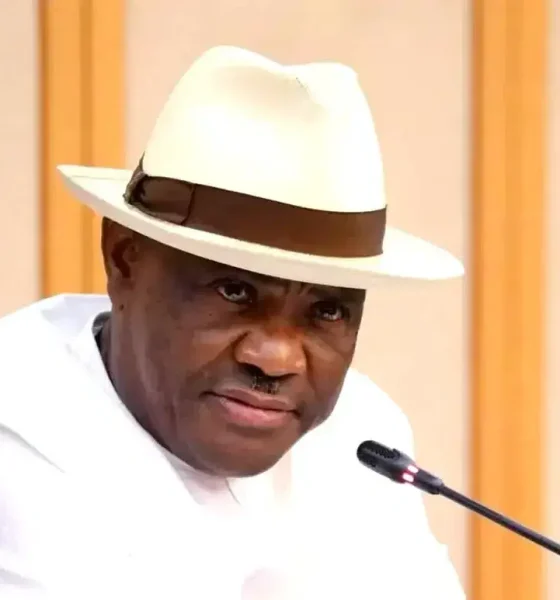
The Peoples Democratic Party (PDP) has indicated plans to take disciplinary action against members accused of working against its interests, with the Minister of the Federal Capital Territory, Nyesom Wike, among those facing criticism over his alleged support for the ruling All Progressives Congress (APC).Access Services
PDP chieftain Emmanuel Ogidi disclosed the party’s position during an interview on Arise Television on Wednesday.
He discussed the lingering crisis within the opposition party and the steps its leadership intends to take against members accused of undermining its activities.
Ogidi described the situation as internal sabotage and maintained that the party could no longer afford to tolerate actions that weaken its structure, particularly as political activities ahead of the 2027 general elections continue to gather momentum.
He accused Wike of maintaining a relationship with the PDP while allegedly supporting the interests of the APC, arguing that such conduct raised serious questions about loyalty and commitment to the opposition party.
“You can’t serve two masters. He (Wike) is supposed to be serving us in PDP, but he is serving APC. This is a threat to democracy. APC is using him to destroy democracy, and it’s deliberate, but we are very conscious of that and very soon you will hear what will happen,” Ogidi said. Access Services
The PDP chieftain’s comments suggest that the party may be preparing to take a firmer position against members it believes are contributing to its internal difficulties.
However, he did not disclose the specific disciplinary measures being considered or when any formal decision concerning Wike would be announced.
Ogidi also indicated that the party had moved beyond the demands previously presented by Wike’s camp during efforts to resolve the disagreements within the PDP.
His comments point to growing frustration among party members who believe that the disagreements have continued for too long and are affecting the party’s ability to prepare for future elections.
The dispute involving Wike and the PDP has remained a major issue within the party since the 2023 general elections, when divisions emerged over its presidential candidate, the distribution of party positions and disagreements surrounding the political future of its leadership.
Wike, a former governor of Rivers State, was a prominent PDP member before President Bola Tinubu appointed him as FCT minister in 2023.
His appointment placed him in the cabinet of an APC-led administration despite his continued association with the opposition party.
His role in the federal government has since generated disagreements among PDP members, with some questioning how a senior party figure can serve in an administration controlled by a political opponent while remaining associated with the PDP.
Ogidi, however, insisted that the PDP belongs to its members and supporters rather than any individual or faction.
He argued that no group should be allowed to dictate the party’s direction or prevent it from enforcing its rules.
He further warned that the party’s willingness to reconcile with aggrieved members should not be interpreted as an acceptance of indiscipline.
According to him, efforts to bring members together must be accompanied by accountability for actions considered harmful to the party.
The PDP remains one of Nigeria’s major political parties, but prolonged internal crises could affect its candidate-selection process, campaign planning and efforts to attract voters ahead of 2027.Nigeria travel guide
Despite these challenges, Ogidi maintained that the PDP remained strong and capable of overcoming its current difficulties.
He dismissed suggestions that defections, court cases and disagreements over zoning had rendered the party incapable of competing in future elections.
He said the party was focused on ensuring that its forthcoming convention was successful, describing the exercise as an important step in its preparations for the 2027 polls.
Nevertheless, the exact nature of the proposed action against Wike and other members remains unclear, pending any formal announcement by the party’s authorised organs.
The FCT minister has not been quoted in the remarks provided as responding directly to Ogidi’s latest comments.
The allegations against him should therefore be understood as the position expressed by the PDP chieftain rather than an established finding of wrongdoing.
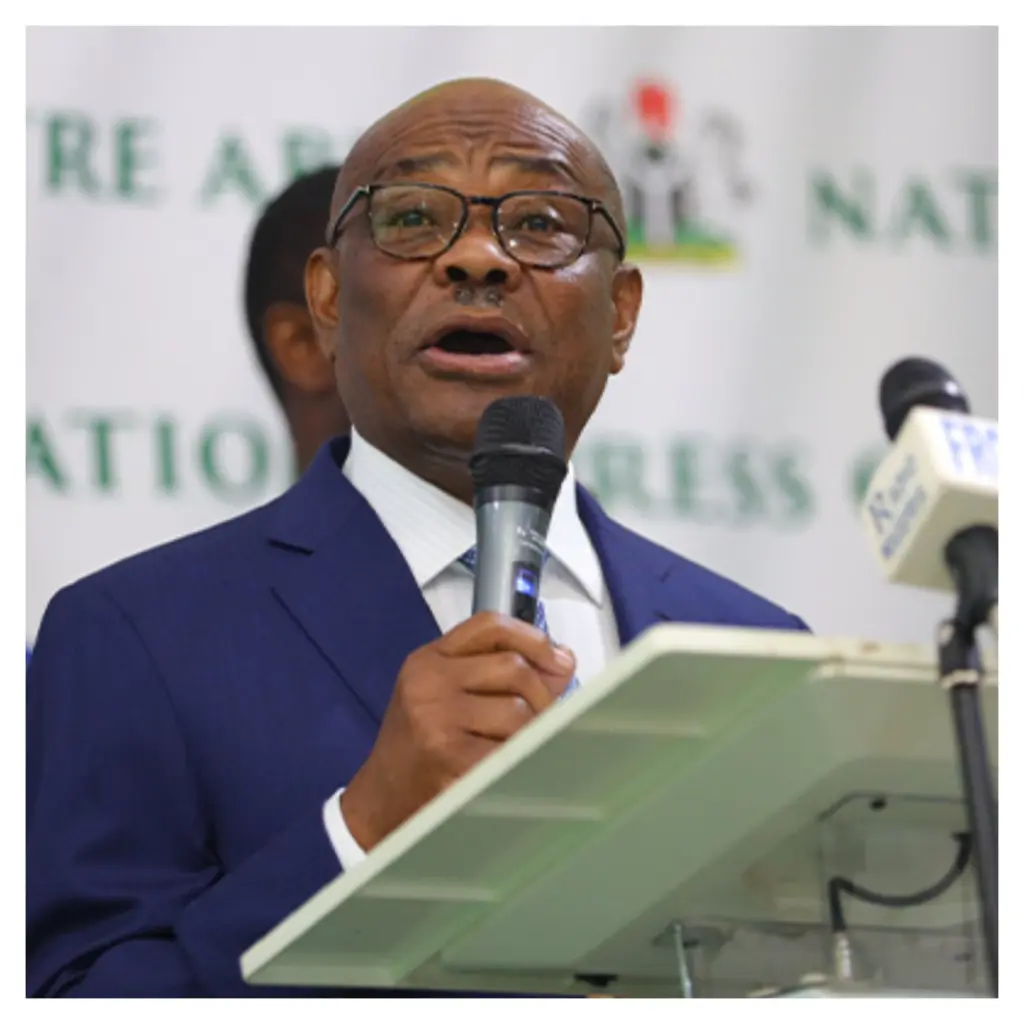
The All Progressives Congress (APC) has dismissed reports of a disagreement between its governors and the Minister of the Federal Capital Territory, Nyesom Wike, insisting that both sides remain committed to President Bola Ahmed Tinubu’s re-election in 2027.
The party’s National Publicity Secretary, Felix Morka, described the reported disagreement as a ‘false battle’.
He maintained that there was no genuine conflict between the minister and members of the Progressives Governors Forum.
Morka clarified this on Tuesday during an interview on Arise Television’s News Day, following Wike’s inclusion in the APC Presidential Campaign Council.
According to him, the governors and the FCT Minister share a common political objective of ensuring Tinubu’s victory in the next presidential election.
“It was a false battle to begin with. I mean, I don’t think there was any real tension between those positions because they united in their extraordinary commitment to the re-election of the president,” Morka said.
He noted that the Progressive Governors Forum comprised governors elected on the APC platform, while Wike, a former Rivers State governor, was a member of Tinubu’s cabinet and a vocal supporter of the President.
According to him, publication of the presidential campaign council list had also clarified the roles of those involved in Tinubu’s re-election campaign.
He said: “Governors, who are not of the APC, now [are] front and centre, coordinating some of our activities in their respective jurisdictions.”
Morka described the development as a new phase in Nigeria’s democratic politics, arguing that the President was bringing politicians from different parties together around a common objective.
The APC spokesperson claimed that the collaboration was unusual in a presidential system, stressing that Tinubu was transcending party differences by building a coalition of political actors to support his administration and re-election campaign.
He said: “We’re seeing a president who is transcending all of the divides and really nullifying what I call the politics of difference between these partisans and bringing them together under the same umbrella to pursue a common agenda for the good of the people.”


Salary: Fresh Update Emerges On Payment To Nigerian Workers

Obasanjo’s Son Picks Side In 2027 Race