
Politics
Fubara Told What to Do as Rivers Assembly Begins Impeachment Proceedings


Abdul-Aziz Abubakar Na’ibi has urged Governor Siminalayi Fubara to counter impeachment threats using state resources. The Rivers State House of Assembly has initiated impeachment proceedings against Governor Fubara for alleged gross misconduct
Opposition figure Na’ibi called for grassroots support and anti-corruption investigations involving lawmakers and Nyesom Wike, the minister of the Federal Capital Territory (FCT)
Port Harcourt, Rivers State – Abdul-Aziz Abubakar Na’ibi, a prominent supporter of former Vice President Atiku Abubakar, has asked Siminalayi Fubara, governor of Rivers, to leverage “the immense resources and executive authority” of the state to firmly counter any impeachment threats.
Describing Rivers as “one of Nigeria’s wealthiest” states, Na’ibi urged embattled Governor Fubara to rally grassroots support and instruct anti-corruption agencies to investigate potential misconduct involving certain state lawmakers and FCT Minister Nyesom Wike, among others.

The Rivers State House of Assembly commenced impeachment proceedings against Governor Siminalayi Fubara during plenary.
The Majority Leader, Major Jack, read out the notice of gross misconduct against the governor before the House. #CTVTweets pic.twitter.com/U2wK6NWG2l
— Channels Television (@channelstv) January 8, 2026
Martins Amaewhule, speaker of the house, presided over the session. Major Jack, leader of the assembly, read the alleged gross misconduct charges, signed by 26 members.
Thereafter, Amaewhule said the notice of gross misconduct will be served on the governor in the next seven days. The day’s proceedings reflect renewed hostilities between Governor Fubara and his predecessor, Nyesom Wike, Minister of the Federal Capital Territory (FCT).
Amaewhule warned that lawmakers are ready to resign if Governor Fubara is not removed from office, describing the governor as a threat to democracy, PM News noted.

Reacting via his verified X (formerly Twitter) page, Na’ibi wrote on Thursday, January 8:
“If I were Gov. Sim Fubara, I would leverage the immense resources and executive authority of Rivers State, one of Nigeria’s wealthiest, to firmly counter any impeachment threats. This would include mobilising grassroots support to initiate constitutional recall processes against disloyal Assembly members aligned with Nyesom Wike, while directing anti-corruption agencies to thoroughly investigate and prosecute any credible allegations of misconduct against them and their leader, Wike!”
If I were Gov. Sim Fubara, I would leverage the immense resources and executive authority of Rivers State, one of Nigeria's wealthiest, to firmly counter any impeachment threats.
This would include mobilizing grassroots support to initiate constitutional recall processes…
— Abdul-Aziz Na'ibi Abubakar (@jrnaib2) January 8, 2026
According to Section 188 of the Constitution, the impeachment process for a governor begins when at least one-third of the House of Assembly members submit a written notice alleging that the governor is guilty of “gross misconduct” in the performance of official duties. The allegation must be clear, specific, and detailed, leaving no room for ambiguity.
Gross misconduct is defined as a “grave violation or breach of the provisions of this Constitution or misconduct of such a nature as, in the opinion of the House of Assembly, amounts to gross misconduct.”
Within seven days of receiving the notice, the Speaker must serve a copy on the governor and ensure that any response from the governor is delivered to all members of the Assembly.
Subsection 4 requires that within 14 days of presenting the notice—regardless of whether the governor responds—the House of Assembly must, by motion and without debate, decide whether to investigate the allegation. This motion must be supported by at least a two-thirds majority of all members.
Under subsection 5, within seven days of passing the motion, the Chief Judge of the state shall, at the Speaker’s request, appoint a seven-person panel (excluding members of the public service, legislature, or political parties) to investigate the allegation. During the hearing, the governor may appear in person or be represented by a legal practitioner. The panel must submit its report to the Assembly within three months.
Subsection 8 states that if the panel finds the allegation unproven, no further impeachment proceedings can take place. Under Section 9, if the panel finds the allegation proven, the Assembly must consider the report within 14 days. If at least a two-thirds majority of all members adopts the report, the governor is removed from office immediately.
Nwogu, who stated that he was part of a major meeting in 2025, Nwogu faulted the Rivers governor’s integrity. Asked if an agreement was reached that Fubara would not contest for a second term in the 2027 Rivers state gubernatorial election, the former federal lawmaker replied: “Well, that is part of it.”
Ikeja, Lagos State – Businessman and politician Pratt Tunde has taken legal action at the Federal High Court in Lagos, challenging what he described as the secret replacement of his name as the Nigeria Democratic Congress (NDC) candidate for the Lagos Mainland federal constituency ahead of the 2027 elections.
As reported by The Nation on Monday, August 24, Pratt claimed he won the NDC primary held on May 29, 2026, an exercise he said the Independent National Electoral Commission (INEC) monitored and certified. He alleged that the NDC leadership subsequently removed his name and replaced it with that of one Tunji Sanni, without his knowledge or consent.
He said he discovered the change on Saturday, August 1, 2026, and immediately set about challenging it within the constitutional deadline.
“I discovered the unlawful candidate substitution on Saturday, 1st of August, 2026. By virtue of Section 285(9) of the 1999 Constitution, I have an absolute maximum of 14 days to file this action, which means my right to sue expires on Saturday, 15th of August, 2026,” he said in an affidavit filed alongside his application.
Pratt challenges NDC candidate substitution.
In the affidavit, Pratt told the court that his inability to access INEC’s nomination portal had already begun causing him concrete harm.
“Because of this unlawful candidate swap, I am locked out of the official INEC nomination portal. I am suffering permanent, unrecoverable political and financial damage as I cannot print posters, mobilise structure, or launch my campaigns for the Lagos Mainland Federal Constituency,” he said.
He also pointed to INEC’s revised timetable and schedule of activities for the 2027 general elections as evidence that the court needed to act without delay, warning that ballot papers could be printed with the substituted candidate’s name before any judgment was delivered.
“If this suit is not granted an expedited hearing immediately, the 3rd Respondent (INEC) will print final ballot papers using the name of the illegal candidate, which will render the final judgment of this Honourable Court completely useless,” he said.
Pratt asked the court to declare the substitution illegal and void and to direct INEC to restore his name as the party’s candidate. He also urged the court to hear the matter on a day-to-day basis to avoid what he called “a complete miscarriage of justice.
INEC, NDC face Pratt’s legal challenge.
Pratt’s legal team is led by Ajose Abejoye. One of the firm’s lawyers, Kaosara Afariogun, stressed that the case was about more than one man’s candidacy.
“Honourable Pratt played by the rules and won fair and square. To see his dedication and the mandate of everyday people allegedly stolen by a secret political plot is unacceptable,” she said.
In a message to his supporters, Pratt said:
“My heart breaks not for myself, but for the beautiful, hardworking people of Lagos Mainland whose hopes were traded away in the dark.”

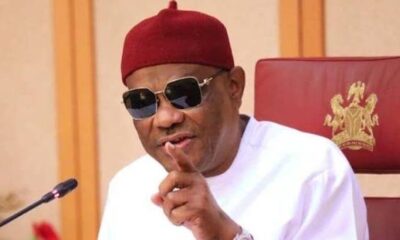
The Minister of the Federal Capital Territory, Nyesom Wike, has been mentioned in an alleged plot by individuals to manipulate the forthcoming elections in Rivers State.
The Rivers State chapter of the African Democratic Congress (ADC), in a statement through its Publicity Secretary, Chizy Enyi, said that the Vice Chancellor (VC) of the University of Port Harcourt, Professor Princewill Chike, was part of the alleged plot.
Enyi claimed that Chike is a member of the Rainbow Coalition, a cross-party political movement associated with the FCT Minister.
According to the ADC spokesman, there are concerns that the UNIPORT Vice Chancellor may have a role in selecting returning officers for the forthcoming election.
Enyi alleged that Chike had openly identified with the coalition and claimed that the vice-chancellor was recommended by Wike for the UNIPORT position.
He further alleged that Chike was “imposed” on the university by the former Rivers State governor.
Enyi said the alleged connection between the vice-chancellor and the coalition could be seen at the entrance of the university.
“To show the public that he is truly Wike’s product, at the entrance of the university, what you will see is the signpost of the VC with the caption, ‘Academia Rainbow Coalition of the Renewed Hope,’ with his picture on it,” he alleged.
The ADC spokesman further alleged that members of the Rainbow Coalition could be nominated as INEC returning officers for the election, Daily Voice reports.
“Those he will nominate as INEC returning officers for the election must be members of the coalition,” Enyi claimed.
He questioned the alleged activities of the vice chancellor ahead of the election, arguing that the process had not yet commenced but concerns were already being raised.
“It’s not even election time yet, but see what he is doing. During the election, all those who will be recommended are definitely going to come from the coalition,” he said.
Enyi challenged Professor Chike to demonstrate that the allegations against him were unfounded when the time came for the appointment of returning officers.
“Professor Chike, only God knows what you have come to do in Port Harcourt. Let us see those you will recommend. Let us see whether they will rig the election,” he added.
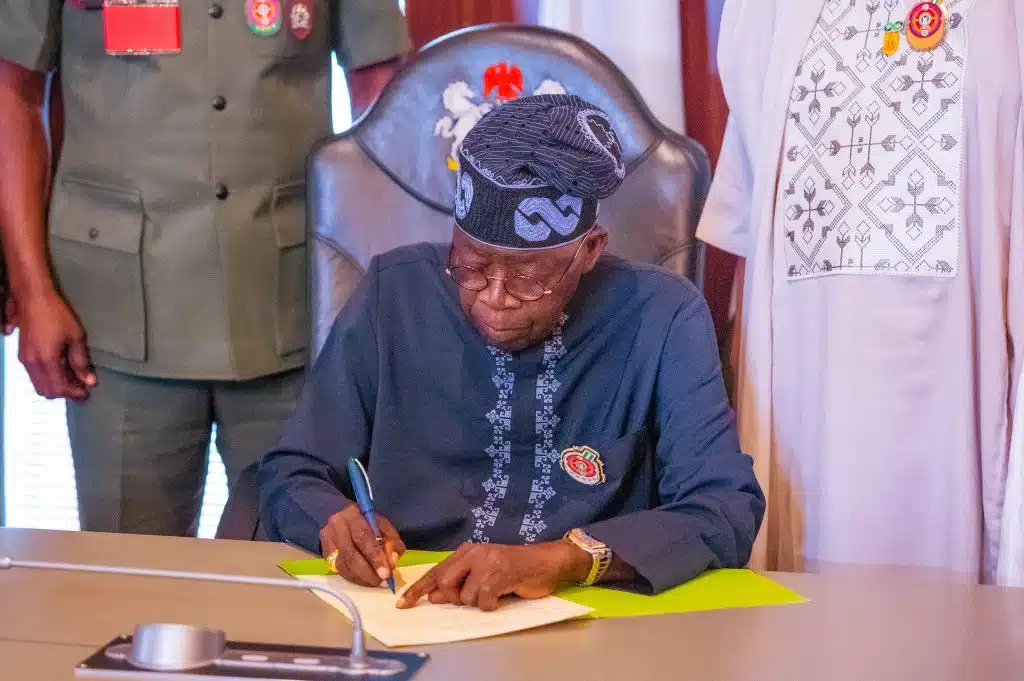
President Bola Tinubu has reportedly ordered the withdrawal and reconstitution of the All Progressives Congress (APC) Presidential Campaign Council for the 2027 general elections.
Daily Voice understands that this followed the controversy that has greeted the initial roaster released by the Presidency on Saturday.
According to TheWill, Tinubu gave the directive following concerns from senior members of the ruling party that the composition failed to adequately accommodate key stakeholders and did not sufficiently reflect the hierarchy, geographical spread and political structure of the party.
Sources revealed that the President directed the Presidency, the leadership of the National Assembly and the National Working Committee (NWC) of the APC to withdraw and review the initial composition and address the identified gaps before a new list is released.
According to the sources, Tinubu was embarrassed by the lapses uncovered in the list and particularly concerned about the need for a campaign structure capable of bringing together the party’s major stakeholders and political actors ahead of the 2027 presidential election.
A source said: “The President was shocked and surprised that there was limited input from key and experienced people in the party in the final composition of the campaign council.”
The initial campaign list, to be headed by former Zamfara State Governor, Senator Abdul’aziz Yari, as Director-General, generated concerns within the party over the absence of several prominent APC members who are regarded as important political stakeholders in their respective states and regions.
Among the major issues raised was the exclusion of Deputy Speaker of the House of Representatives, Benjamin Kalu.
Under the initial arrangement, the Senate President, Godswill Akpabio, was named a Deputy Director-General for the Southern campaign, alongside the Speaker of the House of Representatives, Tajudeen Abbas, and Yobe State Governor, Mai Mala Buni, while Senate Leader, Opeyemi Bamidele, and Deputy Senate President, Jibril Barau, were assigned coordinating roles.
Stakeholders in the APC argued that the designation appeared to place the Senate President in a campaign structure alongside or below other officials of the National Assembly who ordinarily rank differently in the constitutional hierarchy.
The sources told the aforementioned publication that the new arrangement would need to resolve the perceived imbalance and ensure that the leadership of the National Assembly is properly integrated into the campaign hierarchy.
Also missing from the initial list is the Minister of Aviation and Aerospace Development Festus Keyamo (SAN) who served as a prominent spokesman and Director of Public Affairs in the APCs 2023 presidential campaign.
The controversy also reinforces an earlier report by TheWill on prominent APC members with direct experience in presidential campaign management who were not included in the initial roaster.
They include former Plateau State Governor, Simon Lalong, who served as Director-General of the APC Presidential Campaign Council for the 2023 election; Festus Keyamo, a senior advocate and former EFCC prosecutor, who was one of the most prominent campaign spokesmen; and National Security Adviser, Nuhu Ribadu, who served as Director of Stakeholders Relations in the 2023 structure.
Former Kogi State Governor, Yahaya Bello, who served as National Youth Coordinator during the 2023 campaign, was also not included in the initial council.
Other notable omissions include former Ogun State Governors, Gbenga Daniel and Ibikunle Amosun, and former Edo State governorship candidate, Pastor Osagie Ize-Iyamu.
The omission of Edo State Governor, Monday Okpebholo, has also emerged as a major point of concern. Okpebholo has been a prominent political voice in the APC’s mobilisation for Tinubu’s re-election and is regarded as an important component of the party’s growing political strength in the South-South.
However, the decision to review the campaign list has revealed no indication that Tinubu has withdrawn the appointment of Yari as Director-General.


Chukwueze Wins Man Of The Match In Milan’s Win At Torino

Terem Moffi Joins Hamburg In Permanent Move From OGC Nice

‘If I Knew Funke Would Go This Far, I Would Have Held Her Tight’ – Nollywood Actress, Bunmi Nelson

Former Super Eagles Star Loses Life Savings, Duped By A Pastor of ₦1.2 Billion

I’m A Married Man, I Can Never Get Myself Involved With Such A Thing, Delta Gov Aide Reveals Why He Offered Comfort ₦500,000 Job

Lagos Imposes ₦250,000 Fine For Illegal Waste Disposal

-
 News1 day ago
BREAKING: Minister of Defence Musa Told to Resign from Tinubu’s Cabinet; Reason Emerges
-
 Politics6 hours ago
Kalu, Keyamo, Lalong Omitted As Tinubu ‘Withdraws’ APC Campaign Council List
-
 Entertainment6 hours ago
We Did Everything Possible To Save Ogogo — Yayi
-
 Politics5 hours ago
Wike: ADC Alleges Plot To Rig Rivers Election
-
 Politics5 hours ago
2027 Election: INEC, NDC Dragged To Court, Reason, Details Emerge
-
 Sports4 hours ago
Terem Moffi Joins Hamburg In Permanent Move From OGC Nice
-
 Entertainment4 hours ago
‘If I Knew Funke Would Go This Far, I Would Have Held Her Tight’ – Nollywood Actress, Bunmi Nelson
-
 Sports3 hours ago
Chukwueze Wins Man Of The Match In Milan’s Win At Torino