
The Senate followed suit on June 11, passing the bill for second reading and referring it to its Committee on Constitution Review for further legislative consideration.
News
State Police: Governors Demand Greater Powers


State governors are seeking greater constitutional authority over security operations within their domains and guaranteed funding arrangements for the proposed State Police Services, according to a report of a high-level strategic meeting involving state Attorneys-General, legal experts and senior security officials convened by the Nigeria Governors’ Forum Secretariat in Abuja last week.
The report, contained in the NGF bulletin obtained by The PUNCH, provides one of the clearest frameworks yet for the establishment of state police in Nigeria, detailing proposals on operational powers, funding mechanisms, personnel management, oversight structures, and the relationship between federal and state policing institutions.
According to the report, the meeting was convened to harmonise proposals for a constitutional and institutional framework for the establishment of State Police Services across the country.
The report described the deliberations as “a significant milestone in ongoing efforts to strengthen the country’s security architecture through a decentralised policing system that balances local security needs with constitutional safeguards and national cohesion.”
The latest push comes amid growing concerns over worsening insecurity across several parts of the country, including terrorism, banditry, kidnapping, communal conflicts and violent crimes, which have continued to test the capacity of Nigeria’s centrally controlled policing structure.
A major outcome of the meeting was the proposal for greater constitutional recognition of governors’ roles in coordinating security operations within their states.
According to the report, participants reviewed legislative provisions currently under consideration, particularly those relating to governors’ authority in security matters.

“The meeting also reviewed provisions currently under legislative consideration, particularly clauses relating to the authority of governors in directing security operations within their states,” the report stated.
It added that delegates stressed “the importance of recognising the constitutional role of governors in coordinating security matters within their states while establishing safeguards for professionalism, accountability and operational independence.”
The proposal is expected to reignite debate over the powers of governors in security administration, an issue that has remained contentious since Nigeria returned to democratic rule in 1999.
Although governors are commonly referred to as the chief security officers of their states, they currently exercise limited direct control over police operations because the Nigeria Police Force remains under federal command.
The governors’ latest recommendations come at a crucial moment in the state police debate, following significant progress recorded by the National Assembly on constitutional amendments aimed at decentralising policing.
Earlier this month, the House of Representatives approved constitutional amendment proposals seeking to establish state police as part of broader efforts to reform Nigeria’s security architecture and address persistent security challenges across the country.
The amendment seeks to alter relevant provisions of the 1999 Constitution to create a dual policing structure comprising Federal Police Services and State Police Services, with states empowered to establish their own police formations through legislation passed by their respective Houses of Assembly.
The proposal is widely regarded as one of the most significant security reforms since Nigeria’s return to democratic rule in 1999, and represents the furthest the country has moved toward constitutional recognition of state police after years of failed attempts.
The agitation for state police dates back decades but gained momentum during successive waves of insecurity, including militancy in the Niger Delta, Boko Haram insurgency in the North-East, banditry in the North-West, farmer-herder clashes in the North-Central, and rising incidents of kidnapping across the country.
The issue featured prominently at the 2014 National Conference, where delegates recommended the establishment of state police as part of broader constitutional restructuring measures.
Over the years, governors, constitutional lawyers, retired security chiefs, traditional rulers and civil society groups have argued that Nigeria’s federal structure is incompatible with a policing system controlled exclusively from Abuja.
The push intensified further following the emergence of regional security outfits such as Amotekun in the South-West, Ebube Agu in parts of the South-East, and various community-based security arrangements in northern states.
Supporters have argued that these initiatives demonstrate the growing demand for local security structures capable of complementing federal law enforcement agencies and responding more rapidly to threats within communities.
Opponents, however, have consistently warned that state police could be vulnerable to political manipulation and abuse by state governments, particularly during elections and periods of political tension.
Many of those concerns appear to have informed the recommendations emerging from the NGF meeting, which place considerable emphasis on accountability, oversight, and operational independence.
The report also outlined a proposed policing model based on cooperative federalism.
According to the document, discussions centred on “developing a policing structure rooted in cooperative federalism, where federal and state police institutions operate within clearly defined constitutional and statutory jurisdictions.”
Under the proposed arrangement, the Federal Police Service would retain responsibility for crimes considered national in scope.
The report stated, “Under the proposed framework, the Federal Police Service would retain exclusive responsibility for offences of national significance, including terrorism, treason, narcotics-related crimes and interstate criminal activities.”
State Police Services, however, would be empowered to tackle offences falling within their constitutional jurisdictions.
The report added, “State Police Services would be empowered to prevent, investigate and support the prosecution of offences within their constitutionally assigned jurisdiction, particularly offences created under state laws.”
The proposal effectively seeks to establish a constitutional division of responsibilities between federal and state policing institutions, leaving matters such as terrorism, treason and interstate crimes within federal jurisdiction while assigning local law enforcement functions to state police formations.
The report further revealed that stakeholders considered the future of existing police infrastructure under the proposed reforms.
According to the document, “The framework considers mechanisms for the transfer or restructuring of certain existing policing assets, commands and facilities to support State Police.”
The proposal suggests that existing federal policing structures may be reconfigured to support the establishment and smooth operation of state-controlled police services.
Participants also devoted considerable attention to governance and accountability mechanisms designed to prevent abuse of the proposed policing system.
The report noted that “participants extensively debated governance and oversight mechanisms required to ensure accountability within the proposed policing structure.”
Among the proposals considered was the inclusion of a rotating representative of State Attorneys-General on the National Police Council.
The recommendation is expected to strengthen state participation in national policing oversight and policy formulation while ensuring broader representation in decisions affecting law enforcement.
Funding emerged as one of the most significant issues discussed during the meeting.
Participants argued that state police would require guaranteed and predictable funding arrangements to function effectively and independently.
According to the report, stakeholders emphasised “the need for clear constitutional provisions guaranteeing sustainable financial support for state policing structures.”
The report further stated that stakeholders emphasised “the need for predictable and sustainable funding mechanisms to prevent security financing from becoming discretionary and highlighted the importance of adequate resources for personnel training, equipment and operational effectiveness.”
The participants warned that without guaranteed funding mechanisms, state police services could face operational difficulties capable of undermining their effectiveness.
To address those concerns, the meeting considered multiple financing options.
According to the report, stakeholders explored “complementary funding arrangements, including transitional federal support and the establishment of State Security Trust Funds to encourage partnerships with the private sector and other stakeholders.”
The proposal mirrors existing security trust fund models adopted by some states to support law enforcement agencies and other security operations.
Another major recommendation relates to personnel management and transition arrangements.
The report recommends that serving members of the Nigeria Police Force should be allowed to voluntarily transfer to State Police Services once they are established.
According to the document, “The proposed framework includes provisions allowing eligible federal police personnel to voluntarily transition into State Police Services, subject to agreed legal, administrative and welfare arrangements, without losing their rank, seniority or pension benefits.”
The provision is expected to address concerns over the future of personnel who may wish to join state police formations after their establishment.
Participants, however, recommended safeguards to ensure orderly implementation.
The report stated that delegates recommended, “that such transfer arrangements be time-bound to provide certainty for workforce planning and institutional development.”
The framework also seeks to accommodate states that may not immediately establish their own police services.
According to the report, “The framework further provides flexibility for states that may require additional time to establish their own police services, allowing the Federal Government to continue administering policing functions through existing structures pending readiness.”
The proposal is seen as an attempt to address concerns about disparities in financial and institutional capacities among states and to ensure that no state is left without policing coverage during the transition period.
The latest recommendations from the governors, Attorneys-General and security experts are expected to feed into ongoing constitutional amendment efforts and could ultimately shape the final architecture of state policing in Nigeria.
If adopted through constitutional amendments and enabling legislation, the proposals would represent one of the most far-reaching security reforms in Nigeria’s history, fundamentally altering the country’s policing structure by creating federal and state police institutions operating side by side under clearly defined constitutional mandates.
On June 10, the House of Representatives passed a bill to amend the 1999 Constitution (as amended) to allow for the establishment of state police.

Nigerian federal workers are awaiting their salary payments following a social media post claiming that state government workers have received their salaries, with federal workers expected to be paid from Monday.
The update was shared by Naija Updates in the IPPIS Salary Discussion Group on Facebook, where the post announced that state workers had been paid and urged federal workers to anticipate their own payments.
The post generated engagement among Facebook users, attracting reactions and comments from members of the group interested in salary updates and workers’ welfare.
However, the claim that state workers have been paid and that federal salary payments will begin on Monday has not been independently confirmed. The post did not identify the specific states whose workers had received their salaries or provide an official statement from the Federal Government.
Federal workers are therefore advised to rely on official communications from their respective ministries, departments and agencies, as well as relevant government payroll authorities, for accurate information regarding salary disbursements.
The development comes amid continued public interest in salary payment schedules and the welfare of Nigerian workers.
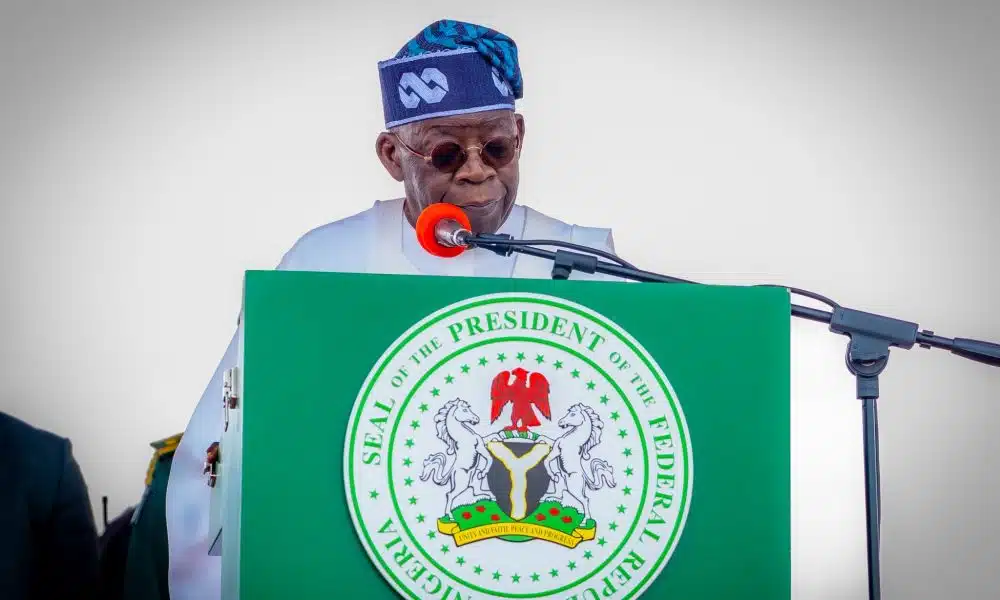
President Bola Tinubu has approved the appointment of the immediate past Director-General of the Department of State Services (DSS), Yusuf Bichi, as the Chairman of the Governing Board of the National Institute for Security Studies (NISS), Lower Usuma Dam, Abuja.
Bichi’s appointment was approved by President Tinubu based on the recommendation of the current Director-General of the DSS, Oluwatosin Adeola Ajayi.
Daily Voice reports that his appointment, according to a statement on Thursday by the Director of Coordination and Liaison of the NISS, Lilian Omo-Odigwe, is for an initial four-year term, effective 22nd October, 2026.
The statement noted that Bichi’s appointment is in accordance with Section 4 of the National Institute for Security Studies (Establishment) Act, 2019.
Bichi, who will succeed A.A. Gadzama, on the Governing Board, handed over leadership of the DSS to the incumbent Director-General in August 2024.
The former DG began his career in the Security Division of the Kano State Cabinet Office before his transfer of service in 1984.
“Bichi’s appointment to Chair the NISS Board brings an extensive experience in intelligence, security administration, operational leadership and institutional training to the governance of the National Institute,” the statement added.
Meanwhile, Nollywood actress Eniola Badmus has defended her continued support for President Bola Ahmed Tinubu, saying her political stance is the reason some people criticize her.
Naija News reports that the actress made this known during an interview with Nigerian comedian and content creator Isbae U on his podcast, Curiosity Made Me Ask.
Badmus explained that the criticism she receives is largely connected to her decision to support Tinubu, adding that she remains committed to the president despite the negative reactions from some Nigerians.
The actress maintained that she would continue to stand by her political choice, regardless of public opinion.
She also noted that democracy allows people to support political candidates and parties of their choice without being attacked for their decisions.
According to Badmus, she does not condemn people for supporting politicians different from the ones she believes in, stressing that everyone should be free to make their own political decisions.



News4 hours ago
Salary: Fresh Update Emerges On Payment To Nigerian Workers

Politics2 days ago
Obasanjo’s Son Picks Side In 2027 Race

News2 days ago