News
SERAP Gives N’Assembly Seven Days To Investigate Alleged Diversion Of N6.3bn Constituency Funds


The Socio-Economic Rights and Accountability Project (SERAP) has given the leadership of the National Assembly a seven-day ultimatum to initiate investigations into the alleged diversion and non-accounting of more than N6.3 billion in constituency project funds.
The organisation warned that it would seek legal redress if no action is taken.
The civil society organisation specifically urged the Senate President,t Godswill Akpabio, and Speaker of the House of Representatives, Tajudeen Abbas, to immediately refer the allegations contained in the 2022 Annual Report of the Auditor-General of the Federation to relevant anti-corruption agencies for investigation and possible prosecution.
SERAP also called on the National Assembly to ensure that any individual found culpable is prosecuted where sufficient evidence exists and that all misappropriated or unaccounted public funds are recovered and returned to the national treasury.
The demands were contained in a letter dated June 27, 2026, and signed by SERAP’s Deputy Director, Kolawole Oluwadare. Details of the letter were made public in a statement issued yesterday.
According to the organisation, the allegations are based on findings contained in the Auditor-General’s 2022 Annual Report, which was published on September 9, 2025.
It further urged the National Assembly leadership to disclose the identities of contractors and companies allegedly awarded constituency projects that were either abandoned or never executed, including information on their shareholders and beneficial owners.

“We would be grateful if the recommended measures are taken within seven days of the receipt and/or publication of this letter.”
“If we have not heard from you by then, SERAP shall take all appropriate legal actions to compel you and the National Assembly to comply with our request in the public interest,” the letter read.
The organisation said the Auditor-General’s report uncovered widespread financial irregularities involving several federal ministries, department,s and agencies that handled constituency projects.
Among the agencies named were the Environmental Health Registration Council of Nigeria (EHORECON); the Federal College of Animal Health and Production Technology, Vom, Plateau State; the Federal Polytechnic, Uka;a, the National Agency for the Prohibition of Trafficking in Persons (NAPTIP); and the National Institute of Legislative and Democratic Studies (NILDS).
According to SERAP, the report highlighted multiple cases of payments into private bank accounts, procurement violations, inflated contracts, undocumented expenditures, payments for contracts that were either not executed or for services not rendered, as well as failures to properly account for public funds.
The organisation said the Auditor-General recommended that all affected sums be recovered and remitted to the federal government’s treasury.
Citing specific findings, SERAP said the report alleged that EHORECON paid N22.94 million from its constituency projects account into private bank accounts belonging to some staff members without evidence showing how the money was utilised or the purpose of the payments.
The council was also accused of awarding consultancy contracts worth more than N12 million in 2021 for the design and supervision of modern abattoir projects in Kebbi and Jigawa States. However, the report allegedly found that the expected project deliverables, including architectural and engineering designs, could not be located.
SERAP said the cumulative questionable constituency project transactions linked to EHORECON exceeded N1.8 billion.
The organisation also pointed to findings involving the Federal College of Animal Health and Production Technology, Vom, where over N279.7 million was reportedly paid to three contractors for youth and women empowerment programmes in Niger and Plateau States without supporting documentation.
It added that another N279.7 million was allegedly released as mobilisation fees without proper records, while more than N629.4 million was paid to contractors despite the absence of evidence of competitive bidding, contract advertisements, or proof that the contractors met procurement requirements.
SERAP further alleged that the Auditor-General identified several irregularities at the Federal Polytechnic, Ukana, Akwa Ibom State, including over N407 million paid as mobilisation without supporting documents, more than N399 million allegedly awarded to unqualified contractors, contract inflation exceeding N192 million, payments of over N279 million for partially executed projects, N50 million paid for an unexecuted borehole project, and over ₦83 million disbursed without the required approvals or documentation.
According to the organisation, the report also accused NAPTIP of irregularly awarding contracts worth over N21.8 million, spending more than ₦176.8 million on logistics and consultancy services without supporting records, and paying over N94 million for projects that were allegedly never executed.
It added that NILDS was cited for failing to submit audited financial statements covering the period from 2012 to 2022, failing to remit over ₦15 million in stamp duties, and spending N1.6 million without the approval of the Office of the Accountant-General of the Federation.
The organisation maintained that corruption involving constituency projects deprives citizens, particularly poor and vulnerable Nigerians, of essential infrastructure and public services intended to improve their living conditions.
It argued that, as the institution constitutionally empowered to oversee public expenditure, the National Assembly has a responsibility to ensure transparency and accountability in the management of constituency project funds.
SERAP also contended that if the allegations are established, they would amount to violations of the provisions of the 1999 Constitution, the Fiscal Responsibility Act, 2007, and the Public Procurement Act, 2007, all of which require prudent management, transparency and accountability in the use of public resources.
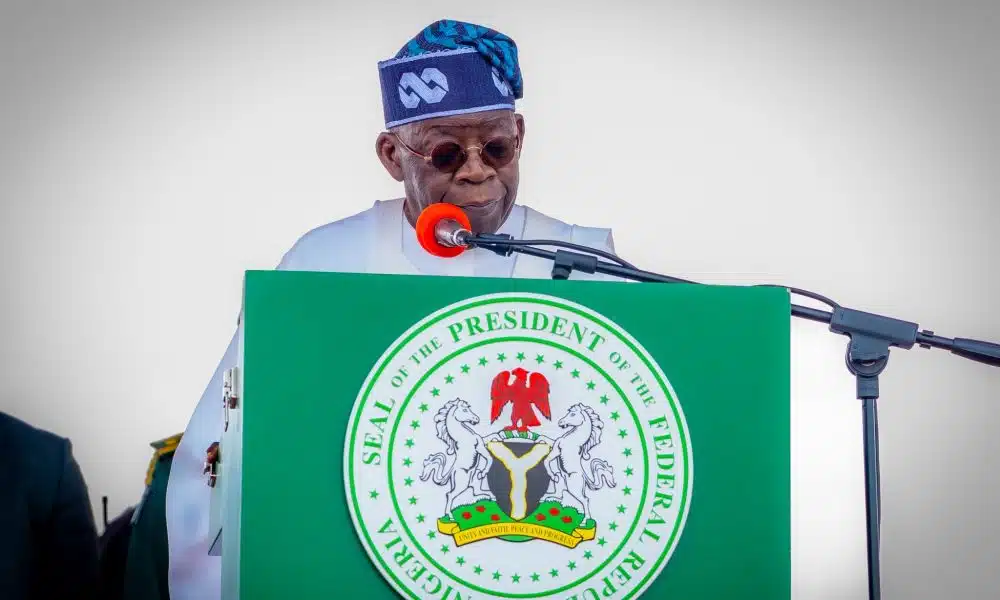
President Bola Tinubu has approved the appointment of the immediate past Director-General of the Department of State Services (DSS), Yusuf Bichi, as the Chairman of the Governing Board of the National Institute for Security Studies (NISS), Lower Usuma Dam, Abuja.
Bichi’s appointment was approved by President Tinubu based on the recommendation of the current Director-General of the DSS, Oluwatosin Adeola Ajayi.
Daily Voice reports that his appointment, according to a statement on Thursday by the Director of Coordination and Liaison of the NISS, Lilian Omo-Odigwe, is for an initial four-year term, effective 22nd October, 2026.
The statement noted that Bichi’s appointment is in accordance with Section 4 of the National Institute for Security Studies (Establishment) Act, 2019.
Bichi, who will succeed A.A. Gadzama, on the Governing Board, handed over leadership of the DSS to the incumbent Director-General in August 2024.
The former DG began his career in the Security Division of the Kano State Cabinet Office before his transfer of service in 1984.
“Bichi’s appointment to Chair the NISS Board brings an extensive experience in intelligence, security administration, operational leadership and institutional training to the governance of the National Institute,” the statement added.
Meanwhile, Nollywood actress Eniola Badmus has defended her continued support for President Bola Ahmed Tinubu, saying her political stance is the reason some people criticize her.
Naija News reports that the actress made this known during an interview with Nigerian comedian and content creator Isbae U on his podcast, Curiosity Made Me Ask.
Badmus explained that the criticism she receives is largely connected to her decision to support Tinubu, adding that she remains committed to the president despite the negative reactions from some Nigerians.
The actress maintained that she would continue to stand by her political choice, regardless of public opinion.
She also noted that democracy allows people to support political candidates and parties of their choice without being attacked for their decisions.
According to Badmus, she does not condemn people for supporting politicians different from the ones she believes in, stressing that everyone should be free to make their own political decisions.
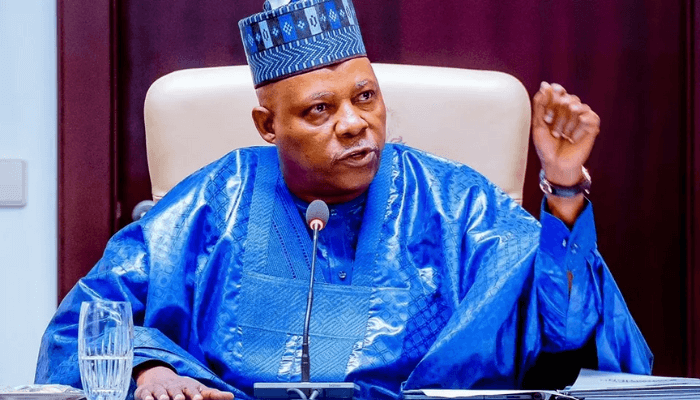
Vice President Kashim Shettima has urged state governments to stop relying solely on the Federal Government to solve Nigeria’s electricity problems and instead establish their own functional power markets to attract private investors.
He said Nigeria’s ambition to build a strong industrial economy would remain difficult to achieve without reliable electricity for businesses, homes, hospitals and schools.
Daily Voice reports that Shettima made the call on Wednesday while declaring open a national stakeholders’ workshop on the Electricity Act 2023 at the Presidential Villa in Abuja.
The Deputy Chief of Staff to the President, Senator Ibrahim Hassan Hadejia, represented the Vice President at the event.
The workshop brought together government agencies, electricity regulators, and other stakeholders to review the law’s implementation and discuss ways to improve power supply across the country.
Shettima said the Electricity Act 2023 had allowed states to regulate electricity markets within their jurisdictions and develop power solutions based on their resources and economic needs.
“Our states must shed the habit of waiting for Abuja to provide every answer,” he said.
He stressed that electricity supply should be treated as a shared responsibility between the Federal Government, state governments and private investors.
The Vice President pointed to the energy resources available in different parts of the country, saying states should take advantage of them to improve electricity supply and support economic growth.
He cited the solar energy potential of Sokoto, Borno and Katsina states, the gas resources in Delta, Rivers and Bayelsa, and the hydropower opportunities in Niger and Kebbi states.
According to him, turning these resources into viable electricity projects would help boost agriculture, manufacturing, healthcare and education.
However, Shettima warned that passing the law alone would not solve the country’s power problems, adding that states needed to establish the right institutions and create an environment that would attract investment.
He urged states that had yet to establish their electricity regulatory bodies to begin the process without further delay.
Shettima also proposed a voluntary National Electricity Reform Peer Review and Implementation Framework involving the Nigerian Electricity Regulatory Commission (NERC), the Federal Ministry of Power, the Nigeria Governors’ Forum and state electricity regulators.
He said the framework would allow states to learn from one another and assess their progress in developing electricity markets, attracting investments, protecting consumers and expanding access to power.
Earlier, the Permanent Secretary of the Ministry of Power, Mahmuda Mamman, said the success of the Electricity Act depended on states establishing credible regulatory institutions and electricity markets that could operate commercially.
On his part, the Director-General of the Nigeria Governors’ Forum, Dr Abdulateef Shittu, said the forum was working to improve cooperation between federal and state institutions on electricity reforms.
Shittu also disclosed that efforts were underway to develop a standard tariff framework that would protect electricity consumers while encouraging private investment in the sector.
Meanwhile, NERC’s Deputy General Manager and Head of Compliance, Hauwa Yakubu, disclosed that the commission had transferred regulatory responsibilities to 17 states.
She said Akwa Ibom was the latest state to receive the transfer, marking another step towards state-level electricity regulation under the Electricity Act 2023.


Obasanjo’s Son Picks Side In 2027 Race

NISS: President Tinubu Makes Fresh Appointment