Business
What NNPC must achieve before going public- Edun
…As MOFI launches Scorecard for GOEs
The Minister of Finance and Coordinating Minister of the Economy, Mr. Wale Edun, has charged the Nigerian National Petroleum Company Limited (NNPCL) to achieve a high standard of corporate governance before going public.
He spoke at the Ministry of Finance Incorporated (MOFI) Corporate Governance Forum for Government Owned Enterprises (GOEs) in Abuja, this afternoon.
He said, “I think you will all agree that this is a critical issue at a critical time. You have the likes of NNPC, which is a portfolio company. We have good indication that they are looking to IPO (Initial Public Offerings). NNPC is the crown jewel of the Nigerian corporate sector and the economy. It is a limited liability company, and if you want to go public, corporate governance is at the heart of what you must achieve.”
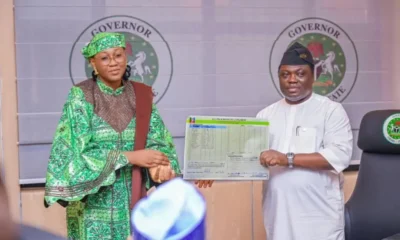
The Minister also launched the GOEs’ Scorecard which seeks to rate the organisations in line with the criteria set out by MOFI, which they must meet.
Crowding in private capital
The minister said that the strategy of the present administration was to crowd in private capital, in recognition of the inadequacy of public funding for the infrastructural sector.
His words, “But more important than that, rather than relying on budgetary funding, the whole aim of Mr. President’s strategy of stabilizing the economy and the investment environment was to crowd in the private sector.
“Government accounts for 10% of GDP. The private sector, 90%. That’s where the money is. And that’s why the focus has been on, for example, rather than the Ministry of Works looking for funds, using the Highway Development and Management Initiative to hand over major roads which the private sector is interested in constructing, reconstructing and concession basis. There are eight other roads that are ready to go.”
Tariffs: We ‘re going back to drawing board
The Minister said that his Economic Management Team would return to the drawing board if the current tariffs situation became a long-drawn battle.
According to him, “For the economic management team of Mr. President and for indeed his whole government, we are going back to the drawing board to look at the scenarios that may play out if the current tariff situation is prolonged.
“For Nigeria, in terms of exports, it’s not too bad because oil minerals are excluded by America from being in any way sanctioned with tariffs. But based on our non-oil exports and based on the formula that the Americans are using, we do have a 14% tariff on our exports. But it’s a lot better than Vietnam, which has 46%.
“So we need to look at these situations and see what the opportunities are. The Nigeria of today, with a relatively stable economy and an attractive investment environment, including attractive exchange rate, is a place where if they can’t produce in Vietnam, they can come and produce in Nigeria. We are here, we are ready, we are waiting, and we have what will be attractive to them in terms of policies, in terms of market, and in terms of export capacity.
In his presentation, the MOFI MD Dr. Armstrong Takang said that globally, GOEs dominated sectors like infrastructure (e.g., power, rail, water), finance, natural resources, and manufacturing, delivering essential services that drive economic growth and poverty reduction.
He added that among OECD countries, utility SOEs 9State Owned Enterprises) accounted for 50% of total SOE value.
The MD described MOFI as custodian of Public Wealth, managing a diverse SOE portfolio spanning energy, infrastructure, financial services, manufacturing, agriculture, and digital services.
“It holds majority stakes in over half of its over 50 portfolio companies, making it a critical driver of Nigeria’s economic landscape and currently actively engaging with SOE boards to enforce policies that maximize value, contrasting with its prior passive stance that led to value erosion.
Its strategic roles, he said, “extends to leading reform within Nigeria’s SOE ecosystem, influencing stakeholders and setting standards and positioning Nigeria’s SOEs as drivers of innovation and global competitiveness within the SOE ecosystem, while acting as a catalyst to attract private sector collaboration and investment into Nigeria’s SOE ecosystem”
The outgoing Country Director of the World Bank in Nigeria Dr. Ndiame Diop, urged greater transparency in the management of GOEs in the country.
He noted that only about 50 percent of them had their Annual Accounts published and posted on the MOFI website and that although an improvement over the previous year, more needed to be done.
Dr. Diop who has just been appointed Vice President, African Region of the World Bank, noted that the deployment of technology to take out federal government revenue from the GOEs, even before the annual accounts were prepared had enhanced government revenue.

Business
FG Issues Ban on Naira Spraying, Money Bouquets as Valentine’s Day Nears
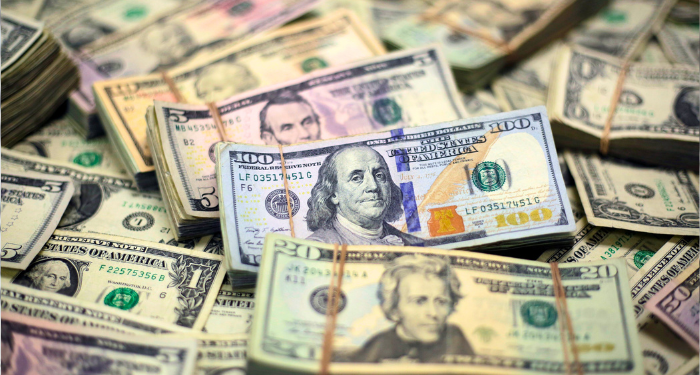
The Federal Government has announced a ban on the spraying and decorative use of naira notes ahead of the 2026 Valentine’s Day celebration. The directive targets practices such as making money bouquets, cash towers, and decorative cakes with banknotes.
According to government authorities, these actions go against Nigeria’s currency laws and will no longer be tolerated.
The Central Bank of Nigeria has described the trend as an abuse of the national currency. It warned that shaping, folding, spraying, or designing banknotes for gifts and ceremonies amounts to defacing legal tender.
According to the bank, the naira is a national symbol and must be handled with care and respect. Officials stressed that treating money as party decoration weakens its dignity and public value.
The government also cautioned event planners, gift vendors, and individuals who engage in such displays. It said anyone found producing or using money bouquets and similar items risks arrest and possible prosecution under existing laws.
Security agencies and regulatory bodies have been directed to monitor public events and commercial activities during the Valentine period. Enforcement will focus on parties, weddings, and street celebrations where cash spraying and money designs are common.
Nigerians were advised to choose alternative gift options such as flowers, cards, or packaged items instead of cash displays. The government noted that love and celebration should not involve damaging the country’s currency.
The warning comes as Valentine’s Day approaches, a season known for increased use of cash-themed gifts and public spraying of naira at romantic events.
Business
Fresh Trouble For Dangote As FG Gives Directive On Petrol, Diesel
Nigeria is set to resume the issuance of petrol and diesel import permits as early as mid-February 2026, a move that could reshape supply dynamics in the downstream market and pose fresh challenges for the Dangote Refinery.
Industry sources say approvals by the Nigerian Midstream and Downstream Petroleum Regulatory Authority (NMDPRA) may begin later this month or, at the latest, early March.
If implemented, this would mark the first batch of import licences for 2026, following a temporary regulatory pause aimed at restricting imports to volumes needed only to cover gaps in domestic refining output.
The decision signals government concern about a potential tightening of fuel supply amid shifting market conditions.
According to a ThisDay repport, sources quoted by Argus linked the delay in issuing permits to leadership changes at the NMDPRA after the exit of its former chief executive, Farouk Ahmed, in December.
The transition reportedly slowed internal decision-making at the authority during the early weeks of the year.
Traditionally, import permits are issued on a quarterly basis and remain valid for three months.
Issuing licences midway into the first quarter has raised questions among market participants about how the existing framework will be applied and whether approvals will be prorated.
Market pressure has also intensified following a drop in crude deliveries to the Dangote Refinery. . Receipts reportedly fell to around 250,000 barrels per day in January, down from roughly 350,000 barrels per day in December, the lowest level in about 16 months.
The decline points to lower run rates at the refinery’s crude distillation unit and increases the likelihood of refined product shortfalls.
Earlier reports indicated maintenance activities on key processing units, including the residue fluid catalytic cracking unit that produces petrol.
Although petrol demand eased during the Christmas and early January holidays, traders say tighter local supply and rising refinery asking prices have renewed interest in imported cargoes.
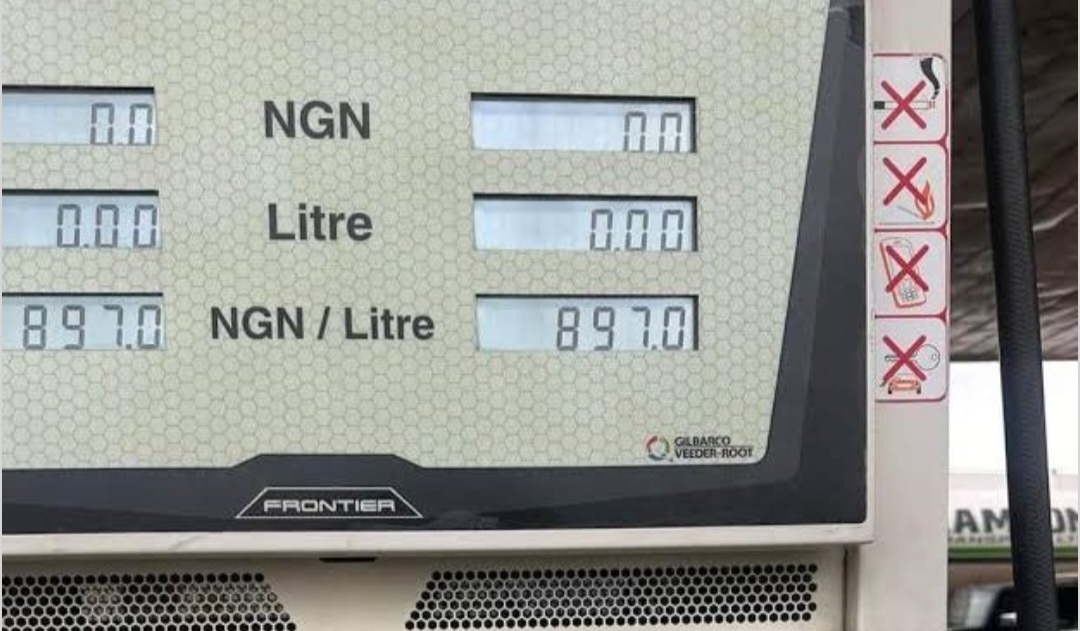
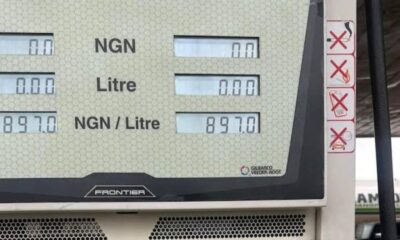
Petrol asking prices climbed by about 14 per cent to N799 per litre by late January, after falling to around N699 per litre in December. The rebound has made imported fuel more competitive in recent trading sessions.
Market participants believe new import permits would allow marketers to supplement domestic supply while regulators continue to prioritise local refining. However, increased imports could dilute Dangote Refinery’s growing dominance in the downstream market.
Amid the shifting landscape, the Dangote Refinery has warned that petrol pump prices could approach N1,000 per litre if marketers increasingly rely on coastal transportation rather than gantry loading for fuel evacuation.
In a statement, the refinery said coastal logistics can add about N75 per litre to petrol costs due to port charges, maritime levies and vessel-related expenses.
With Nigeria’s daily consumption estimated at 50 million litres of petrol and 14 million litres of diesel, the extra cost could translate into an annual burden of roughly N1.75 trillion if passed on to consumers.
The company stressed that gantry loading remains the most cost-efficient option and that marketers are free to choose their preferred evacuation method. It cautioned, however, that widespread reliance on coastal shipping would undermine recent price relief achieved through domestic refining.
Business
‘Cooking Gas, Petrol Prices Crash Nationwide’ [DETAILS]
Petrol and cooking gas prices declined year-on-year in December 2025, signalling a gradual easing of household energy costs, according to separate reports released by the National Bureau of Statistics (NBS).
Naija News reports that data from the bureau showed that both Liquefied Petroleum Gas (LPG), commonly used for cooking, and Premium Motor Spirit (PMS), also known as petrol, recorded notable price reductions compared with December 2024, alongside modest month-on-month declines.
The NBS noted that while the downward trend was observed across most states and geopolitical zones, prices continued to vary widely depending on location.
5kg Of Cooking Gas Price Drops By 25%
According to the report, the average price for refilling a 5kg cylinder of LPG declined by 1.20 per cent month-on-month, falling from ₦5,425.78 in November 2025 to ₦5,360.43 in December 2025.
On a year-on-year basis, the price fell sharply by 25.31 per cent, down from ₦7,177.27 recorded in December 2024.
Confirming the trend, the NBS stated, “The average retail price for refilling a 5kg cylinder of Liquefied Petroleum Gas (Cooking Gas) decreased by 1.20 per cent on a month-on-month basis,” adding that the year-on-year decline stood at 25.31 per cent.”
A state-level analysis showed that Kaduna recorded the highest average price for refilling a 5kg cylinder at ₦5,838.66, followed by Jigawa at ₦5,825.09 and Osun at ₦5,777.80.
On the lower end, Katsina recorded the cheapest average price at ₦4,855.80.
Similarly, the average retail price for refilling a 12.5kg cylinder of LPG fell by 0.74 per cent month-on-month, declining from ₦13,538.79 in November 2025 to ₦13,438.90 in December 2025.
Year-on-year, the price dropped by 22.20 per cent from ₦17,274.16 recorded in December 2024.
On a state-by-state basis, Abia recorded the highest average price for refilling a 12.5kg cylinder at ₦14,489.96, followed by Osun at ₦14,444.50 and Delta at ₦14,393.17, the bureau said.
Petrol Price Dips To ₦1,048
The NBS also reported a decline in the average retail price of petrol.
According to the report, the average price of Premium Motor Spirit stood at ₦1,048.63 in December 2025, representing an 11.81 per cent decrease compared with ₦1,189.12 recorded in December 2024.
The bureau stated, “The average retail price paid by consumers for Premium Motor Spirit (Petrol) for December 2025 was ₦1,048.63.”
On a month-on-month basis, petrol prices declined by 1.20 per cent, down from ₦1,061.35 recorded in November 2025.
Further analysis showed that Kogi State recorded the highest average petrol price at ₦1,104.45, while Oyo State had the lowest at ₦996.55.
Regionally, the North East emerged as the most expensive zone for petrol, while the South West recorded the lowest average prices.
-
News16 hours agoJUST IN: Fresh Trouble As Court Orders Probe Of Top Tinubu’s Minister
-
News2 days agoEl-Rufai Reveals Who Ordered His Arrest In Trending Video
-
News2 days agoTerrorists’ Warning Letters Spark Mass Exodus
-
Entertainment2 days agoDavido Slams Sophia Momodu’s Lawyer After Custody Case Is Dropped
-
Politics15 hours ago2027 Election: Prophet Releases Message On Tinubu’s Chances Amid Sack Plots By Atiku, Obi, Others [VIDEO]
-
Sports12 hours agoNigeria Secures Spot At 2026 FIFA World Cup