Business
Fugitive Nigerian Businessman Ben Peters Arrest Sparks Jubilation As Residents Commend Government For Nabbing Him
News of the arrest of Fugitive Nigerian Businessman Benedict Peters has sparked wild jubilation among residents at Aurora Apartments in Kanda, close to the Jubilee House.
The jubilation stems from reports by the residents that, Mr. Peters who is wanted by the Nigerian Government for criminal activities including corruption has terrorized them for several years now, and was being protected by the erstwhile government.
According to some of the residents who spoke to this portal, the fugitive businessman has constituted a huge nuisance to them and all within the area since he pitched camp there several years ago, and has bragged and boasted about his connections in high places, for which reason no one could apprehend him.
One elated resident, Jacob Asamoah said Mr. Peters even had in his possession, vehicles belonging to the National Security, parked in his basement, and was in cahoots with the immediate past administration.
He said they lodged several complaints and sent many petitions to law enforcement agencies and the erstwhile government on the reckless conduct of Mr. Peters to no avail.
He said ‘’Today we are extremely happy and grateful to President Mahama and his government for this big move. They have done us a great deal of good and this residential area will see some sanity, after several years. That Peters guy is a fugitive. He is wanted in Nigeria and should be deported there immediately to face justice. He has terrorized us for far too long’’.
Mr. Asamoah added that ‘’He has used the place as a brothel, a night club and avenue for perpetrating various criminal activities in the full glare of the law enforcement agencies who have benefited from his dubious largesse. We are happy that under this government, National Security, the Military and the Police are all involved, and the fact that he has been smoked out of hiding and apprehended, gives us hope that peace has come to stay in this area’’.
Mr. Peters’ arrest was prompted by complaints by residents of the area who said he had, together with some acquaintances blocked the entrance of the apartments with his vehicles, denying many access to the apartments. He was reported to have gone into hiding after he got wind of his imminent arrest, and only surfaced when the younger brother of President John Mahama, Mr. Ibrahim Mahama appeared at the scene, eventually culminating in his arrest.
Mr. Peters and his men were said to be fully armed and engaged the security operatives in a heavy battle before they were subdued and apprehended, and this has been corroborated by video evidence, as they were seen brazenly resisting arrest.
Deputy General Secretary of the governing NDC, Mr. Mustapha Gbande who was part of the operation that led to the arrest of Mr. Peters in an interview with the media observed that Mr. Peters run his own army, had military-like vehicles and motorbikes that should not be owned by individuals, and was basically a nuisance to the society.
Mr. Peters, together with his associates were arrested and some of his vehicles seized by the National Security, led by the Director of Special duties, Mr. Richard Jakpa.
Mr. Peters is the owner of Aiteo Group of Companies in Nigeria, who was entangled in a web of controversy on allegations of corruption and questions surrounding the COVID-19 testing contract in Ghana a few years back.
A civil society group dragged Nigeria’s Economic and Financial Crimes Commission (EFCC) to court, demanding Peters’ arrest and prosecution over corruption allegations. It will be recalled that lack of transparency regarding the USD 150 COVID-19 test at Kotoka International Airport in Accra left travelers and Ghana’s political landscape in turmoil.
Member of Parliament for North Tongu and Minister for Foreign Affairs, Samuel Okudzeto Ablakwa who revealed some details of the Frontier contract with the Ghana Airports Company, (GACL) at the time, stated that GACL made $10 out of every $150 collected for COVID test at Ghana’s Airport.
According to him, Frontier is estimated to have made a colossal $130m from the 2-year contract.

Business
Nigeria’s Inflation Rises To 15.69% In April 2026
Nigeria’s inflation rises to 15.69% in April 2026
Nigeria’s inflation rate increased marginally in April 2026, rising to 15.69 per cent from 15.38 per cent recorded in March, according to the latest Consumer Price Index, CPI, report released by the National Bureau of Statistics, NBS, on Friday.
The data showed a 0.31 percentage point year-on-year increase, indicating that the general price level of goods and services remained higher compared to the previous month.
However, the report also pointed to a slowdown in price increases on a month-on-month basis, suggesting a gradual easing in the pace of inflationary pressure.
According to the NBS, month-on-month headline inflation stood at 2.13 per cent in April 2026, down significantly from 4.18 per cent recorded in March.
“This means that in April 2026, the rate of increase in the average price level was lower than the rate of increase in the average price level in March 2026,” the bureau explained.
The statistics agency noted that although inflation remains elevated, the latest figures reflect a moderation in the speed of price increases across the economy.
On a 12-month average basis, the headline inflation rate for the period ending April 2026 was 19.16 per cent, slightly lower than the 19.33 per cent recorded in the corresponding period of 2025.
A breakdown of the report showed mixed inflation trends between urban and rural areas.
Urban inflation stood at 15.40 per cent year-on-year in April 2026, while month-on-month urban inflation eased to 1.86 per cent from 3.16 per cent in March.
The 12-month average urban inflation rate was 19.07 per cent, compared to 20.76 per cent recorded in April 2025.
In rural areas, inflation was higher at 16.36 per cent year-on-year, reflecting continued cost pressures outside major cities.
However, rural month-on-month inflation dropped sharply to 2.80 per cent in April, down from 6.73 per cent in March.
The 12-month average rural inflation rate stood at 18.99 per cent, higher than the 17.63 per cent recorded in the same period last year.
Business
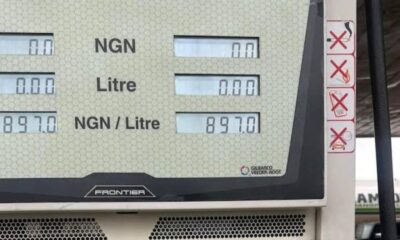
Dangote Cuts Petrol Price by N200 – Details Emerge
Dangote Refinery recently promised to reduce the frequency of its petrol price adjustments, especially hikes, to give Nigerians a breather amid the harsh economic reality, as reported by Legit.
However, fresh data has revealed that the Dangote Refinery adjusted the price of Premium Motor Spirit (PMS), popularly known as petrol, at least nine times in early 2026, highlighting the volatility in Nigeria’s downstream oil market.
The refinery, which remains Africa’s largest single-train refinery, reportedly implemented six upward reviews and three downward adjustments within the first quarter of the year, as global crude oil prices, exchange rate pressures, and depot competition continued to shape local fuel pricing.
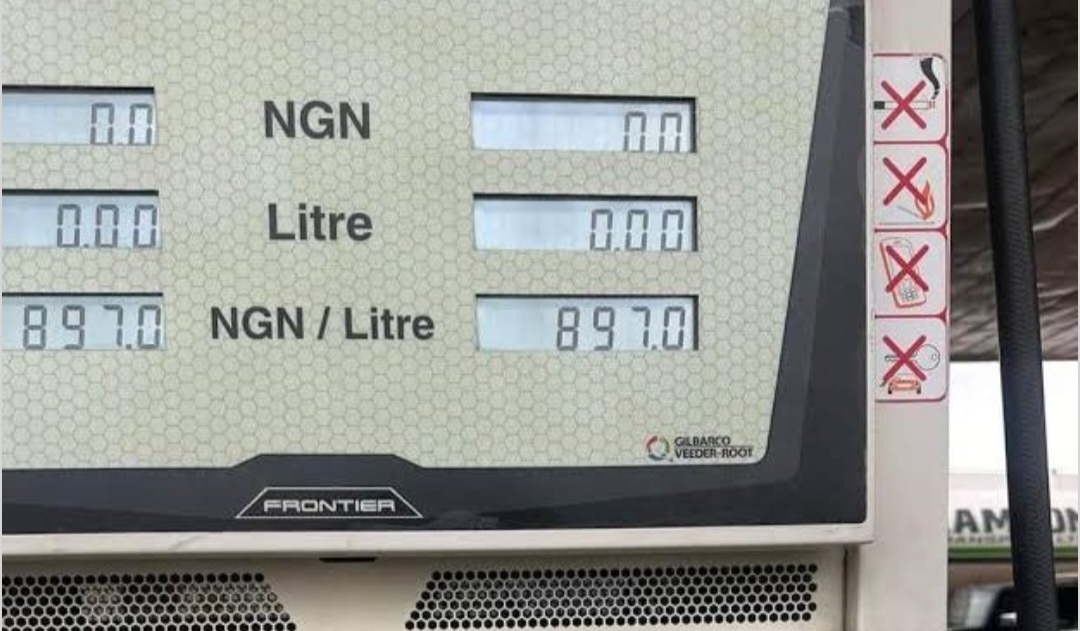
One of the most significant reductions came in March 2026, when the refinery slashed petrol prices by ₦100 per litre, bringing the ex-depot rate down from ₦1,175 to ₦1,075 per litre. Industry watchers say the cumulative reductions recorded so far in 2026 amount to nearly ₦200 per litre, offering some relief to marketers and eventually consumers facing persistent fuel price pressure.
March price cut became a major turning point
On March 10, 2026, Dangote Refinery announced one of its biggest price cuts of the year after global crude oil prices softened in the international market. The refinery reduced its PMS loading price from ₦1,175 per litre to ₦1,075 per litre, representing a ₦100 drop.
Reports linked the move to declining crude prices and efforts to remain competitive against rising depot prices across Nigeria. The adjustment came after weeks of sharp increases driven by Brent crude trading above $100 per barrel, which had forced many depot owners and independent marketers to review their prices upward.
Market analysts described the March reduction as a strategic move aimed at stabilising retail prices and easing supply pressure across filling stations.
Six increases, three reductions in just months
According to the market tracking platform PetroleumPriceNG, Dangote Refinery’s pricing pattern in 2026 has been highly dynamic.
Within just the first quarter, the refinery reportedly carried out six price hikes and three cuts, reflecting how quickly market realities changed.
Some of the earlier increases were tied to:
- rising international crude oil prices
- foreign exchange instability
- logistics and distribution costs
- strong domestic demand for refined petroleum products.
Meanwhile, the downward adjustments were largely triggered by:
- softer global crude prices
- pressure from competing depots
- efforts to moderate retail pump prices
- market expectations for price stability
A smaller reduction was also reported in February before the more dramatic March cut, while later adjustments were introduced to prevent excessive depot pricing across major supply hubs.
Nigerians are still watching pump prices closely
Although ex-depot reductions do not always translate immediately to lower pump prices at filling stations, consumers across Nigeria continue to monitor Dangote Refinery’s pricing decisions closely because of its growing influence in the fuel supply chain.
With marketers relying heavily on Dangote’s supply volumes, each adjustment at the refinery level often triggers reactions across independent depots, retail stations, and transport costs nationwide.
Experts say if global oil prices remain moderate and exchange rate pressures ease, Nigerians could see more stability in PMS prices in the coming months.
However, any renewed surge in crude oil prices or forex volatility could quickly reverse the gains.
Refinery’s growing influence on fuel pricing
Since ramping up operations, Dangote Refinery has increasingly become a major price setter in Nigeria’s petroleum market.
Its decisions now shape pricing conversations among depot owners, marketers, and regulators alike. For many Nigerians, the refinery represents both hope for long-term price stability and a daily reminder of how global oil market movements directly affect transport fares, food prices, and the overall cost of living.
Business
JUST IN: MTN Begins Free Airtime Compensation Transfer for Poor Service: How To Qualify Emerges
MTN Nigeria has announced plans to compensate subscribers affected by poor network quality, following a directive from the Nigerian Communications Commission (NCC) aimed at enforcing stricter service standards across the country’s telecom sector.
The telecom giant disclosed that customers impacted by network disruptions recorded between November 2025 and January 2026 would receive compensation in line with the NCC’s quality-of-service regulatory framework.
The move comes as regulators intensify pressure on mobile network operators over persistent consumer complaints, including dropped calls, slow internet speeds, failed connections, and prolonged service outages.
According to MTN, the compensation exercise is part of a broader effort to improve accountability and ensure customers receive value for the services they pay for. The company described the NCC directive as a customer-focused intervention designed to protect subscribers and encourage operators to maintain acceptable service standards.
“At MTN Nigeria, our customers are the lifeblood of our business,” the company said, stressing that every subscriber deserves a reliable and high-quality network experience.
The telecom operator noted that the new compensation policy reflects a stronger regulatory approach where service providers are held directly responsible for poor service delivery.
How to qualify for MTN compensation
Under the NCC’s framework, subscribers do not need to file complaints, visit service centres, or submit special applications to qualify. Compensation will be automatically applied to customers in locations where MTN failed to meet the commission’s approved quality-of-service benchmarks during the affected period.
This means users who experienced significant service disruptions in identified areas between November 2025 and January 2026 may receive airtime, bonus value, or related service-based compensation directly on their lines.
The compensation applies strictly to subscribers within affected network zones verified by the NCC’s monitoring system. Customers are therefore advised to monitor SMS notifications and account updates from MTN regarding any compensation credited to their lines.
-
News23 hours agoJUST IN: APC Releases List of Disqualified Aspirants Nationwide (FULL LIST)
-
News2 days agoSenate Finally Announces Name of Proposed New State
-
Opinion1 day agoBREAKING: Tears, Shock as Fayose’s Wife Dies; Cause of Death Revealed
-
Uncategorized2 days agoBREAKING: Filling Stations Change Petrol Prices Nationwide As Depots Release New Rates
-
Politics16 hours agoBREAKING: Governor Fubara Finally Announces His Party Ahead 2027 Election
-
Politics2 hours agoAPC Primaries: List of Winners and Losers Emerges -SEE FULL LIST
-
Politics7 hours agoAPC Senator Dumps Party Ahead of Monday Primary; Gives Shocking Reason
-
Uncategorized8 hours agoBREAKING: List Of Senate Aspirants “Not Cleared” Ahead Of 2027 Primaries — See Full List