Business
Who dominates Nigeria’s beer market? Guinness vs. International Breweries vs. Nigerian Breweries
Nigeria’s alcoholic beverage industry is fiercely competitive, but in 2025, the battle for market share between Nigerian Breweries, International Breweries, and Guinness Nigeria is more intense than ever.
So, who really owns the beer market?
While Nigerian Breweries maintains dominance in Nigeria’s brewery market by size, revenue, and assets, International Breweries has emerged as the biggest winner in 2025 in terms of shareholder return.
Guinness Nigeria, meanwhile, is quietly staging a comeback and may soon lead on dividend payouts.
Nigerian Breweries still sells the most beer
When it comes to selling beer in Nigeria, Nigerian Breweries is still the biggest player.
In 2024, it made over N1.1 trillion in sales, which is like selling more beer than International Breweries and Guinness Nigeria combined. This was a huge 81% jump from the previous year.
International Breweries also did well, earning N488.96 billion, an even bigger jump of 88%, while Guinness Nigeria made N299.49 billion, growing by 31%.
In the first three months of 2025, Nigerian Breweries stayed ahead, pulling in N383.6 billion in sales. That’s more than twice what International Breweries made (N173.6 billion) and three times Guinness’s (N118.3 billion).
But here’s the twist: Guinness Nigeria is starting to bounce back. Even though its sales are smaller, it grew its revenue by 53% in the first three months of 2025. That’s a sign that Guinness is regaining its strength and could surprise everyone later in the year.
Nigerian Breweries leads in profit turnaround
There’s finally some cheer in Nigeria’s beer market. After a rough 2024 filled with heavy losses, all three major brewers bounced back to profit in the first three months of 2025.
But leading the turnaround is Nigerian Breweries, which pulled off the strongest recovery:
Nigerian Breweries flipped a N65.6 billion loss into a solid N69.99 billion pre-tax profit.
International Breweries followed, with N35.07 billion, rebounding from a steep N89.35 billion loss.
Guinness Nigeria also improved, reporting N10.28 billion after a N56 billion loss.
Still, the scars of 2024 run deep. For the full year:
- Nigerian Breweries was still in the red with a N182.2 billion loss.
- International Breweries recorded a N111.8 billion loss.
- Guinness Nigeria wasn’t spared either, with N73.7 billion lost.
The return to profitability can largely be attributed to a more stable foreign exchange environment, which significantly reduced FX losses.
Nigerian Breweries has the biggest financial muscle
When it comes to size, Nigerian Breweries is clearly ahead. As of March 2025, it had N1.144 trillion in total assets, much bigger than:
International Breweries: N742.93 billion
Guinness Nigeria: N285.63 billion
This huge asset base means Nigerian Breweries has more room to grow, invest in new ideas, and hold its ground in the market. It also gives it more power when dealing with suppliers and partners, which really matters when prices rise everywhere.
Guinness set to lead on dividends
What sets Guinness Nigeria apart in 2025 is its path to restoring shareholder value through potential dividends.
As of March 2025, Guinness had trimmed its retained losses to –N39.66 billion, down from –N46.38 billion. In contrast:
Nigerian Breweries still carried –N126.33 billion in retained losses,
While International Breweries posted –N212.57 billion.
This trend puts Guinness in pole position to break even and return to dividend-paying status, possibly before its competitors. Development dividend-hungry investors will be watching closely.
Market cap & shareholder return: International Breweries tops the charts
When it comes to market value and shareholder reward in 2025, International Breweries is sitting at the top of the leader board.
As of June 5, 2025, International Breweries commands the largest market capitalization among Nigeria’s three brewing giants, with a value of N1.84 trillion.
That puts it ahead of Nigerian Breweries at N1.76 trillion, and far above Guinness Nigeria, which stands at N197 billion.
But that is not all; shareholders of International Breweries are also enjoying the highest returns this year.
The stock has delivered an impressive +97% year-to-date gain, outpacing Nigerian Breweries’ solid +78% gain, and Guinness Nigeria’s more modest +28%.
While most people look at market capitalization (the value of a company’s shares) to judge a company’s worth, Enterprise Value (EV) gives a fuller picture. It tells you what it would actually cost to buy the whole company, including its debt and cash position.
Here, International Breweries is quietly winning.
As of June 5, 2025, here’s how the numbers stack up:
International Breweries: EV of N1.77 trillion
Nigerian Breweries: EV of N1.75 trillion
Guinness Nigeria: EV of N246 billion
Even though Nigerian Breweries has more assets and cash, International Breweries comes out on top. Nigerian Breweries, despite its strong fundamentals, still has over N107 billion in debt, which weighs down its enterprise value.
So, who really owns Nigeria’s beer market in 2025?
In sheer market dominance, sales, scale, and distribution, Nigerian Breweries still holds the crown. It sells the most beer, commands the largest asset base, and led the industry’s return to profitability in Q1 2025.
But when it comes to investor rewards, International Breweries is winning the valuation game. It leads in market capitalization, enterprise value, and total shareholder return.
Meanwhile, Guinness Nigeria is the dark horse. Its earnings are recovering steadily, and it may soon outpace both rivals on dividend payouts, thanks to a faster cleanup of retained losses.
So, while Nigerian Breweries remains the industry heavyweight, International Breweries is winning investor confidence, and Guinness is quietly positioning itself for a dividend-led rebound.
The battle for Nigeria’s beer market is far from over, but in 2025, each brewer is winning in its own lane.
Nairametrics.com

Business
Fresh Trouble For Dangote As FG Gives Directive On Petrol, Diesel
Nigeria is set to resume the issuance of petrol and diesel import permits as early as mid-February 2026, a move that could reshape supply dynamics in the downstream market and pose fresh challenges for the Dangote Refinery.
Industry sources say approvals by the Nigerian Midstream and Downstream Petroleum Regulatory Authority (NMDPRA) may begin later this month or, at the latest, early March.
If implemented, this would mark the first batch of import licences for 2026, following a temporary regulatory pause aimed at restricting imports to volumes needed only to cover gaps in domestic refining output.
The decision signals government concern about a potential tightening of fuel supply amid shifting market conditions.
According to a ThisDay repport, sources quoted by Argus linked the delay in issuing permits to leadership changes at the NMDPRA after the exit of its former chief executive, Farouk Ahmed, in December.
The transition reportedly slowed internal decision-making at the authority during the early weeks of the year.
Traditionally, import permits are issued on a quarterly basis and remain valid for three months.
Issuing licences midway into the first quarter has raised questions among market participants about how the existing framework will be applied and whether approvals will be prorated.
Market pressure has also intensified following a drop in crude deliveries to the Dangote Refinery. . Receipts reportedly fell to around 250,000 barrels per day in January, down from roughly 350,000 barrels per day in December, the lowest level in about 16 months.
The decline points to lower run rates at the refinery’s crude distillation unit and increases the likelihood of refined product shortfalls.
Earlier reports indicated maintenance activities on key processing units, including the residue fluid catalytic cracking unit that produces petrol.
Although petrol demand eased during the Christmas and early January holidays, traders say tighter local supply and rising refinery asking prices have renewed interest in imported cargoes.
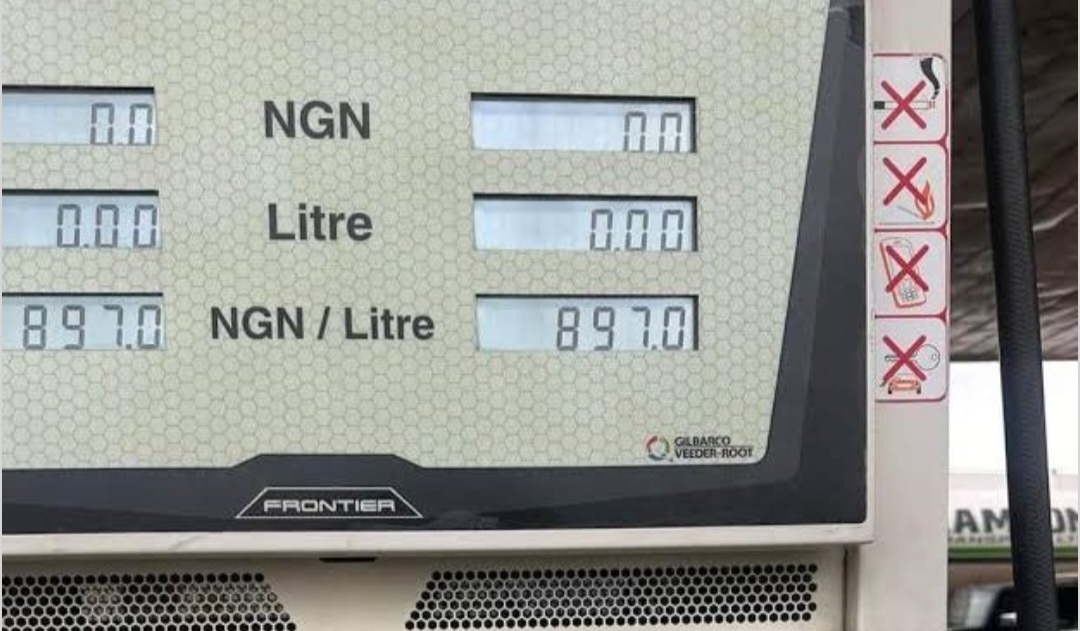
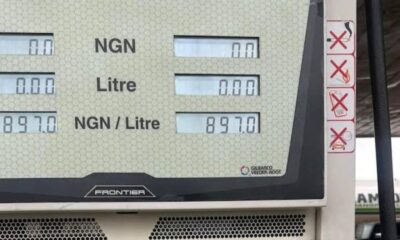
Petrol asking prices climbed by about 14 per cent to N799 per litre by late January, after falling to around N699 per litre in December. The rebound has made imported fuel more competitive in recent trading sessions.
Market participants believe new import permits would allow marketers to supplement domestic supply while regulators continue to prioritise local refining. However, increased imports could dilute Dangote Refinery’s growing dominance in the downstream market.
Amid the shifting landscape, the Dangote Refinery has warned that petrol pump prices could approach N1,000 per litre if marketers increasingly rely on coastal transportation rather than gantry loading for fuel evacuation.
In a statement, the refinery said coastal logistics can add about N75 per litre to petrol costs due to port charges, maritime levies and vessel-related expenses.
With Nigeria’s daily consumption estimated at 50 million litres of petrol and 14 million litres of diesel, the extra cost could translate into an annual burden of roughly N1.75 trillion if passed on to consumers.
The company stressed that gantry loading remains the most cost-efficient option and that marketers are free to choose their preferred evacuation method. It cautioned, however, that widespread reliance on coastal shipping would undermine recent price relief achieved through domestic refining.
Business
‘Cooking Gas, Petrol Prices Crash Nationwide’ [DETAILS]
Petrol and cooking gas prices declined year-on-year in December 2025, signalling a gradual easing of household energy costs, according to separate reports released by the National Bureau of Statistics (NBS).
Naija News reports that data from the bureau showed that both Liquefied Petroleum Gas (LPG), commonly used for cooking, and Premium Motor Spirit (PMS), also known as petrol, recorded notable price reductions compared with December 2024, alongside modest month-on-month declines.
The NBS noted that while the downward trend was observed across most states and geopolitical zones, prices continued to vary widely depending on location.
5kg Of Cooking Gas Price Drops By 25%
According to the report, the average price for refilling a 5kg cylinder of LPG declined by 1.20 per cent month-on-month, falling from ₦5,425.78 in November 2025 to ₦5,360.43 in December 2025.
On a year-on-year basis, the price fell sharply by 25.31 per cent, down from ₦7,177.27 recorded in December 2024.
Confirming the trend, the NBS stated, “The average retail price for refilling a 5kg cylinder of Liquefied Petroleum Gas (Cooking Gas) decreased by 1.20 per cent on a month-on-month basis,” adding that the year-on-year decline stood at 25.31 per cent.”
A state-level analysis showed that Kaduna recorded the highest average price for refilling a 5kg cylinder at ₦5,838.66, followed by Jigawa at ₦5,825.09 and Osun at ₦5,777.80.
On the lower end, Katsina recorded the cheapest average price at ₦4,855.80.
Similarly, the average retail price for refilling a 12.5kg cylinder of LPG fell by 0.74 per cent month-on-month, declining from ₦13,538.79 in November 2025 to ₦13,438.90 in December 2025.
Year-on-year, the price dropped by 22.20 per cent from ₦17,274.16 recorded in December 2024.
On a state-by-state basis, Abia recorded the highest average price for refilling a 12.5kg cylinder at ₦14,489.96, followed by Osun at ₦14,444.50 and Delta at ₦14,393.17, the bureau said.
Petrol Price Dips To ₦1,048
The NBS also reported a decline in the average retail price of petrol.
According to the report, the average price of Premium Motor Spirit stood at ₦1,048.63 in December 2025, representing an 11.81 per cent decrease compared with ₦1,189.12 recorded in December 2024.
The bureau stated, “The average retail price paid by consumers for Premium Motor Spirit (Petrol) for December 2025 was ₦1,048.63.”
On a month-on-month basis, petrol prices declined by 1.20 per cent, down from ₦1,061.35 recorded in November 2025.
Further analysis showed that Kogi State recorded the highest average petrol price at ₦1,104.45, while Oyo State had the lowest at ₦996.55.
Regionally, the North East emerged as the most expensive zone for petrol, while the South West recorded the lowest average prices.
Business
BREAKING: Naira Hits Two-Year High In Official Window As External Reserves Rise
Nigeria’s naira recorded one of its strongest performances in months on Tuesday, January 27, 2026, appreciating sharply against the US dollar at the official foreign exchange window amid improving liquidity and rising confidence in the country’s FX reforms.
The local currency strengthened to around ₦1,400 per dollar at the official market, marking its firmest level since the Central Bank of Nigeria (CBN implemented sweeping FX reforms.
The move signals easing pressure on the naira and renewed optimism among investors and market participants.
According to the CBN’s daily foreign exchange report, the naira closed at ₦1,401.22 per dollar, representing a 1.27 percent appreciation on the day.
Market operators described the move as a reflection of improved dollar supply and stronger participation by banks and other authorised dealers.
Traders said the official window saw increased volumes, with the improved liquidity helping to narrow volatility and reduce speculative demand.
The latest performance reinforces the view that the reforms aimed at unifying exchange rates and improving price discovery are beginning to yield results.
The positive momentum extended to the parallel market, where the naira also posted modest gains.
Channel checks showed the local currency appreciating by about 0.33 per cent to trade around ₦1,476 per dollar. While the gap between the official and parallel rates remains, analysts say the narrowing spread reflects improving confidence across both the regulated and informal segments of the FX market.
According to a report by MarketForces Africa, reduced arbitrage opportunities and stronger supply conditions are helping to stabilise pricing.
The naira’s rally comes against the backdrop of rising external reserves, which have strengthened the CBN’s ability to intervene when necessary and support market liquidity.
Higher reserves are widely viewed as a key confidence signal for foreign investors, particularly portfolio investors who remain sensitive to currency risk.
Market watchers say consistent inflows from export earnings, improved remittance flows, and cautious monetary management have all contributed to the improved outlook for the naira in recent weeks.
-
Sports1 day agoHEARTBREAKING: Nigerian Footballer Dies In UK Hospital
-
Politics1 day ago[BREAKING] Fresh Controversy As Top Female Minister Got Pregnant
-
Business2 days agoFresh Trouble For Dangote As FG Gives Directive On Petrol, Diesel
-
News10 hours agoSchools, Markets Open As IPOB Ends Monday Sit-At-Home
-
News10 hours agoBandit Attacks: Nigerian Governor Shuts Down All Activities In The State
-
News2 hours agoTrump’s Secret Deal With Tinubu’s Govt Revealed
-
Politics10 hours agoElectoral Act Tension Escalates as Senate Calls Emergency Plenary