Connect with us

Business

World Bank Cuts Global Growth Forecast To 2.3% For 2025

Published

on

World Bank Cuts Global Growth Forecast To 2.3% For 2025

If current projections hold, average global growth in the first seven years of the 2020s would be the slowest of any decade since the 1960s.

Global economic growth is projected to slow to 2.3 per cent in 2025 due to mounting trade tensions and persistent policy uncertainty, according to the World Bank’s latest Global Economic Prospects report.

A statement from the bank’s Online Media Briefing Centre on Tuesday noted that the new forecast was nearly half a percentage point lower than the rate projected at the beginning of the year.

The report indicated that the slowdown would mark the weakest non-recessionary global growth since 2008.

“The turmoil has resulted in growth forecasts being cut in nearly 70 per cent of all economies, across all regions and income groups,” the report states.

In spite of the gloomy outlook, a global recession is not anticipated. However, if current projections hold, average global growth in the first seven years of the 2020s would be the slowest of any decade since the 1960s.

Indermit Gill, the World Bank Group’s Chief Economist and Senior Vice-President for Development Economics, warned of deepening stagnation in the developing world.

Audience Feedback Survey
“Outside of Asia, the developing world is becoming a development-free zone. It has been advertising itself for more than a decade,” he said.

Mr Gill noted that growth in developing economies had declined steadily, from 6 per cent annually in the 2000s, to 5 per cent in the 2010s, and to under 4 per cent in the 2020s.

This trend mirrored the slowdown in global trade, which fell from an average of 5 per cent in the 2000s to under 3 per cent today. Investment growth had also weakened, while debt had surged to record levels.

The report projected that growth would slow in nearly 60 per cent of developing economies in 2025, averaging 3.8 per cent before a modest rise to 3.9 per cent in 2026 and 2027.

The report added that more than a full percentage point below the average of the 2010s.

“Growth in low-income countries is expected to reach 5.3 per cent in 2025, a 0.4 percentage point downgrade from earlier forecasts.

“Tariff hikes and tight labour markets are expected to keep global inflation elevated, with a projected average of 2.9 per cent in 2025, still above pre-pandemic levels.”

The World Bank warned that slowing growth would hinder efforts by developing economies to create jobs, reduce poverty, and close the income gap with advanced economies.

“Per capita income growth in these economies is forecast at 2.9 per cent in 2025, 1.1 percentage points below the 2000–2019 average.

“Assuming developing countries (excluding China) maintain a GDP growth rate of 4 per cent the forecast for 2027, it would take them about two decades to return to their pre-pandemic growth trajectory.”

Still, the report noted that global growth could rebound more quickly if major economies reduced trade tensions.

It said that resolving current disputes and halving tariffs could boost global growth by 0.2 percentage points over 2025 and 2026.

In response to rising protectionism, the World Bank urged developing economies to diversify trade, pursue strategic partnerships, and engage in regional agreements.

Given constrained public resources and growing development needs, policymakers are encouraged to mobilise domestic revenue, prioritise spending for the most vulnerable, and enhance fiscal management.

To drive sustainable growth, the report emphasised the need to improve business environments, expand productive employment, and align workforce skills with market demands.

Finally, it highlighted the importance of global cooperation in supporting the most vulnerable economies through multilateral initiatives, concessional financing, and targeted relief for countries affected by conflict.

Premiumtimesng.com

Click to comment

Leave a Reply

Your email address will not be published. Required fields are marked *

Business

FG Issues Ban on Naira Spraying, Money Bouquets as Valentine’s Day Nears

Published

on

The Federal Government has announced a ban on the spraying and decorative use of naira notes ahead of the 2026 Valentine’s Day celebration. The directive targets practices such as making money bouquets, cash towers, and decorative cakes with banknotes.

According to government authorities,  these actions go against Nigeria’s currency laws and will no longer be tolerated.

The Central Bank of Nigeria has described the trend as an abuse of the national currency. It warned that shaping, folding, spraying, or designing banknotes for gifts and ceremonies amounts to defacing legal tender.

According to the bank, the naira is a national symbol and must be handled with care and respect. Officials stressed that treating money as party decoration weakens its dignity and public value.

The government also cautioned event planners, gift vendors, and individuals who engage in such displays. It said anyone found producing or using money bouquets and similar items risks arrest and possible prosecution under existing laws.

Security agencies and regulatory bodies have been directed to monitor public events and commercial activities during the Valentine period. Enforcement will focus on parties, weddings, and street celebrations where cash spraying and money designs are common.

Nigerians were advised to choose alternative gift options such as flowers, cards, or packaged items instead of cash displays. The government noted that love and celebration should not involve damaging the country’s currency.

The warning comes as Valentine’s Day approaches, a season known for increased use of cash-themed gifts and public spraying of naira at romantic events.

Continue Reading

Business

Fresh Trouble For Dangote As FG Gives Directive On Petrol, Diesel

Published

on

Nigeria is set to resume the issuance of petrol and diesel import permits as early as mid-February 2026, a move that could reshape supply dynamics in the downstream market and pose fresh challenges for the Dangote Refinery.

Industry sources say approvals by the Nigerian Midstream and Downstream Petroleum Regulatory Authority (NMDPRA) may begin later this month or, at the latest, early March.

If implemented, this would mark the first batch of import licences for 2026, following a temporary regulatory pause aimed at restricting imports to volumes needed only to cover gaps in domestic refining output.

The decision signals government concern about a potential tightening of fuel supply amid shifting market conditions.

According to a ThisDay repport, sources quoted by Argus linked the delay in issuing permits to leadership changes at the NMDPRA after the exit of its former chief executive, Farouk Ahmed, in December.

The transition reportedly slowed internal decision-making at the authority during the early weeks of the year.

Traditionally, import permits are issued on a quarterly basis and remain valid for three months.

Issuing licences midway into the first quarter has raised questions among market participants about how the existing framework will be applied and whether approvals will be prorated.

Market pressure has also intensified following a drop in crude deliveries to the Dangote Refinery. . Receipts reportedly fell to around 250,000 barrels per day in January, down from roughly 350,000 barrels per day in December, the lowest level in about 16 months.

The decline points to lower run rates at the refinery’s crude distillation unit and increases the likelihood of refined product shortfalls.

Earlier reports indicated maintenance activities on key processing units, including the residue fluid catalytic cracking unit that produces petrol.

Although petrol demand eased during the Christmas and early January holidays, traders say tighter local supply and rising refinery asking prices have renewed interest in imported cargoes.

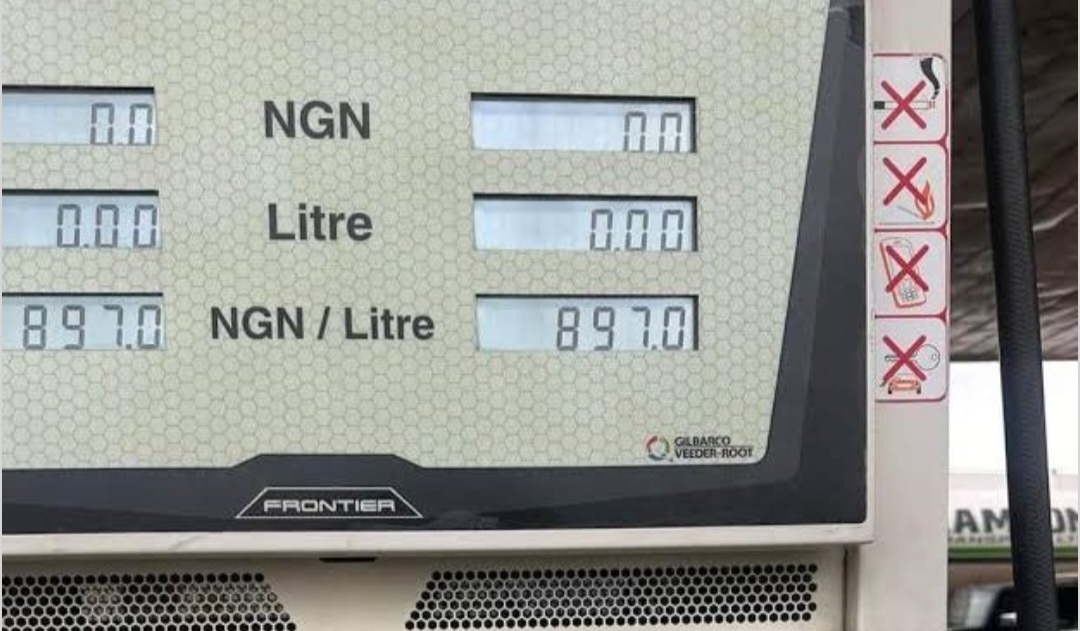
Petrol asking prices climbed by about 14 per cent to N799 per litre by late January, after falling to around N699 per litre in December. The rebound has made imported fuel more competitive in recent trading sessions.

Market participants believe new import permits would allow marketers to supplement domestic supply while regulators continue to prioritise local refining. However, increased imports could dilute Dangote Refinery’s growing dominance in the downstream market.

Amid the shifting landscape, the Dangote Refinery has warned that petrol pump prices could approach N1,000 per litre if marketers increasingly rely on coastal transportation rather than gantry loading for fuel evacuation.

In a statement, the refinery said coastal logistics can add about N75 per litre to petrol costs due to port charges, maritime levies and vessel-related expenses.

With Nigeria’s daily consumption estimated at 50 million litres of petrol and 14 million litres of diesel, the extra cost could translate into an annual burden of roughly N1.75 trillion if passed on to consumers.

The company stressed that gantry loading remains the most cost-efficient option and that marketers are free to choose their preferred evacuation method. It cautioned, however, that widespread reliance on coastal shipping would undermine recent price relief achieved through domestic refining.

Continue Reading

Business

‘Cooking Gas, Petrol Prices Crash Nationwide’  [DETAILS]

Published

on

Petrol and cooking gas prices declined year-on-year in December 2025, signalling a gradual easing of household energy costs, according to separate reports released by the National Bureau of Statistics (NBS).

Naija News reports that data from the bureau showed that both Liquefied Petroleum Gas (LPG), commonly used for cooking, and Premium Motor Spirit (PMS), also known as petrol, recorded notable price reductions compared with December 2024, alongside modest month-on-month declines.

The NBS noted that while the downward trend was observed across most states and geopolitical zones, prices continued to vary widely depending on location.

5kg Of Cooking Gas Price Drops By 25%
According to the report, the average price for refilling a 5kg cylinder of LPG declined by 1.20 per cent month-on-month, falling from ₦5,425.78 in November 2025 to ₦5,360.43 in December 2025.

On a year-on-year basis, the price fell sharply by 25.31 per cent, down from ₦7,177.27 recorded in December 2024.

Confirming the trend, the NBS stated, “The average retail price for refilling a 5kg cylinder of Liquefied Petroleum Gas (Cooking Gas) decreased by 1.20 per cent on a month-on-month basis,” adding that the year-on-year decline stood at 25.31 per cent.”

A state-level analysis showed that Kaduna recorded the highest average price for refilling a 5kg cylinder at ₦5,838.66, followed by Jigawa at ₦5,825.09 and Osun at ₦5,777.80.

On the lower end, Katsina recorded the cheapest average price at ₦4,855.80.

Similarly, the average retail price for refilling a 12.5kg cylinder of LPG fell by 0.74 per cent month-on-month, declining from ₦13,538.79 in November 2025 to ₦13,438.90 in December 2025.

Year-on-year, the price dropped by 22.20 per cent from ₦17,274.16 recorded in December 2024.

On a state-by-state basis, Abia recorded the highest average price for refilling a 12.5kg cylinder at ₦14,489.96, followed by Osun at ₦14,444.50 and Delta at ₦14,393.17, the bureau said.

Petrol Price Dips To ₦1,048
The NBS also reported a decline in the average retail price of petrol.

According to the report, the average price of Premium Motor Spirit stood at ₦1,048.63 in December 2025, representing an 11.81 per cent decrease compared with ₦1,189.12 recorded in December 2024.

The bureau stated, “The average retail price paid by consumers for Premium Motor Spirit (Petrol) for December 2025 was ₦1,048.63.”

On a month-on-month basis, petrol prices declined by 1.20 per cent, down from ₦1,061.35 recorded in November 2025.

Further analysis showed that Kogi State recorded the highest average petrol price at ₦1,104.45, while Oyo State had the lowest at ₦996.55.

Regionally, the North East emerged as the most expensive zone for petrol, while the South West recorded the lowest average prices.

Continue Reading

Trending